An entrepreneur has a comprehensive business plan, secured funding, and identified a prime location for a new manufacturing facility in Botswana. Commercially, all the pieces are in place. Yet, a critical regulatory process stands between this vision and the start of construction: the Environmental Impact Assessment (EIA).
Overlooking this mandatory step can lead to significant delays, unforeseen costs, and even the complete halt of a promising industrial venture. This guide provides a clear, step-by-step overview of the EIA process in Botswana. It’s designed for business professionals and investors who need to understand their obligations under the country’s environmental laws to ensure their project proceeds smoothly from concept to operation.
Table of Contents
What is an Environmental Impact Assessment (EIA) and Why is it Required?
An Environmental Impact Assessment is a formal, systematic process used to identify, predict, and evaluate the potential environmental effects of a proposed project before major decisions are made. In Botswana, this process is legally mandated by the Environmental Assessment Act of 2011.
For business leaders, it’s essential to view the EIA not simply as a compliance hurdle but as a critical risk management tool. A properly conducted EIA helps to:
- Ensure Legal Compliance: It serves as the primary mechanism for obtaining environmental clearance for industrial projects.
- Improve Project Design: It can identify potential environmental liabilities early, allowing for design modifications that reduce negative impacts and can even lower long-term operational costs.
- Secure Social License: A transparent EIA process, including public consultation, builds trust with local communities and stakeholders.
- Enhance Access to Finance: Many international lenders and investors require a comprehensive EIA as a condition for funding.
The Key Government Body: The Department of Environmental Affairs (DEA)
In Botswana, the EIA process is administered by the Department of Environmental Affairs (DEA). This department is responsible for reviewing all applications, providing guidance to project developers (known as proponents), coordinating with other government agencies for technical input, and ultimately issuing the final decision on whether a project can proceed.
Establishing a clear, professional line of communication with the DEA is key to navigating the process efficiently.
The EIA Process: A Step-by-Step Breakdown
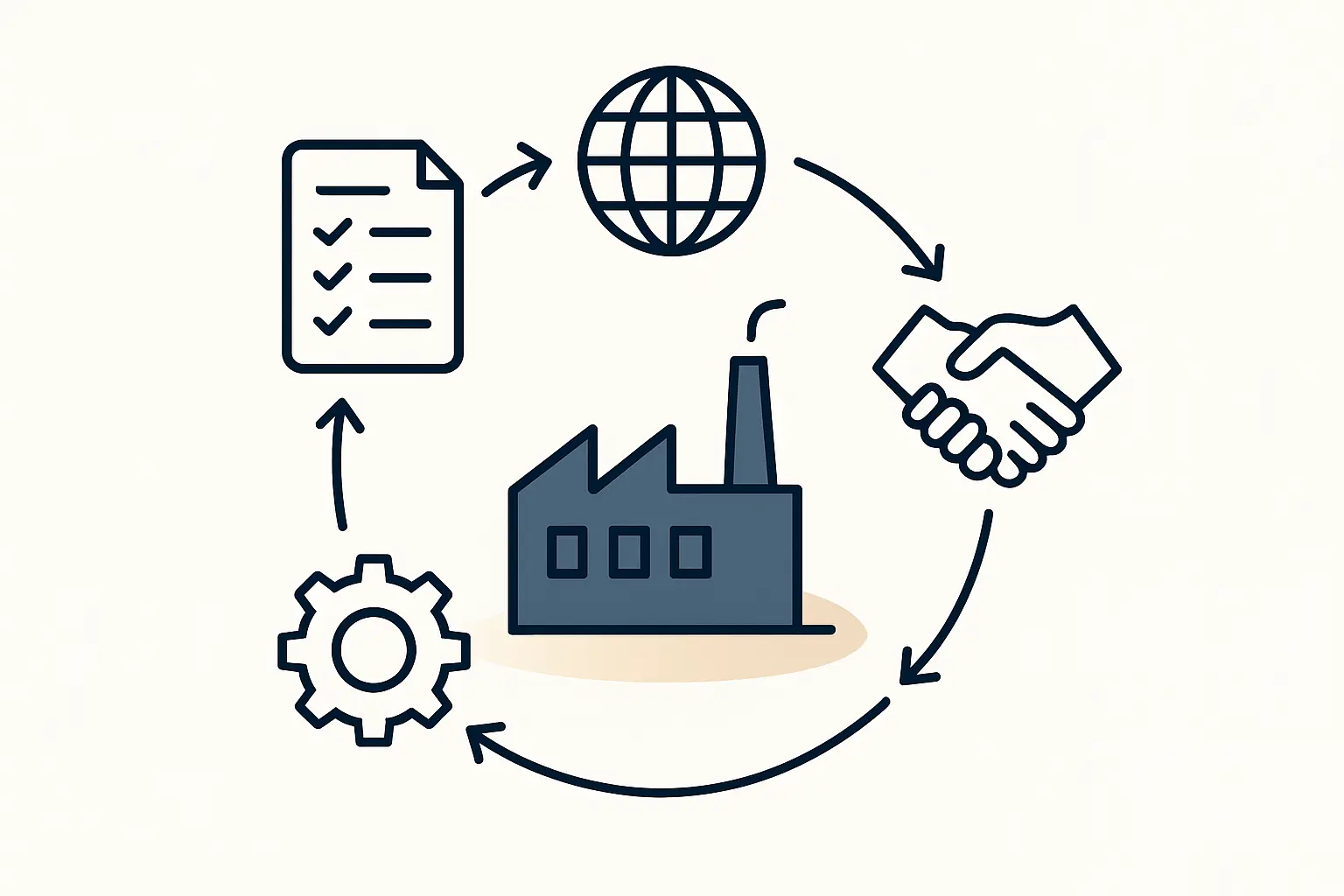
The journey from project conception to receiving environmental authorisation follows a structured, multi-stage path. While details can vary based on project complexity, the core stages remain consistent for most industrial projects.
Stage 1: Project Registration and Screening
The process begins when the project proponent submits a “Project Brief” to the DEA. This initial document provides a high-level overview of the proposed factory, its location, and its potential activities. The DEA then screens this brief to determine if a full, detailed EIA is required. For most industrial and manufacturing projects, a full EIA is standard procedure.
Stage 2: Scoping and Developing the Terms of Reference (ToR)
Once the DEA determines an EIA is necessary, the “scoping” phase begins. This involves identifying the most significant environmental and social issues that need to be studied in detail. The outcome of this phase is a critical document called the Terms of Reference (ToR), which serves as the approved blueprint for the entire EIA study. It outlines the exact scope, methodology, and deliverables and must be formally approved by the DEA before the main assessment can begin.
Stage 3: Impact Assessment and Mitigation Planning
This is the most intensive phase, conducted by an independent environmental consultant hired by the project proponent. It involves detailed fieldwork, data collection, and scientific analysis to predict the factory’s potential impacts on areas such as air and water quality, soil and land use, local biodiversity, noise levels, and socio-economic conditions.
Ready to make big Profits?
The solar Industry is Booming
WE HELP NEWCOMERS to the solar industry start their own solar module production line. Customers can make BIG PROFITS by selling modules and finding investors, without wasting money and time on things they don't need!
Crucially, this stage also involves developing practical mitigation measures to avoid, reduce, or manage the identified negative impacts. The quality of the consultant is paramount here; experience shows that an expert consultant can prevent significant delays during the DEA’s review.
Stage 4: Preparing and Submitting the Environmental Impact Statement (EIS)
All findings from the assessment are compiled into a comprehensive report known as the Environmental Impact Statement (EIS). This central document presents the project description, baseline environmental conditions, predicted impacts, proposed mitigation measures, and the final Environmental Management Plan (EMP). The DEA will base its final decision on the EIS.
Stage 5: Public and Technical Review
Transparency is a cornerstone of the EIA process in Botswana. Once submitted, the EIS is made available for public review for a minimum of 30 days, during which affected communities, NGOs, and other stakeholders can submit comments.
Concurrently, the DEA circulates the EIS to other relevant government departments for a technical review.
Stage 6: Decision Making by the DEA
After the review period closes, the DEA evaluates the EIS, all public comments, and the technical feedback from other agencies. Based on this comprehensive review, the DEA will make one of three decisions:
- Approve the project, usually with legally binding conditions attached.
- Request further information if aspects of the EIS are unclear or insufficient.
- Reject the project if the environmental impacts are deemed unacceptable.
Stage 7: Implementation of the Environmental Management Plan (EMP)
Approval does not mark the end of a project’s environmental obligations. The Environmental Management Plan (EMP), part of the approved EIS, becomes a live document. It outlines the specific actions, responsibilities, and timelines for implementing mitigation measures during the factory’s construction and operational phases. The proponent is legally required to implement the EMP and submit regular monitoring reports to the DEA.
Common Challenges for Entrepreneurs and How to Prepare
Navigating the EIA process can be complex, but many challenges can be overcome with proper foresight and planning.
Selecting the Right Environmental Consultant
The success of an EIA application often depends on the competence and local experience of the environmental consultant. A consultant unfamiliar with the DEA’s specific requirements or the local environmental context can produce a substandard EIS, leading to requests for additional information and costly delays.
Incomplete Documentation and Data
A thorough and well-documented EIS is essential, as any data gaps will be identified by the DEA, leading to delays. Conducting a detailed factory feasibility study beforehand can provide much of the baseline project data required for the initial Project Brief, saving valuable time.
Underestimating Timelines and Costs
Entrepreneurs must budget both time and money for the EIA. The entire process, from registration to decision, typically takes 6 to 12 months and can run longer for particularly complex or controversial projects. Costs can vary significantly based on the scale of the factory, ranging from $5,000 to over $50,000 USD.
Inadequate Public Consultation
Simply holding a meeting is not enough. The DEA expects to see evidence of meaningful engagement with local communities and stakeholders. Failure to adequately consult the public is one of the most common reasons for project delays and can create long-term reputational damage.
Frequently Asked Questions (FAQ)
How long does the entire EIA process take in Botswana?
Typically, the process takes between 6 and 12 months from the submission of the Project Brief to a final decision from the DEA. This timeline can be longer if the project is complex or if the submitted documents are incomplete.
Can I start any construction while the EIA is in progress?
No. It is illegal to commence any site clearing, construction, or related physical activities before receiving formal environmental authorisation from the DEA.
What is the difference between an EIS and an EMP?
The Environmental Impact Statement (EIS) is the comprehensive study report the DEA uses to make a decision. The Environmental Management Plan (EMP) is a practical, action-oriented document within the EIS that details how environmental impacts will be managed on an ongoing basis after the project is approved.
Who is responsible for paying for the EIA?
The project developer, or proponent, is responsible for all costs associated with conducting the EIA study, including the fees for the independent environmental consultant.
Is it necessary to hire a local consultant?
While not a strict legal requirement, it is highly recommended. A consultant based in Botswana will have established relationships with the DEA, a deep understanding of local regulations, and familiarity with the specific environmental and social context—all of which are invaluable for a smooth process.
The Path Forward: Integrating the EIA into Your Project Plan
The Environmental Impact Assessment should not be viewed as a final hurdle to clear but as an integral part of the initial factory planning phase. By treating the EIA as a strategic component of project development, entrepreneurs can mitigate risks, build stronger community relationships, and lay the foundation for a sustainable and compliant operation.
A structured approach that anticipates regulatory requirements from the outset is the most effective way to turn the vision of an industrial facility in Botswana into a reality. Successfully navigating the EIA is a critical milestone on that journey.
Get the downloadable PDF explaining Botswana’s EIA process for industrial projects.