For anyone considering the Caribbean’s energy sector, two facts stand out: the region is blessed with abundant sunshine yet is uniquely vulnerable to destructive hurricanes. These seemingly conflicting realities reveal a significant market gap and a compelling business opportunity.
Standard solar modules, mass-produced for global markets, simply aren’t engineered to withstand the extreme weather events that define the region. This creates an opening for a specialized manufacturing facility in a strategic location like Grenada. A facility there could produce hurricane-resilient solar modules tailored specifically for the Caribbean, capturing a premium market while building the region’s critical infrastructure. This article explores the technical and business case for establishing such a venture.
The Caribbean’s Energy Dilemma: Sun, Storms, and High Costs
The economic case for solar energy in the Caribbean is exceptionally strong. Many island nations within CARICOM rely on imported fossil fuels, leading to some of the highest electricity costs in the world, often ranging from $0.30 to $0.40 per kilowatt-hour. High solar irradiation makes photovoltaic (PV) technology an obvious solution for reducing this economic burden.
However, the climate presents a formidable challenge. The region lies squarely in the Atlantic hurricane belt, with seasonal storms that can devastate infrastructure and erase years of economic progress. The impact of Hurricane Maria on Dominica in 2017, which caused damages equivalent to 226% of the country’s GDP, is a stark reminder of this vulnerability. For solar assets with a 25-year lifespan, resilience isn’t a feature; it’s a fundamental requirement.
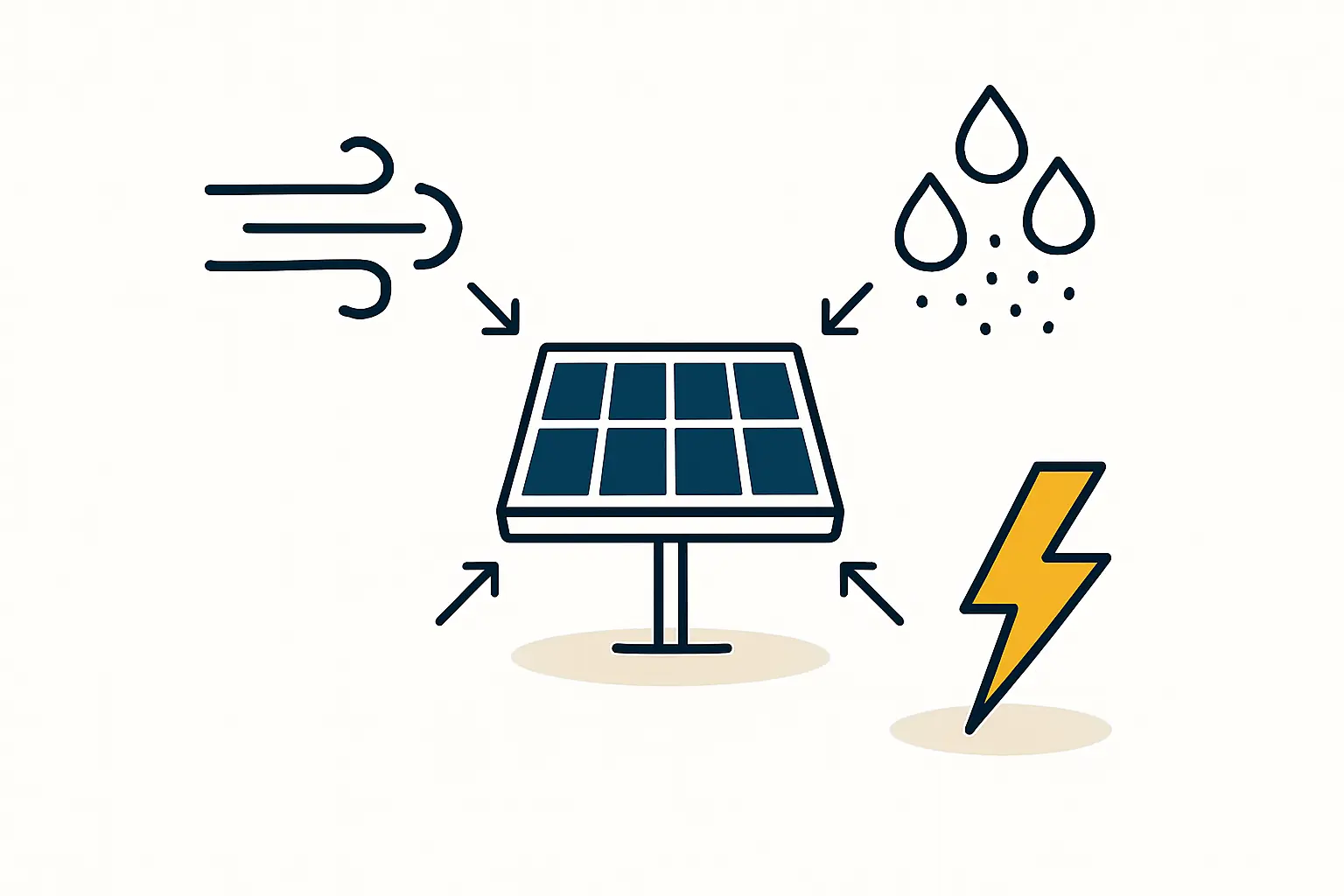
A factory based in Grenada would be strategically positioned to serve CARICOM nations, engineering for these local risks in a way that distant, large-scale manufacturers cannot.
Why Standard Solar Modules May Not Be Sufficient
Solar modules must meet rigorous international certification standards, most notably IEC 61215. A key part of this certification is the mechanical load test, which simulates the stress of wind and snow. The standard test applies a pressure of 2400 Pascals (Pa), equivalent to wind speeds of approximately 140 mph (225 km/h).
While this is sufficient for most regions, it falls short of the forces generated by major hurricanes. The Saffir-Simpson Hurricane Wind Scale puts this into perspective:
Category 4: 130–156 mph winds
Category 5: Winds exceeding 157 mph (252 km/h)
This reveals a critical engineering gap. A standard-certified solar module may not be designed to survive a direct hit from a Category 4 or 5 storm.
For investors, governments, and business owners in the Caribbean, relying on standard modules for critical infrastructure represents an unacceptable risk.
Engineering for Resilience: Building a Hurricane-Ready Solar Module
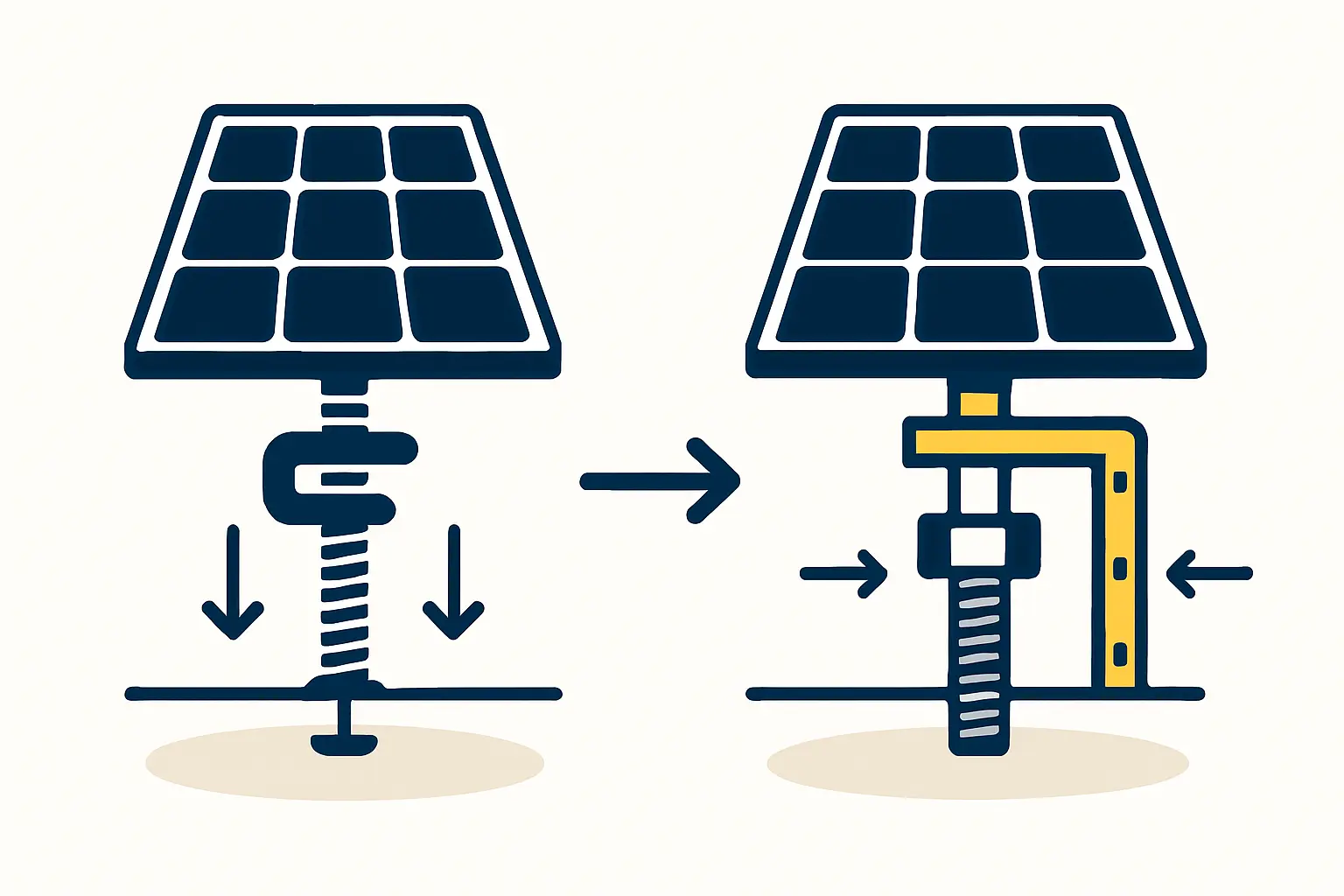
Manufacturing a module to withstand higher wind loads doesn’t require reinventing the technology. Instead, it involves strategic enhancements to key components—a process entirely feasible for a small- to medium-sized production facility. Experience from J.v.G. turnkey projects shows that specific modifications can significantly increase a module’s resilience.
Reinforcing the Frame
The aluminum frame is a solar module’s primary source of structural rigidity. A common cost-saving measure in standard modules is to use a thinner frame (e.g., 30mm). Increasing the frame profile to 40mm or even 45mm and using stronger corner connections dramatically improves the module’s ability to resist bending and torsion under extreme wind pressure.
Upgrading the Glass and Backsheet
The front glass is the module’s first line of defense. Upgrading from a standard 3.2mm tempered glass to a 4.0mm thickness increases its resistance to both wind pressure and impacts from airborne debris. Similarly, selecting an advanced polymer backsheet with higher tensile strength prevents delamination and tearing on the module’s rear side.
Adding Structural Support
For maximum resilience, additional cross-support bars can be added to the back of the frame. This simple addition acts like a truss, distributing wind load forces more evenly across the entire structure and preventing the glass and cells from flexing to their breaking point.
These targeted improvements are specified during the planning phase. They form the core of the product’s Bill of Materials (BOM), which directly determines both its resilience and final cost.
The Strategic Advantage of Local Manufacturing in Grenada
An entrepreneur might ask, “Why not simply import stronger modules?” The answer lies in market dynamics, logistics, and regional economics.
Market Specialization and Brand Trust
A Grenadian factory can build its entire brand around resilience. By becoming the regional specialist for hurricane-proof solar technology, it can establish a powerful competitive advantage that large, diversified global manufacturers cannot easily replicate. Customers will associate the brand with safety and reliability in the face of local climate threats.
Reduced Logistics and Supply Chain Efficiencies
Importing modules from Asia involves long shipping times, high transportation costs, and vulnerability to global supply chain disruptions. A factory in Grenada can serve the entire CARICOM market with shorter lead times, lower shipping costs, and duty-free access, making its premium product more cost-competitive.
Economic Development and Regional Impact
Establishing a solar module manufacturing business in Grenada creates skilled local jobs, fosters technical expertise, and contributes to the nation’s economic diversification. This aligns with governmental goals for sustainable development, making such projects attractive for institutional support.
From Concept to Production: What It Takes
The initial investment for a solar factory for a 20 MW to 50 MW line is significant but manageable for established entrepreneurs looking to enter a high-growth industry. Modern production lines are compact, efficient, and can be operated by a trained staff of fewer than 30 people per shift.
The key is flexibility. A modern turnkey solar manufacturing line can be configured from the outset to handle thicker glass, larger frames, and other specialized components required for hurricane-resilient modules. With proper planning and expert guidance, a new factory can become operational in under a year.
Frequently Asked Questions (FAQ)
What kind of investment is required for such a factory?
For a semi-automated line with an annual capacity of 20–50 MW, the initial investment for machinery, training, and setup typically falls in the range of a few million US dollars. The pvknowhow.com platform provides detailed guides on financial planning for such ventures.
How does a reinforced module compare in cost to a standard one?
The material costs for a reinforced module are incrementally higher, driven by the thicker glass, a more robust frame, and potential support bars. However, for the end-user in a high-risk zone, the total cost of ownership is far lower when factoring in the immense financial risk of losing an asset during a hurricane. The value proposition is based on security and long-term reliability.
Are certifications different for hurricane-resistant modules?
All modules must pass the standard IEC 61215 and 61730 certifications to be sold commercially. A manufacturer of hurricane-resilient modules would typically seek additional, more rigorous voluntary testing from certification bodies to quantify and market the product’s superior performance under extreme wind loads (e.g., testing to 5400 Pa or higher).
Why is Grenada a suitable location?
Grenada offers a combination of a stable political and business environment, membership in the CARICOM single market, a strategic geographic location for serving the Caribbean islands, and government interest in promoting renewable energy and sustainable development.
The Path to Building a Resilient Energy Future
The Caribbean’s demand for secure, affordable, and sustainable energy will only continue to grow. The inherent climate risks of the region, far from being a deterrent, represent a clear and underserved market niche for specialized, high-resilience solar technology.
For an entrepreneur with the right vision, establishing a local manufacturing plant in Grenada is more than a business venture. It is an opportunity to build a cornerstone of the Caribbean’s resilient energy future.