An entrepreneur invests in a state-of-the-art solar module factory, eager to play a role in the nation’s renewable energy future. The machinery is installed, the staff is trained, and the first production run begins.
Then, without warning, the power cuts out—not for a few minutes, but for several hours. This kind of shutdown, a daily reality in many promising markets, halts operations, damages expensive equipment, and can transform a viable business plan into a financial liability.
For investors considering solar manufacturing in Libya, a region with immense solar potential, planning for electrical grid instability isn’t a secondary concern—it is fundamental to success. This guide outlines the challenges posed by an unreliable grid and provides a framework for building a resilient and profitable manufacturing operation.
The Libyan Context: High Potential Meets a Fragile Grid
Libya boasts one of the world’s most favorable locations for solar energy, with an average solar irradiation of approximately 2,100 kWh/m² per year. This natural advantage, combined with a government plan to add 3 GW of solar power by 2030, creates a significant opportunity for local solar module manufacturing.
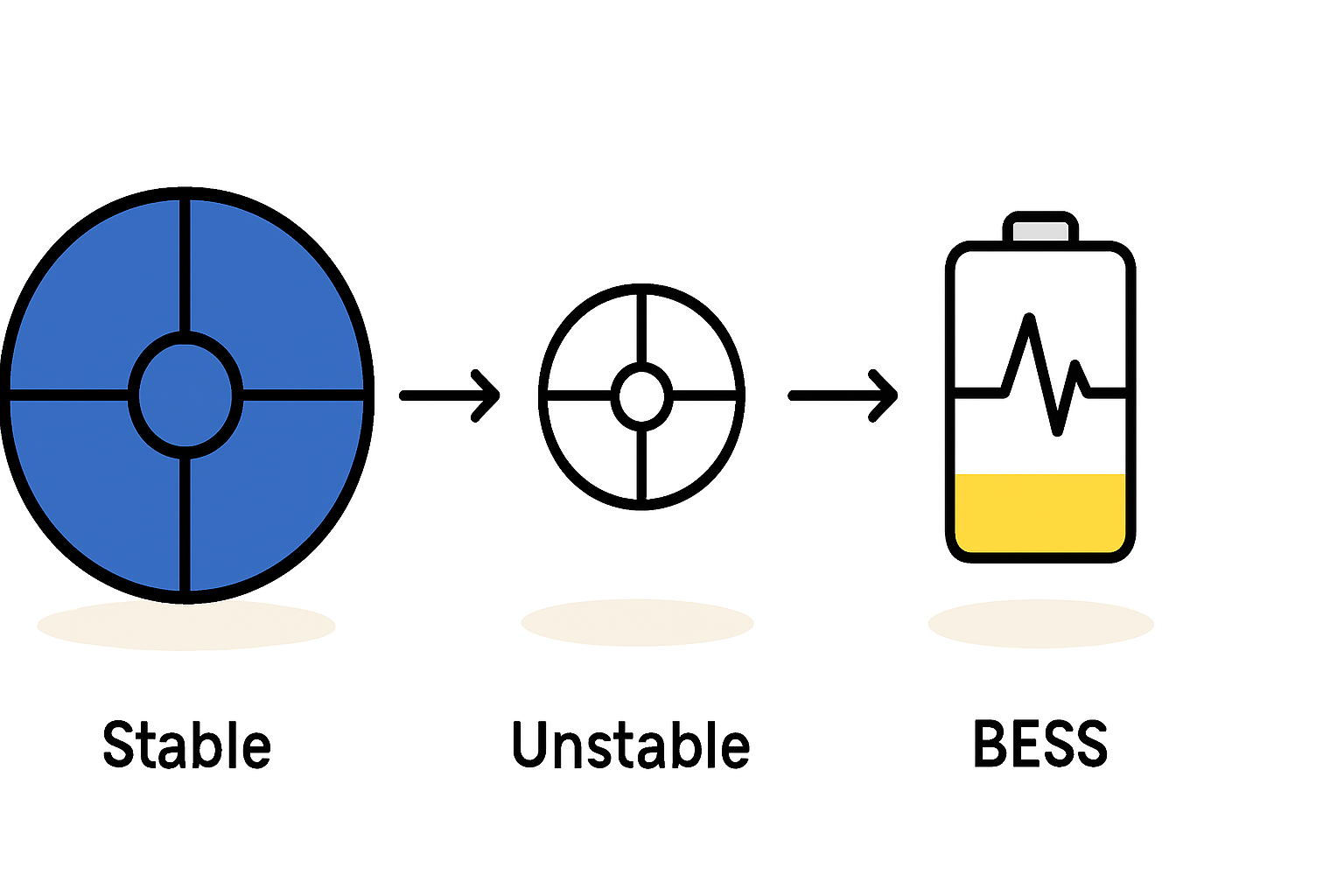
However, this opportunity is set against the backdrop of a severely strained national power infrastructure. The state-owned General Electricity Company of Libya (GECOL) manages a grid degraded by years of conflict and underinvestment. This leaves a substantial generation deficit, estimated at 2.5 GW, as the available capacity of 7 GW cannot meet the peak demand of 9.5 GW.
For industrial operators, this deficit means frequent, unpredictable power outages that can last for hours. Relying solely on the national grid for a continuous manufacturing process is simply not a viable strategy.
The Direct Impact of Power Instability on Solar Module Manufacturing
A stable power supply is the lifeblood of a solar module factory. Unlike industries where work can simply pause and resume, an abrupt power loss during critical manufacturing stages can have severe consequences.
Critical Process Interruption
Key machines in a solar production line, such as laminators and stringers, need uninterrupted power to complete their cycles. A laminator, for instance, uses a precise heating and pressure sequence to bond the layers of a solar module. If power is lost mid-cycle, the materials inside—including solar cells, EVA film, and glass—are often ruined, leading to direct material loss and waste.
Risk of Equipment Damage
Modern manufacturing equipment relies on sensitive electronics vulnerable to power fluctuations. Sudden shutdowns and the power surges that often accompany the grid’s return can damage control boards, motors, and sensors. These repairs are costly and lead to extended downtime, jeopardizing production targets. The financial implications of such disruptions are a critical factor in calculating the total cost of solar panel manufacturing.
Ready to make big Profits?
The solar Industry is Booming
WE HELP NEWCOMERS to the solar industry start their own solar module production line. Customers can make BIG PROFITS by selling modules and finding investors, without wasting money and time on things they don't need!
Reduced Throughput and Profitability
Every hour of downtime is an hour of lost production. For a factory designed for continuous operation, frequent interruptions make it impossible to meet output goals, fulfill orders, and achieve profitability. A common challenge for new factory owners in regions with unstable grids is the significant gap between their plant’s theoretical capacity and its actual output.
Strategic Solutions for Ensuring Operational Continuity
Addressing power instability means incorporating energy resilience into the factory’s core design. Entrepreneurs must treat their facility’s power system as a critical piece of production infrastructure, not as a utility to be taken for granted.
On-Site Independent Power Generation
The most direct solution is an independent power source capable of running the entire facility during grid outages.
-
Diesel Generators: The conventional approach for industrial backup power is to use one or more large diesel generators. These systems are reliable and provide the consistent power manufacturing requires. However, they come with high operational costs, driven by fuel consumption, regular maintenance, and the logistics of securing a constant diesel supply.
-
Hybrid Power Systems: A more advanced and sustainable strategy is to create a hybrid microgrid for the factory. This system integrates multiple power sources, typically including:
- Rooftop Solar PV: The factory’s own roof can generate a significant portion of its electricity during daylight hours.
- Battery Storage System (BESS): Batteries store excess solar energy and provide instantaneous, clean power the moment the grid fails, acting as an uninterruptible power supply (UPS) for critical machinery.
- Grid Connection: The grid is used when it is stable and cost-effective.
- Backup Generator: A diesel generator remains as the final layer of redundancy for extended outages or periods of low solar generation.
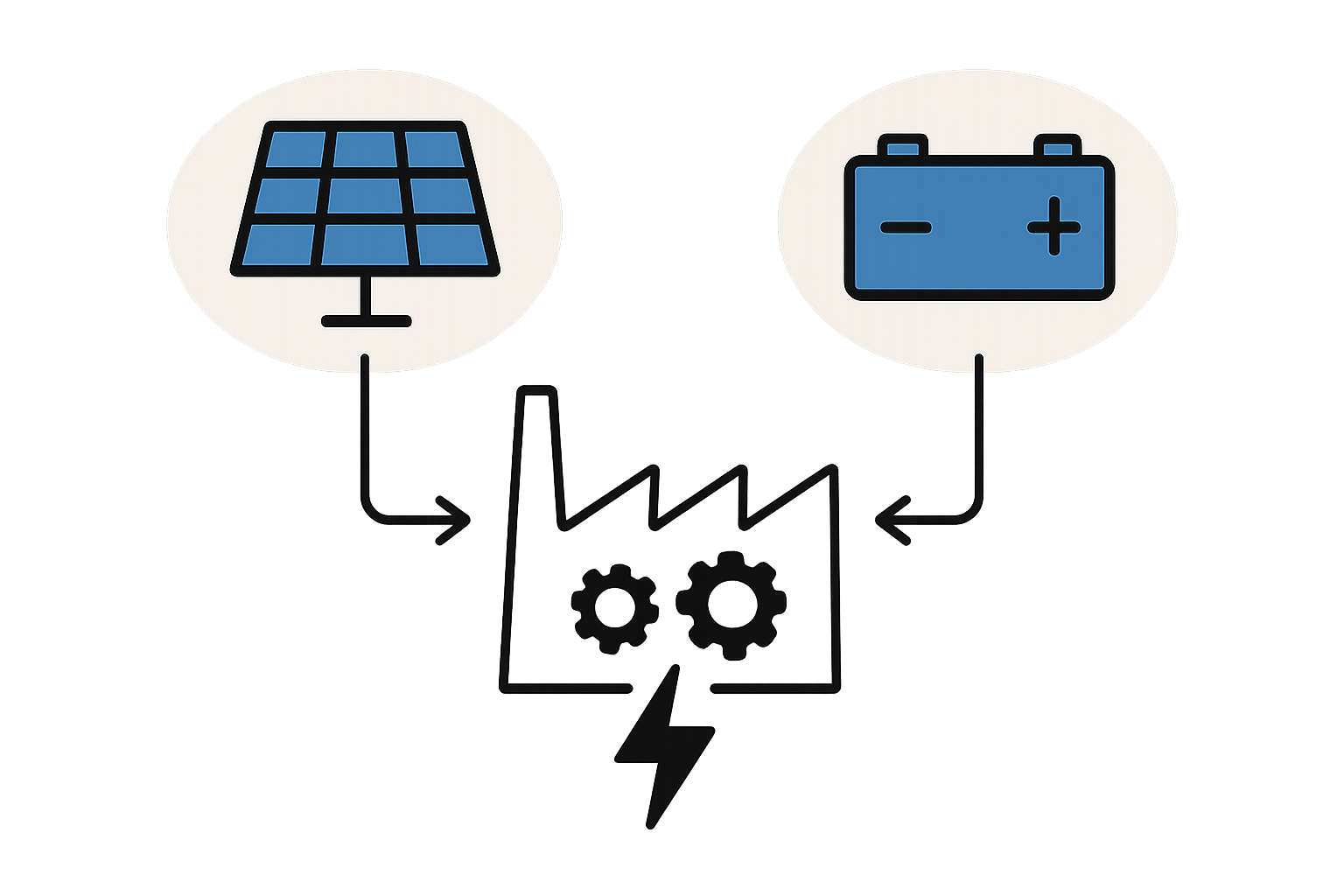
This integrated approach not only ensures continuous operation but can also significantly lower long-term energy costs. A thorough assessment of solar factory building requirements must include space and structural support for these power systems.
Operational Planning and Process Scheduling
Beyond hardware, operational strategies can help mitigate the impact of power cuts. If outages follow predictable patterns, energy-intensive processes like lamination can be scheduled for periods of expected grid stability. Additionally, designing the production flow around smaller batches can limit the amount of material wasted during an unexpected shutdown.
Experience from projects in similar markets shows that integrating this analysis early is essential. An experienced provider of a turnkey solar manufacturing line will conduct a thorough site and infrastructure assessment to design a factory that is resilient to local conditions from day one.
Frequently Asked Questions (FAQ)
Is a diesel generator enough to run a solar factory?
A correctly sized diesel generator can power a solar factory. However, reliance on diesel leads to high and volatile operational expenses tied to fuel prices. It also presents logistical challenges in sourcing and storing fuel, and it conflicts with the sustainable mission of a solar company. It is best viewed as a necessary backup, not a primary solution.
Can a solar factory power itself entirely with its own solar panels?
While it is technically possible for a factory to run on its own solar and battery system, achieving 100% autonomy for a 24/7 industrial operation requires an exceptionally large PV array and battery bank. This significantly increases the initial capital investment. A hybrid approach combining solar, batteries, and a generator for backup is often more economically balanced.
How does grid instability affect the final quality of the solar modules?
If critical processes like lamination or cell testing are interrupted, it can introduce hidden defects or inconsistencies in the final product. Incomplete lamination, for example, can result in delamination over time and lead to module failure. A stable power supply is essential for consistent quality assurance.
Should power infrastructure be planned before or after choosing the machinery?
Power infrastructure should be planned in tandem with the selection of production machinery. The power requirements, voltage sensitivity, and operational cycles of the equipment determine the necessary size and specifications of the generators, battery systems, and wiring. This integrated planning is a hallmark of a well-designed factory project.
Planning for Resilience is Non-Negotiable
For entrepreneurs venturing into solar manufacturing in Libya and other markets with grid challenges, the lesson is clear: energy resilience cannot be an afterthought. The instability of the electrical grid is a known business risk that must be addressed with the same rigor as supply chain management or market analysis.
By proactively designing an independent or hybrid power system, investors can protect their equipment, ensure production continuity, and control operational costs. This approach transforms a significant local challenge into a manageable variable, paving the way for a successful and impactful manufacturing enterprise—one that is truly built to last.