For an international entrepreneur considering a new venture, the initial financial model can appear daunting. High capital expenditure for equipment, coupled with taxes during the critical early years, often pushes the break-even point further into the future.
However, government frameworks in certain strategic markets are specifically designed to alter this financial equation. Mali is a compelling case in point; its Investment Code offers a structured pathway to significantly reduce risk and accelerate the profitability of a new solar module factory.
This article provides an overview of the key financial incentives available to renewable energy manufacturers under Mali’s Investment Code (Law No. 2012-016), detailing the exemptions on duties and taxes that can dramatically improve the business case for establishing a local production facility.
Understanding Mali’s Legal Framework for Investment
The foundation for investment incentives in Mali is Law No. 2012-016 of 27 February 2012, commonly known as the Investment Code. This legislation aims to promote private investment, create employment, and foster economic development by ensuring a transparent and favorable business environment. A key feature of the code is its designation of certain sectors as priorities, with renewable energy manufacturing chief among them.
All investment applications and approvals are managed by a single entity, the Investment Promotion Agency of Mali (API-MALI). This centralized approach streamlines the process for domestic and foreign investors alike, providing a single point of contact to navigate all legal requirements.
The code applies to both new ventures and the expansion of existing businesses. A typical solar module manufacturing facility, for instance, would likely fall under ‘Regime B,’ which is designated for large enterprises with investments exceeding 2 billion FCFA.
Core Financial Incentives for Solar Manufacturers
The incentives are structured into two distinct phases: the initial setup of the factory and its operational period. This structure ensures financial relief during the most capital-intensive stages of the project.
Phase 1: The Implementation and Construction Period
This phase covers the time required to build the facility and install the production line, which typically lasts up to three years. During this critical setup period, an approved enterprise benefits from substantial exemptions that lower the initial investment cost.
-
Exemption from Customs Duties and Taxes: All imported capital goods, materials, and equipment required for the project are exempt from import duties and taxes, directly reducing the initial cash outlay. This includes the core solar panel manufacturing machines that make up a major part of the startup cost, with the only typical charge being a small statistical royalty fee of around 2.5%.
-
VAT Exemption: A Value Added Tax (VAT) exemption applies to imported equipment and to goods and services purchased locally during construction. This is crucial for managing cash flow during a period with no revenue.
Ready to make big Profits?
The solar Industry is Booming
WE HELP NEWCOMERS to the solar industry start their own solar module production line. Customers can make BIG PROFITS by selling modules and finding investors, without wasting money and time on things they don't need!
Phase 2: The Operational Period
Once the factory begins production, a new set of long-term incentives comes into effect to foster growth and accelerate profitability.
The most significant is a multi-year corporate income tax holiday, with a duration strategically linked to the factory’s location to encourage investment in developing regions outside the capital.
- Corporate Income Tax (CIT) Exemption: The length of the corporate income tax exemption depends on the investment zone:
- Zone A (Bamako District): Up to 15 years
- Zone B (Regional Capitals): Up to 20 years
- Zone C (Other Locations): Up to 25 years

-
Business Tax (Patente) Exemption: For the same duration as the CIT exemption, the enterprise is also exempt from the ‘patente,’ a form of business license tax.
-
Registration Fee Exemptions: Certain legal acts related to the company’s formation and capital increases may also be exempt from registration fees.
How These Incentives Impact Your Business Case
These government-backed incentives are not minor benefits; they are strategic tools that fundamentally alter the financial projections of a new manufacturing plant. When developing a business plan for a solar factory, the exemptions have a direct and measurable impact:
-
Lower Initial Capital Expenditure (CapEx): The exemption on customs duties for imported machinery can significantly reduce the initial project cost, freeing up capital for operations or other strategic needs.
-
Accelerated Path to Profitability: A tax holiday of 15 years or more means that all operational profits can be reinvested into the business for expansion, used to pay down debt faster, or returned to shareholders. This dramatically shortens the payback period for the investment.
-
Improved Internal Rate of Return (IRR): With a lower initial investment and higher net profits in the first decade, the project’s IRR becomes far more attractive to investors and financial institutions.
Based on experience from J.v.G. turnkey projects, accurately modeling these incentives is crucial for securing financing and making an informed investment decision.
The Application Process: Securing Your Approval
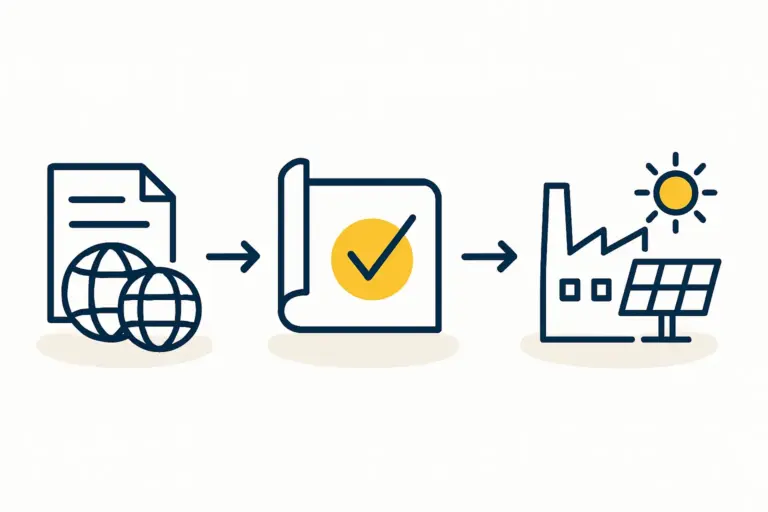
Accessing these benefits requires a formal application and approval process managed by API-MALI. While the specific documentation can be detailed, the general process follows a clear structure.
-
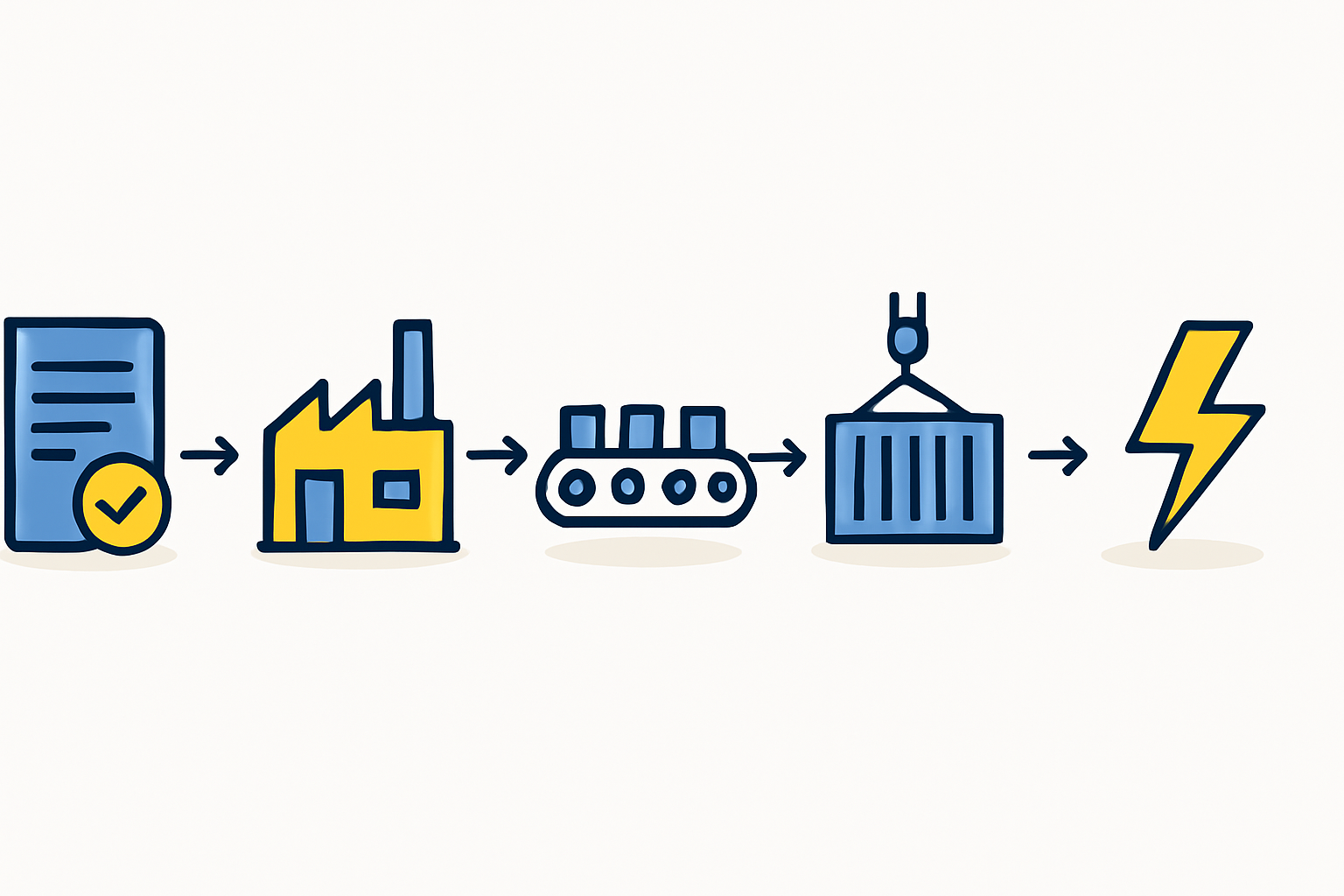
Submission of Application File: The investor submits a comprehensive file to API-MALI, including the business plan, financial projections, proof of financing, and technical details about the project.
-
Review by API-MALI: The agency reviews the application for completeness and compliance with the Investment Code.
-
Issuance of Approval (Agrément): If the project meets all criteria, API-MALI issues an official approval certificate (‘agrément’) that specifies the regime and applicable incentives.
This approval is the legal document that grants the enterprise its tax-exempt status. Navigating this process efficiently is key when planning a turnkey solar module manufacturing line, as it ensures the business is structured to receive all available benefits from day one.
Frequently Asked Questions (FAQ)
What is the minimum investment required to qualify?
The Investment Code has two primary tiers. Regime A is for Small and Medium Enterprises (SMEs) with investments between 100 million and 2 billion FCFA. A solar module factory would typically fall under Regime B, for investments exceeding 2 billion FCFA.
Are these incentives available to foreign investors?
Yes. The Investment Code of Mali guarantees non-discriminatory treatment. Foreign individuals or legal entities receive the same rights and protections as Malian nationals under the code.
How long does the approval process with API-MALI typically take?
While timelines can vary, the framework is designed for efficiency. With a complete and well-prepared application file, the approval process can often be completed within 30 to 60 days.
Do these benefits apply if I want to expand an existing factory in Mali?
Yes, the code’s provisions also apply to investments aimed at extending the capacity of an existing production facility, provided the investment meets the required thresholds.
Conclusion: A Strategic Foundation for Growth
Mali’s Investment Code provides a clear, predictable, and highly advantageous financial framework for entrepreneurs in the renewable energy manufacturing sector. The combination of upfront duty exemptions and long-term tax holidays creates a powerful foundation for building a sustainable and profitable business.
For investors capable of looking beyond headlines, these structured incentives represent a calculated opportunity to establish a major manufacturing presence in the heart of West Africa, a region with immense solar potential. Understanding this legal landscape is the essential first step in transforming a business concept into a viable, bankable project.