Any entrepreneur visiting Lilongwe or Blantyre quickly observes two contrasting realities: abundant year-round sunshine alongside frequent challenges with grid stability and power availability. For an investor, this gap represents a significant opportunity. Recognizing this, the Malawian government has established a clear pathway for investors to enter the renewable energy sector—a process managed almost exclusively by one central body: the Malawi Investment and Trade Centre (MITC).
For any serious investor considering a solar module manufacturing facility in Malawi, understanding how to work with the MITC is more than just an administrative step; it is the foundation of a successful venture. This guide breaks down the role of the MITC, the incentives it manages, and the step-by-step process for securing the necessary approvals for a solar manufacturing project.
The Central Role of MITC for Foreign Investors
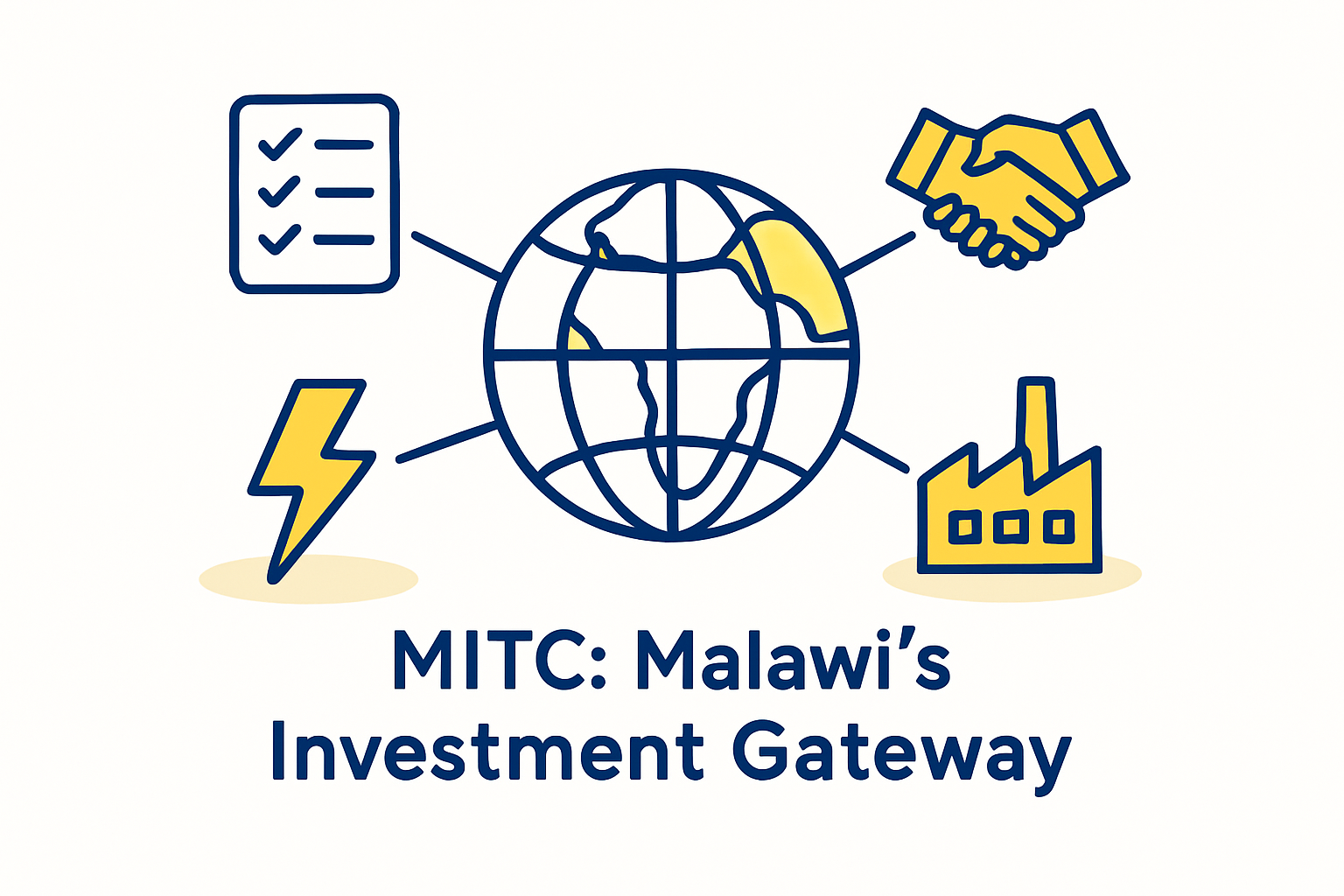
The Malawi Investment and Trade Centre acts as the primary point of contact for all foreign investors. It is designed to be a ‘one-stop service centre’ that streamlines the process of establishing a business, from initial inquiries to operational launch.
Its mandate is to promote, attract, and facilitate investment in sectors deemed critical for national development, with renewable energy being a top priority.
Engaging with the MITC early is crucial for any investor new to the country. The agency provides guidance on regulatory compliance, helps navigate inter-departmental requirements, and, most importantly, is the sole issuer of the Investment and Registration Certificate (IRC).
The Strategic Advantage: Why Malawi Prioritises Solar Investment
Malawi’s focus on attracting solar manufacturing investment is rooted in distinct economic and developmental needs. The country has historically relied heavily on hydropower, which is vulnerable to fluctuating water levels and seasonal droughts. To build a more resilient energy infrastructure, the government actively encourages private sector investment in solar power generation and manufacturing.
By establishing a local production facility, an investor not only addresses a critical domestic need but also aligns with national policy. This alignment makes the project eligible for a comprehensive suite of government-backed incentives and underscores the importance of the MITC process.
Securing Your Investment and Registration Certificate (IRC)
The Investment and Registration Certificate (IRC) is the most critical document an investor obtains from the MITC. It serves as official recognition of the investment and acts as the legal key to unlocking the significant fiscal and non-fiscal incentives offered by the government. Without an IRC, a solar manufacturing project would operate as a standard business, forfeiting access to tax holidays, duty waivers, and other benefits vital for financial viability in the early years.
A Step-by-Step Guide to the MITC Application Process
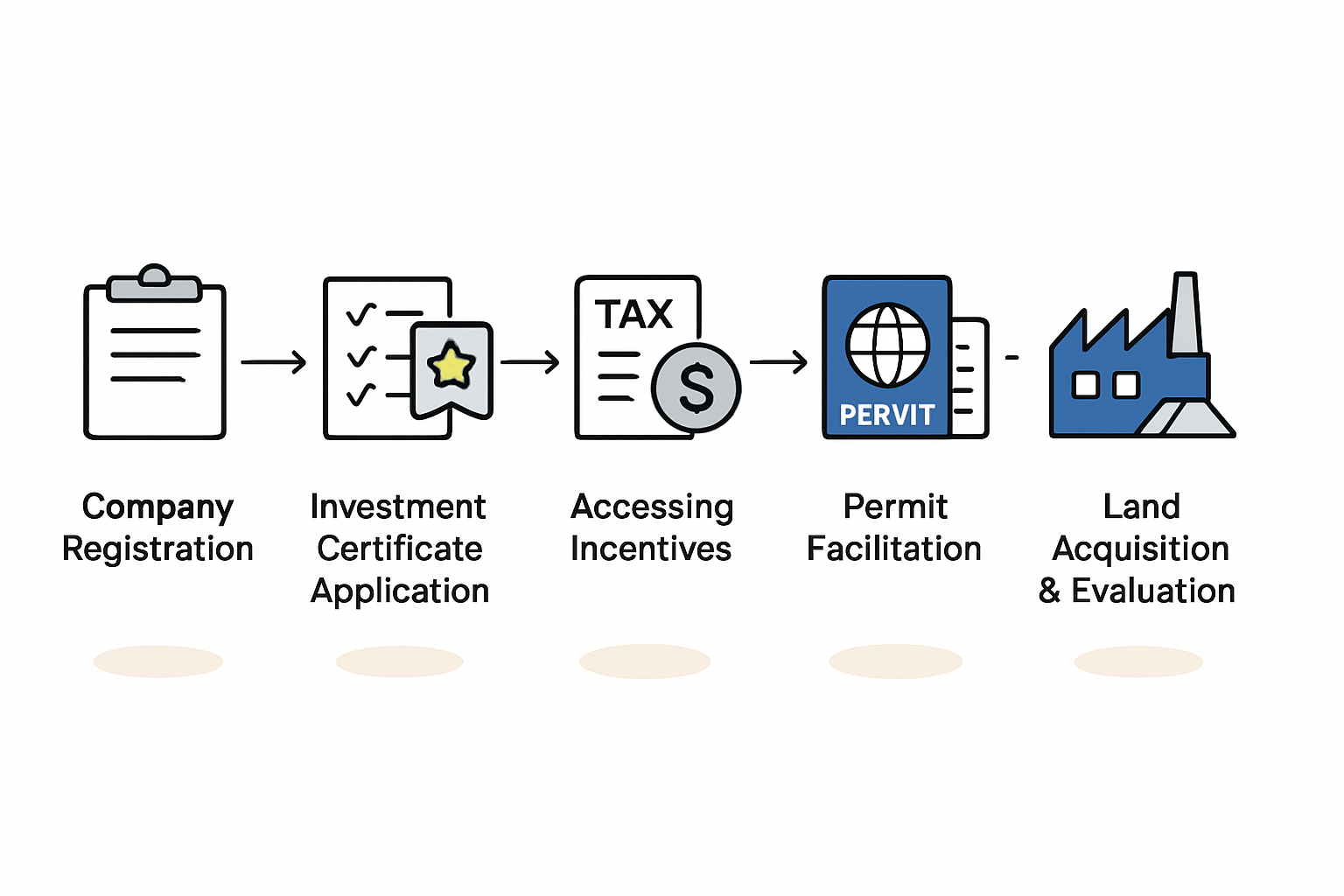
While the MITC aims to be a one-stop shop, the application process requires diligent preparation and precise documentation. The journey from initial concept to a fully approved project consists of four main stages.
Ready to make big Profits?
The solar Industry is Booming
WE HELP NEWCOMERS to the solar industry start their own solar module production line. Customers can make BIG PROFITS by selling modules and finding investors, without wasting money and time on things they don't need!
Step 1: Initial Due Diligence and Company Formation
Before approaching the MITC, an investor must register a local business entity with the Registrar General. This establishes the legal framework for the investment. During this phase, investors should also conduct thorough due diligence on land acquisition, local supply chains, and labor availability.
Step 2: Preparing the Application Dossier
This is the most demanding phase of the process. The MITC requires a detailed submission package to evaluate a project’s viability and its contribution to the Malawian economy. Key documents include:
- A Comprehensive Business Plan: This document must be exceptionally detailed, outlining the project’s technical specifications, production capacity, market analysis, employment projections, and financial forecasts. A well-structured business plan for a solar manufacturing plant is the cornerstone of a successful application.
- Proof of Financial Capability: Evidence of the capital required to fund the project.
- Company Registration Documents: Certificates from the Registrar General.
- Technical Schematics: An overview of the proposed factory layout and the types of solar manufacturing machines to be installed.
Step 3: Application Submission and Vetting
The completed dossier is submitted to the MITC. The Centre’s officials review the application for completeness and compliance with the Investment and Promotion Act. This vetting process may involve requests for additional information or clarification. Based on experience from J.v.G. turnkey projects in emerging markets, responding promptly and thoroughly to these requests is critical for maintaining momentum.
Step 4: Receiving the IRC and Activating Incentives
Upon successful review, the MITC issues the Investment and Registration Certificate. With the IRC in hand, the investor can formally apply to the Malawi Revenue Authority (MRA) and other relevant bodies to activate specific incentives, such as the duty-free importation of equipment.
Key Government Incentives for Solar Module Manufacturers
The incentives available to IRC holders are designed to significantly reduce the initial capital burden and improve a project’s long-term profitability.
Fiscal Incentives
Investors in priority sectors like renewable energy manufacturing can qualify for a corporate tax holiday of up to 10 years. This allows the business to reinvest early profits into operations and expansion, accelerating growth.
Non-Fiscal Incentives
Perhaps the most impactful incentive is the duty-free importation of capital equipment. For a typical 20–50 MW solar module production line, the cost of specialized machinery like stringers, laminators, and testers represents a significant portion of the initial investment. Waiving customs duties and excise taxes on these items can reduce upfront capital expenditure by over 20%, dramatically improving the project’s financial model.
Preparing for Common Procedural Challenges
While the framework is supportive, investors should be prepared for potential administrative hurdles. The bureaucratic process can be slow, and strict adherence to documentation requirements is non-negotiable. Any missing information or inconsistencies in the business plan can lead to significant delays.
Engaging with consultants who understand both the technical requirements of a solar factory and the nuances of the local investment climate can be invaluable. This approach helps ensure the application submitted to the MITC is robust, credible, and complete from the outset.
Frequently Asked Questions (FAQ)
How long does the MITC approval process typically take?
Official timelines suggest a few weeks, but investors should realistically budget for two to three months from submission to issuance of the IRC, assuming all documentation is in perfect order.
Is there a minimum investment threshold to qualify for incentives?
While specific figures can change, foreign investors are generally expected to meet a minimum capital investment threshold, often in the range of USD 250,000 to USD 500,000, to qualify for the full suite of incentives under an IRC.
Is a Malawian partner a mandatory requirement for foreign investors?
No, foreign investors can own 100% of their business in Malawi. However, forming a joint venture with a local partner can sometimes be strategically advantageous for navigating the local business terrain.
What kind of support is needed for the technical aspects of the application?
The MITC will scrutinize the technical and financial viability of the proposed manufacturing plant. The business plan must demonstrate a clear understanding of the production process, equipment requirements, and operational costs. The structured e-courses at pvknowhow.com provide foundational knowledge for creating such technical documentation.
A Structured Path Forward
For an entrepreneur looking to enter the solar manufacturing industry, Malawi presents a compelling case: high demand, strong government support, and abundant natural resources. The Malawi Investment and Trade Centre provides a structured, albeit rigorous, path to turning that opportunity into a reality.
A successful application hinges on meticulous preparation, a deep understanding of the technical project, and a professionally crafted business plan. By treating the MITC process as a foundational step in how to start a solar panel factory, an investor can build a resilient and profitable venture that contributes to both their portfolio and Malawi’s energy future.