For many businesses in emerging economies, the day begins and ends with the sound of a diesel generator. It’s the constant, expensive, and often unreliable reality of their operations.
This single pain point, however, is also one of the most significant opportunities for new entrants into the solar module manufacturing industry. Rather than competing in a global commodity market, a focused strategy addressing local energy challenges offers a clear path to building a sustainable business.
This article explores the primary local demand for solar modules across many developing regions: replacing diesel generators and electrifying off-grid communities. Understanding this specific market is crucial for designing the right product and building a successful manufacturing operation.
The Pervasive Challenge of Diesel-Powered Economies
In regions with underdeveloped or unreliable grid infrastructure, diesel generators are not a choice but a necessity. They power everything from small shops and agricultural processing facilities to telecom towers and rural clinics. While providing essential electricity, they also create a cycle of economic and operational challenges.
The Hidden Costs of Diesel Dependency:
-
Volatile Fuel Prices: Global oil price fluctuations translate directly into unpredictable operational costs, making financial planning difficult. A sudden price spike can render a profitable enterprise unviable overnight.
-
High Operating and Maintenance Costs: Beyond the cost of fuel, generators require frequent maintenance, specialized technicians, and a steady supply of spare parts, all adding to the total cost of energy. Running a generator permanently below its rated load, which is common when a business oversizes its set for peak demand, also accelerates wear and increases fuel consumption per kWh.
-
Supply Chain Unreliability: In many remote or island locations, transporting diesel fuel is a logistical challenge. Delays from weather, poor road conditions, or administrative hurdles can bring business operations to a standstill. Spare parts for inverters, batteries, and controllers can face similarly long lead times, which is why serious proposals for island customers need to include spare parts stocking and response time commitments.
-
Environmental and Health Impact: The noise and exhaust fumes from generators are significant local pollutants, impacting community health and the environment.
For a national economy, a heavy reliance on imported fossil fuels is a continuous drain on foreign currency reserves. By contrast, solar energy harnesses a local, inexhaustible resource. The scale of this shift is visible globally: according to IRENA, 91 percent of renewable power capacity commissioned in 2024 already generated electricity more cheaply than the cheapest new fossil fuel option, creating a foundation for greater energy independence and economic resilience.
Identifying the Primary Local Demand: Off-Grid and Unreliable Grids
The most immediate market for a new solar module manufacturer is often right outside the factory gates. This isn’t a market of large, utility-scale solar farms, but a distributed network of smaller-scale needs where solar, usually paired with battery storage, provides a direct and compelling solution.
Ready to make big Profits?
The solar Industry is Booming
WE HELP NEWCOMERS to the solar industry start their own solar module production line. Customers can make BIG PROFITS by selling modules and finding investors, without wasting money and time on things they don't need!
Key Customer Segments:
-
Island and Remote Communities: For communities physically disconnected from a national grid, diesel-powered microgrids are the standard. The cost of electricity in these locations can be exceptionally high, making solar a highly attractive alternative, provided the system is sized correctly for night load, peak load, and seasonal variation.
-
Small and Medium Enterprises (SMEs): Businesses such as farms, small factories, hotels, and retailers depend on consistent power. An unreliable grid forces them to use diesel generators, eroding their profit margins. Solar offers them predictable energy costs and operational stability.
-
Critical Infrastructure: Telecom towers, rural health clinics, water pumping stations, cold storage, and port facilities require uninterrupted power. Solar hybrid systems provide a far more reliable and cost-effective solution than a standalone generator.
Recognizing these specific, localized needs is essential for developing a sound business plan. A serious customer assessment should go well beyond installed capacity in kW and include annual and peak consumption, night load, existing diesel liters per kWh, local fuel price including transport, required renewable coverage share, acceptable outage duration, and site conditions such as salt, heat, dust, and wind exposure. A deep understanding of this customer base is central to learning how to start a solar factory designed for success from day one.
The Business Case: Calculating the Value of Diesel Displacement
For customers in this target market, the decision to switch to solar is based on clear financial logic. The key concept is the Levelized Cost of Energy (LCOE), which calculates the total cost of generating a kilowatt-hour (kWh) of electricity over the lifetime of a system.
-
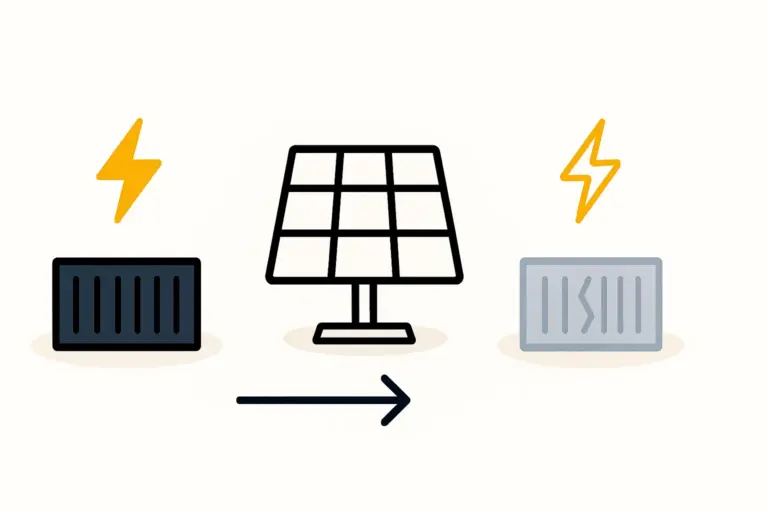
Diesel Generator LCOE: When factoring in fuel, maintenance, parts, and eventual replacement, the LCOE from a diesel generator typically ranges from $0.30 to over $0.70 per kWh, depending heavily on local fuel costs and transport logistics.
-
Solar PV LCOE: Globally, the weighted-average LCOE of new utility-scale solar PV fell to just $0.043 per kWh in 2024, according to IRENA. This figure describes large grid-connected plants, not a remote island microgrid, but it illustrates how far generation costs have fallen. Once battery storage, hybrid controls, transport, installation, and financing for a remote site are added, a realistic off-grid LCOE is higher than this benchmark, yet it remains well below diesel in almost every documented case.
Two additional cost trends strengthen this case further. Average global module prices fell nearly 45 percent year on year in 2024 to around $0.09 per watt and held at that level through the first half of 2025, a level the IEA describes as below the production cost of most manufacturers, including leading Chinese producers. At the same time, battery storage costs dropped by about 93 percent between 2010 and 2024, from $2,571 to $192 per kWh, making the battery component of a hybrid system dramatically more affordable than a decade ago. This striking difference in energy cost creates a powerful, easily understood return on investment (ROI) for the end customer. For the solar module manufacturer, this built-in value proposition is the engine of market demand. Evaluating this opportunity is a core part of assessing the overall investment requirements for a solar factory.

Designing Solar Modules for Real-World Conditions
Modules intended for diesel replacement and off-grid applications are not the same as those destined for large solar farms in mild climates. They must be engineered to withstand the specific environmental and logistical challenges of their target markets, and sized correctly within a hybrid system where the diesel generator stays available as a backup for extended cloudy periods, battery faults, or demand spikes rather than being removed entirely on day one.
Based on experience from J.v.G. turnkey projects, focusing on product robustness creates a significant competitive advantage. With global module prices at or below production cost for many manufacturers, competing purely on price is a losing strategy for a new, smaller factory. The solar module manufacturing process must instead be configured to prioritize durability and long-term performance.
Key Design Considerations:
-
Mechanical Durability: Modules may be transported over unpaved roads and installed by teams with varying levels of experience. A robust aluminum frame and thicker front glass (e.g., 3.2 mm) are essential to prevent damage.
-
High-Temperature Performance: In many target regions in Africa and the Middle East, ambient temperatures are very high. Modules must be built with materials and solar cells that have a low temperature coefficient, ensuring they produce power efficiently even in extreme heat.
-
Humidity and Corrosion Resistance: For island and coastal applications, salt mist is a major cause of module degradation, affecting not just the module but connectors, mounting structures, switchgear, and battery enclosures. Using high-quality, corrosion-resistant materials for the frame and junction box, and ensuring the laminate is perfectly sealed, is critical. Certifications like IEC 61701 (Salt Mist Corrosion Testing) offer customers assurance beyond the nameplate power rating.
A local manufacturer has the unique ability to design and produce modules specifically optimized for these local conditions, offering a superior product compared to generic, mass-produced imports. Because standalone module sales carry thin margins at current global price levels, the more durable commercial path is to bundle modules with battery storage, energy management, diesel integration, monitoring, and local warranty and spare parts service, rather than competing on module price alone.

Frequently Asked Questions (FAQ)
Why not just import cheaper modules from large global manufacturers?
While imported modules may sometimes have a lower upfront price, local manufacturing offers distinct advantages: supply chain security, reduced shipping costs and delays, the ability to customize designs for local conditions, and avoidance of potential import tariffs. It also stimulates the local economy and creates skilled jobs, which is often supported by government incentives.
What is an ‘off-grid’ system?
An off-grid system, also known as a stand-alone power system (SAPS), is a self-contained electrical system that is not connected to the public electricity grid. It typically consists of solar panels to generate power, a battery bank to store energy for use at night or during cloudy periods, and an inverter to convert the DC power from the panels and batteries into usable AC power. Sizing the battery correctly requires more than total kWh capacity; usable versus nominal capacity, charge and discharge rates, temperature behavior, and degradation over time all affect real-world performance.
How does solar work with an existing diesel generator?
Solar and diesel generators can be integrated into a ‘hybrid system.’ In this setup, the solar panels and battery provide the bulk of the energy, drastically reducing the generator’s runtime and fuel consumption. The generator remains available as a backup for extended periods of bad weather, battery maintenance, or when energy demand exceeds what the solar and battery system can provide. For small island grids, this hybrid approach is often more economically robust than attempting to eliminate diesel entirely from day one, since the optimal mix of solar, battery, and generator capacity depends on load profile, solar resource, diesel price, and the desired level of supply security at each specific site.
A Strategic Entry Point into Solar Manufacturing
For entrepreneurs and investors looking to enter the solar industry, the diesel replacement and off-grid market is a strategic and highly impactful entry point. This is a market defined by a clear, pressing need and a compelling economic rationale, reinforced by falling battery costs and a solar LCOE that keeps dropping even as module prices compress manufacturer margins elsewhere in the value chain.
By focusing on producing durable, high-performance modules tailored to solve these specific local problems, and by packaging them with storage, monitoring, and service rather than selling panels in isolation, a new manufacturer can build a strong brand, establish a loyal customer base, and create a profitable business that contributes directly to the energy security and economic development of its region. Understanding this core demand, and the realistic total system economics behind it, is the first and most important step toward building a viable and impactful enterprise.