An entrepreneur planning to build a solar module factory in Mali faces a unique paradox. While the country boasts one of the world’s most abundant solar resources, its national power grid is notoriously unreliable. This raises a fundamental question: how can a manufacturer secure the stable, high-quality electricity needed for advanced production when consistent power is not guaranteed?
This article examines the reality of Mali’s energy infrastructure for industrial operations, outlining the limitations of conventional power sources and exploring a captive solar-plus-storage system as a strategic solution to ensure operational continuity and predictable long-term costs.
The Energy Paradox: Abundant Sun, Unreliable Grid
Mali’s potential for solar energy generation is immense, with average solar irradiation levels between 5 and 7 kWh/m² per day across the country. This natural advantage makes it an ideal location for solar-related industries, yet the opportunity is shadowed by significant challenges in the national energy infrastructure.
The state-run utility, Energie du Mali (EDM-SA), contends with substantial operational and financial difficulties. The result is a grid plagued by frequent power outages and voltage instability, particularly outside the capital, Bamako.
Key statistics illustrate the situation:
-
National Electrification: The rate stands at approximately 51%, revealing a significant portion of the country lacks access to the grid.
-
Rural vs. Urban Divide: This gap is stark, with electrification in Bamako nearing 95%, while in rural areas, it falls as low as 19%.
-
High Tariffs: For connected industrial consumers, electricity tariffs in Mali are among the highest in the region, impacting operational costs.
For a prospective factory owner, relying on this infrastructure alone introduces unacceptable risks.
Assessing Power Requirements for Solar Module Manufacturing
Solar module manufacturing is a sophisticated process that demands a continuous and stable supply of electricity. Unlike simple assembly lines, key equipment has specific energy needs and is highly sensitive to power disruptions.
-
Stringer Machines: These automated machines, which solder solar cells together into strings, require precise control and uninterrupted operation. A sudden power loss can cause material waste and production downtime.
Ready to make big Profits?
The solar Industry is Booming
WE HELP NEWCOMERS to the solar industry start their own solar module production line. Customers can make BIG PROFITS by selling modules and finding investors, without wasting money and time on things they don't need!
-
Laminators: The lamination stage is a critical, time-sensitive thermal process. An outage during a cycle can ruin an entire batch of modules, resulting in significant financial loss.
-
Testing Equipment: Electroluminescence (EL) testers and sun simulators need consistent power for accurate quality control measurements.
A typical 20–50 MW solar module factory requires several hundred kilowatts of stable power to run its production lines, climate control systems, and ancillary equipment. Any fluctuation or interruption directly threatens production targets, product quality, and profitability.
Common Power Solutions and Their Limitations
Entrepreneurs in Mali traditionally consider two primary options for powering an industrial facility, each with considerable drawbacks.
Option 1: Exclusive Grid Connection
Relying 100% on the national grid is the most straightforward approach but also the most precarious. Even within designated industrial zones where infrastructure may be better, frequent outages lasting hours or even days are a common operational reality. The financial impact of production downtime, coupled with high electricity tariffs, makes this a high-risk strategy for a capital-intensive business like solar manufacturing.
Option 2: Grid Power with Diesel Generator Backup
A more common approach is to use diesel generators as a backup during grid failures. While this provides a degree of energy security, it introduces its own set of challenges:
-
High Operational Costs: Diesel fuel is expensive, and its price is subject to global market volatility. Running generators for extended periods significantly increases the cost per kilowatt-hour.
-
Logistical Burdens: Securing a reliable supply of quality fuel and performing regular, skilled maintenance on generators adds complexity and cost to factory operations.
-
Environmental Impact: Diesel generators produce significant emissions and noise pollution, which can conflict with the sustainability mission of a solar-focused enterprise.
While a diesel generator may be a necessary component of a backup strategy, relying on it as a primary or frequent power source is financially and operationally unsustainable.
The Strategic Alternative: A Captive Solar-plus-Storage System
Given these limitations, a self-sufficient power solution becomes a strategic necessity. A captive solar-plus-storage system, designed specifically for the factory’s needs, offers a path to operational independence and long-term financial stability.
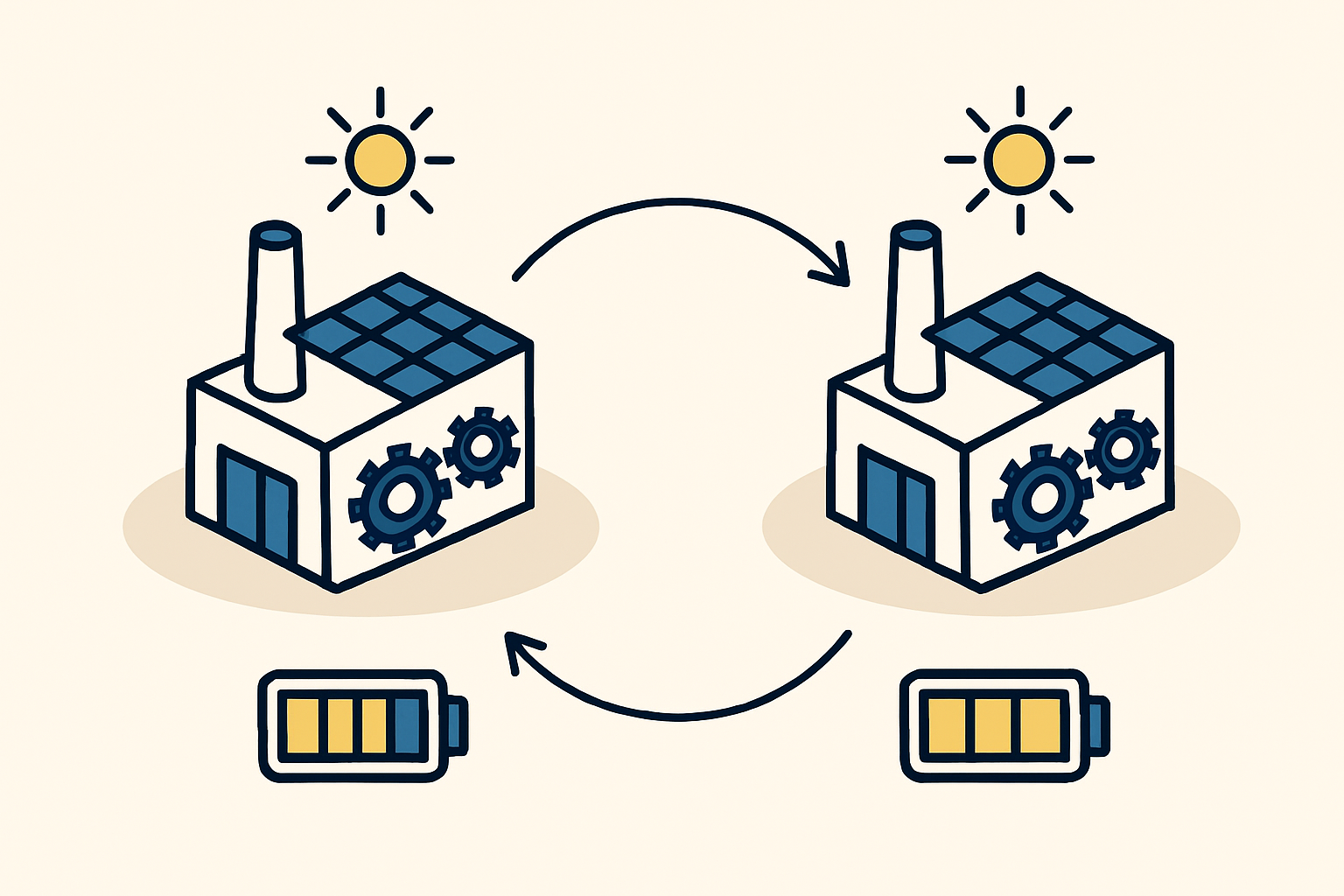
This model leverages Mali’s greatest advantage—abundant sunlight—to solve its primary infrastructure challenge. The concept is straightforward: a dedicated solar array generates electricity during the day to power the factory, with excess energy stored in a Battery Energy Storage System (BESS). This stored energy is then used to power operations at night, during cloudy weather, or in the event of a grid outage.
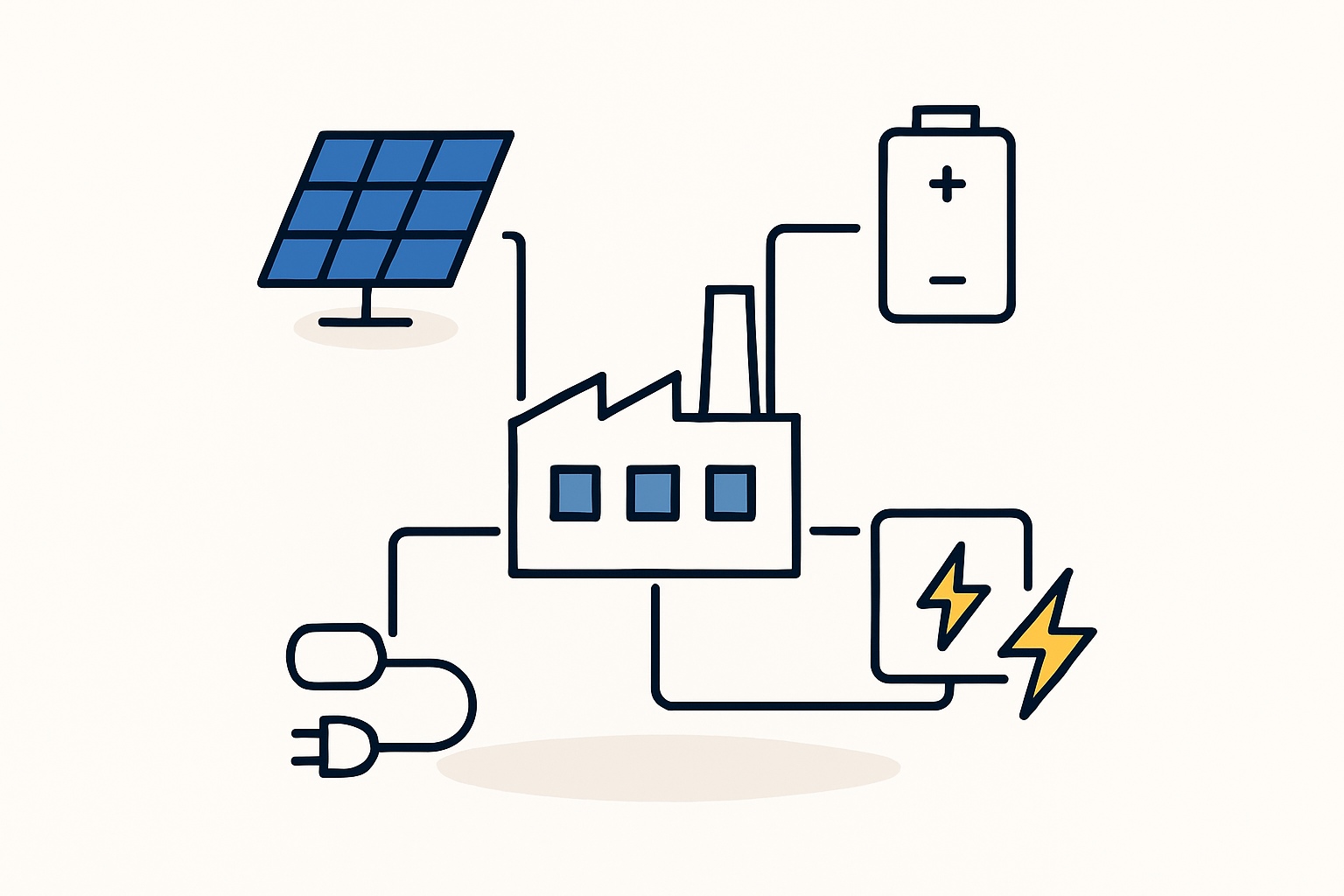
The benefits of this approach are compelling:
-
Uninterrupted Operations: A captive system insulates the factory from grid instability, ensuring the 24/7 power quality needed for sensitive manufacturing equipment.
-
Predictable Costs: This approach transforms a volatile operational expense (electricity or diesel) into a predictable capital investment with minimal running costs, shielding the business from future tariff hikes and fuel price volatility.
-
Enhanced Sustainability: Powering a solar factory with its own solar energy creates a powerful ‘made with solar’ brand story and minimizes the facility’s carbon footprint.
Planning and Implementation Considerations
Developing a captive power system requires careful planning and is an integral part of the design for any turnkey solar factory.
System Sizing and Design
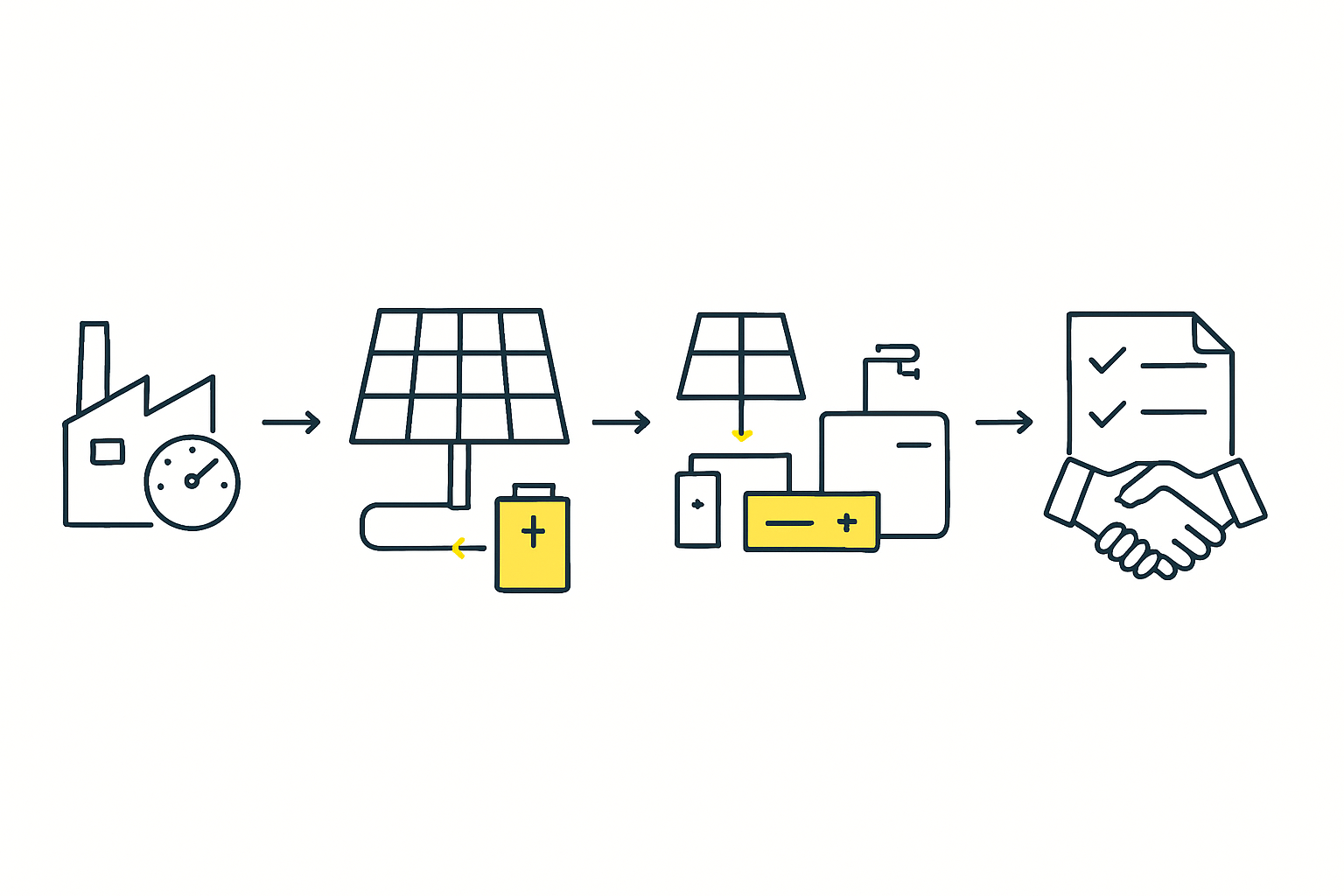
The system’s capacity must be meticulously calculated based on the factory’s total energy consumption, the power profile of its machinery, planned shift patterns, and the desired days of autonomy—the ability to run without sun or grid input. A detailed energy audit and production analysis are essential first steps.
Initial Investment vs. Long-Term Savings
The initial investment for a robust solar-plus-storage system is significant. However, when analyzed over a 10- or 20-year operational lifespan, it often proves more economical than the cumulative cost of grid electricity and diesel fuel. This capital expenditure should be viewed as a strategic investment in operational resilience and cost control. Experience from projects by J.v.G. Technology GmbH shows that integrating this planning from the outset prevents costly retrofits and production delays.
Hybrid Integration
For maximum security, a hybrid system can be designed. The solar-plus-storage system serves as the primary power source, with the national grid or a small backup generator acting as a tertiary failsafe. This provides multiple layers of redundancy, ensuring almost absolute operational continuity.
Frequently Asked Questions (FAQ)
How much land is required for a captive solar power plant?
As a general estimate, a 1-megawatt (MW) solar installation suitable for a mid-sized factory typically requires about 1 hectare (10,000 square meters) of land.
Can the factory operate entirely off-grid with this system?
Yes, it is technically feasible to design a system that allows the factory to run completely independent of the national grid. This provides the highest level of energy security but requires a larger investment in solar panel capacity and battery storage to cover several days of autonomy.
What is the typical payback period for such an investment in Mali?
Given Mali’s high solar irradiation and relatively high conventional energy costs, payback periods can be commercially attractive, often falling within a 5- to 8-year range.
Does the government in Mali offer incentives for industrial solar projects?
The Malian government is supportive of renewable energy development, and various policies or incentives may be available for such projects. However, navigating the regulatory landscape can be complex, so it is advisable to work with local partners or consultants experienced in the country’s industrial energy sector.
A Foundation for Success
For any entrepreneur entering the solar manufacturing sector in Mali, securing a reliable power source is not just an operational detail—it is the bedrock of the entire business venture. Relying on an unstable grid or expensive diesel fuel introduces risks that can undermine the viability of the project.
By leveraging the country’s exceptional solar resources, a captive solar-plus-storage system provides a robust and financially sound solution. It turns a major operational vulnerability into a strategic asset, ensuring the factory can run efficiently and predictably, regardless of external infrastructure limitations. This approach lays a resilient foundation for long-term success in one of Africa’s most promising solar markets.