For any entrepreneur considering a solar module factory, assessing machinery, buildings, and capital is fundamental. Yet, one factor often determines the venture’s long-term success: the availability and skill of the local workforce. In a country like Malawi—a compelling case for local manufacturing due to its abundant sunlight and growing energy needs—human capital deserves a thorough analysis.
This article examines the Malawian labor market for the solar module production industry. We explore the availability of skilled and unskilled labor, outline typical wage structures, and detail the requirements for a training program designed to meet international quality standards.
The Human Capital Equation: A Primary Consideration for Investors
Choosing a factory location involves balancing costs, logistics, and market access. In this equation, the workforce is far more than a line item in a financial model; it is the engine of production quality and operational efficiency.

An analysis of the Malawian labor market reveals a distinct duality: a substantial pool of general labor coexisting with a scarcity of specialized photovoltaic manufacturing experience. This situation is not a barrier but rather the primary strategic challenge: how to transform motivated individuals into a highly disciplined, quality-focused production team. Success hinges on a clear understanding of this starting point and a robust plan to bridge the skills gap.
Understanding the Malawian Workforce: Availability and Skill Sets
A granular look at the labor pool reveals both opportunities and specific areas requiring focused development.
General and Unskilled Labor: An Available Resource
With its large, youthful population and high unemployment rates, Malawi has a significant pool of candidates for factory operator positions. This offers a considerable advantage for the more labor-intensive aspects of semi-automated module assembly. Experience from industrial projects in the region shows the workforce is generally motivated and eager for stable employment. A structured recruitment process can identify individuals with the necessary aptitude for detail-oriented work.
Technical and Supervisory Staff: Identifying the Gap
While personnel with direct experience in solar cell tabbing, stringing, or lamination are scarce, Malawi does have a technical base. Vocational schools and universities produce graduates with foundational knowledge in electrical and mechanical engineering. These individuals offer a solid foundation to build upon.
The critical gap is the practical, hands-on experience with the specific machinery used in a solar module production line. A graduate may understand electrical principles but will need intensive, targeted training to operate, maintain, and troubleshoot a high-precision solar module stringer or electroluminescence tester. Identifying candidates with a strong theoretical background and a practical mindset is the first step toward building a competent local technical team.
A Practical Guide to Wage Structures in Malawi
A realistic financial projection is a key component of any business plan, and labor costs are a significant factor. The wage structure in Malawi differs considerably from those in Europe, North America, or East Asia, offering a potential competitive advantage if managed correctly.
Ready to make big Profits?
The solar Industry is Booming
WE HELP NEWCOMERS to the solar industry start their own solar module production line. Customers can make BIG PROFITS by selling modules and finding investors, without wasting money and time on things they don't need!
While low by international standards, these figures are competitive within the local Malawian market and sufficient to attract and retain qualified, motivated staff. These costs are a crucial part of calculating the overall initial investment required for a new facility.
Typical Monthly Wage Benchmarks
Based on recent market data, the following ranges can be used for preliminary financial modeling:
- Unskilled Factory Operators: MWK 60,000 – 80,000 (approximately US$35 – $46)
- Supervisors / Line Leaders: MWK 150,000 – 300,000 (approximately US$86 – $172)
- Technicians & Engineers (Post-Training): MWK 300,000 – 700,000 (approximately US$172 – $400)
The Cornerstone of Success: A Robust In-House Training Program
Given the skills gap, a comprehensive in-house training program is not an optional extra; it is the central pillar of a successful manufacturing strategy. The goal is to systematically transfer the knowledge required to produce high-quality solar modules that can compete in any market.
From General Skills to Precision Manufacturing
A successful training curriculum must go beyond basic machine operation to instill a culture of quality and discipline. Key modules should include:
- Machine Operation: Safe and efficient handling of all equipment, from glass loading to the final framing station. This is particularly important when selecting the right level of automated production lines.
- Quality Control (QC): Detailed training on visual inspection criteria for cells and laminates, understanding material defects, and performing process checks at every stage.
- Process Discipline: Emphasizing strict adherence to standardized operating procedures to ensure consistent output.
- Safety Protocols: Comprehensive instruction on workplace safety, including the proper handling of materials and machinery.
A Proven Strategy: The ‘Train the Trainer’ Model
Based on experience from J.v.G. Technology GmbH turnkey projects across the globe, the ‘Train the Trainer’ model is highly effective. This approach involves a small, core group of local engineers and supervisors receiving intensive, hands-on instruction from experienced expatriate technicians. This core team is trained until they have mastered the required skills.

Once qualified, this local team becomes responsible for training all new operators. This model has two significant benefits: it builds lasting, in-house expertise and ensures knowledge is transferred in a culturally and linguistically appropriate way, making the operation self-sufficient long-term.
The Goal: Achieving International Quality Standards
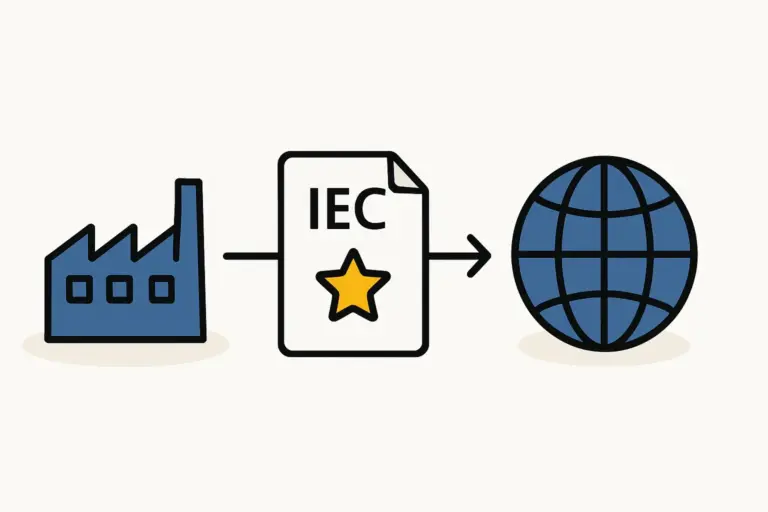
Ultimately, rigorous training ensures that every module leaving the factory meets exacting quality benchmarks. A well-trained team is the foundation for producing a reliable, durable, and bankable product. This discipline is a non-negotiable prerequisite for passing the stringent tests required to meet international certification standards such as those from the IEC.
Frequently Asked Questions (FAQ)
How long does it take to train a new factory workforce in Malawi?
A core team of 3-5 supervisors and technicians typically undergoes 4-6 weeks of intensive training. This team can then train general operators for their specific tasks within 1-2 weeks. A production line usually reaches a state of consistent, high-quality output within 3-6 months of commissioning.
Is it difficult to find candidates with the right attitude for precision work?
While direct experience is rare, the Malawian workforce is generally regarded as eager to learn and adaptable. A well-designed recruitment process that tests for attention to detail and conscientiousness, combined with strong, supportive management, is crucial for building the right team culture.
Can a new factory partner with local vocational schools?
Yes, establishing relationships with local institutions like the Technical, Entrepreneurial and Vocational Education and Training Authority (TEVETA) can be highly strategic. These partnerships can help create a pipeline of pre-screened candidates with basic technical aptitudes, reducing recruitment time. However, factory-specific, in-house training remains essential.
How many employees are typically needed for a small-scale solar factory?
A typical 20–50 MW semi-automated production line can be run effectively with a team of 25–30 employees per shift. This includes machine operators, quality control inspectors, material handlers, technicians, and a shift supervisor.
Conclusion: Transforming Potential into a High-Performing Workforce
The Malawian labor market offers significant potential for new solar module manufacturing ventures. The combination of a large, motivated workforce and a competitive wage structure creates a compelling business case. The primary challenge is not a lack of people, but a lack of specific, industry-relevant skills.
This skills gap is demonstrably bridgeable. Through a structured, disciplined, and continuous in-house training program, a local workforce can be developed to meet and maintain the highest international quality standards. For the discerning investor, the human capital in Malawi is not a liability to be managed, but a resource to be cultivated into a key competitive advantage.