An entrepreneur has identified a promising market, secured initial investment, and even pinpointed an ideal location for a new solar module manufacturing facility in Latvia. On paper, everything is aligned for success.
Yet, between the business plan and the first operational machine lies a complex, often underestimated challenge: navigating the local building permit and commissioning process. This stage can feel like an invisible wall, governed by regulations and timelines that are often unfamiliar to those from outside the European Union.
This guide outlines the Latvian building permit process for an industrial facility, providing business professionals with a practical understanding of the steps, documentation, and authorities involved. The goal is to demystify the regulatory landscape and provide a structured framework for planning this critical phase of your project.
Understanding the Latvian Regulatory Framework
The foundation of all construction in Latvia is the Construction Law (Būvniecības likums). This law mandates a highly digitized and transparent process managed almost exclusively through a central online platform: the Construction Information System (Būvniecības informācijas sistēma, or BIS).
For any investor, understanding the BIS is non-negotiable, as it is the single point of contact for submitting applications, receiving decisions, and coordinating with all relevant state authorities.
The primary governing body is the local Municipal Building Authority (Būvvalde) of the city or region where the facility will be located. This authority also acts as a coordinator, ensuring that your project receives approval from other specialized state institutions, including:
- State Fire and Rescue Service (VUGD): For fire safety compliance.
- State Environmental Service (VVD): For environmental impact and protection.
- Health Inspectorate (Veselības inspekcija): For occupational health and safety standards.
Navigating this system successfully requires a methodical, three-phase approach.
The Three Phases of the Latvian Building Permit Process
Based on experience from numerous industrial projects, the timeline from initial submission to final operational approval typically spans between 12 and 18 months. This duration depends heavily on the project’s complexity, the quality of the submitted documentation, and the efficiency of coordination.
Phase 1: Pre-Construction and Design Approval
This initial phase focuses on laying the legal and technical groundwork for your project. It involves translating your business vision into a formal architectural and engineering plan that meets Latvian standards.
-
Architectural Planning and Design Task (APDT): The process begins with the submission of a būvniecības iecere (construction intention) to the local Building Authority via the BIS. This is a formal application that outlines the scope, purpose, and basic parameters of the proposed solar factory.
Ready to make big Profits?
The solar Industry is Booming
WE HELP NEWCOMERS to the solar industry start their own solar module production line. Customers can make BIG PROFITS by selling modules and finding investors, without wasting money and time on things they don't need!
-
Receiving Design Conditions: Based on your submission, the Building Authority issues projektēšanas nosacījumi (design conditions). This critical document specifies all the requirements your technical project must meet, including utility connections, environmental standards, and territorial planning constraints.
-
Developing the Technical Design: With these conditions in hand, a certified Latvian architect and engineering team will develop the full tehniskais projekts (technical design). This comprehensive package includes architectural drawings, structural calculations, HVAC plans, and detailed specifications for all building systems. During this stage, the specifics of your operation, such as designing your solar module factory layout, must be finalized and integrated into the plans.
Phase 2: Securing the Construction Permit (Būvatļauja)
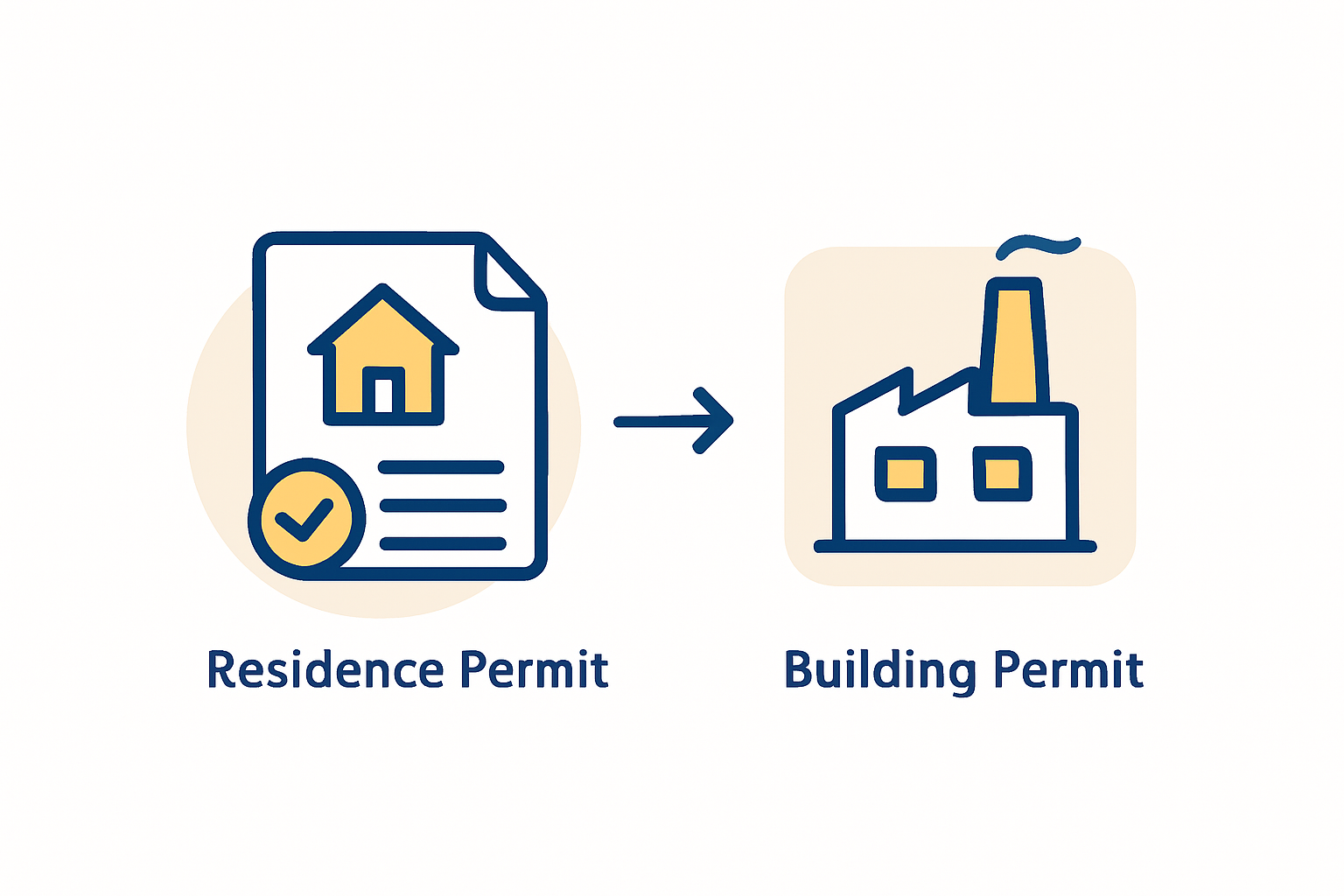
Once the technical design is complete, it is formally submitted to the Building Authority through the BIS portal, initiating the core approval process.
-
Project Review and Coordination: The Building Authority reviews the project for compliance with the initial design conditions and national building codes. Simultaneously, the BIS system automatically forwards relevant sections of the project to the other state institutions (Fire Service, Environmental Service, etc.) for their review and approval. Any objections or requests for additional information from these bodies must be addressed by the design team.
-
Issuance of the Construction Permit: Upon receiving positive decisions from all involved institutions, the Building Authority issues the Būvatļauja (Construction Permit). This permit is often issued in two parts:
- Part 1: Fulfilled conditions for the commencement of construction work.
- Part 2: A list of conditions that must be met before the building can be commissioned and put into operation.
Phase 3: Construction and Final Commissioning
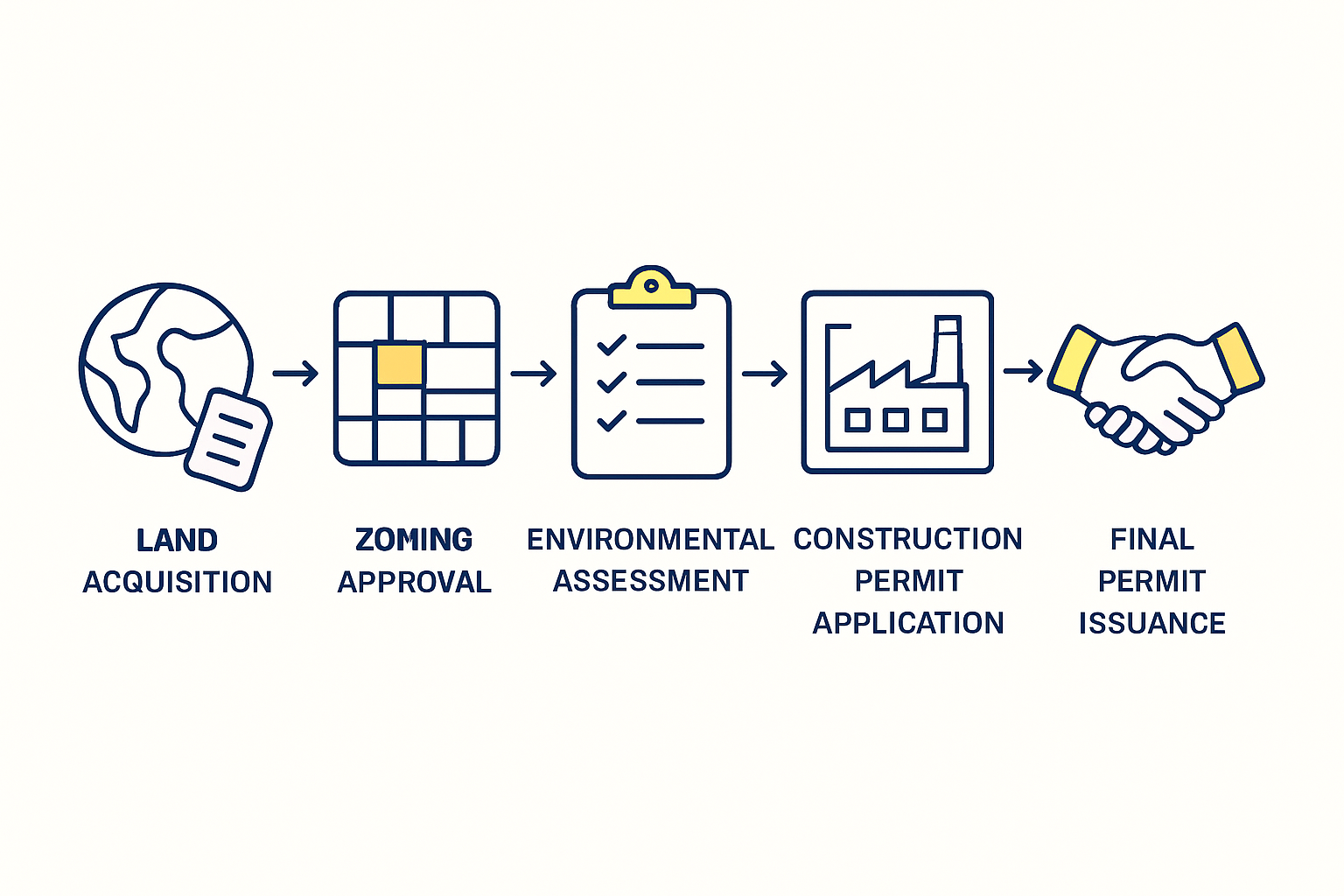
With the permit in hand, construction can begin. This phase is monitored by a certified construction supervisor, who ensures all work adheres to the approved project.
-
Construction and Documentation: Throughout the construction process, all work must be documented. This includes material certificates, executive surveys, and signed acts of completed work.
-
Final Commissioning: Once construction is complete and all equipment is installed, the final step is pieņemšana ekspluatācijā (acceptance into service). A commissioning committee, typically including representatives from the Building Authority and other state institutions, inspects the finished facility to verify compliance with the approved design and all conditions of the construction permit.
-
Operational Approval: Following a successful inspection, the Building Authority makes a final entry in the BIS, officially recognizing the building as accepted into service. Only after this final step can your solar module factory legally begin operations.
Key Documents and Stakeholders
A successful application hinges on thorough and accurate documentation. While the full list is extensive, key documents include:
- Land Register Certificate: Proof of ownership or legal right to use the land.
- Territorial Plan Compliance Statement: Confirmation that the industrial facility aligns with local zoning regulations.
- Full Technical Design Project: Prepared by a certified Latvian architect and engineer.
- Technical Specifications from Utility Providers: Agreements for electricity, water, gas, and sewage.
- Environmental Impact Assessment (EIA): Required for larger industrial projects or those in sensitive areas.
Your primary partners throughout this process are your locally certified architect, engineering team, and construction supervisor. Their expertise in navigating the BIS and communicating with the Būvvalde is indispensable for foreign investors. For example, when defining the technical project, detailed information on key machinery for a 50 MW production line will be required to satisfy engineering and safety reviews.
Common Challenges and Strategic Considerations
Entrepreneurs entering the Latvian market often face several predictable hurdles:
- Timeline Underestimation: The multi-stage approval process, involving several independent institutions, can lead to delays if not managed proactively. Factoring a buffer into your project timeline is crucial.
- Importance of Local Expertise: Attempting to manage the BIS and regulatory communication without an experienced local partner is a significant risk. Their role is not just technical but also relational.
- Budgeting for Regulatory Costs: The costs associated with design, state fees, and expert consultations are a significant part of the overall budget. These should be included when estimating the total investment for a new solar plant.
Engaging with partners who offer comprehensive project oversight can mitigate these risks. For instance, turnkey factory solutions often incorporate regulatory planning into the initial project scope, ensuring that the factory design is compliant from day one. This proactive approach, based on experience from J.v.G. turnkey projects, can prevent costly revisions and delays.
Frequently Asked Questions (FAQ)
-
How long does the entire building permit process in Latvia typically take?
For a new industrial facility, a realistic timeline is 12 to 18 months from the initial application to the final commissioning and operational approval. -
Is the entire process managed digitally?
Yes, virtually all submissions, communications, and decisions are processed through the online Construction Information System (BIS). This creates a transparent and traceable record of your project’s progress. -
Can a foreign-owned company apply for a building permit?
Absolutely. A company registered in Latvia, regardless of the owners’ nationality, is fully entitled to own property and apply for construction permits, provided it complies with all legal requirements. -
What is the difference between a ‘minimal composition’ and ‘full composition’ technical design?
A ‘minimal composition’ design is for simpler structures and may not require detailed engineering for all systems. For a solar manufacturing facility, a ‘full composition’ technical design is always required due to its complexity, safety requirements, and industrial nature. -
What are the legal consequences of starting construction without a valid permit?
Commencing construction without a Būvatļauja is illegal and results in substantial fines, a legally mandated order to halt all work, and potentially an order to demolish any structures already built.
Conclusion: Moving from Blueprint to Production
Obtaining a building permit for a solar factory in Latvia is a structured, transparent, and highly detailed process. It demands meticulous planning, robust documentation, and deep reliance on certified local expertise.
By understanding the three core phases—design, permitting, and commissioning—and by anticipating the central role of the BIS and the Municipal Building Authority, entrepreneurs can confidently navigate the regulatory landscape.
The journey from a business plan to an operational production line is complex, but it is far from an insurmountable barrier. With the right guidance and a clear understanding of the procedure, investors can successfully establish their manufacturing presence in this strategic European location.