For any investor considering entry into the solar manufacturing sector, the first critical challenge is translating a broad vision into a concrete financial plan. While the potential in a market like Namibia—with its world-class solar irradiation and strategic goals for industrialization—is clear, understanding the precise capital required is the first step toward a viable business case. A general idea of ‘several million dollars’ is simply insufficient for serious planning.
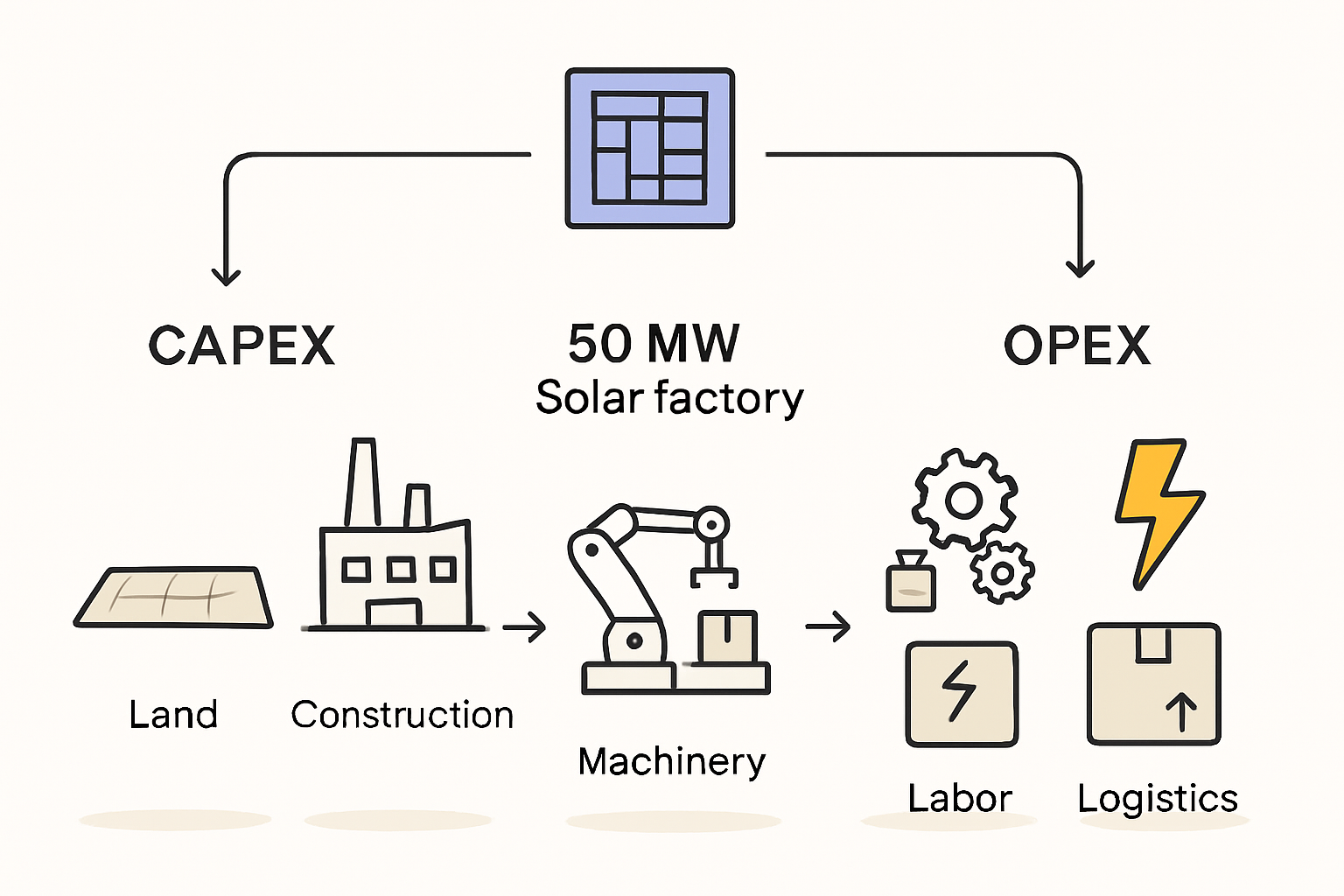
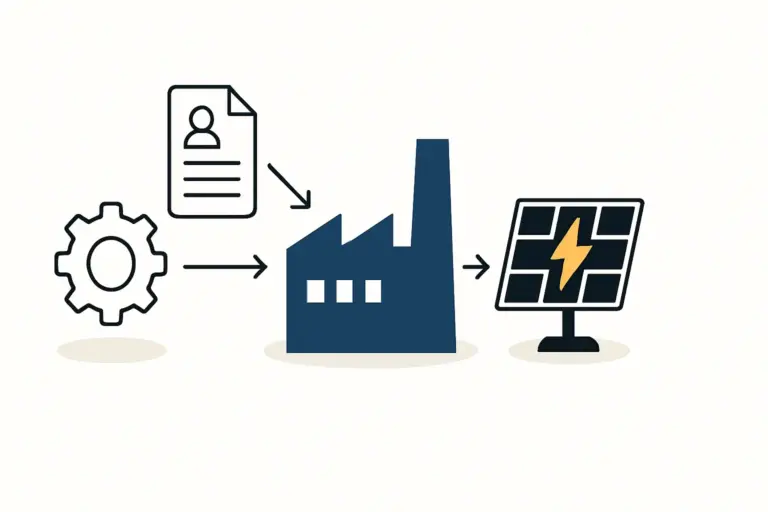
This article lays out a detailed sample financial model for establishing a 50 MW solar module assembly line in Namibia. It breaks down the specific capital expenditures (CAPEX) and operational expenditures (OPEX) an entrepreneur can expect, transforming an abstract concept into a tangible investment roadmap. The figures presented are illustrative, based on industry data from comparable emerging markets and adjusted for local Namibian economic factors.
The Strategic Case for Solar Manufacturing in Namibia
Namibia’s commitment to economic development, coupled with its exceptional solar resources, creates a favorable environment for solar manufacturing. Local production can serve not only the domestic market but also the wider Southern African Development Community (SADC), reducing reliance on imports and building local technical capacity. Establishing a production facility aligns with national priorities and positions an investor at the forefront of the region’s energy transition.
Core Assumptions for a 50 MW Financial Model
This projection is built on a clear set of assumptions:
- Production Capacity: 50 MW per annum, operating on a single-shift schedule. This is a common starting point for new entrants.
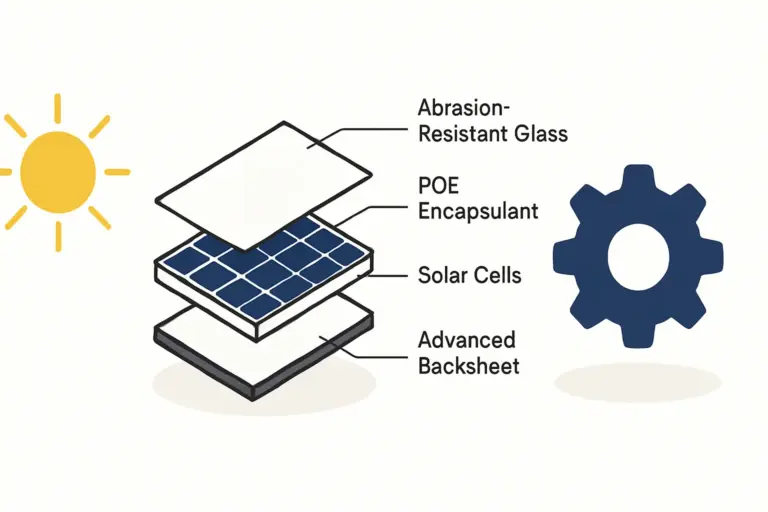
- Technology: Standard monocrystalline PERC (Passivated Emitter and Rear Cell) technology, producing glass-foil modules.
- Location: The model assumes the facility is in an industrial zone near a major logistical hub like Windhoek or Walvis Bay.
- Land & Building: The model includes the cost of acquiring land and constructing a new, purpose-built facility.
- Currency: All financial figures are presented in United States Dollars (USD) for international comparability.
Capital Expenditure (CAPEX): The Initial Investment
The CAPEX represents the total one-time investment required to bring the factory from concept to full operation—the most significant upfront financial commitment.
Production & Testing Machinery
This is the technical core of the factory. A 50 MW line requires a balanced set of reliable, semi-automated machines suitable for this production volume. Key equipment includes:
- Cell Stringer Machine: Connects individual solar cells into strings.
- Layup Station: Assembles the layers of the module (glass, EVA, cell matrix, backsheet).
- Laminator: Fuses the layers together under heat and pressure, making it a critical piece of solar panel manufacturing equipment.
- Framing and Junction Box Machine: Attaches the aluminum frame and electrical junction box.
- Testing Equipment: Includes a Sun Simulator (Flasher) to measure module performance and an Electroluminescence (EL) Tester to detect microcracks.
Building, Land & Civil Works
A common mistake is to underestimate infrastructure costs. A 50 MW facility typically requires a building of 3,000–4,000 square meters to accommodate the production line, raw material storage, finished goods warehousing, and administrative offices. The costs include land acquisition, construction, and site preparation. Based on experience with turnkey projects, planning for adequate space for future expansion is a prudent strategy.
Ancillary & Setup Costs
Beyond the primary machinery and building, several other costs are essential for launch:
- Initial Raw Material Stock: A 2–3 month supply of solar cells, glass, frames, and other components.
- Utilities & Infrastructure: Transformers, compressed air systems, and water connections.
- Logistics & Installation: Shipping of machinery from the supplier, plus on-site installation and commissioning.
- Training & Know-How Transfer: A critical investment to ensure the local team can operate and maintain the equipment efficiently.
- Contingency Fund: A recommended buffer of 10–15% of the total project cost to cover unforeseen expenses.
CAPEX Summary
| Category | Estimated Cost (USD) | Notes |
|---|---|---|
| Production & Testing Machinery | $2,500,000 – $3,500,000 | Semi-automated line from a reputable supplier. |
| Building & Civil Works (4,000 m²) | $1,200,000 – $1,800,000 | Includes land acquisition and construction. |
| Utilities & Factory Infrastructure | $300,000 – $500,000 | Electrical, compressed air, HVAC. |
| Logistics, Installation & Commissioning | $350,000 – $450,000 | Varies based on machinery origin. |
| Initial Raw Material Stock | $800,000 – $1,200,000 | For initial production ramp-up. |
| Training & Know-How Transfer | $150,000 – $250,000 | Essential for operational success. |
Subtotal: $5,300,000 – $7,750,000
Contingency (10%): $530,000 – $775,000
Notes: A crucial buffer for project management.
Ready to make big Profits?
The solar Industry is Booming
WE HELP NEWCOMERS to the solar industry start their own solar module production line. Customers can make BIG PROFITS by selling modules and finding investors, without wasting money and time on things they don't need!
Total Estimated CAPEX: $5,830,000 – $8,525,000
Operational Expenditure (OPEX): The Annual Running Costs
Once the factory is commissioned, OPEX represents the ongoing annual costs to produce 50 MW of solar modules. A thorough understanding of these costs is fundamental to pricing strategy and profitability analysis. Analyzing these figures in detail is a core part of any comprehensive solar factory investment guide.
Raw Materials (Bill of Materials – BOM)
This is typically the largest component of OPEX, often accounting for 70-80% of the production cost per module. The BOM includes:
- Solar Cells
- Tempered Glass
- EVA (Ethyl Vinyl Acetate) Encapsulant
- Backsheet
- Aluminum Frames
- Junction Boxes & Cables
Labor Costs
For a 50 MW semi-automated line operating a single shift, a team of approximately 25-35 employees is required. This includes:
- Direct Labor: Machine operators, quality control inspectors, and maintenance technicians.
- Indirect Labor: Plant manager, engineers, administrative staff, and sales and logistics personnel.
Utilities & Overheads
The primary utility cost is electricity, especially for power-intensive machines like the laminator and air compressors. Other costs include water, facility maintenance, spare parts, insurance, and logistics for finished goods.
OPEX Summary (Annual Estimate for 50 MW Production)
| Category | Estimated Annual Cost (USD) | Notes |
|---|---|---|
| Raw Materials (BOM) | $12,000,000 – $15,000,000 | Highly dependent on global commodity prices. |
| Direct & Indirect Labor | $400,000 – $600,000 | Based on estimated local wage structures. |
| Electricity & Utilities | $250,000 – $400,000 | Assumes industrial electricity tariffs. |
| Maintenance & Spare Parts | $150,000 – $250,000 | Budgeted as a percentage of machine cost. |
| Logistics & Shipping (Outbound) | $200,000 – $300,000 | For distribution to customers. |
| Overheads & Administration | $200,000 – $350,000 | Includes rent/depreciation, insurance, etc. |
Total Estimated Annual OPEX: $13,200,000 – $16,900,000
Synthesizing the Financial Picture: Payback and Profitability
With an initial CAPEX of approximately $6–8.5 million and annual OPEX of $13–17 million, the next step is to project revenue. Assuming an average market price per watt for the finished modules, an investor can calculate the gross margin and estimate the payback period.
Depending on market conditions and operational efficiency, a well-managed 50 MW facility based on these figures can achieve a payback period of 3 to 5 years. This model serves as a robust foundation for a detailed business plan tailored to specific market prices, supply chain arrangements, and financing structures.
Frequently Asked Questions (FAQ)
Can a new venture start with a smaller capacity than 50 MW?
Yes, starting with a smaller line—say, 20-30 MW—is possible. This would reduce the initial CAPEX for machinery and building size. However, it may also result in a higher production cost per watt due to lower economies of scale, potentially affecting competitiveness.
How long does it take to set up such a factory?
A realistic timeline from project confirmation to the start of production is typically 9 to 12 months. This includes machinery manufacturing (4-6 months), shipping and logistics (1-2 months), and on-site installation, commissioning, and staff training (2-3 months).
Are these costs fixed, or can they be optimized?
Several areas offer opportunities for optimization. Choosing a supplier that offers a fully integrated turnkey solution can often reduce costs and project management complexity. Opting for a leased industrial building instead of new construction can significantly lower upfront CAPEX. Finally, the level of automation can be adjusted; more manual processes reduce machinery costs but may increase long-term labor costs.
Does the Namibian government offer incentives for manufacturing?
Many governments offer incentives for industrial development, such as tax holidays, import duty exemptions on machinery, or streamlined approvals. A crucial step for any investor is to conduct thorough due diligence with local investment promotion agencies, like the Namibia Investment Promotion and Development Board (NIPDB), to identify available support schemes.
Next Steps in Your Investment Journey
This financial model offers a clear, data-driven overview of the investment required to establish a solar module factory in Namibia. It serves as a starting point for serious entrepreneurs and investors.
The logical next step is to develop a detailed feasibility study and a formal business plan. This process involves validating these assumptions with local market data, obtaining firm quotations for machinery, and securing sources of funding. Educational platforms like pvknowhow.com provide structured guidance, including a free course on how to start a solar factory, to help navigate these critical planning stages with confidence.