An investor has finalized the purchase of state-of-the-art solar manufacturing machinery from a supplier in Europe or Asia. With the site for a new factory in Pakistan secured and a robust business plan in place, a critical variable remains: the journey of that multi-million-dollar equipment from a foreign port to the factory floor.
This logistical phase, often underestimated, can dictate the project’s timeline and budget. For entrepreneurs entering Pakistan’s burgeoning solar sector, understanding the nuances of import logistics is not just an operational detail—it is a strategic necessity. This guide provides a clear overview of the process, key ports, and common challenges of importing capital machinery and raw materials through Pakistan.
The Strategic Context for Solar Manufacturing in Pakistan
Pakistan’s commitment to renewable energy is rooted in significant strategic advantages. The country benefits from high solar irradiation levels, particularly in the provinces of Sindh and Balochistan, making it one of the most suitable regions globally for solar power generation.
The government has actively encouraged this potential through policies aimed at attracting investment, including significant fiscal incentives like exemptions from customs duties and sales tax on imported machinery for renewable energy projects. This favorable policy landscape, combined with a growing domestic demand for energy, creates a compelling case for establishing local solar module manufacturing facilities.
Key Gateways: Understanding Pakistan’s Primary Ports
The choice of port is the first major decision in the logistics chain. While Pakistan has several ports, three are most relevant for industrial-scale imports.
Karachi Port: The Established Hub
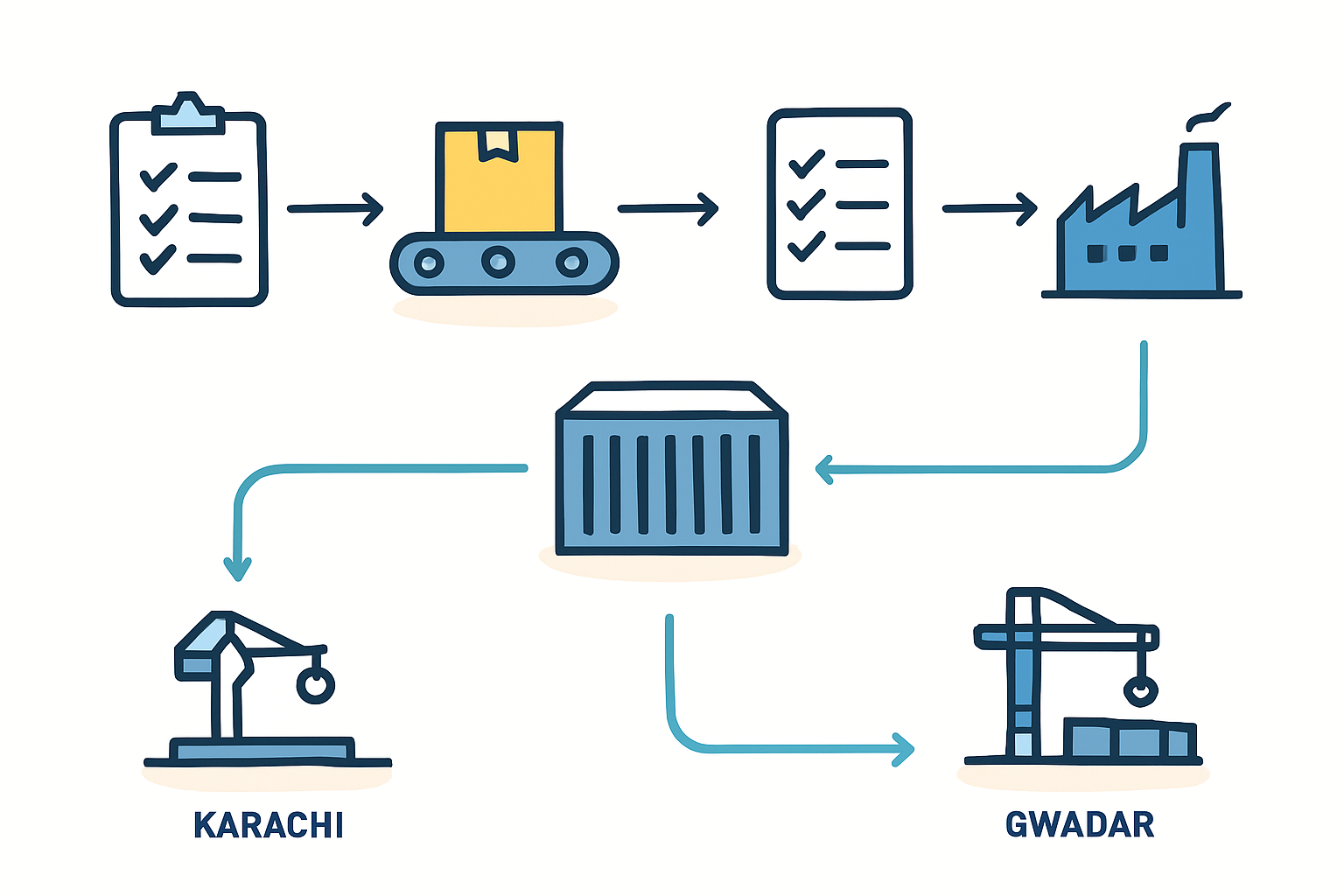
As the nation’s largest and busiest port, Karachi Port is the traditional gateway for most of Pakistan’s cargo. Its long-established infrastructure, deep network of customs agents, and extensive road and rail links to major industrial centers like Lahore, Faisalabad, and Sialkot make it a reliable choice. For first-time investors, the port’s mature ecosystem makes the process more predictable.
Port Qasim: The Industrial Complement
Located east of Karachi, Port Qasim is Pakistan’s second-busiest port and is deeply integrated with nearby industrial zones. It handles a diverse range of cargo and is well-equipped for heavy machinery and bulk materials. Its proximity to major industrial estates can offer distinct logistical advantages for factories located in the Sindh province.
Gwadar Port: The Strategic Newcomer
Developed as a cornerstone of the China-Pakistan Economic Corridor (CPEC), Gwadar is a modern deep-sea port with significant potential. Its strategic location on the Arabian Sea offers the shortest sea route to western China and Central Asia. While its infrastructure is state-of-the-art, the surrounding logistics and customs clearance ecosystem is still developing compared to Karachi. For projects in Balochistan or those tied to the CPEC framework, Gwadar is a compelling, forward-looking option.
Ready to make big Profits?
The solar Industry is Booming
WE HELP NEWCOMERS to the solar industry start their own solar module production line. Customers can make BIG PROFITS by selling modules and finding investors, without wasting money and time on things they don't need!
The Import Process: From Bill of Lading to Factory Floor
Successfully importing equipment requires a methodical approach to documentation and customs procedures. The process can be broken down into several key stages.
Step 1: Pre-Shipment Documentation
Accuracy at this stage is critical, as incomplete or incorrect paperwork is the primary cause of costly delays. Essential documents typically include:
- Commercial Invoice: Details the transaction between buyer and seller.
- Packing List: Specifies the contents, weight, and dimensions of each crate or container.
- Bill of Lading (B/L) or Airway Bill (AWB): The contract between the cargo owner and the shipping line.
- Certificate of Origin: Verifies the country where the goods were manufactured.
- Import License/Permit (if applicable): Required for certain categories of goods.
Another critical detail is correctly classifying all machinery and components using the Harmonized System (HS) codes. This code determines the applicable duties and taxes and is essential for claiming any available exemptions for renewable energy equipment.
Step 2: Customs Clearance Procedures
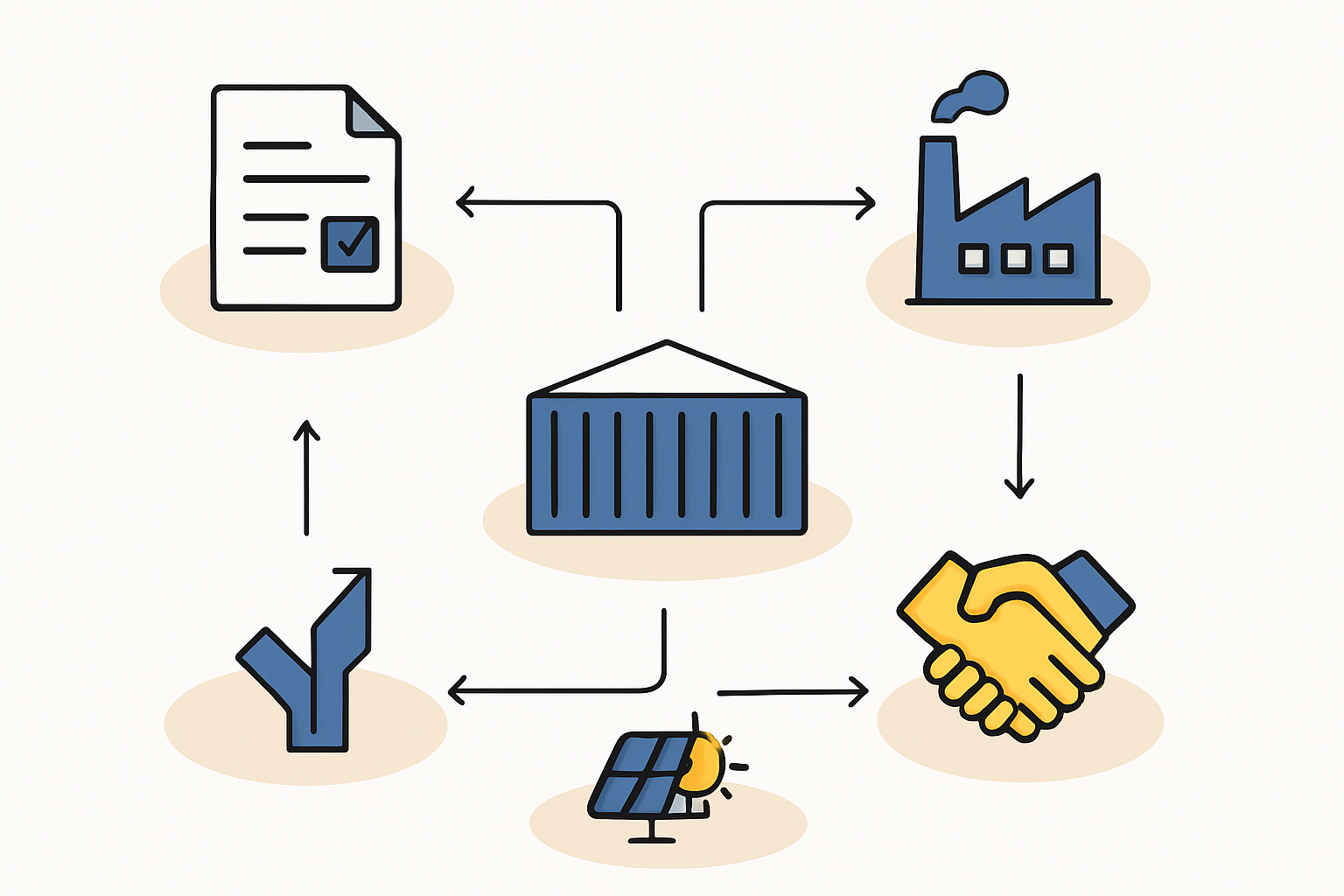
Upon arrival at the port, all goods must be declared to Pakistan Customs. This process is managed through the Web Based One Customs (WeBOC) system, an electronic platform for filing a ‘Goods Declaration.’ Based on the importer’s profile and the nature of the goods, the shipment is assigned to one of three channels:
- Green Channel: For trusted importers with a strong compliance history. Goods are cleared with minimal inspection.
- Yellow Channel: Requires document verification by a customs officer.
- Red Channel: Requires both document verification and physical inspection of the goods.
New importers should anticipate being assigned to the Yellow or Red channel initially.
Step 3: Duties, Taxes, and Exemptions
While the government provides exemptions for solar energy equipment, accessing these benefits requires precise documentation. Importers must reference the correct Statutory Regulatory Orders (SROs) in their customs filings to have duties and taxes waived. Failure to do so can result in standard import tariffs being applied, significantly impacting project costs.
Common Challenges and Strategic Solutions
Experience with J.v.G. turnkey projects shows that foreign investors often face a recurring set of logistical hurdles.
Challenge 1: Customs Delays and Demurrage
Any delay in clearance can lead to demurrage—fees charged by the shipping line for using its container beyond the allotted free time. These charges can accumulate rapidly.
Solution: Engage a reputable and experienced local customs clearing agent well before the shipment arrives. Provide them with all documentation for review to identify potential issues. A proactive approach is the best defense against unforeseen delays.
Challenge 2: Inland Transportation Logistics
Moving sensitive, oversized machinery from a coastal port to an inland factory requires specialized handling. Key considerations include the quality of road infrastructure, transit security, and the availability of suitable heavy-haulage vehicles. Logistics must be planned in coordination with the overall factory layout to ensure machines arrive in the correct sequence for installation.
Solution: Work with a logistics partner that has demonstrable experience in handling industrial project cargo. They can arrange for appropriate transport, insurance, and any necessary route surveys or permits.
Challenge 3: Navigating Bureaucracy
For those unfamiliar with local administrative processes, the system can seem opaque. Understanding the roles of different agencies and the correct procedures for escalations or queries is vital.
Solution: A reliable local partner—be it a clearing agent, a logistics provider, or a consultant—is indispensable. Their expertise provides the necessary bridge between the investor and local regulatory bodies, ensuring a smoother process.
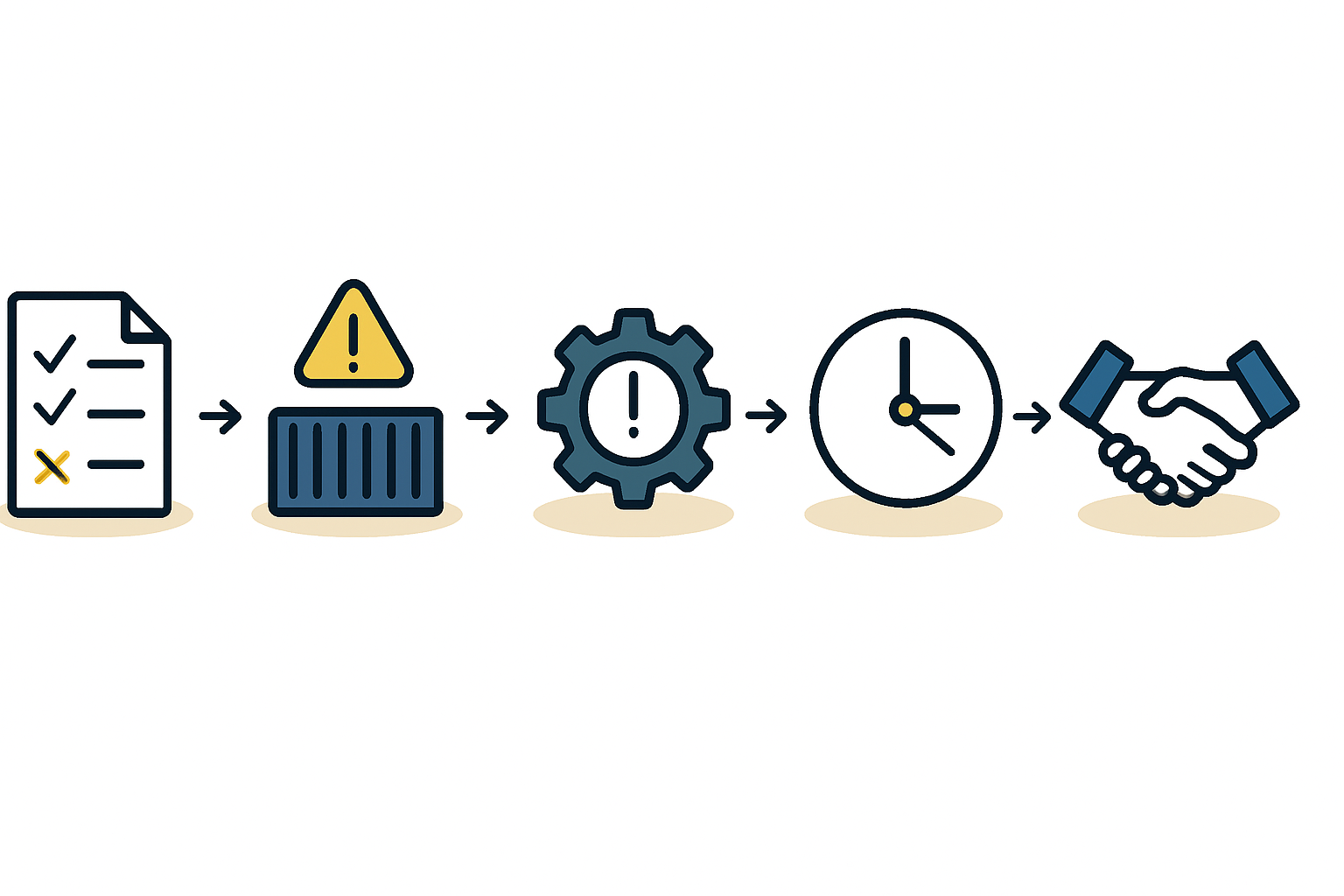
Estimated Timelines and Costs
While every shipment is unique, investors can use the following estimates for planning:
- Customs Clearance: This can range from 3–5 working days for Green Channel clearance to 10–15 days or more if cargo is routed through the Red Channel and requires extensive inspection.
- Port Handling & Inland Transport: Once cleared, allow an additional 5–10 days for port handling, loading, and transportation to a major industrial hub.
Logistics costs include customs agent fees, port handling charges, transport fees, and insurance. Investors should also budget for potential contingencies like demurrage or unforeseen inspection fees.
Frequently Asked Questions (FAQ)
What is the most important document for customs clearance?
While all documents are important, the Goods Declaration (GD) filed in the WeBOC system is the central document. Its accuracy, supported by the commercial invoice and packing list, is crucial for a smooth clearance process.
Should I use Karachi or Gwadar port for my equipment?
For most new projects, Karachi’s established logistics ecosystem makes it the more straightforward choice. Gwadar is a strategic option for projects located in Balochistan or for businesses with a long-term focus on CPEC-related supply chains.
How can I avoid demurrage charges?
The key is pre-planning. Ensure all documentation is submitted to your clearing agent before the vessel’s arrival. This allows them to file the Goods Declaration promptly and resolve any documentary issues before the free time expires.
Do I need a local partner in Pakistan for logistics?
Yes, a local partner is essential. A local customs clearing agent is legally required to file the Goods Declaration. An experienced local partner can also navigate administrative hurdles and manage ground-level operations far more effectively than an international team.
Are there import duties on raw materials like solar glass and EVA film?
Policies on raw materials can differ from those for capital machinery. While some incentives exist, it is essential to verify the current SROs and HS codes applicable to each specific material to understand the full cost structure.
Planning Your Next Steps
The logistical chain for importing solar manufacturing equipment into Pakistan is detailed but entirely manageable with diligent preparation and the right local expertise. The process rewards meticulous attention to documentation and proactive communication with logistics partners.
By understanding these steps, investors can de-risk a critical phase of their project, ensuring that their valuable equipment arrives safely, on time, and on budget. For a deeper understanding of the entire setup process, from machinery selection to factory commissioning, explore the comprehensive e-course and educational materials at pvknowhow.com for a complete roadmap.
Download the PDF guide to Pakistani ports and solar equipment imports.