An investor stands on a plot of land in Sindh or Punjab, feeling the intense sun. The opportunity seems clear: an abundance of solar energy waiting to be harnessed.
However, the very elements that make solar power so promising in Pakistan—the high heat and vast, arid landscapes—also pose the greatest threats to the long-term performance and profitability of a solar project.
Standard solar modules, often designed for milder European climates, can underperform and degrade rapidly under these conditions. The difference between a successful 25-year solar investment and a failing one often hinges on technical specifications decided long before the first panel is ever installed. This guide breaks down the critical engineering considerations for producing solar modules specifically suited to Pakistan’s challenging environmental conditions.
The Challenge: When Standard Specifications Are Not Enough
Solar modules are typically tested and rated under Standard Test Conditions (STC), which assume a cell temperature of 25°C and an irradiance of 1000 W/m². These laboratory conditions rarely reflect reality, especially in Pakistan, where summer ambient temperatures frequently exceed 40°C.
This discrepancy is more than a technicality; it has significant financial implications. Research indicates that for every 1°C increase in temperature above 25°C, a typical crystalline silicon solar module loses between 0.3% and 0.5% of its power output.
A Real-World Example:
On a 45°C day, a solar module’s operating temperature can easily reach 65-75°C. A 40°C rise above the 25°C STC translates to a staggering 15-20% reduction in real-time power output.
For a commercial-scale solar farm, this represents a substantial loss of revenue. That’s why understanding climate-specific technical specifications isn’t just an engineering exercise—it’s a fundamental business requirement.
Key Technical Considerations for the Pakistani Climate
To build a solar module that performs reliably for decades in Pakistan, manufacturers must focus on a few critical design and material choices. These choices directly counter the primary environmental stressors: extreme heat, pervasive dust, and in some regions, humidity.
1. Combating Extreme Heat: Temperature Coefficient and NOCT
The most important metric for a module operating in a hot climate is its temperature coefficient of power (Pmax). This value, found on every module datasheet, specifies how much power is lost for each degree Celsius the temperature rises above 25°C.
What to look for: A lower temperature coefficient is always better. For instance, a module with a coefficient of -0.35%/°C will perform significantly better in high heat than one with -0.45%/°C.
Ready to make big Profits?
The solar Industry is Booming
WE HELP NEWCOMERS to the solar industry start their own solar module production line. Customers can make BIG PROFITS by selling modules and finding investors, without wasting money and time on things they don't need!
Another related specification is the Nominal Operating Cell Temperature (NOCT). This indicates the temperature a cell will reach under more realistic conditions (800 W/m² irradiance, 20°C ambient temperature, 1 m/s wind). A lower NOCT means the module is better at dissipating heat, which directly translates to higher energy yield in hot weather.
2. The Fight Against Dust: Soiling Losses and Material Science
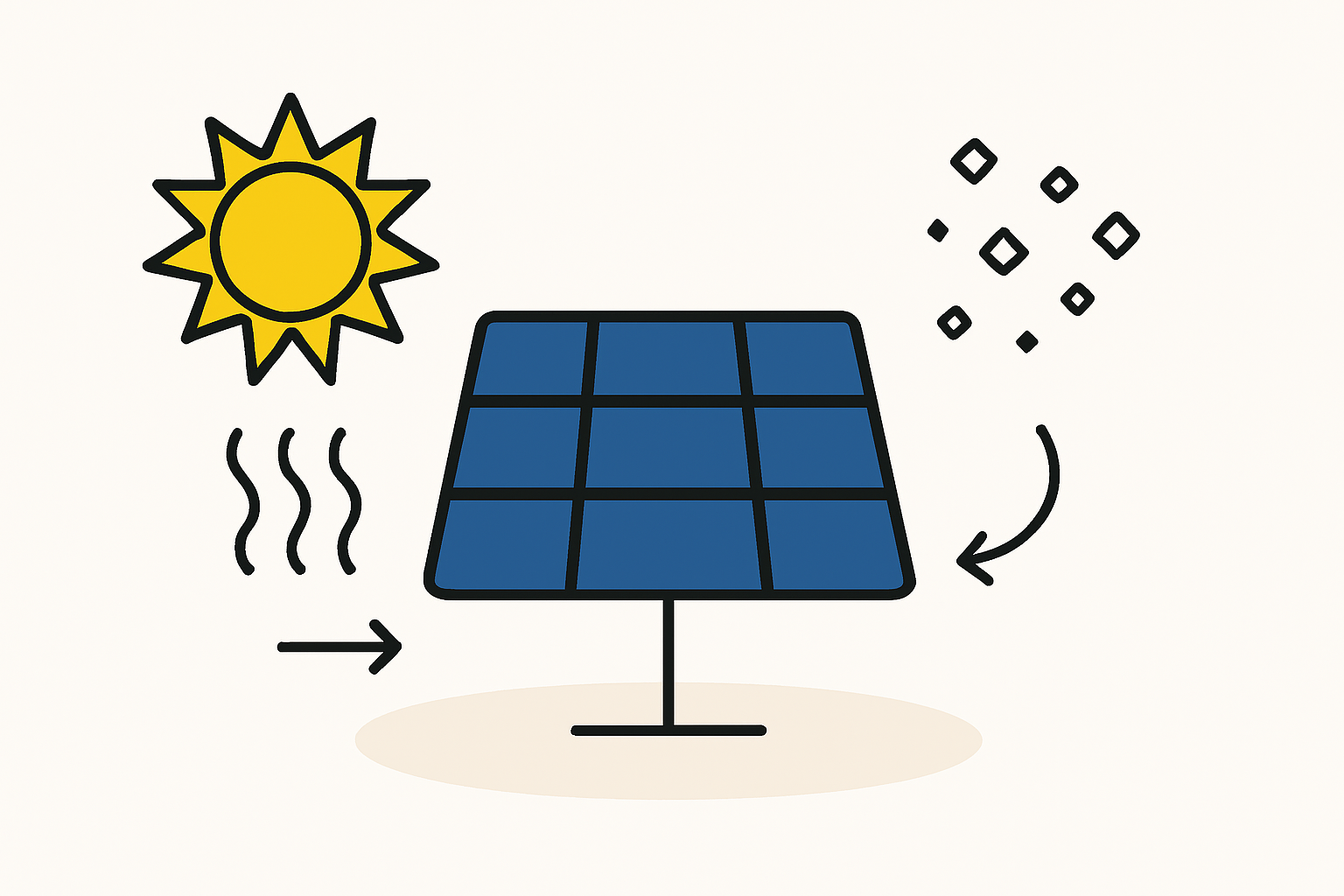
Dust and airborne particulates are a major issue across Pakistan. This ‘soiling’ can block sunlight and drastically reduce energy production. A study conducted in Karachi revealed that dust accumulation can lead to power losses of up to 12.5% if panels are not cleaned regularly.
While regular cleaning is essential, module design can mitigate the problem:
Anti-Soiling Coatings: Applying a transparent, anti-soiling layer to the glass surface can help. Hydrophilic coatings cause water to sheet off the surface, taking dust with it, while hydrophobic coatings repel water and contaminants.
Frame Design: A well-designed frame with proper drainage holes is crucial. It prevents water and dust from pooling at the edges of the module, which can cause long-term damage and persistent soiling.
3. Durability Against the Elements: Materials and Construction
In coastal regions like Karachi, high humidity and salt mist pose the additional risks of corrosion and delamination. The quality of the module’s construction and materials is paramount to its longevity.
Encapsulants (EVA/POE): The encapsulant is the adhesive layer that bonds the cells to the glass and backsheet. While EVA (Ethylene Vinyl Acetate) is standard, POE (Polyolefin Elastomer) offers superior resistance to moisture ingress and is a better choice for humid environments.
Junction Box: The junction box must have a high Ingress Protection (IP) rating, ideally IP68, to prevent moisture and dust from reaching the electrical connections.
Construction Type: The debate over glass-glass vs. glass-backsheet modules is particularly relevant here. Glass-glass modules, which use a second sheet of glass instead of a polymer backsheet, offer superior protection against moisture and mechanical stress, making them an exceptionally durable option for harsh climates.
4. Resisting Degradation: PID and UV Resistance
High temperatures and strong ultraviolet (UV) radiation accelerate the natural aging process of module materials.
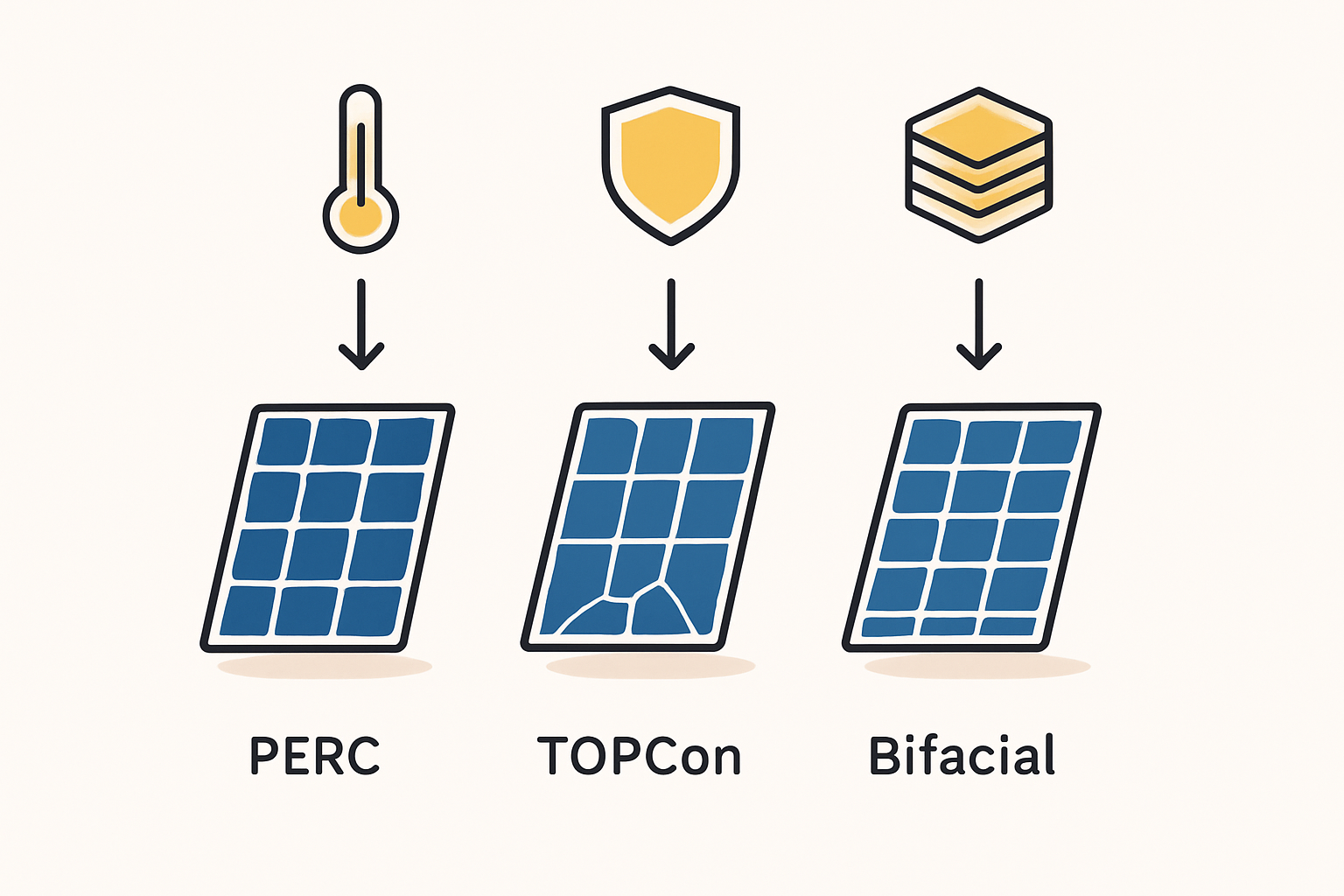
Potential Induced Degradation (PID): This is a performance-degrading effect exacerbated by high heat and humidity. Using certified PID-resistant materials for cells and encapsulants is a non-negotiable requirement for modules intended for Pakistan.
UV Resistance: Low-quality backsheets and encapsulants can turn yellow and crack under intense UV exposure, compromising the module’s safety and performance. Specifying high-quality, UV-stabilized materials is essential for ensuring a 25-year service life.
From Specification to Production: Ensuring Quality Control
Defining these specifications is only the first step. The true test of a module’s quality lies in the manufacturing process. Rigorous quality control ensures that the specified materials and design principles are implemented correctly.
For example, microcracks in solar cells are invisible to the naked eye but can lead to significant power loss over time. These defects can be introduced during cell handling or lamination. Detecting them requires specialized equipment like an electroluminescence (EL) tester, which functions like an X-ray for solar modules, revealing hidden defects before the product leaves the factory.
Establishing robust quality gates at each production step is fundamental to delivering a product that can live up to its warranty in a demanding environment.

Frequently Asked Questions (FAQ)
What is the most important specification for a solar module in a hot climate?
The temperature coefficient of power (Pmax) is arguably the most critical. A lower value directly translates to better performance and higher energy yield in the high-temperature conditions prevalent in Pakistan.
How much more does a module designed for harsh climates cost?
The cost premium for high-performance materials (e.g., POE encapsulant, high-quality backsheet, anti-soiling coating) can be modest, often adding only a few percent to the total module cost. However, this small upfront investment can yield significantly higher returns over the project’s lifetime by improving energy output and reducing degradation.
Can’t I just clean the panels more often to deal with dust?
While a frequent cleaning schedule is necessary, it is a recurring operational expense. Designing a module with anti-soiling properties and effective drainage can reduce the required cleaning frequency and its associated labor and water costs, improving the project’s overall financial performance.
What certifications should I look for?
Beyond the standard IEC 61215 (performance) and IEC 61730 (safety) certifications, look for specific tests related to harsh environments. These include certifications for salt mist corrosion (IEC 61701) and ammonia corrosion (IEC 62716), which demonstrate a higher level of durability.
Conclusion: Building for Longevity, Not Just for Sunlight
The success of a solar module manufacturing venture in Pakistan depends on a clear understanding of the local environment. It is not enough to produce a standard module; a manufacturer must engineer a product specifically designed to withstand decades of high heat, dust, and humidity.
By focusing on key specifications like a low temperature coefficient, high-grade PID-resistant materials, and robust construction, a manufacturer can produce a solar module that not only survives but thrives. This technical foresight is the foundation for building a reputable brand and a profitable business in one of the world’s most promising solar markets. For anyone planning to enter this market, understanding these technical requirements is the essential first step toward success.