An investor examining the energy landscape of Southeastern Europe sees surging demand, ambitious renewable energy targets, and abundant sunshine. Yet, a critical gap is apparent. The solar modules being installed across the Balkans are often standard models designed for more temperate climates. In the intense summer heat and coastal humidity of the region, these modules can underperform and degrade faster than expected, jeopardizing the long-term financial viability of solar projects.
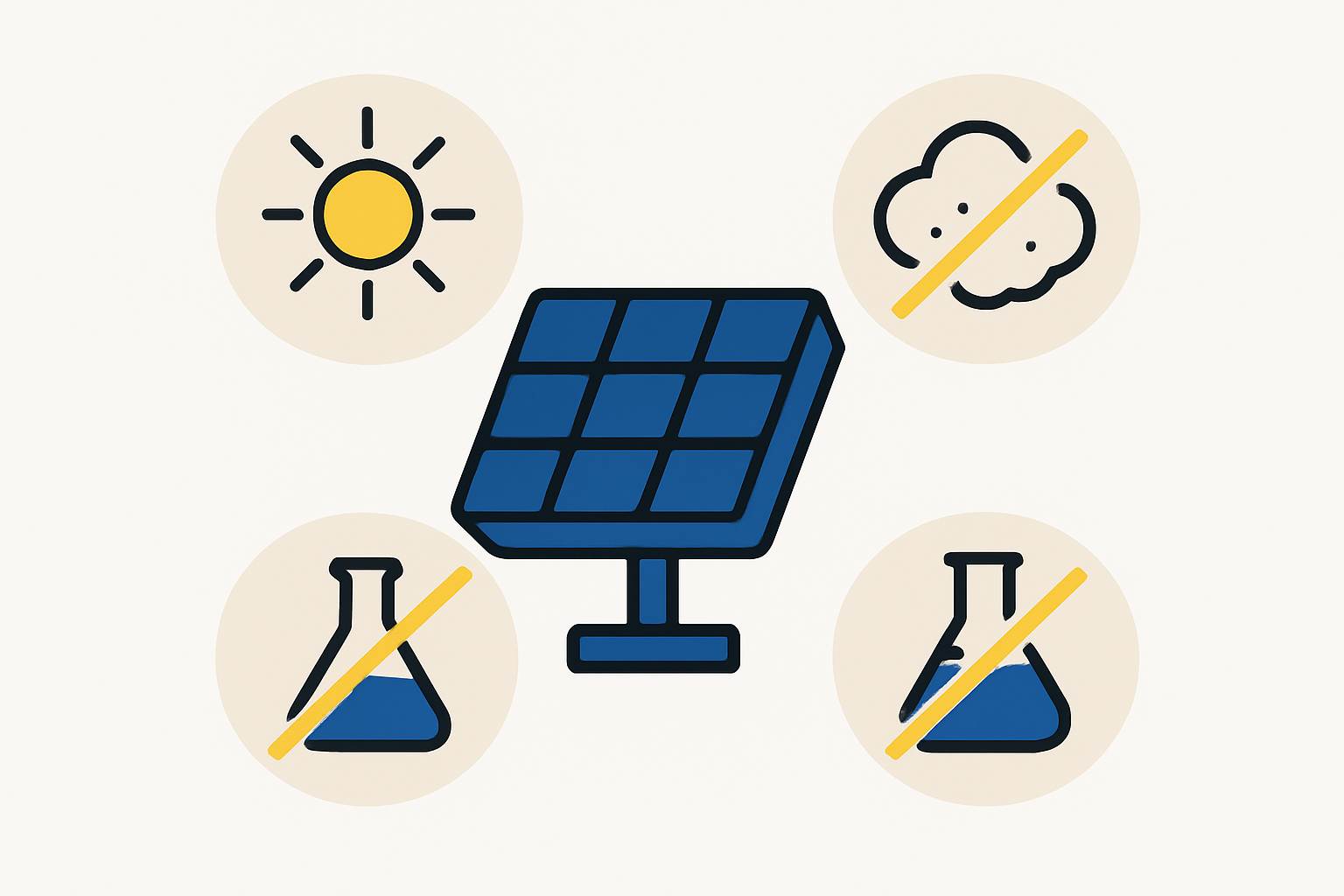
This gap presents a significant market opportunity: establishing a local production facility for solar modules specifically engineered to withstand the region’s challenging climate. This article lays out the strategic rationale for setting up a DESERT+ technology production line in Romania to serve the unique needs of the Balkan and Black Sea markets.
Why the Balkan Region Requires a Specialized Solar Solution
Standard photovoltaic (PV) modules perform well under standard test conditions (25°C). However, the reality in Southern and Southeastern Europe is often far from standard. During summer months, countries like Greece, Bulgaria, Albania, and even southern Romania regularly experience ambient temperatures exceeding 35°C, with module surface temperatures reaching up to 75°C.
This environment poses several challenges that directly impact the performance and lifespan of solar modules:
-
Accelerated Degradation: High temperatures, combined with a high UV index, accelerate the aging process of materials used in standard modules, particularly the EVA (Ethylene Vinyl Acetate) encapsulant. This leads to a faster-than-projected loss of power output—a phenomenon known as degradation.
-
Increased Power Loss: All crystalline silicon solar cells lose efficiency as they get hotter. In the intense heat of a Balkan summer, this ‘temperature coefficient’ effect can reduce a solar farm’s daily energy output by a noticeable margin.
-
Humidity and Salinity: For projects near the Black Sea or Adriatic coasts, high humidity and salt mist can penetrate standard module backsheets over time, leading to corrosion and a serious safety and performance issue called Potential-Induced Degradation (PID).
Research indicates that standard PV modules can have an annual power degradation rate of 0.5% to 0.8%, and in harsh climates, this rate can be even higher. Over a 25-year project, this difference is substantial and directly affects the return on investment for solar park operators, creating a clear demand for a more robust product.
An Introduction to DESERT+ Technology
The term ‘DESERT+ technology’ does not refer to a single brand but rather to a set of manufacturing principles and material choices designed to create exceptionally durable solar modules. These modules are engineered to thrive in environments with high temperatures, high UV radiation, and humidity.
Ready to make big Profits?
The solar Industry is Booming
WE HELP NEWCOMERS to the solar industry start their own solar module production line. Customers can make BIG PROFITS by selling modules and finding investors, without wasting money and time on things they don't need!
The core components that differentiate DESERT+ modules are:
-
Glass-Glass Construction: Instead of the common glass-foil structure (a glass front and a polymer backsheet), these modules use a second layer of glass on the rear. This design provides superior protection against moisture ingress and mechanical stress, virtually eliminating issues like PID. This structure is also the foundation for most bifacial solar panel technology, which can capture sunlight from both sides.
-
Advanced Encapsulant Materials: DESERT+ modules typically use POE (Polyolefin Elastomer) instead of EVA as the encapsulant material between the cells and glass. POE offers significantly higher resistance to UV radiation, heat, and moisture, preventing the ‘browning’ and delamination that can affect EVA-based modules over time.
-
Highly Resistant Components: Every component, from the junction box to the connectors and frame, is selected for long-term stability in harsh conditions.
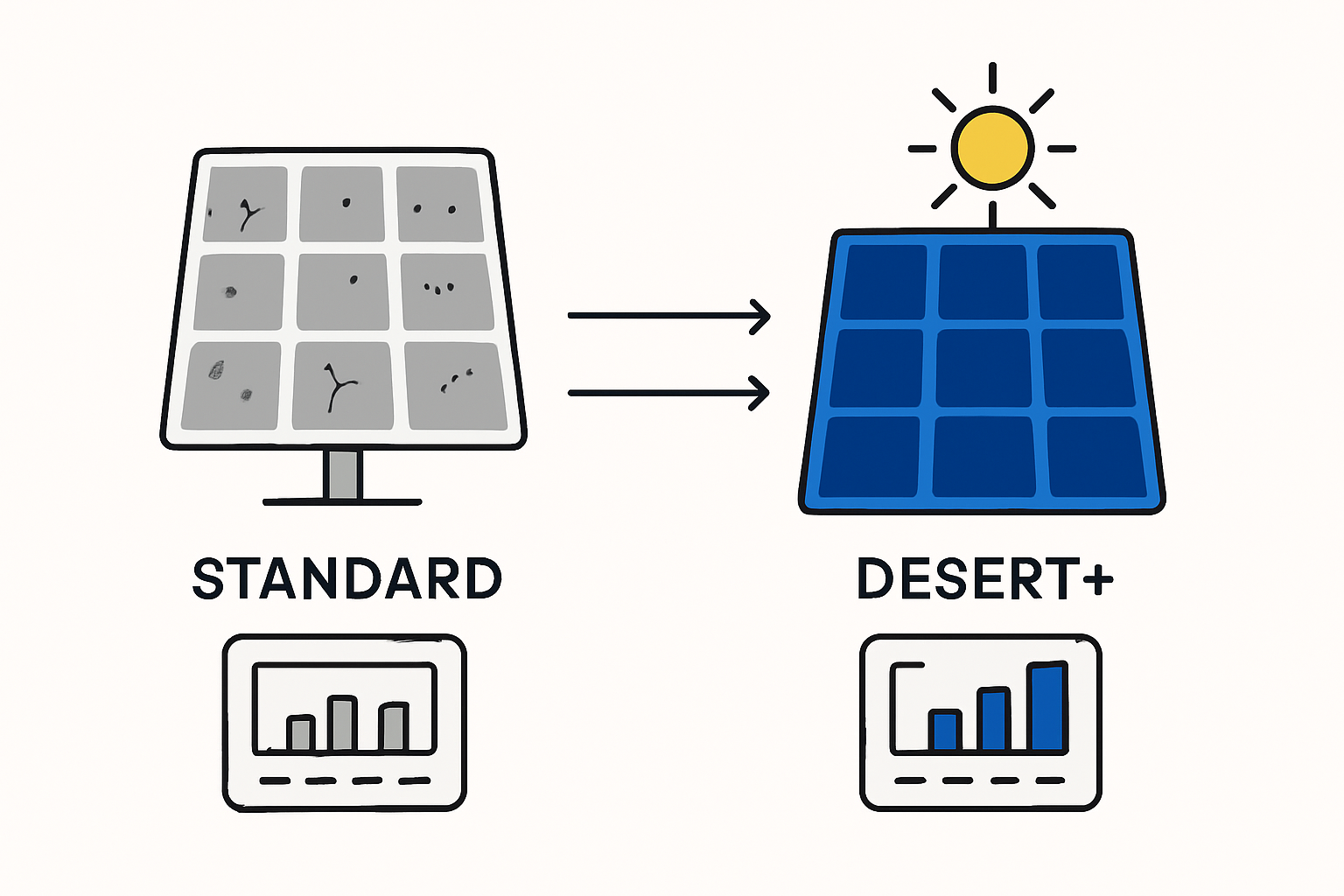
The result is a solar module with a significantly lower annual degradation rate—often projected at 0.4% or less—and a useful life that can extend beyond 30 years. For project developers in the Balkan region, this means higher energy generation over the project’s lifetime and a more predictable financial return.
Romania: A Strategic Hub for Regional Production
While modules could be imported, producing them within the region offers compelling strategic advantages. Romania is uniquely positioned to become the manufacturing hub for high-durability solar modules for several key reasons.
Logistical and Market Access
Located at the crossroads of Central, Eastern, and Southeastern Europe, Romania provides unparalleled access to key emerging solar markets.
-
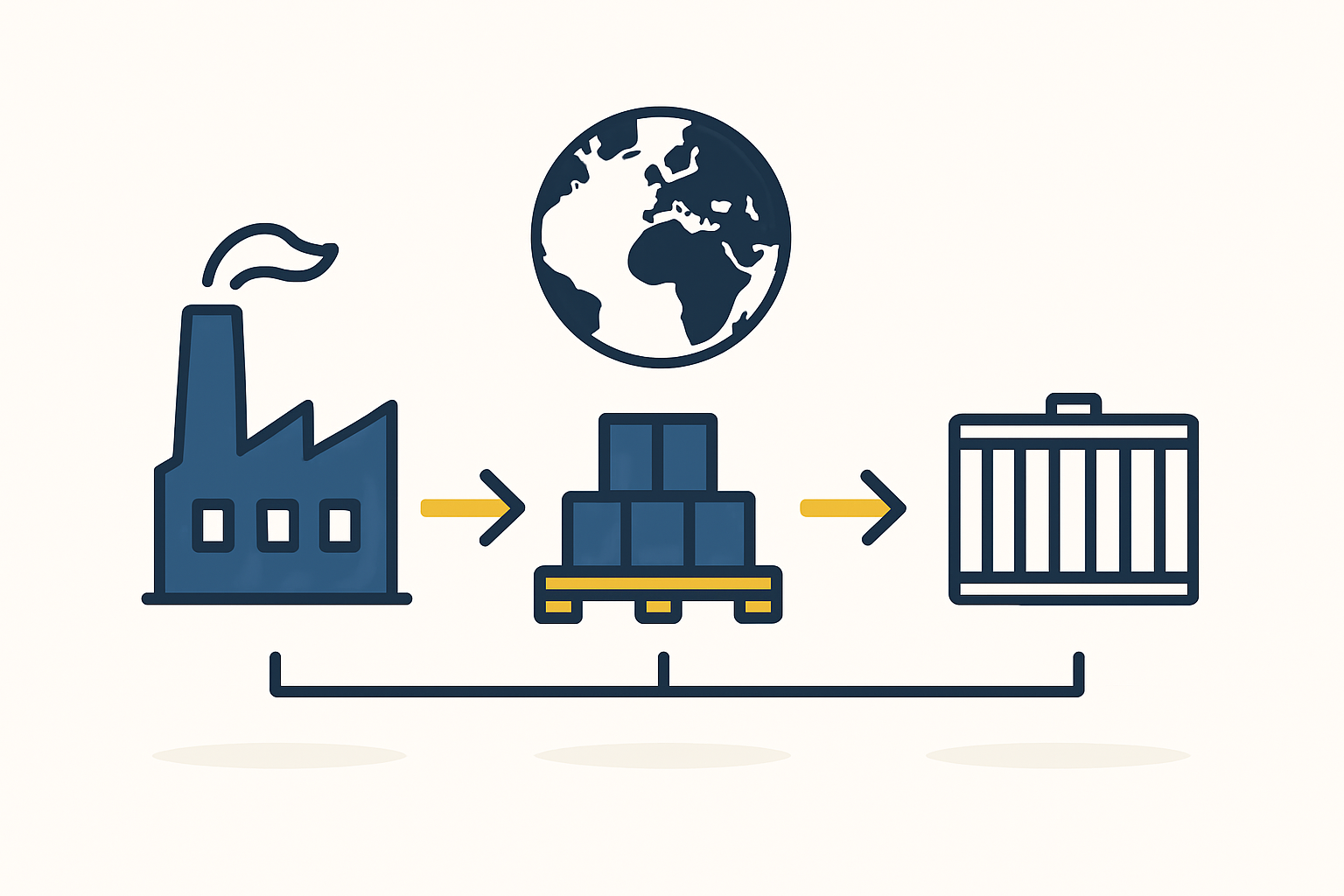
Proximity to Target Markets: A factory in Romania can deliver modules to Bulgaria, Serbia, Greece, Moldova, and Hungary with significantly reduced transportation costs and lead times compared to imports from Asia.
-
The Port of Constanța: As the largest port on the Black Sea, Constanța serves as an efficient gateway for importing raw materials like solar cells, glass, and aluminum frames.
-
EU Single Market: As an EU member state, a Romanian factory enjoys frictionless access to the entire European Union market, free of customs duties and with streamlined logistics.
Favorable Business and Industrial Environment
Romania offers a stable and cost-effective environment for establishing an advanced manufacturing operation.
-
Industrial Expertise: The country has a long tradition of industrial and engineering know-how, with a skilled and technically proficient workforce available at competitive wages.
-
Investment Incentives: Various national and EU-level programs are available to support investments in green technology and manufacturing, which can help offset initial capital expenditures.
-
Growing Domestic Demand: Romania itself is a rapidly growing solar market, providing a foundational customer base for a new production facility.
For any entrepreneur investigating this opportunity, the first step is understanding how to start a solar module production factory. The process involves careful planning, from site selection to securing permits and financing.
Anatomy of a DESERT+ Production Line
Establishing a manufacturing facility for DESERT+ modules doesn’t require reinventing the wheel. The process builds upon standard PV manufacturing technology but requires careful selection of specific machinery to handle the specialized materials and construction.
Key Machinery Considerations
A typical turnkey solar module manufacturing line includes equipment for cell stringing, bussing, lamination, and testing. For DESERT+ production, a few machines are particularly critical:
-
The Laminator: This is the heart of the production line. A high-quality solar module laminator capable of handling the glass-glass structure and achieving the specific temperature profiles required for POE encapsulation is non-negotiable.
-
Automated Layup Station: Precision is key. Automated systems ensure the perfect alignment of glass, encapsulant, solar cells, and the second layer of glass before lamination.
-
Framing and Sealing Equipment: The final assembly must ensure a perfect, durable seal to protect the module’s internal components for decades.
A comprehensive solar panel manufacturing machine list for a DESERT+ line would be refined based on the desired level of automation and production capacity.
Representative Factory Metrics
To make this concept more tangible, consider the metrics for a mid-scale factory focused on regional markets:
-
Initial Capacity: 100 MW per year. This is a common and viable starting point, capable of producing approximately 220,000 modules annually (at ~450W per module).
-
Estimated Investment: The capital expenditure for equipment for a 100 MW line typically falls in the range of €6 to €9 million.
-
Workforce: Such a facility would employ around 50 to 70 people, including operators, engineers, and administrative staff.
-
Timeline: Based on J.v.G. Technology’s experience with turnkey projects, a well-planned factory can move from groundbreaking to full operation in as little as 9 to 12 months.
Frequently Asked Questions (FAQ)
-
Is it significantly more expensive to produce DESERT+ modules?
The raw material cost for DESERT+ modules is slightly higher due to the use of a second sheet of glass and POE encapsulant. However, these costs are often offset by higher production yields and the premium price the superior product can command in the market. The manufacturing process itself is not dramatically different in complexity. -
What certifications are required to sell these modules in the EU?
All solar modules sold in the European Union must be CE marked and typically require certifications such as IEC 61215 (for performance) and IEC 61730 (for safety). Additional certifications for enhanced durability, such as salt mist corrosion (IEC 61701) or ammonia resistance (IEC 62716), can provide a strong competitive advantage. -
Can a factory designed for DESERT+ technology also produce other module types?
Yes. A production line equipped to handle glass-glass modules is highly flexible. With minor adjustments to the process and materials, the same line can be used to produce high-efficiency bifacial modules or other specialized products, allowing the business to adapt to changing market demands. -
How does the current geopolitical situation in the region impact this business case?
The drive for energy independence across Europe, amplified by recent geopolitical events, has accelerated the transition to renewable energy. This has created a strong political and financial tailwind for projects that strengthen local energy supply chains. A manufacturing facility in Romania aligns perfectly with this strategic priority.
Next Steps in Exploring the Opportunity
There is a clear and compelling business case for establishing a DESERT+ solar module production line in Romania. The convergence of specific climate needs, growing regional demand, and Romania’s strategic advantages creates a powerful opportunity for a forward-thinking entrepreneur.
For individuals and companies considering this path, the next steps involve detailed feasibility studies, financial modeling, and technical planning. The pvknowhow.com platform offers structured educational resources, including a free e-course on factory planning, to guide entrepreneurs through these critical early stages. By building on a foundation of expert knowledge, a promising idea can be transformed into a successful industrial reality.