Entrepreneurs exploring the solar manufacturing sector often focus on capital expenditure—the cost of machinery, buildings, and initial materials. Yet a critical, long-term factor is frequently overlooked: operational expenditure (OpEx), especially the cost of energy.
It’s a surprising turn of industrial logic: one of the world’s largest hydroelectric dams has created a uniquely favorable environment for producing solar photovoltaic (PV) modules.
This analysis explores the unique financial case for establishing a solar module factory in Paraguay, where the industrial backbone is powered by immense, cost-effective energy from the Itaipu Dam. This single factor can fundamentally alter profitability models, reduce operational risk, and provide a significant competitive advantage in the regional market.
Understanding the Core Challenge: Energy in Solar Module Production
A common misconception is that manufacturing green technology is an energy-light process. The reality is starkly different. The journey from raw silicon cells to a finished, certified solar panel is an energy-intensive industrial operation.
Key stages, like the lamination process where modules are heated to over 140°C, demand significant power. So too do climate-controlled cleanrooms and advanced testing equipment, all contributing to a substantial electricity load. These are not variable costs that can be easily minimized; they are fundamental requirements of the solar module production steps. Consequently, the local price of electricity becomes a primary driver of the final production cost per module. In regions with high or volatile energy tariffs, this can erode profit margins and render a factory uncompetitive.
Paraguay’s Strategic Asset: The Itaipu Dam
Paraguay’s industrial energy landscape is dominated by a single, monumental asset: the Itaipu Hydroelectric Dam, a bi-national project with Brazil on the Paraná River. As one of the largest operational hydroelectric power plants in the world, it generates vast amounts of clean, reliable, and remarkably low-cost electricity.
Due to its relatively small population and industrial base, Paraguay consumes only a fraction of its 50% share of the dam’s output. This creates a significant energy surplus, which the government leverages to attract industrial investment by offering some of the lowest electricity tariffs on the continent and, indeed, the world. For energy-intensive industries, this is not a minor discount but a foundational economic advantage.

A Comparative Financial Model: Quantifying the Cost Advantage
To put the tangible impact of Paraguay’s energy costs into perspective, let’s consider a typical scenario for a new solar module manufacturing plant.
Scenario Assumptions:
- Factory Size: A semi-automated line with an annual production capacity of 50 MW.
- Operational Hours: Two shifts, operating approximately 250 days per year.
- Estimated Energy Consumption: Based on J.v.G. Technology turnkey projects, a factory of this scale consumes approximately 2,000,000 kWh per year.
Now, let’s compare the annual electricity expenditure across different industrial markets.
Ready to make big Profits?
The solar Industry is Booming
WE HELP NEWCOMERS to the solar industry start their own solar module production line. Customers can make BIG PROFITS by selling modules and finding investors, without wasting money and time on things they don't need!
Annual Electricity Cost Comparison (Illustrative):
- Paraguay: At an industrial tariff of approximately $0.05 USD per kWh, the annual cost is $100,000 USD.
- Germany: With industrial tariffs averaging around $0.20 USD per kWh, the same factory would face an annual cost of $400,000 USD.
- United States: With average industrial rates near $0.15 USD per kWh, the annual expenditure would be $300,000 USD.
The analysis reveals a direct operational saving of $200,000 to $300,000 per year compared to establishing the same facility in the US or Europe. These savings flow directly to the bottom line, significantly improving the business’s profitability and resilience. Considering the total investment required for a solar factory, such substantial annual OpEx savings can dramatically shorten the return on investment period.
Broader Implications for a Solar Business
The financial benefit extends beyond a simple reduction in overheads, creating several positive knock-on effects for the business.
Increased Profitability and Competitive Pricing
With a lower cost-per-watt-peak produced, a manufacturer can achieve healthier profit margins. Alternatively, this cost advantage can be passed on to the customer, allowing the company to offer highly competitive pricing within the MERCOSUR trading bloc and other regional markets.
Enhanced Business Resilience
Factories in markets with volatile, fossil-fuel-dependent energy grids are exposed to price shocks that can cripple profitability. The stability of hydropower-based pricing insulates a Paraguayan operation from this global volatility, making financial forecasting more reliable.
Faster Return on Investment (ROI)
Significant annual savings on electricity translate directly into a faster payback period for the initial investment in the key machinery in a solar module line. This makes the project more attractive to investors and financial institutions.
Is Paraguay the Right Fit for Every Venture?
While the energy cost advantage is compelling, it is just one part of a larger business case. Prospective investors must conduct thorough due diligence on other critical factors, including:
- Logistics and Supply Chain: Assessing the costs and efficiency of importing raw materials (cells, glass, EVA, backsheets) and exporting finished modules.
- Labor Market: Availability of skilled and semi-skilled labor for technical and operational roles.
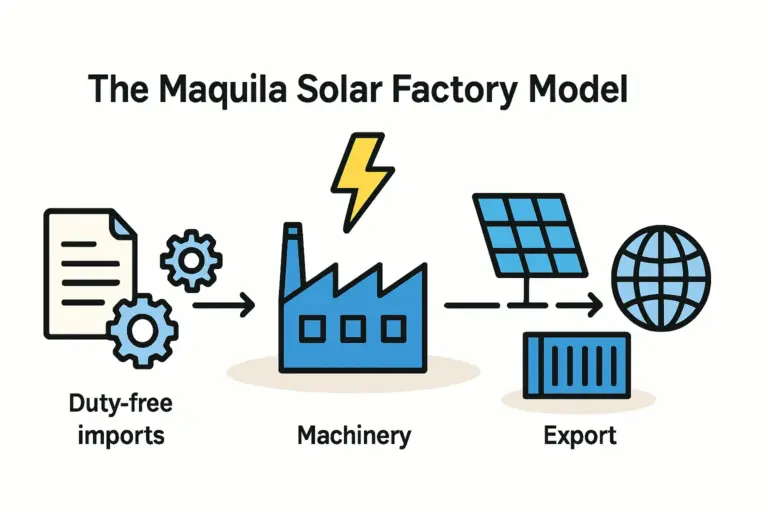
- Regulatory Framework: Understanding local business laws, tax incentives (such as the Maquila regime), and import/export regulations.
- Market Access: Evaluating the demand and competitive landscape within Paraguay and neighboring countries like Brazil, Argentina, and Uruguay.
The low energy cost serves as a powerful foundation, but it must be complemented by a solid strategy that addresses these other operational factors.
Frequently Asked Questions (FAQ)
What is the typical electricity consumption of a solar module factory?
For a modern, semi-automated 50 MW production line, annual consumption typically falls between 1,800,000 and 2,200,000 kWh. This figure can vary based on the level of automation and the specific technology being used.
How stable are Paraguay’s electricity prices?
Sourced from hydropower, Paraguay’s electricity tariffs are exceptionally stable compared to markets dependent on natural gas or other fossil fuels. Pricing is governed by long-term treaties and is not subject to the volatility of global commodity markets.
Does Paraguay offer other incentives for industrial investors?
Yes, Paraguay has established incentive programs to attract foreign investment. The ‘Maquila’ law, for instance, offers significant tax advantages for manufacturing companies that export their products, including a nominal 1% corporate income tax.
Can a non-expert successfully start a factory in such a market?
Yes. Many successful manufacturing ventures are started by entrepreneurs with strong business acumen but without deep technical backgrounds in photovoltaics. The key is to partner with experienced technical consultants. To bridge this knowledge gap, resources like pvknowhow.com provide structured e-courses and turnkey project guidance to help investors navigate the entire process, from initial planning to full-scale production.
Conclusion: A Unique Convergence of Green Technologies
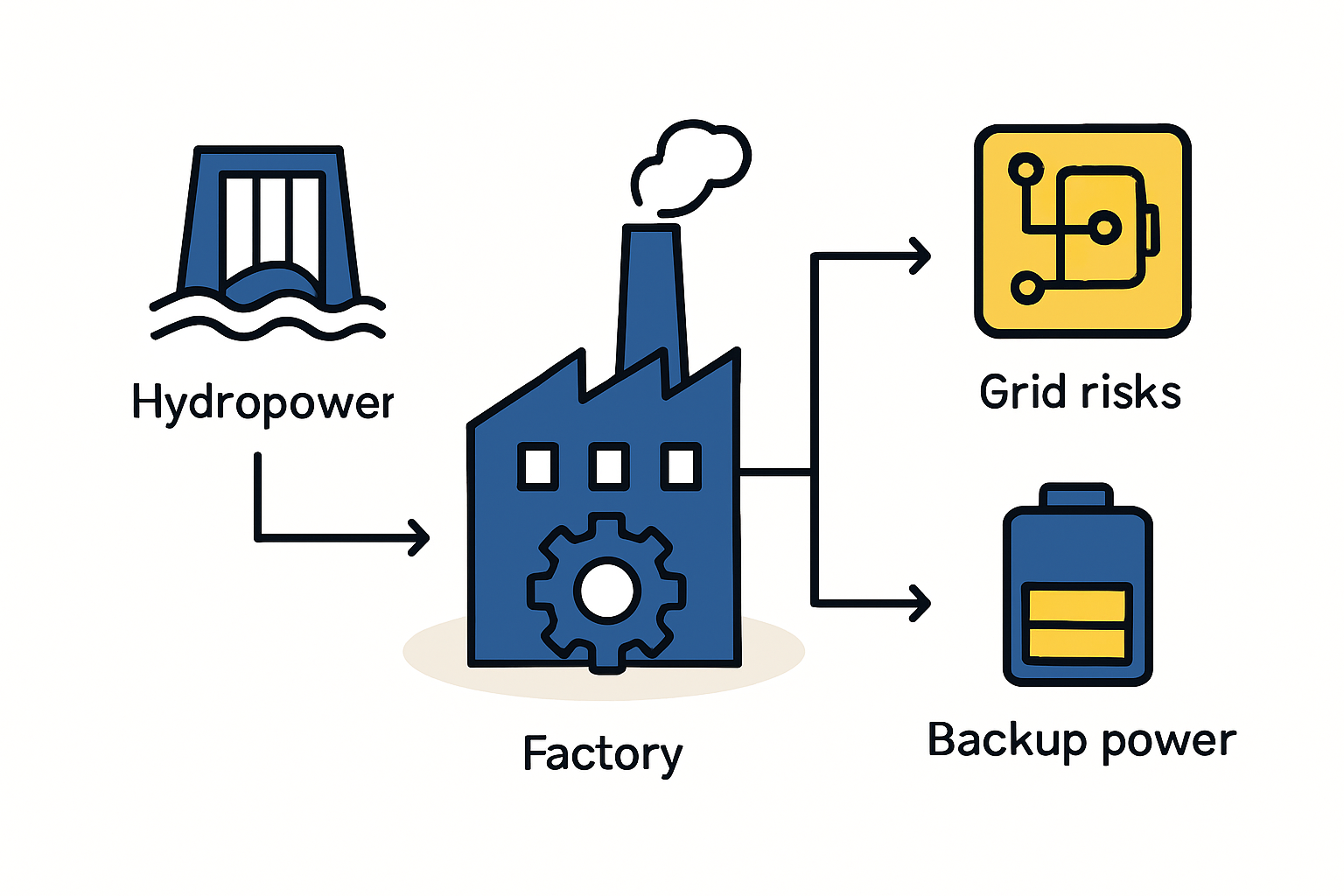
Paraguay presents a potent business case where one form of established renewable energy—hydropower—creates fertile ground for the growth of another: solar manufacturing. The profound and stable cost advantage on electricity is not a marginal benefit but a central pillar for building a highly profitable and competitive enterprise.
For the discerning entrepreneur, this represents a unique opportunity to leverage a country’s natural endowment to build a resilient manufacturing business poised for success in the rapidly expanding South American solar market. It is a clear example of how strategic geographic selection can become a company’s most significant competitive edge.