An entrepreneur looking at a map of the Pacific sees more than islands; they see opportunity. Vanuatu, with its ambitious goal of 100% renewable energy by 2030, offers a compelling case for investment in solar technology.

However, the path from vision to a fully operational solar module factory is paved with essential regulatory steps. For any foreign investor, the first and most critical gateway is the Vanuatu Foreign Investment Promotion Agency (VFIPA).
Navigating this agency without a clear roadmap can be a significant challenge. This article provides a structured guide to the VFIPA process, outlining the steps, documentation, and strategic considerations for establishing a solar manufacturing presence in Vanuatu. It’s designed to transform regulatory complexity into a manageable, step-by-step plan.
Understanding VFIPA’s Role in Vanuatu’s Solar Ambition
The Vanuatu Foreign Investment Promotion Agency (VFIPA) is the principal government body responsible for promoting, facilitating, and regulating foreign investment. It acts as more than a bureaucratic checkpoint; its mandate is to ensure foreign investments align with the nation’s economic development goals.
For a solar venture, this alignment is particularly strong. A solar investment directly supports Vanuatu’s National Energy Road Map (NERM), which prioritizes reducing the country’s reliance on imported fossil fuels and enhancing energy security. By establishing local manufacturing, an investor contributes to job creation, technology transfer, and the national sustainable development agenda—a powerful narrative for a successful application. A proposal for a solar module manufacturing line that emphasizes these benefits will be viewed favourably.
The VFIPA Approval Process: A Step-by-Step Breakdown
The VFIPA process is methodical. While details can vary, the journey from application to approval follows a clear sequence. Based on experience from turnkey projects in emerging markets, a well-prepared application is the foundation for an efficient timeline.
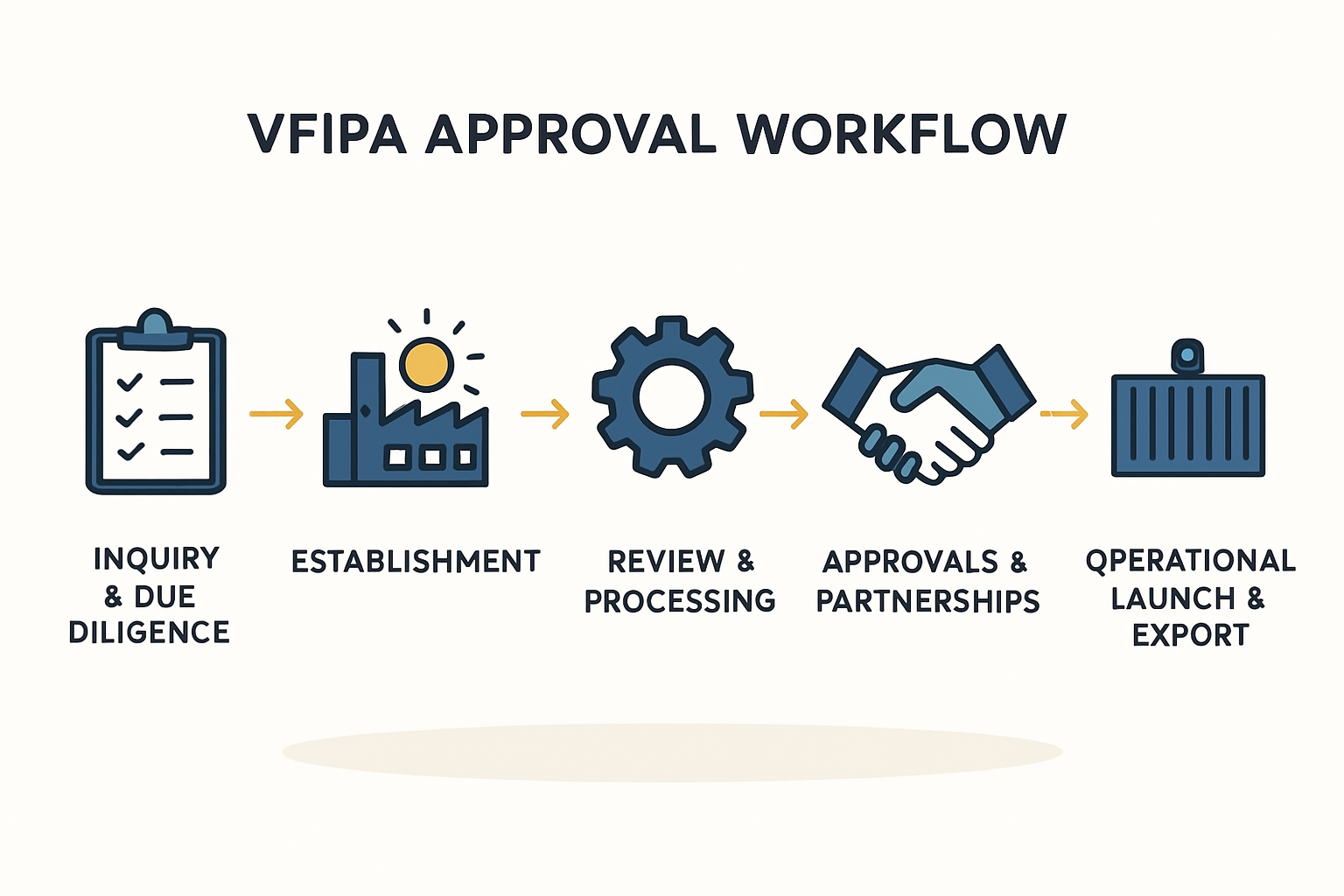
Step 1: The Initial Application and Project Proposal
The process begins with submitting a detailed application form accompanied by a comprehensive project proposal or business plan. This document is the cornerstone of your application. It must clearly articulate:
- Investor Profile: Details of the investing entity and key individuals.
- Project Description: A thorough explanation of the proposed solar manufacturing facility, including production capacity, technology used, and target markets (domestic and export).
- Financial Projections: A detailed financial model showing the initial investment, projected revenues, and profitability over a five-year period.
- Economic and Social Benefits: A clear outline of the project’s contribution to Vanuatu, including the number of local jobs to be created, training programs, and potential for upstream and downstream industry development.
Step 2: Due Diligence and Scrutiny
Once submitted, the application undergoes a thorough due diligence process by VFIPA. The agency scrutinizes the proposal to verify its viability and alignment with national interests. Key assessment criteria include:
- Financial Capacity: Verifying that the investor possesses the necessary funds to execute the project.
- Technical Feasibility: Assessing the soundness of the proposed technology and operational plan. A technical feasibility study can be an invaluable supporting document here.
- Legal Compliance: Ensuring the proposed business activities are permitted under Vanuatu law.
- Environmental Impact: While a full Environmental Impact Assessment (EIA) may be a separate step, the initial proposal should address environmental considerations.
Step 3: Receiving the Foreign Investment Approval Certificate (FIAC)
Upon a successful review, VFIPA issues a Foreign Investment Approval Certificate (FIAC). This certificate is the official green light for the investment to proceed. It is a critical milestone, granting the investor the right to establish and operate the business in Vanuatu as described in the proposal. The FIAC is typically valid for twelve months, within which time the investor is expected to implement the project.
Ready to make big Profits?
The solar Industry is Booming
WE HELP NEWCOMERS to the solar industry start their own solar module production line. Customers can make BIG PROFITS by selling modules and finding investors, without wasting money and time on things they don't need!
Step 4: Post-FIAC Procedures – From Approval to Operation
The FIAC is the key, but it does not open every door at once. After receiving the FIAC, the investor must proceed with several other essential registrations:
- Company Registration: Formally incorporating the business with the Vanuatu Financial Services Commission (VFSC).
- Business License: Obtaining a license from the relevant municipal council or provincial government.
- Work Permits: Securing permits for any expatriate staff required for the project.
Key Documentation and Common Pitfalls
Precision in documentation is non-negotiable. Missing or poorly prepared documents can cause significant delays.
Essential Document Checklist:
- Completed VFIPA Application Form
- Detailed Business Plan / Project Proposal
- Certificate of Incorporation (for corporate investors)
- Passport copies of directors and shareholders
- Bank statements or a letter of financial capability as proof of funds
- Police clearance certificates for key individuals
A common pitfall is underestimating the local context. For example, land tenure in Vanuatu is complex. While foreign citizens cannot own land, long-term leases are a standard and secure mechanism for industrial projects. Engaging with a reputable local legal advisor early in the process is crucial for navigating land acquisition and securing a suitable building or site.
Another frequent oversight is creating an overly optimistic timeline. The VFIPA process itself can take several months, with subsequent steps adding more time. A realistic project plan must account for these administrative periods.

Frequently Asked Questions (FAQ)
-
Is a local partner mandatory for foreign investment in Vanuatu?
No, a local partner is not mandatory for most sectors, including manufacturing. Foreign investors can own 100% of their enterprise, although having a local partner can be strategically advantageous for navigating local networks and business culture. -
What is the minimum investment required for VFIPA approval?
The official minimum investment requirement is VUV 5,000,000 (approximately USD 42,000). However, for a capital-intensive project like a solar module factory, the proposed investment will naturally be substantially higher, which is generally viewed positively as a sign of a serious, long-term commitment. -
How does the VFIPA process differ for manufacturing versus a solar farm?
The core VFIPA application process is similar for both. The key difference lies in the supporting documentation and subsequent permits. A manufacturing plant requires detailed plans for the factory, supply chain, and workforce, whereas a solar farm demands an in-depth site analysis, grid connection agreements, and a more extensive environmental impact assessment. -
Can a consultant assist with the technical documentation for the VFIPA application?
Yes. For entrepreneurs without a deep technical background in photovoltaics, engaging a consultant is highly recommended. Specialist firms can prepare the technical sections of the business plan, providing credible data on production processes, equipment sourcing, and quality control. Educational resources, such as e-courses, can also help investors understand these requirements before hiring a consultant.
Next Steps on Your Investment Journey
Navigating the VFIPA process successfully is the first major step toward establishing a solar manufacturing facility in Vanuatu. It requires diligence, transparency, and a thorough understanding of the requirements. The process is designed not as a barrier, but as a framework to foster successful and mutually beneficial investments.
An investor with a well-prepared proposal highlighting the project’s alignment with Vanuatu’s renewable energy goals can approach VFIPA with confidence. For those beginning this journey, exploring comprehensive guides on how to start a solar factory can provide the foundational knowledge needed to build a robust and compelling business plan.