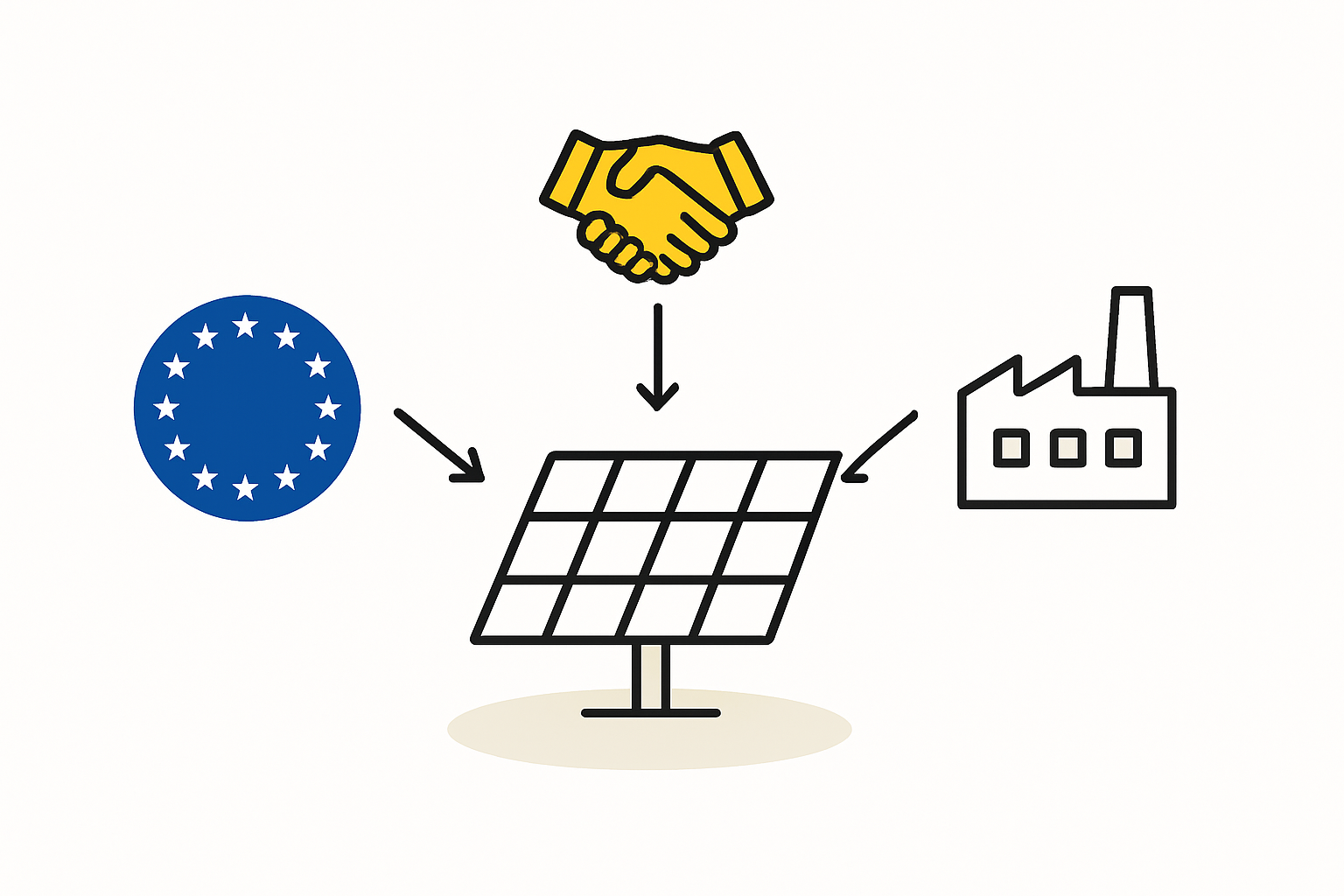
For entrepreneurs and investors exploring the solar manufacturing sector, the European Union represents a vast and mature market. However, it is also a market protected by complex trade regulations and significant tariffs on solar modules from certain countries—a formidable barrier for new entrants.
Yet a strategic advantage exists for manufacturers based in Turkey, offering a unique geographical and political pathway to the EU market, free from many of these financial hurdles. This advantage stems from the EU-Turkey Customs Union, an agreement that reshapes the export landscape for industrial goods. Understanding how to leverage this framework can provide a decisive competitive edge and transform a potential barrier into a significant business opportunity.
Understanding the EU-Turkey Customs Union
Established in 1995, the EU-Turkey Customs Union is a distinct trade agreement, more integrated than a standard free-trade area. Under this arrangement, most industrial goods and processed agricultural products can move between Turkey and the EU without incurring customs duties.
This concept is known as ‘free circulation’. It means that once a product is legally manufactured or imported into either territory, it can be moved to the other without additional tariffs. For a solar module manufacturer in Turkey, this means locally produced modules can be exported to any EU member state as if they were made within the EU itself.
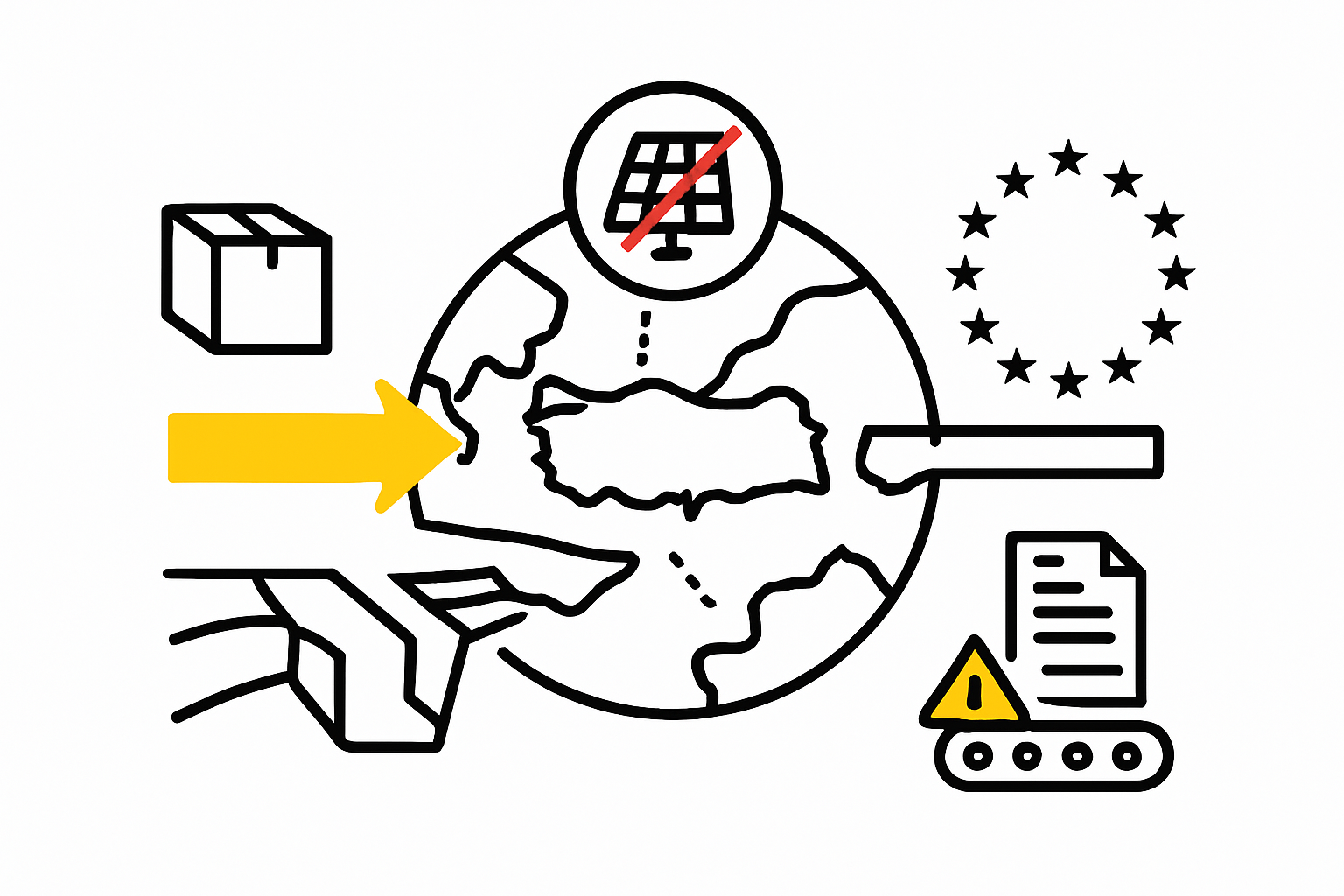
This creates a powerful opportunity, particularly when considering the EU’s trade defense instruments. The European Commission has historically implemented anti-dumping (AD) and anti-subsidy (AS) duties on solar products, primarily targeting imports from China. These duties can add a substantial percentage to the import cost, making it difficult for affected products to compete on price. Since Turkish-made goods are treated as internal products, they are not subject to these third-country tariffs.
The Strategic Advantage for Solar Manufacturers in Turkey
The primary benefit is direct and quantifiable: cost-competitiveness. A solar module factory in Turkey can supply the European market without incurring the steep anti-dumping duties that may apply to competitors in other regions.
Consider this scenario:
A distributor in Germany wants to import 10 MW of solar modules.
An offer from a manufacturer in a country subject to EU tariffs must include the module price plus the significant AD/AS duties.
An offer from a manufacturer in Turkey includes only the module price and transportation costs.
This tariff exemption allows a Turkish-based producer to offer more competitive pricing or realize a higher profit margin. Furthermore, Turkey’s geographical proximity to major European markets reduces logistics costs and delivery times compared to manufacturers in Asia, enhancing the overall value proposition.
Key Considerations for Compliance: Rules of Origin
While the Customs Union offers a clear advantage, it is not an automatic passport to the EU market. The most critical requirement is compliance with the ‘Rules of Origin’. Simply assembling components imported from a third country, like China, in Turkey is not enough to qualify for tariff-free export.
Ready to make big Profits?
The solar Industry is Booming
WE HELP NEWCOMERS to the solar industry start their own solar module production line. Customers can make BIG PROFITS by selling modules and finding investors, without wasting money and time on things they don't need!
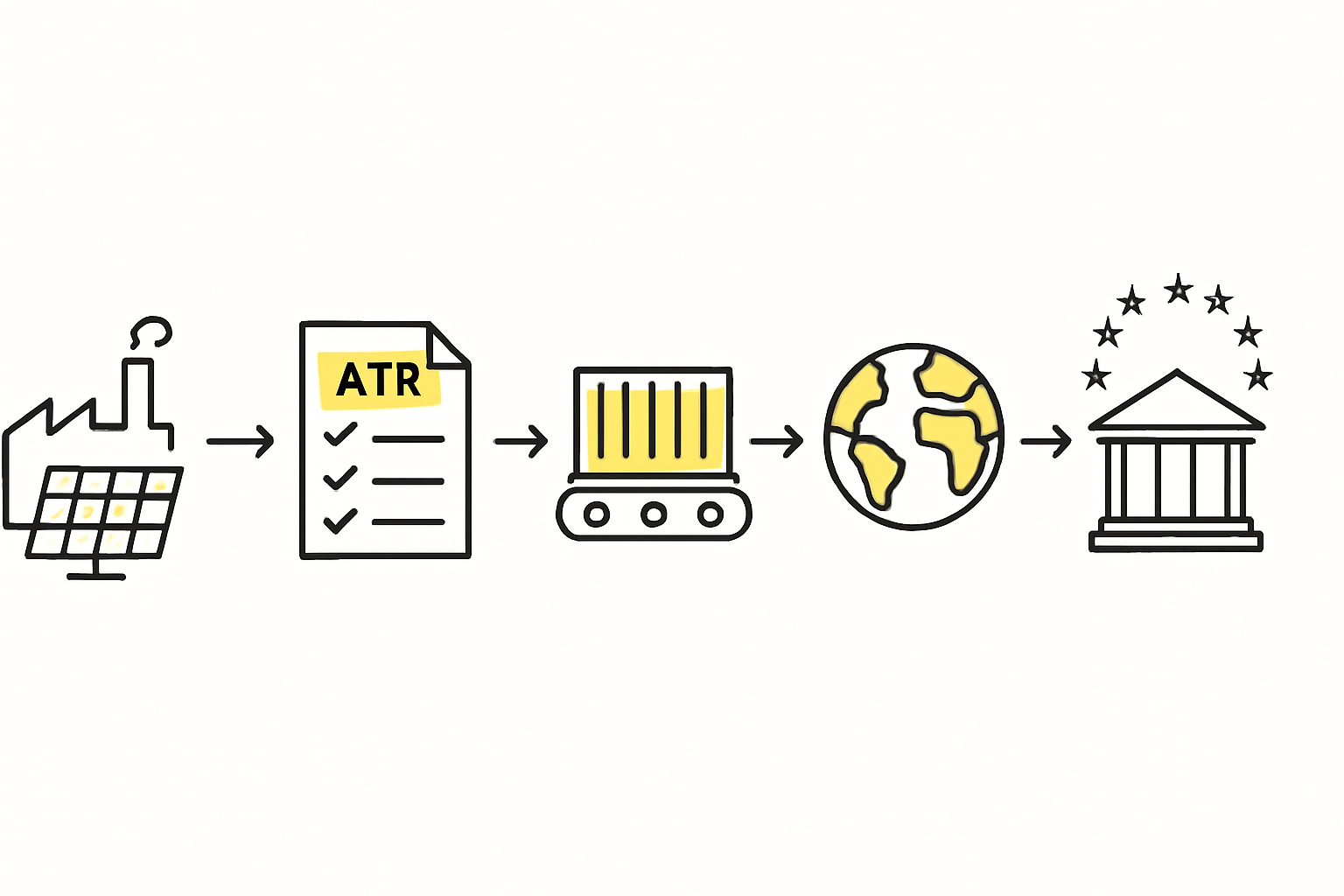
To be considered of Turkish origin, the product must undergo a ‘substantial transformation’ within the country. This means a significant portion of its manufacturing process and value creation must occur in Turkey. For solar modules, this typically involves the complete production process starting from the cell level:
- Cell Tabbing and Stringing: Interconnecting solar cells to form strings.
- Layup: Assembling the layers (glass, EVA, cell matrix, backsheet).
- Lamination: Fusing the layers together under heat and pressure.
- Framing and Junction Box Installation: Finishing the module for installation.
Establishing a facility capable of these processes is essential. Investors planning to enter this market must focus on setting up a complete production line, not merely a final assembly workshop. This is a central part of the planning process for anyone considering how to start a solar panel manufacturing business with the EU market in mind.
Based on experience from J.v.G. turnkey projects, securing a reliable supply chain for raw materials that meets origin requirements is another vital planning step. The A.TR Movement Certificate is the official document used to prove that goods are in free circulation, making them eligible for tariff-free treatment. Proper documentation and a transparent, auditable production process are non-negotiable.
Business Implications for New Investors
For an entrepreneur or corporation evaluating locations for a new solar factory, Turkey presents a compelling business case that extends beyond its domestic market.
- Market Access: Direct, tariff-free access to the world’s second-largest solar market.
- Financial Viability: The initial solar panel manufacturing plant cost can be offset by higher potential margins on exports to the EU. The absence of tariffs allows for more flexible pricing strategies.
- Reduced Logistical Complexity: Shorter shipping routes to Europe lead to lower costs, faster delivery, and a more resilient supply chain—a factor of growing importance in a volatile global market.
Setting up a manufacturing facility that complies with the Rules of Origin requires meticulous planning and technical expertise. This is where integrated solutions like turnkey solar manufacturing lines become invaluable. These solutions ensure that the factory is designed from the ground up to meet the technical and legal standards for tariff-free export, removing a significant layer of risk for investors new to the photovoltaic industry.
Frequently Asked Questions (FAQ)
What exactly is a customs union?
A customs union is an agreement between two or more countries to eliminate customs duties on trade between them and to adopt a common external tariff for trade with non-member countries. This differs from a free trade area, where member countries maintain their own external tariffs.
Are all products manufactured in Turkey exempt from EU tariffs?
The EU-Turkey Customs Union covers most industrial goods and processed agricultural products. However, some items, mainly primary agricultural products and coal and steel products, are not covered. Solar modules fall under the category of industrial goods and are included.
What is the A.TR Movement Certificate?
The A.TR certificate is a customs document used in trade between the EU and Turkey to prove that goods are in ‘free circulation’. It allows goods to benefit from the tariff exemptions under the Customs Union. The exporter is responsible for issuing this certificate correctly.
What are the main risks of this strategy?
The primary risk is non-compliance with the Rules of Origin. If authorities determine that a product did not undergo ‘substantial transformation’ in Turkey, it will not qualify for preferential treatment, and standard third-country tariffs will be applied retroactively. Another consideration is the political climate between the EU and Turkey, although the Customs Union has remained a stable pillar of their relationship for decades.
Does this advantage apply to exports from the EU to Turkey as well?
Yes, the agreement is reciprocal. Industrial goods from the EU can also enter Turkey without customs duties, which can be beneficial for sourcing specialized manufacturing equipment or materials from European suppliers.
Conclusion: A Strategic Gateway to the European Market
For investors looking to establish a solar module manufacturing presence, location is a critical strategic decision. Turkey, through its long-standing Customs Union with the EU, offers a distinct and durable competitive advantage. By enabling tariff-free access to the vast European market, this union provides a solution to one of the most significant barriers to entry.
Realizing this potential, however, requires a thorough understanding of the regulatory framework, particularly the Rules of Origin. Success depends on establishing a genuine, high-value manufacturing operation, not just an assembly plant. With proper planning, technical guidance, and a focus on compliance, a factory in Turkey can become a powerful and profitable gateway to Europe.
Download the PDF to learn how Turkey’s Customs Union boosts solar exports.