A state-of-the-art solar module factory is a precisely coordinated operation. When a multi-million-dollar laminator is in a critical heating cycle, the last thing an investor wants is for the power to fail. Yet in many emerging markets, this is a daily operational risk.
For entrepreneurs considering Togo for solar module production, understanding the nuances of the national power grid isn’t just a technical detail—it’s a fundamental component of a successful business plan. This article assesses the power infrastructure in Togo’s key industrial zones, explaining why standard grid connections fall short for sensitive manufacturing and outlining a robust solution to guarantee the uninterrupted operation of a high-quality, profitable factory.
The Reality of Togo’s National Power Grid
Togo has made significant strides in its National Electrification Strategy, aiming for universal access by 2030. However, for the kind of high-demand, zero-interruption power an industrial facility requires, the current national grid presents several challenges that must be addressed through strategic planning.
Key Considerations for Investors
-
Reliance on Imported Electricity: A substantial portion of Togo’s electricity is imported from neighboring Ghana and Nigeria. This dependency introduces external variables, making the supply susceptible to fluctuations based on the neighbors’ own generation capacity and transmission stability.
-
Transmission and Distribution (T&D) Losses: The Togolese grid experiences T&D losses estimated at around 18%. These losses point to an infrastructure under strain, often leading to voltage instability and power quality issues that can be detrimental to sensitive industrial machinery.
-
Frequent Outages: Businesses currently operating in Togo, including in primary industrial areas, report regular power outages. These interruptions can last from minutes to several hours, posing a significant threat to continuous manufacturing processes.
For a solar module factory where processes are timed to the second, an unplanned shutdown is not a minor inconvenience. It can lead to material waste, damage to expensive equipment, and significant production delays, directly impacting profitability.
Why Uninterrupted Power is Non-Negotiable in Solar Manufacturing
The solar panel manufacturing process involves several stages that are highly sensitive to power disruptions. Key machines, such as stringers, layup stations, and laminators, follow precise, automated sequences.
Stringers and Bussing: These machines perform delicate soldering at high speeds. A sudden stop can cause defective cell connections that are difficult to detect, leading to underperforming modules.
Laminators: This is arguably the most critical stage. The lamination cycle involves a carefully controlled sequence of vacuum, pressure, and heat over a set period. An interruption can ruin an entire batch of modules, rendering valuable materials like solar cells, EVA, and glass useless.
Ready to make big Profits?
The solar Industry is Booming
WE HELP NEWCOMERS to the solar industry start their own solar module production line. Customers can make BIG PROFITS by selling modules and finding investors, without wasting money and time on things they don't need!
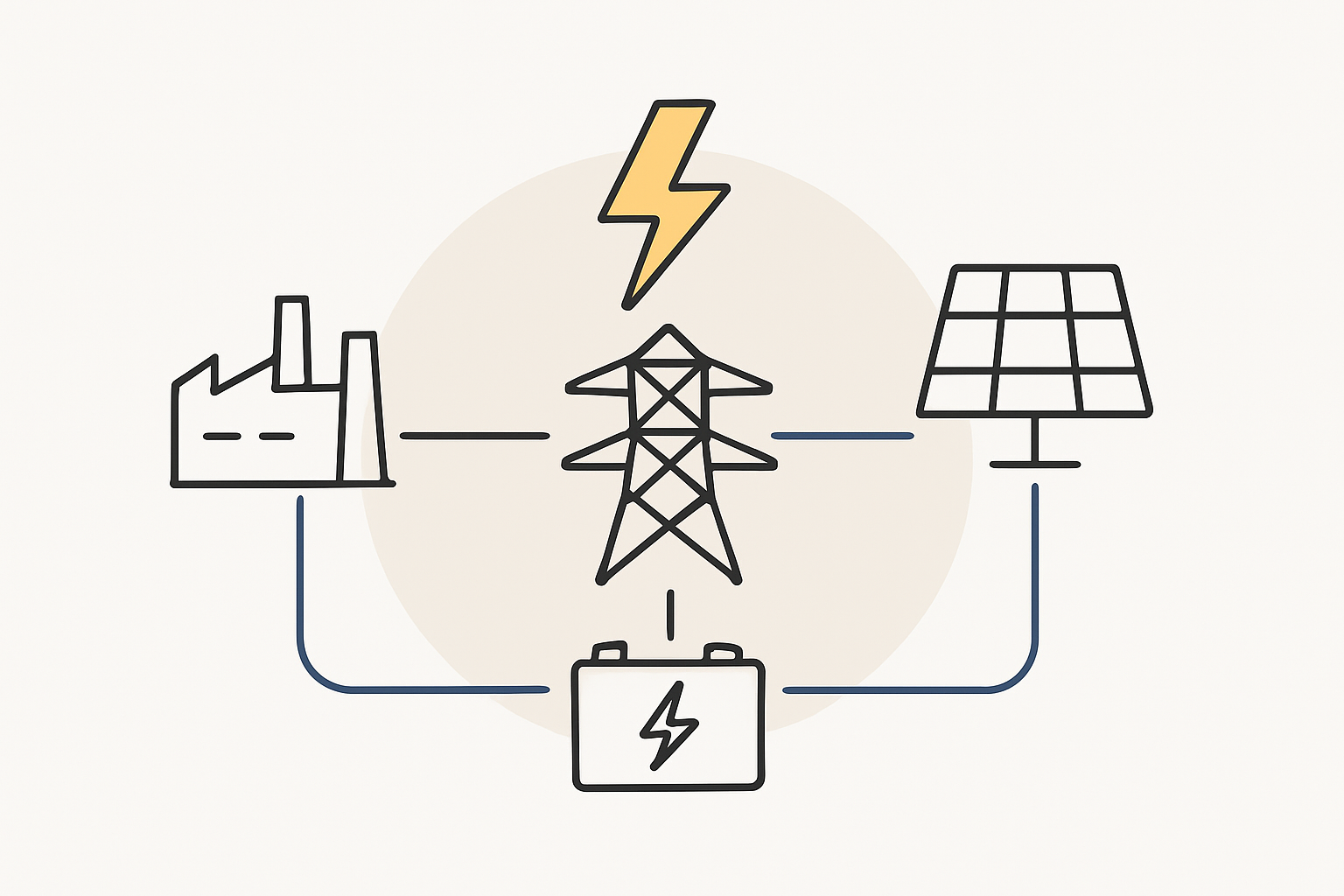
The financial impact of a single production halt can be substantial, far exceeding the cost of a daily power bill. This is why selecting the right solar manufacturing equipment must be paired with an equally robust power supply strategy.
Focus on Key Industrial Zones
Even within designated industrial hubs like the Plateforme Industrielle d’Adétikopé (PIA) or the area surrounding the Port of Lomé, factories are not insulated from the vulnerabilities of the national grid. While these zones often feature upgraded substations and dedicated power lines, they remain connected to the same national infrastructure.
Investors should not assume that locating within a premier industrial park eliminates the risk of power instability. Based on experience from J.v.G. turnkey projects in similar markets, a private, on-site power solution is the professional standard for ensuring operational continuity.
The Strategic Solution: An On-Site Hybrid Power System
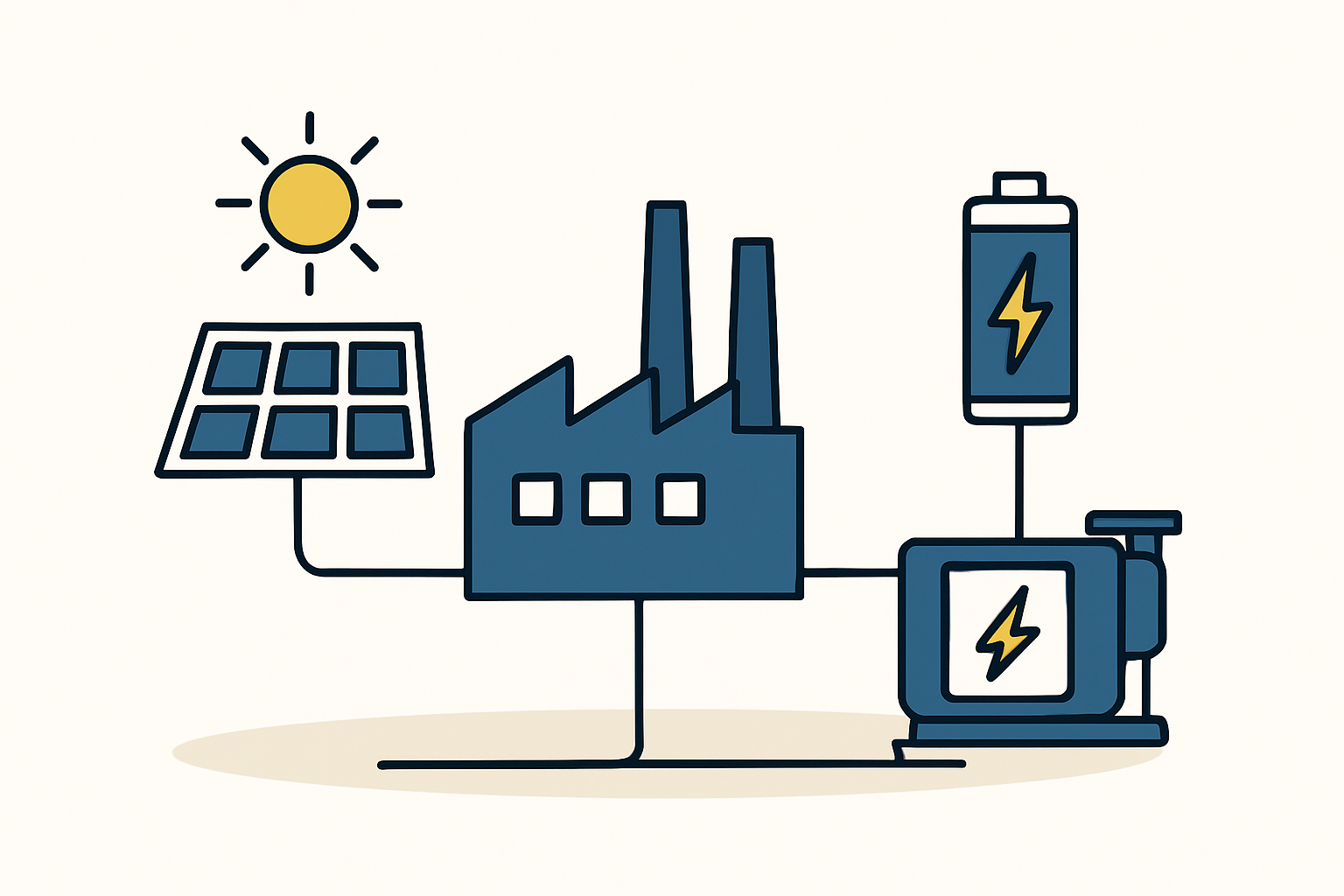
To mitigate the risks of grid instability, a dedicated on-site hybrid power system is the most reliable and cost-effective solution. This system creates a private, stable microgrid for the factory, delivering perfect power quality 24/7, regardless of the state of the national grid.
The typical components of this system include:
-
Solar PV Array: A ground-mounted or rooftop solar installation serves as the primary power source during daylight hours. This not only provides clean energy but also significantly reduces the factory’s long-term operational costs.
-
Battery Energy Storage System (BESS): This is the core of the solution. The BESS stores excess energy from the solar array and provides instantaneous, uninterrupted power the moment the grid fails. The transition is seamless; manufacturing equipment continues to run without even a flicker.
-
Backup Diesel Generator: For prolonged grid outages or during periods of high demand that exceed the capacity of the solar and battery system, a diesel generator serves as the final layer of redundancy. It ensures the factory can operate indefinitely, under any external conditions.
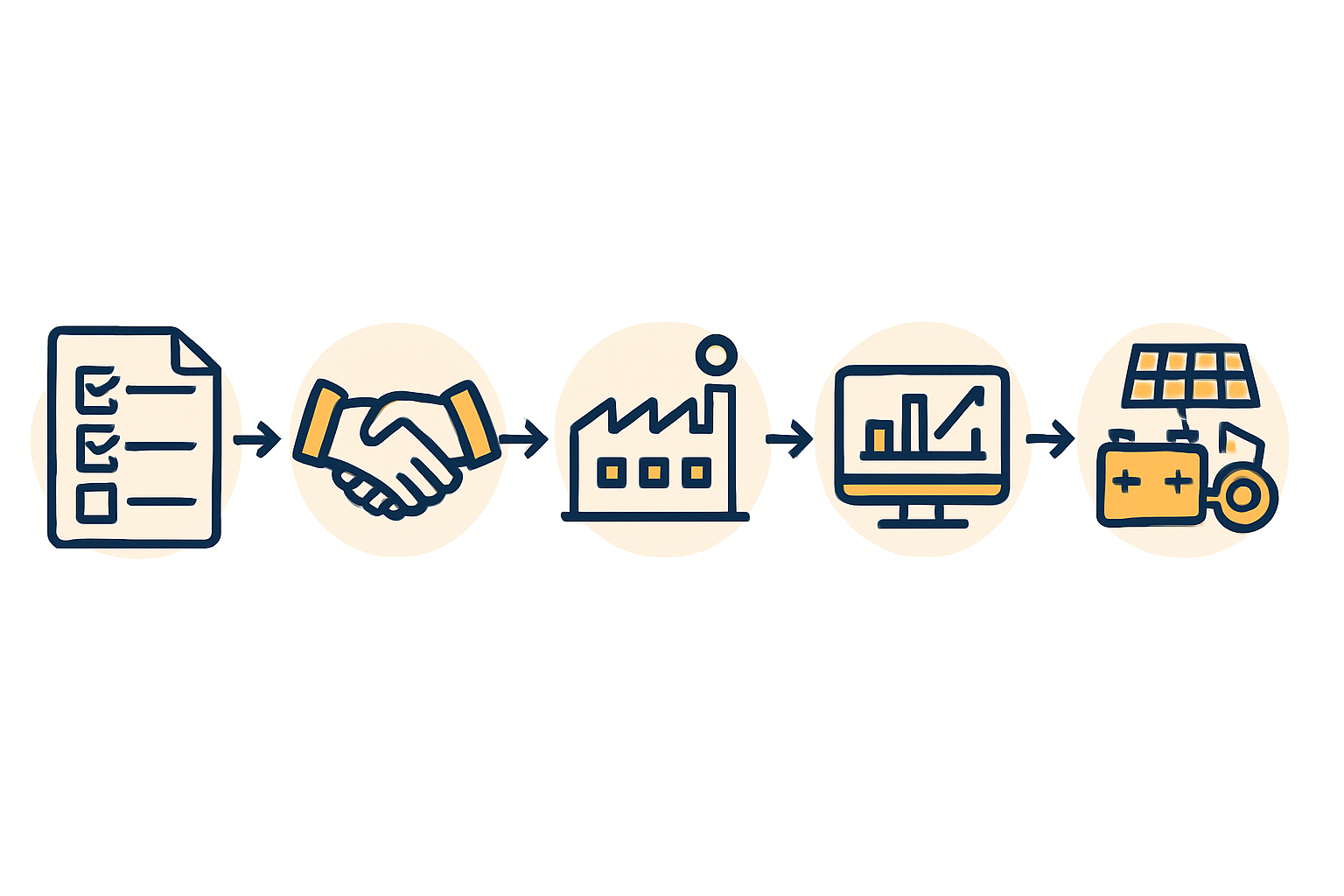
This three-tiered approach provides complete energy independence and operational certainty. The integration of these components is a core element of comprehensive turnkey factory planning, as it directly protects the primary capital investment.
Frequently Asked Questions (FAQ)
Is a hybrid power system a significant additional cost?
While it requires an upfront investment, the system is best viewed as insurance against far greater potential losses. The cost of a single day of lost production, wasted materials, or damaged machinery can easily exceed the expense of a reliable power system. Moreover, on-site solar generation provides substantial long-term savings on electricity costs.
Why not rely solely on a diesel generator for backup?
A diesel generator alone has two major disadvantages. First, there is a startup delay of several seconds, which is long enough to disrupt and damage sensitive manufacturing equipment. A BESS provides instantaneous power. Second, continuous reliance on diesel is expensive due to high fuel and maintenance costs, making it an uneconomical primary backup solution.
How much space is required for such a system?
The space requirement depends on the factory’s load and desired autonomy. The solar array can often be installed on the factory roof, utilizing non-productive space. The BESS and generator are typically housed in a small, dedicated area on the property. These considerations are a standard part of professional factory layout planning.
Can the factory sell excess energy back to the Togolese grid?
The possibility of selling surplus electricity depends on national regulations and the policies of the local utility, CEET (Compagnie Énergie Électrique du Togo). While technically feasible, the primary purpose of this system is to ensure self-sufficiency and operational stability, not to function as a commercial power plant.
Turning a Challenge into a Strategic Advantage
The condition of Togo’s national power grid presents a clear and manageable challenge for prospective solar module manufacturers. Attempting to run a modern factory directly from the grid without a robust backup and conditioning system is a high-risk strategy that will likely fail.
However, by incorporating an on-site hybrid power system into the initial project plan, investors can completely neutralize this risk. This proactive approach not only guarantees the smooth, uninterrupted production essential for quality and profitability but also enhances the project’s bankability. It demonstrates a thorough understanding of the local operating environment and a commitment to building a resilient, world-class manufacturing facility.