An entrepreneur planning a new solar module factory often focuses on the most visible elements, like state-of-the-art machinery, building layout, and initial investment figures. While these are undoubtedly critical, a project’s profitability can hinge on an often-underestimated factor: logistics.
The efficiency of your supply chain—getting raw materials in and finished products out—is not a secondary detail but a primary pillar of success.
Consider the scale: a medium-sized 50 MW solar factory needs to import thousands of tons of glass, solar cells, aluminum, and other components annually. It must also export over 100,000 finished solar modules. Without a robust logistical framework, this massive flow of materials can quickly become a bottleneck, leading to costly delays and eroding any competitive advantage.
This article explores the strategic importance of port infrastructure by looking at Spain’s major maritime gateways: Valencia, Algeciras, and Barcelona. For any professional considering entry into solar manufacturing, understanding what world-class logistics look like provides a crucial benchmark for evaluating potential factory locations, anywhere in the world.
The Unseen Engine: Why Logistics Dictate Success in Solar Manufacturing
A solar module assembly line is fundamentally a conversion business, turning globally sourced raw materials into high-value finished goods for regional and international markets. The efficiency of this process is directly tied to the reliability and cost-effectiveness of its supply chain.
The modern solar supply chain typically involves:
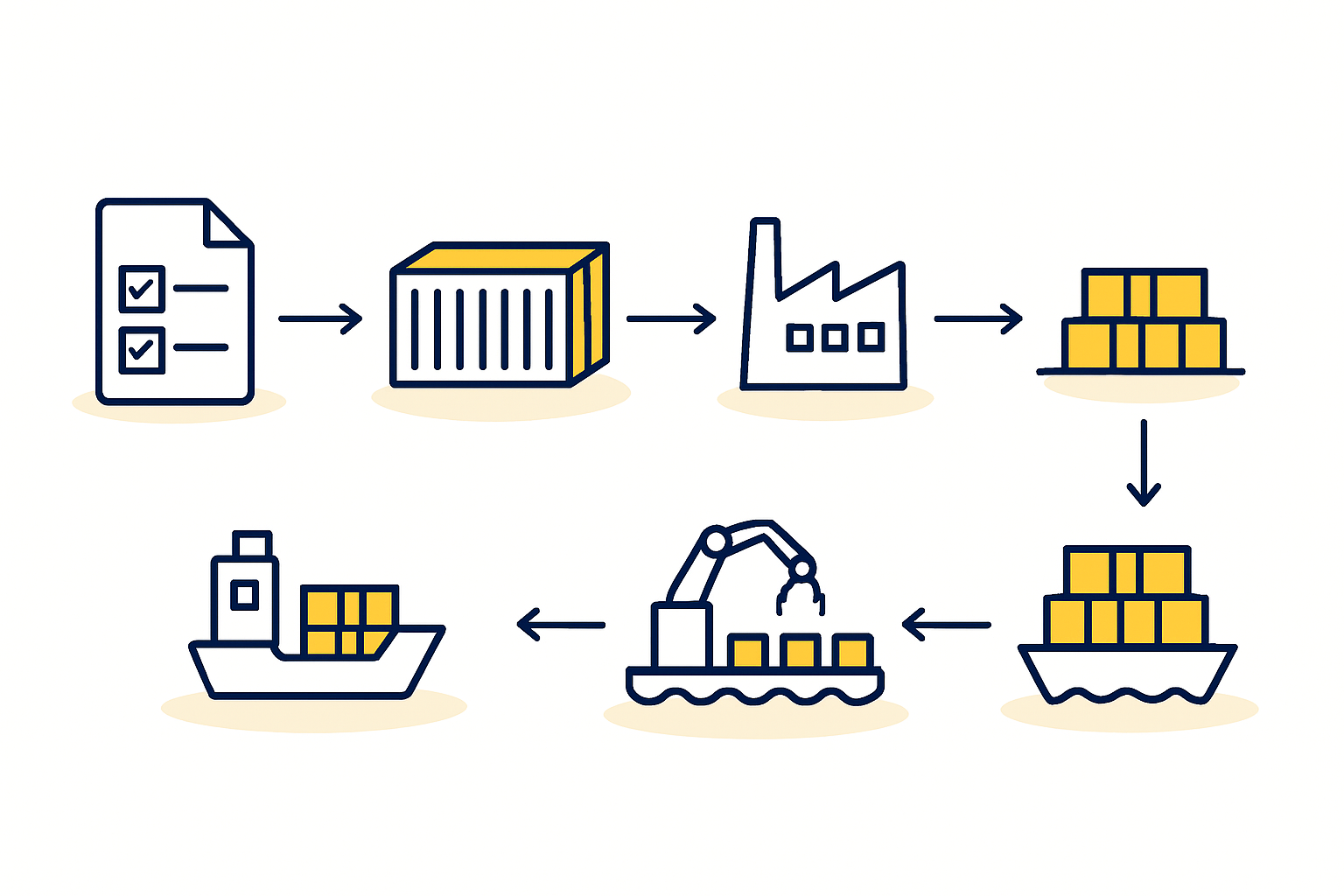
Inbound Logistics: Importing key components such as solar cells, tempered glass, EVA encapsulant, and aluminum frames, predominantly from manufacturing hubs in Asia.
Outbound Logistics: Exporting finished solar modules to customers, who may be located domestically or across continents.
An optimized logistical operation minimizes warehousing costs with just-in-time delivery, reduces the risk of production stoppages from material shortages, and ensures timely delivery to customers. For this reason, a comprehensive solar module manufacturing business plan must include a thorough analysis of the logistical infrastructure.
A Global Benchmark: Analyzing Spain’s Maritime Gateways
As some of the busiest ports in the Mediterranean, Spain’s maritime gateways offer a compelling case study in how strategic location and modern infrastructure create a competitive advantage. They serve as vital links connecting Europe with Asia, Africa, and the Americas.
Ready to make big Profits?
The solar Industry is Booming
WE HELP NEWCOMERS to the solar industry start their own solar module production line. Customers can make BIG PROFITS by selling modules and finding investors, without wasting money and time on things they don't need!
The Port of Valencia: A Model of Efficiency and Connectivity
Consistently ranked among the top ports in Europe, the Port of Valencia handles over 5 million TEUs (Twenty-foot Equivalent Units) in container traffic annually. Its significance for a manufacturing operation lies in several key factors:
-
Direct Asian Connections: It boasts extensive maritime connections with major ports in China and Southeast Asia, ensuring reliable and frequent shipments of raw materials.
-
Intermodal Excellence: Valencia is not just a seaport; it is a logistics hub. Strong rail and road networks connect the port to the rest of the country and Europe, facilitating the smooth flow of goods from the dock to the factory floor.
-
Commitment to Modernization: The port has invested heavily in digitalization and sustainability, streamlining customs processes and reducing vessel turnaround times—critical factors for maintaining a lean production schedule.
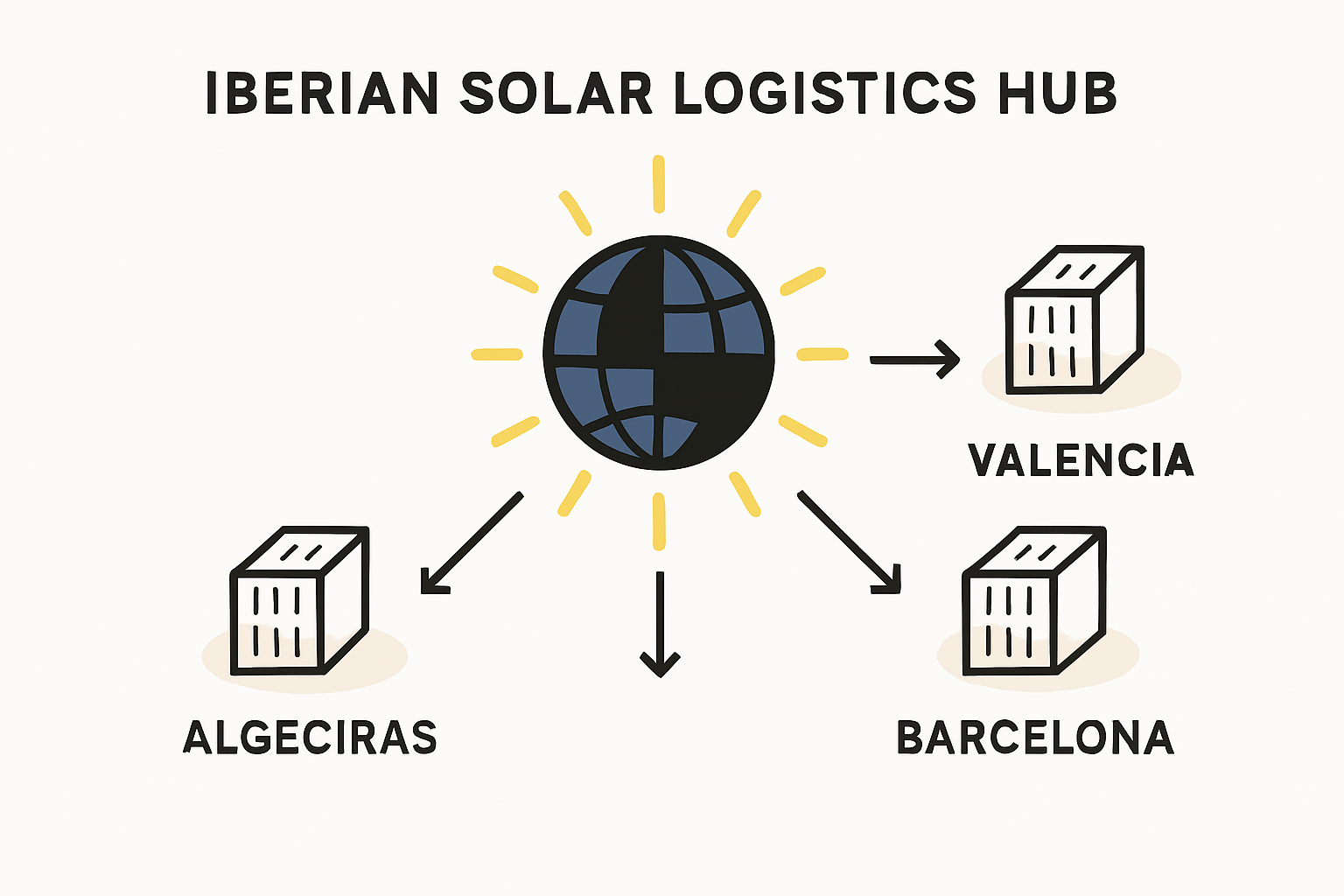
The Port of Algeciras: The Strategic Transshipment Hub
Located at the Strait of Gibraltar, the Port of Algeciras has a unique geographical advantage. It is the leading transshipment hub in the Mediterranean, serving as a central point where cargo is transferred from large ocean-faring vessels to smaller ships destined for other ports.
For a solar manufacturer, especially one targeting markets in Africa or the Americas, this advantage is significant. Algeciras provides access to a vast network of shipping routes that might not be served directly from other ports. Its deep-water terminals can accommodate the world’s largest container ships, making it a pivotal point on major East-West trade routes.
The Port of Barcelona: The Integrated Logistics Powerhouse
The Port of Barcelona combines high traffic volumes with a focus on value-added logistics. Situated near one of Spain’s largest industrial and commercial zones, it creates a synergistic ecosystem. For a manufacturing business, its value lies in:
-
Integrated Logistics Zones: The port features extensive logistics parks that offer warehousing, consolidation, and other services that help a manufacturer manage inventory more effectively.
-
Diverse Connectivity: Like Valencia, it offers strong connections to Asia and a well-developed network for distributing goods throughout Southern Europe and North Africa.
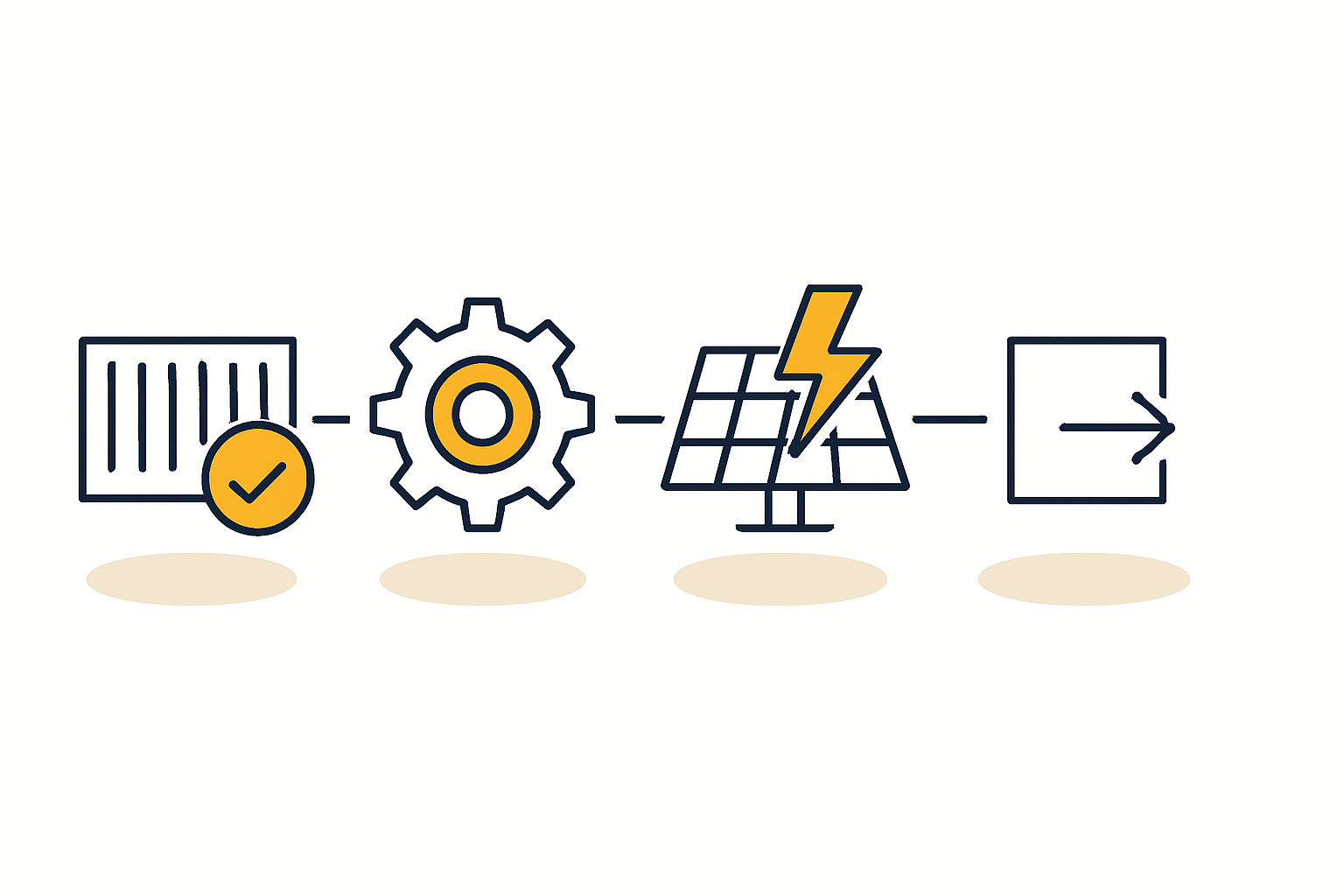
From Components to Containers: The Solar Supply Chain in Motion
Understanding what these ports offer is one part of the equation; the other is seeing how they facilitate the specific needs of a solar factory.
Importing Raw Materials: The Journey from Asia
With the core components of a solar module sourced globally, a reliable port is essential for managing the inbound flow of materials. The right infrastructure allows a factory to receive regular shipments of:
- Solar Cells
- Solar Glass
- EVA Film and Backsheets
- Aluminum Frames
- Junction Boxes
Efficient port operations and customs clearance ensure materials spend less time in transit or storage and more time on the production line. This is a crucial consideration when specifying the list of solar module manufacturing machines, as machine throughput must be matched by a reliable supply of materials.
Exporting Finished Modules: Reaching Global Markets
Once assembled, solar modules must be shipped safely and cost-effectively. A well-connected port provides access to a wide range of global destinations. For entrepreneurs in Africa, the Middle East, or Latin America, a nearby port with regular sailings to key export markets is fundamental to growth. The ability to load containers and ship them on predictable schedules is key to fulfilling contracts and building a reputation for reliability.
Key Logistical Questions for Your Solar Factory Project
The Spanish example provides a clear framework for evaluation. Before committing to a location for a solar factory, any professional should ask the following questions about their local port and transport infrastructure:
-
Global Connectivity: Does the nearest major port have direct and regular services from key manufacturing hubs in Asia?
-
Transshipment Capabilities: Does it serve as a hub with onward connections to your target export markets (e.g., other parts of Africa, Europe, or the Americas)?
-
Port Efficiency: What is the average vessel turnaround time? How efficient and transparent are the customs and clearance processes? High demurrage fees (charges for delayed container pickup) can quickly become a significant hidden cost.
-
Inland Transportation: How strong are the road and rail links between the port and your proposed factory site? Delays in inland transport can negate the benefits of an efficient port.
-
Handling Capacity: Is the port equipped to handle large container volumes and the specific needs of your cargo?
Based on experience from J.v.G. Technology turnkey projects, logistical planning is a foundational step. Overlooking these questions can lead to significant operational challenges and unforeseen costs that can threaten the enterprise’s long-term viability.
Frequently Asked Questions (FAQ)
What is a ‘TEU’ and why is it important for shipping?
TEU stands for ‘Twenty-foot Equivalent Unit.’ It is a standard unit of measurement for containerized cargo capacity. A standard 40-foot shipping container is equal to two TEUs. A port’s annual TEU volume is a key indicator of its size and capacity.
Why are most solar raw materials sourced from Asia?
Over the past two decades, a highly specialized and cost-competitive supply chain for photovoltaic components, particularly solar cells, has developed in China and Southeast Asia. These regions benefit from economies of scale, advanced manufacturing technology, and government support, making them the primary source for most module manufacturers globally.
What is the difference between a direct port and a transshipment hub?
A direct port is the final destination for cargo on a particular shipping route. A transshipment hub, like Algeciras, is a strategic interchange point where containers are moved from one vessel to another to reach their final destination. Hubs are critical for global trade as they connect major long-haul routes with smaller regional ‘feeder’ routes.
How does port digitalization improve the supply chain?
Digitalization involves using technology to manage and automate port operations. This includes electronic customs declarations, automated container tracking, and scheduling systems. For a manufacturer, this leads to greater transparency, reduced paperwork, faster clearance times, and more predictable supply chain management.
Your Factory’s Foundation Is More Than Just Concrete
While the choice of machinery and factory design are critical, they are only part of the success formula. Strategically selecting a location with robust, efficient, and well-connected port infrastructure is equally important. As the Spanish case study demonstrates, world-class ports act as the heart of an industrial ecosystem, pumping raw materials in and finished goods out with reliability and efficiency.
For any entrepreneur entering the solar manufacturing space, a deep understanding of logistics is not an optional extra—it is a fundamental requirement for building a resilient and profitable business.