An entrepreneur looking at a map of the Pacific might see a collection of small, isolated markets. A strategic investor, however, sees something different: a region with some of the highest electricity costs in the world, a deep reliance on volatile imported fuels, and a clear, unified ambition to embrace renewable energy.
The core challenge—and the opportunity—is not a lack of demand for solar, but a shortage of local supply tailored to the region’s unique needs.
For those considering entry into the solar manufacturing sector, the first question is often, ‘How large should my factory be?’ The standard answer might involve global benchmarks of 100 MW or more, but this approach is unsuited for the Pacific Islands. A successful venture here requires a precise, demand-driven strategy that starts not with machine capacity, but with a deep understanding of the local energy landscape.
This article outlines a framework for determining the optimal production line size for a market like Samoa, focusing on analyzing real-world demand from residential, commercial, and government sectors across the Pacific.
Understanding the Unique Pacific Island Energy Landscape
The economic case for solar in the Pacific is exceptionally strong. Electricity prices frequently range from US$0.30 to US$0.40 per kilowatt-hour, driven by the high cost of importing and distributing diesel fuel. These high costs create a significant financial burden on households, businesses, and governments, and expose their economies to global fuel price shocks.
In response, nations across the region have set ambitious renewable energy targets. Samoa, for example, aims for 100% renewable electricity generation by 2025. This government-led initiative creates a highly favorable environment for investment in local solar infrastructure.
The key challenge for an aspiring manufacturer is to serve a market that is geographically dispersed yet shares common needs. Samoa’s central position within Polynesia makes it a logical hub for supplying neighboring island nations like Tonga, Tuvalu, and the Cook Islands.

A local manufacturing facility in Samoa can transform this logistical challenge into a strategic advantage, serving as a central point for regional distribution and support. From this hub, a successful business plan begins with a clear analysis of who the end customers are.
Deconstructing Local Demand: The Three Core Markets
Unlike large, grid-dominated markets in Europe or North America, demand in the Pacific Islands is more granular and largely focused on off-grid or hybrid applications. A realistic factory plan must be sized to serve three primary segments.
The Residential Off-Grid Market
This is the largest and most foundational segment. Thousands of households across the islands either have no access to a stable grid or face prohibitively high electricity bills. For these customers, small-scale solar systems are not a luxury but a necessity.
Typical System Size: 1 to 5 kW per household.
Module Requirement: Demand is not for the large 500W+ panels common in utility-scale farms. The market requires smaller, durable, and easy-to-handle modules, typically in the 250Wp to 380Wp range (standard 60- or 72-cell formats). These are better suited for smaller roof spaces and inter-island transport.
The Commercial and Tourism Sector
Resorts, hotels, and local businesses are anchor clients for a solar manufacturer. For these clients, who rely on a constant power supply and often depend on expensive, noisy diesel generators, solar offers energy independence, operational stability, and significant cost savings. They often require larger, custom-sized systems and value local technical support and supply.
Government and Institutional Projects
Government agencies and non-governmental organizations (NGOs) are actively funding projects to power critical infrastructure, including rural schools, health clinics, water pumps, and telecommunication towers. While these projects may be smaller in individual size, they represent a steady stream of demand and are crucial for community development. Securing a reputation as a reliable local supplier for these initiatives can build long-term business stability.
Translating Demand into Production Capacity
With a clear understanding of the market segments, it’s possible to model the required production capacity. Instead of choosing a factory size and hoping for demand, a prudent investor calculates the demand and builds a factory to meet it.
Consider a simplified business model for a Samoan facility:
-
Residential Target: If the goal is to supply 2,000 homes per year with an average system size of 3 kW, this translates to 6 MW of annual module demand (2,000 homes x 3 kW/home).
-
Commercial Target: Securing projects for 20 mid-sized resorts or businesses, each requiring a 50 kW system, adds another 1 MW of demand (20 businesses x 50 kW/business).
-
Institutional Target: Fulfilling various government and NGO tenders could realistically account for another 1-2 MW annually.
In this scenario, the immediate, verifiable local and regional demand is approximately 8-9 MW per year. This data provides a powerful starting point. It suggests that a massive 50 MW line would be oversized and capital-intensive, while a very small 2 MW line would fail to achieve economies of scale.
This points to a strategic starting capacity in the 10 MW to 25 MW range. This size is large enough to be cost-efficient yet nimble enough to align with real-world regional demand, offering room to grow and capture a larger export market as the business matures. The process of developing this business model is a central theme in learning how to start a solar module factory.
The Strategic Advantage of Local Assembly in Samoa
A common question is whether it is more effective to simply import finished modules from Asia. For the Pacific Islands, local assembly offers distinct and decisive advantages.
Overcoming Logistical Hurdles
Importing finished solar modules to remote islands is logistically complex and expensive. The modules are bulky, fragile, and subject to damage during transport. In contrast, shipping raw materials—glass, solar cells, aluminum frames—in bulk is far more efficient and cost-effective. Local assembly converts this logistical disadvantage into a competitive edge.

Building for a Cyclone-Prone Environment
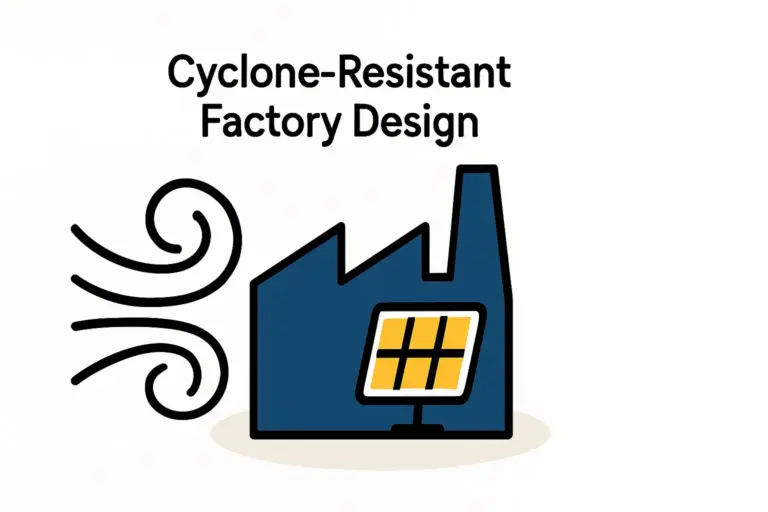
The Pacific is prone to severe weather, including cyclones. Standard modules may not be robust enough to withstand these conditions. A local factory can produce panels specifically engineered for high wind loads and resistance to salt mist corrosion by using thicker glass, reinforced frames, and specific sealants. Securing the right solar module certifications for durability is a powerful market differentiator that importers cannot easily match.
The Role of Equipment in a Flexible Factory
A regional factory doesn’t require the same machinery as a gigawatt-scale facility. Modern, semi-automated production lines are designed for flexibility, allowing a manufacturer to switch between different module types and sizes with minimal downtime. This agility is crucial for serving the diverse needs of the residential, commercial, and institutional markets. Choosing the right solar panel manufacturing equipment is a critical step in ensuring the factory is both efficient and responsive to market demands. Based on experience from J.v.G. turnkey projects, a well-planned semi-automated line can be operated effectively with a team of fewer than 30 trained staff.
Frequently Asked Questions (FAQ)
What is a realistic starting capacity for a solar factory in Samoa?
Based on a thorough analysis of local and regional demand, a starting capacity of 10 MW to 25 MW is often the most strategic choice. This allows for economies of scale while remaining aligned with tangible market opportunities, preventing over-investment in idle capacity.
What kind of solar modules should a Pacific Island factory produce?
The primary demand is for durable, high-quality 60-cell and 72-cell modules (approximately 250Wp to 380Wp). These are ideal for residential rooftops, commercial installations, and off-grid projects. There is less demand for the very large-format modules used in utility-scale solar farms.
Is finding skilled labor a major obstacle?
While specialized technical experience may be limited locally, modern semi-automated production lines are designed for straightforward operation. A comprehensive training program, often included in turnkey factory solutions provided by partners like J.v.G. Technology, can equip a local team with the necessary skills within weeks.
How can a local factory compete with low-cost modules from major international producers?
A local manufacturer competes on factors other than price per watt alone. Key advantages include:
-
Lower logistical costs and reduced risk of transport damage.
-
Customization for local environmental conditions (e.g., cyclone resistance).
-
Faster availability and local technical support.
-
Exemption from import duties that may be levied on finished goods but not on raw materials.
-
Building a trusted, local brand that supports the regional economy.
Ultimately, establishing a solar module factory in a market like Samoa is less about competing on a global scale and more about becoming an indispensable part of the regional energy solution. By right-sizing the facility based on tangible local demand, an entrepreneur can build a resilient, profitable, and impactful business that accelerates the Pacific’s transition to a clean energy future.