The recent surge in US-based solar manufacturing, driven by legislation like the Inflation Reduction Act (IRA), has created an unprecedented opportunity for entrepreneurs and established companies. While much of the focus is on securing capital and technology, a critical factor often determines whether a new factory succeeds or fails: its workforce. A state-of-the-art facility is only as effective as the skilled individuals who operate and maintain it.
For investors entering this sector, building a capable team presents unique challenges and opportunities. This isn’t simply a matter of hiring; it requires a strategic approach to finding, training, and retaining talent in a competitive market. This article outlines a framework for developing a robust workforce strategy, from identifying regional talent pools to establishing effective training programs that ensure production quality and long-term success.
The US Solar Labor Landscape: Growth and New Challenges
The American solar industry is experiencing significant expansion. According to the Interstate Renewable Energy Council (IREC), the solar workforce grew by 3.5% in 2022 to over 263,000 workers. More importantly for new investors, the manufacturing sub-sector grew by an impressive 13%, reaching nearly 37,500 jobs. This growth is set to accelerate, with projections indicating the IRA could help create over 1.5 million new clean energy jobs across the economy.
This rapid expansion, however, creates a significant challenge: competition for skilled labor is intensifying. The primary issue is a ‘skills gap’ between the general manufacturing workforce and the specific competencies required for photovoltaic (PV) production. As new factories come online, they are all seeking individuals with a similar, specialized skill set, placing upward pressure on wages and making recruitment more complex.
Identifying Regional Talent Pools: Where to Build Your Team
A solar factory’s location has a profound impact on its ability to attract and retain a qualified workforce. The United States has several established and emerging manufacturing hubs, each with distinct advantages and disadvantages.
Established Hubs (e.g., Ohio, Georgia, Arizona):
Advantages: These regions often have a deep-rooted manufacturing culture, a large pool of experienced industrial workers, and established vocational training infrastructure.
Disadvantages: Competition is fierce. Existing automotive, aerospace, and semiconductor industries are often competing for the same technicians and engineers, driving up labor costs.
Emerging Hubs (e.g., South Carolina, Texas, Indiana):
Advantages: Less direct competition for labor may result in lower wage pressure and higher employee loyalty. State and local governments in these areas are often highly motivated to attract new industries with grants and support programs.
Disadvantages: The local talent pool may lack specific high-tech manufacturing experience, requiring a greater investment in foundational training and development programs.
A thorough analysis of a region’s demographics, existing industries, and educational institutions is a critical early step. This assessment should be a core component of any comprehensive solar panel manufacturing business plan.
Ready to make big Profits?
The solar Industry is Booming
WE HELP NEWCOMERS to the solar industry start their own solar module production line. Customers can make BIG PROFITS by selling modules and finding investors, without wasting money and time on things they don't need!
Building a Competitive Workforce: Roles, Skills, and Compensation
A typical solar module assembly plant requires a multi-layered team with diverse skills. Understanding these roles and their market-rate compensation is essential for accurate financial modeling.
Key Production Roles and Typical Wage Structures
Production Operator: Responsible for operating specific machines on the assembly line (e.g., stringer, laminator). Requires attention to detail and process discipline.
Typical Wage: $18–$25 per hour.
Maintenance Technician: A critical role responsible for preventative maintenance, troubleshooting, and repair of automated equipment. Often requires a background in mechanics, electronics, and PLC (Programmable Logic Controller) systems.
Typical Wage: $25–$35 per hour.
Quality Control (QC) Inspector: Conducts visual inspections, runs tests (e.g., EL testing, sun simulation), and ensures all modules meet quality standards.
Typical Wage: $20–$28 per hour.
Process Engineer: Optimizes the production line for efficiency, yield, and quality. Requires a degree in engineering (e.g., mechanical, electrical, or industrial) and an analytical mindset.
Annual Salary: $70,000–$110,000.
These figures can vary by 15–20% depending on the region. These labor expenses are a significant part of the overall cost to start a solar panel factory and must be planned for carefully.
Bridging the Skills Gap: Training and Development Strategies
Simply hiring experienced personnel is often not a viable strategy, given the scarcity of talent. The most successful manufacturers build their workforce through a combination of strategic partnerships and robust in-house training.
The Power of Local Partnerships
Collaboration with local community colleges and technical schools is one of the most effective ways to build a sustainable talent pipeline. A proactive approach involves more than just attending career fairs; it means co-developing curricula.
By partnering with an educational institution, a manufacturer can help shape a certificate or associate degree program that teaches the specific skills required for modern PV assembly. This could include modules on:
- Cleanroom protocols and safety procedures.
- Basics of semiconductor handling.
- Operation of automated manufacturing equipment.
- Quality assurance principles in PV production.
This creates a direct pathway for graduates to join the company with a relevant, practical skill set, reducing the internal training burden.
Structuring an In-House Training Program
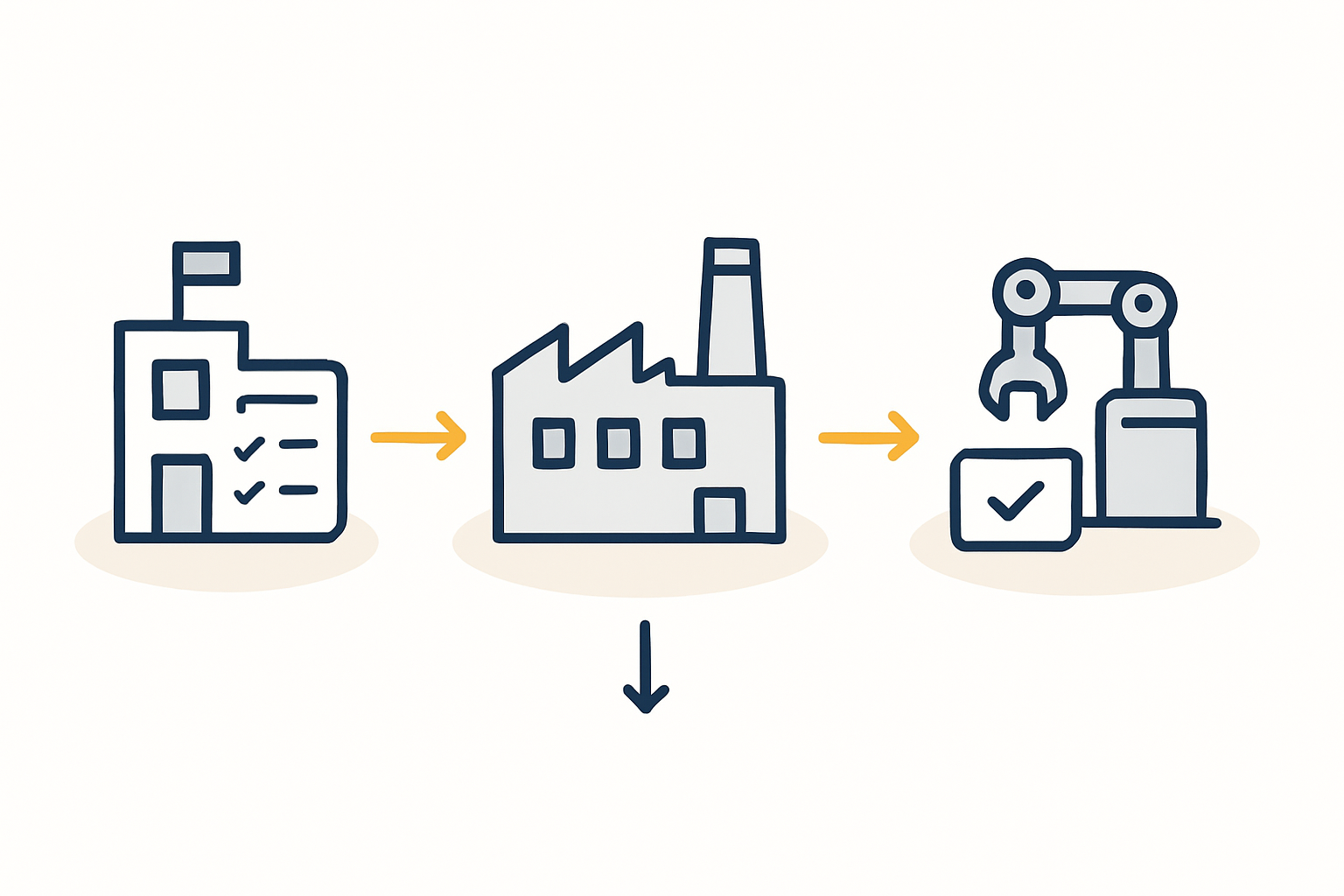
Even with strong external partnerships, a structured internal training program is essential. This program ensures consistency and quality, regardless of an employee’s prior experience. Key components include:
-
Onboarding: Introduction to the company culture, safety standards, and the fundamentals of solar energy technology.
-
Machine-Specific Training: Hands-on instruction for each piece of equipment, often led by a senior operator or a specialist. Experience from J.v.G. turnkey projects shows this phase is most effective when key personnel receive initial training directly from the machine suppliers.
-
Cross-Training: Equipping employees to work at multiple stations within the solar panel factory layout creates a more flexible and resilient workforce.
-
Continuous Improvement: Ongoing training on new processes, quality updates, and troubleshooting techniques.
Long-Term Success: Retention and Career Progression
In a competitive market, retaining skilled employees is as important as recruiting them. High turnover rates lead to productivity losses, increased training costs, and inconsistent product quality. A strong retention strategy is built on three pillars:
-
Competitive Compensation: Offering wages and benefits that meet or exceed the local market average.
-
Clear Career Paths: Showing employees a clear pathway for advancement, from an entry-level operator to a team lead, supervisor, or technician role.
-
Positive Work Culture: Fostering an environment of respect, safety, and continuous learning where employees feel valued.
A well-defined workforce strategy isn’t an afterthought; it’s a foundational element that supports every aspect of the manufacturing operation.
Frequently Asked Questions (FAQ)
How many employees are needed for a small-scale solar factory?
A typical semi-automated 20–50 MW solar module assembly line usually requires 30 to 50 employees per shift to manage production, quality control, maintenance, and logistics.
What are the most difficult positions to fill?
Maintenance technicians with experience in industrial automation and process engineers with a background in high-volume manufacturing are often the most challenging roles to fill due to the specific technical expertise required.
Can workers from other manufacturing sectors be hired?
Absolutely. Individuals with experience in automotive, electronics, or consumer goods manufacturing often possess transferable skills in process discipline and quality control. They will, however, require specific training on PV technology and the delicate handling of materials like silicon wafers and solar glass.
How long does it take to train a new production operator?
For an individual with no prior manufacturing experience, a structured program can typically bring them to basic proficiency on a single machine within four to eight weeks. Achieving mastery and the ability to troubleshoot minor issues can take several months.
What is the role of a turnkey provider in workforce development?
A turnkey solar manufacturing line provider often includes initial training as part of the package. This typically involves training the client’s core team of engineers and technicians on machine operation, maintenance, and process control at the supplier’s facility. This core team is then equipped to train the rest of the local workforce.