A solar module factory’s success is often measured by its production line’s efficiency and the quality of its final product. Yet, a critical and frequently underestimated factor determines a project’s viability long before the first module is assembled: logistics.
For an entrepreneur establishing a factory in North Africa, the journey of heavy machinery to the facility and the path of finished goods to market are just as vital as the manufacturing process itself. This case study examines the logistical framework for a hypothetical solar module factory in Tunisia using the Port of Radès as its central hub. It outlines two primary flows—importing heavy machinery and exporting finished solar modules—to provide a practical blueprint for navigating the opportunities and challenges of this strategic gateway.
Why the Port of Radès is a Strategic Choice for Solar Manufacturing
The Port of Radès is not just another seaport; it is Tunisia’s primary economic artery. Handling approximately 80% of the country’s container traffic, its strategic importance is immense. For a new manufacturing venture, its location offers two distinct advantages: proximity to European markets and access to beneficial economic zones.
Exporting solar modules from Tunisia to Europe provides a significant competitive edge over Asian producers, primarily through reduced shipping times and costs. Furthermore, the presence of Free Trade Zones (FTZs) near the port allows businesses to import machinery and raw materials—and export finished goods—with substantial tax and customs duty exemptions, directly improving the operation’s financial model.
However, this strategic position also presents challenges. The high volume of traffic can lead to significant port congestion, with documented waiting times of up to 12 days. Such delays underscore the need for meticulous planning, as they can directly impact project timelines and cash flow.
The Two Core Logistical Flows: A Step-by-Step Breakdown
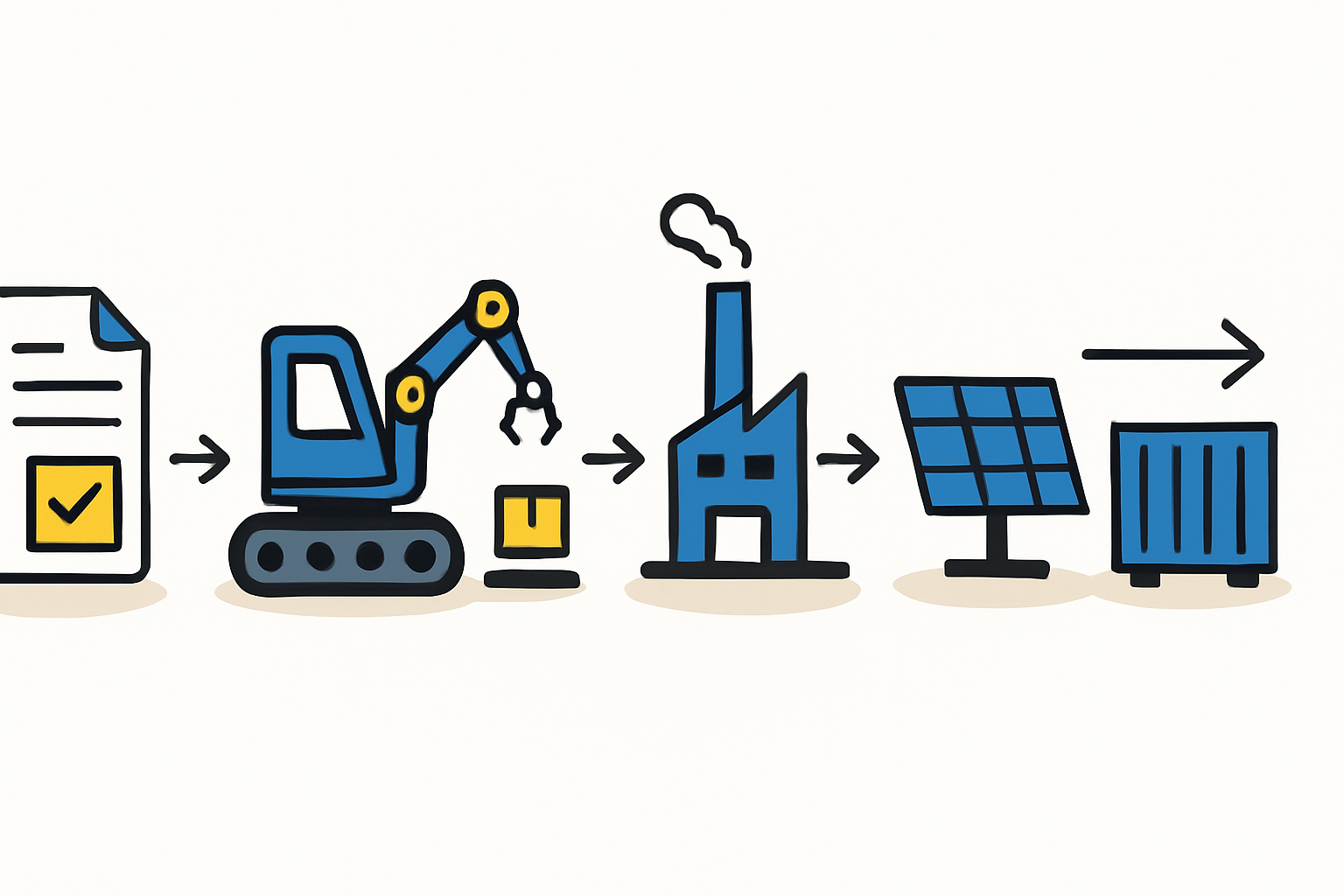
A solar factory’s logistics can be divided into two critical pathways: the inbound flow of production equipment and the outbound flow of finished solar modules. Each requires a distinct strategy and a unique set of considerations.
Phase 1: Importing Production Machinery
The initial factory setup involves transporting large, heavy, and sensitive equipment from global suppliers to the factory floor. This is a one-time, high-stakes process where errors can cause costly delays.
Step 1: Customs Clearance and Documentation
This first step is often the most significant bottleneck. Clearing capital goods like laminators, stringers, and cell testers is a complex process that demands flawless documentation. Bills of lading, commercial invoices, certificates of origin, and technical specification sheets must all be prepared and submitted with perfect accuracy. Any discrepancy can lead to inspections and delays, compounding the issues of port congestion. Engaging an experienced local customs broker is not a luxury but a necessity.
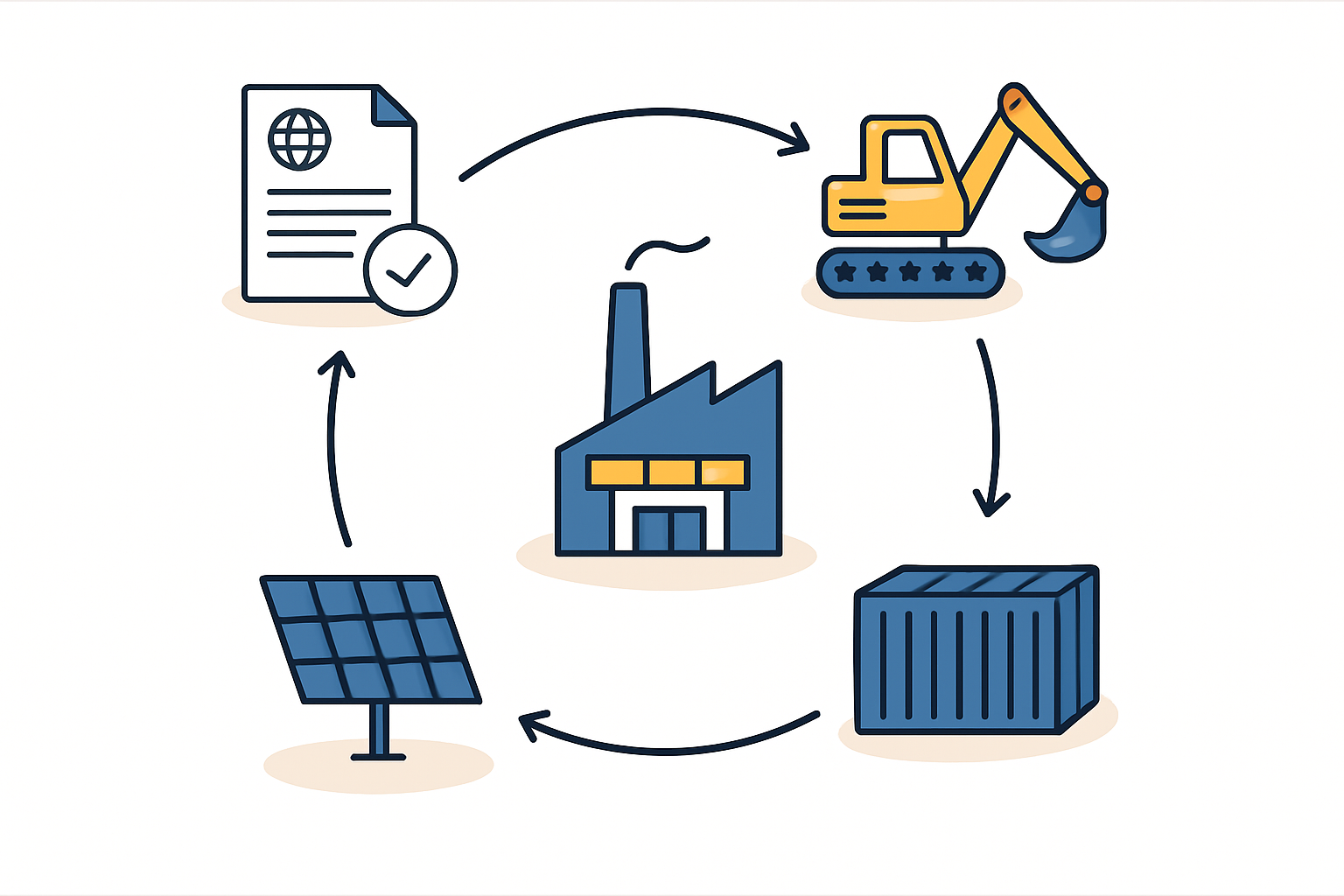
Step 2: Handling and Unloading Heavy Equipment
A solar laminator can weigh over 20 tonnes. Unloading such machinery from a ship and securing it for inland transport requires specialized equipment like heavy-lift cranes and experienced personnel. Based on experience from J.v.G. turnkey projects, coordinating with port authorities and a reliable freight forwarder well in advance is crucial to ensure the right equipment is available when the vessel arrives.
Ready to make big Profits?
The solar Industry is Booming
WE HELP NEWCOMERS to the solar industry start their own solar module production line. Customers can make BIG PROFITS by selling modules and finding investors, without wasting money and time on things they don't need!
Step 3: Inland Transportation and Installation
Once cleared, the machinery must be transported from the port to the factory. This involves planning the route to accommodate oversized loads, arranging for police escorts if necessary, and ensuring the vehicle is appropriate for the equipment’s weight and dimensions. The final step—moving the machinery inside the facility—must be coordinated with the installation team as a key part of the overall solar factory layout planning.
Phase 2: Exporting Finished Solar Modules
Once the factory is operational, the focus shifts to a repetitive, high-volume process: shipping finished modules to international customers. Here, efficiency and reliability are paramount.
Step 1: Professional Packaging and Containerization
Solar modules are fragile. They must be carefully packed onto pallets and loaded into containers to prevent damage during transit. Standard 40-foot containers typically hold between 600 and 800 modules, depending on their size. Proper bracing and weight distribution inside the container are essential to withstand the rigors of sea travel.
Step 2: Managing Export Documentation
For factories operating within a Free Trade Zone, the export process is streamlined. However, accurate documentation—including packing lists, commercial invoices, and certificates of compliance (such as IEC certifications)—is still required by customs authorities in the destination country.
Step 3: Navigating Port Operations for Timely Departure
Here, proactive management of port congestion is critical. A reliable freight forwarder will have established relationships and systems to book vessel space in advance, manage container drop-offs, and navigate port bureaucracy. Building buffer time into the shipping schedule is a prudent strategy for meeting delivery deadlines and protecting both revenue and reputation. The efficiency of the entire solar module manufacturing process can be undone by a single delayed shipment.
Addressing Key Challenges with Strategic Planning
While the logistical path is clear, several obstacles require foresight and careful mitigation.
Port Congestion
The most effective way to mitigate congestion is through proactive planning. This includes building buffer days into every shipping schedule, establishing a strong partnership with a proactive freight forwarder, and maintaining clear communication with customers about potential transit times. While ongoing infrastructure upgrades at the Port of Radès offer long-term optimism, short-term realities demand conservative planning.
Customs Complexity
The solution lies in expertise. A local customs broker who understands the specific requirements for importing industrial machinery and the procedures within FTZs is indispensable. All documentation should be reviewed by multiple parties for accuracy before submission.
Infrastructure and Handling
Before the first shipment arrives, a thorough assessment of the port’s heavy-lift capabilities and the inland road network is vital. This due diligence, a standard component of a turnkey solar factory setup, prevents expensive surprises during the critical installation phase.
Frequently Asked Questions (FAQ)
What is a freight forwarder and why is one essential?
A freight forwarder is a company that organizes shipments to move goods from the manufacturer to a final destination. They do not transport the goods themselves but act as an expert intermediary between the shipper and various transportation services. For a project like this, their role is crucial for negotiating freight rates, booking vessel space, handling customs documentation, and solving logistical problems as they arise.
How does a Free Trade Zone (FTZ) work for a manufacturer?
An FTZ is a special economic area where goods can be imported, handled, manufactured, and re-exported without being subject to customs duties. For a solar module manufacturer, this means machinery and raw materials (like solar cells and glass) can be imported tax-free. The finished solar modules can then be exported, with duties typically paid only in the destination country. This provides a significant cash flow and cost advantage.
What kind of insurance is needed for shipping heavy machinery?
Marine cargo insurance is essential. It should cover the full replacement value of the machinery against all risks, from the moment it leaves the supplier’s warehouse until it is installed and commissioned in the new factory. Given the high value and sensitive nature of the equipment, this is not an area for compromise.
How long does the entire import logistics process typically take?
The timeline can vary significantly. Ocean freight from Asia can take 30–40 days, while freight from Europe might take 7–14 days. Upon arrival at the Port of Radès, assuming no issues, customs clearance and inland transport could take another 7–21 days, depending heavily on port congestion and administrative efficiency. A conservative estimate from supplier departure to factory arrival would be 45–70 days.
Conclusion: Logistics as a Cornerstone of Success
This case study of the Port of Radès demonstrates that logistics is far more than mere transportation; it is a strategic function that directly impacts a project’s budget, timeline, and profitability. For entrepreneurs entering the solar manufacturing industry, understanding and planning for these complex logistical flows is fundamental to success.
By anticipating challenges like port congestion and customs complexity, and by engaging expert partners from the outset, a business can transform a potential liability into a competitive advantage, ensuring that its state-of-the-art factory is built on an equally robust and reliable supply chain.