The Solomon Islands, an archipelago of nearly 1,000 islands, presents a compelling opportunity for solar energy development. With a government mandate to transition to 100% renewable energy and roughly 80% of its population living in rural areas without reliable grid access, the demand for solar modules is substantial—creating a significant market for entrepreneurs.
However, the very geography that creates this demand—scattered islands spread across a vast ocean—also poses a formidable operational challenge: logistics.
Successfully establishing a solar module factory in such an environment depends less on production speed and more on mastering the complex web of inter-island supply chains. This is not a standard manufacturing setup; it is a logistics-first enterprise.
This guide outlines the logistical considerations for moving raw materials and finished solar modules within an archipelago, using the Solomon Islands as a practical case study.
The Core Challenge: A Decentralized Market
In a conventional market, a factory serves a contiguous landmass connected by roads and rail. An operation in an archipelago, however, must serve dozens, if not hundreds, of disconnected micro-markets—a reality that fundamentally alters the business model.
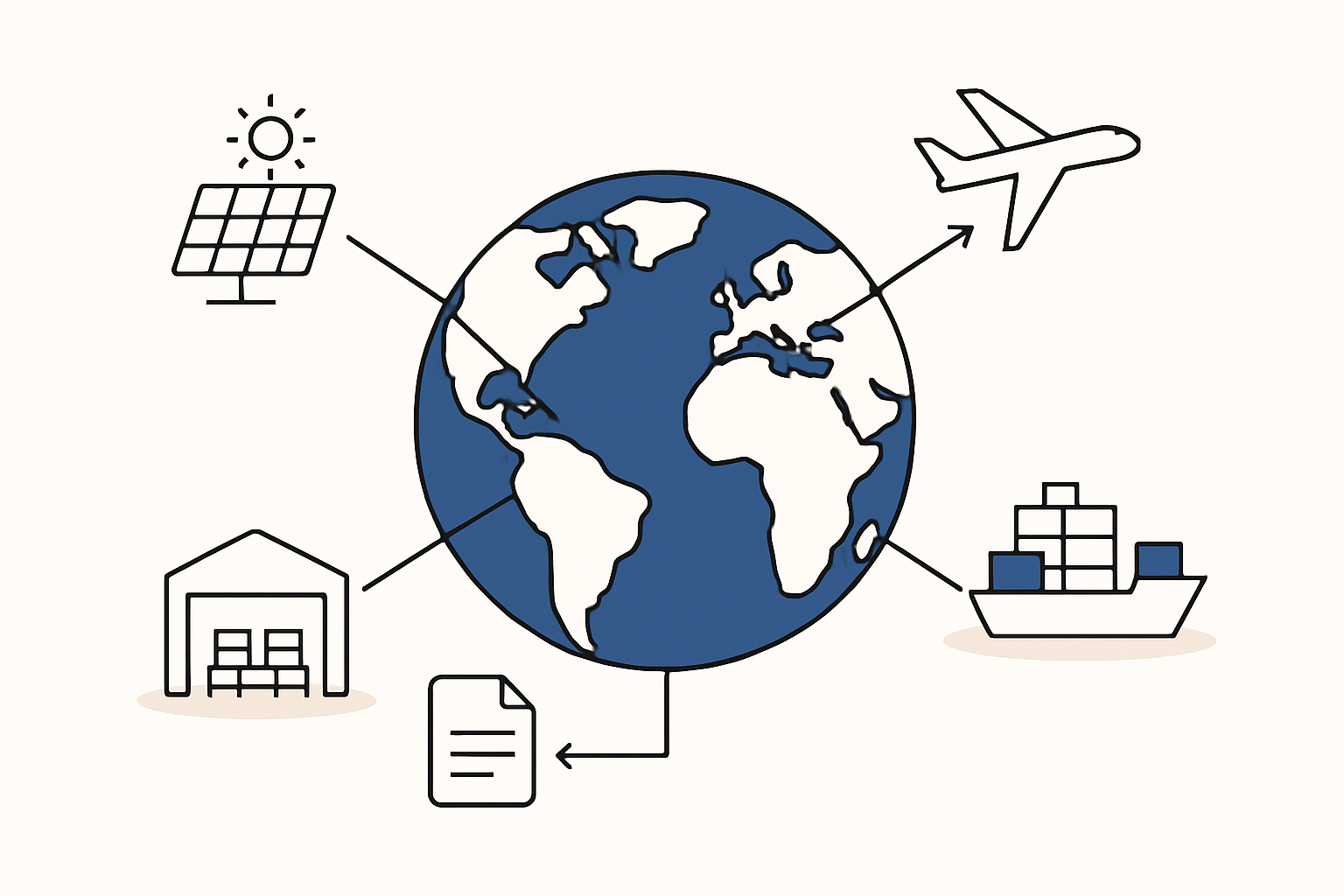
According to the World Bank, the high cost of imported diesel fuel for generators makes solar a highly attractive and economically viable alternative for clinics, schools, and local businesses on these remote islands. The challenge, therefore, is not creating demand but reliably meeting it.
Any business plan must be built around the strategy for moving goods from a central production hub, likely in Honiara, to the outer islands where the need is greatest.
Inbound vs. Outbound Logistics: Two Sides of the Same Coin
The supply chain has two distinct phases:
-
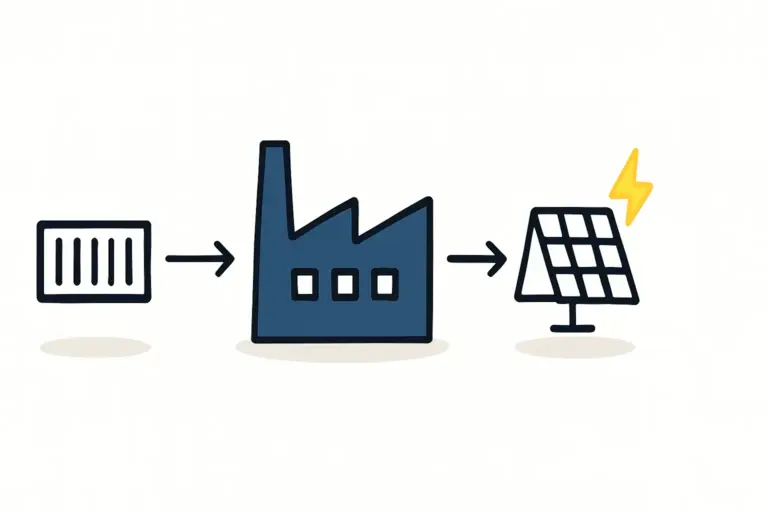
Inbound Logistics: The process of importing the raw materials required for production—such as solar glass, EVA film, backsheets, and solar cells—from international suppliers to the main factory site.
Ready to make big Profits?
The solar Industry is Booming
WE HELP NEWCOMERS to the solar industry start their own solar module production line. Customers can make BIG PROFITS by selling modules and finding investors, without wasting money and time on things they don't need!
-
Outbound Logistics: The distribution of finished, packaged solar modules from the factory to customers, installers, and project sites across the various islands.
While inbound logistics involves the familiar challenges of international shipping and customs, the outbound, inter-island phase demands the most specialized planning.
Phase 1: Strategy for Inbound Raw Materials
The first step is to establish a reliable flow of materials to your production facility. For a facility located in the Solomon Islands, the Port of Honiara would serve as the primary entry point for 20-foot or 40-foot shipping containers.
Key considerations include:
-
Supplier Lead Times: International shipping routes to the Pacific islands can be long and are often subject to delays, making a robust inventory management system essential. It is common practice to hold several months of key materials in reserve to buffer against unforeseen supply disruptions.
-
Customs and Port Clearance: Partnering with an experienced local freight forwarder is not optional; it is a necessity. This partner will navigate customs brokerage, port handling, and inland transport from the port to the factory.
-
Warehousing Capacity: The factory’s initial design must account for significant onsite storage space for raw materials. This is a critical factor when calculating the initial investment for a solar module factory. Insufficient storage creates a production bottleneck that cannot be easily solved once operations begin.
Phase 2: Mastering Outbound Inter-Island Distribution
Distributing finished modules to remote islands is the most complex and high-risk part of the operation. A standard delivery truck is not an option; the entire distribution network relies on sea freight.
Sea Freight: The Arteries of the Operation
Inter-island transport is typically handled by smaller, locally operated vessels, introducing several variables that must be managed:
-
Irregular Schedules: Unlike international shipping lines, local ferry and cargo services may not run on a fixed daily or weekly schedule. Departures often depend on weather, tides, and cargo demand.
-
Limited Capacity: These vessels have limited space, so a large order for a remote community solar project might require multiple shipments or a dedicated charter, impacting delivery timelines and costs.
-
Handling and Transshipment: Modules may be loaded and unloaded multiple times using rudimentary equipment. This dramatically increases the risk of damage from impact or mishandling.
Packaging: The First Line of Defense
Given the rough handling and exposure to saltwater and high humidity, standard packaging is insufficient. Modules destined for inter-island shipment require enhanced, sea-worthy crating.
This includes:
-
Robust Wooden Crates: Replacing standard cardboard with sturdy, treated wooden crates.
-
Waterproof Linings: Internal waterproof membranes to protect modules and their electrical components from moisture intrusion.
-
Secure Bracing: Additional internal bracing to prevent modules from shifting and colliding during transit on rough seas.
While this increases packaging costs, it is a necessary investment to reduce the far greater cost of product damage and replacement.
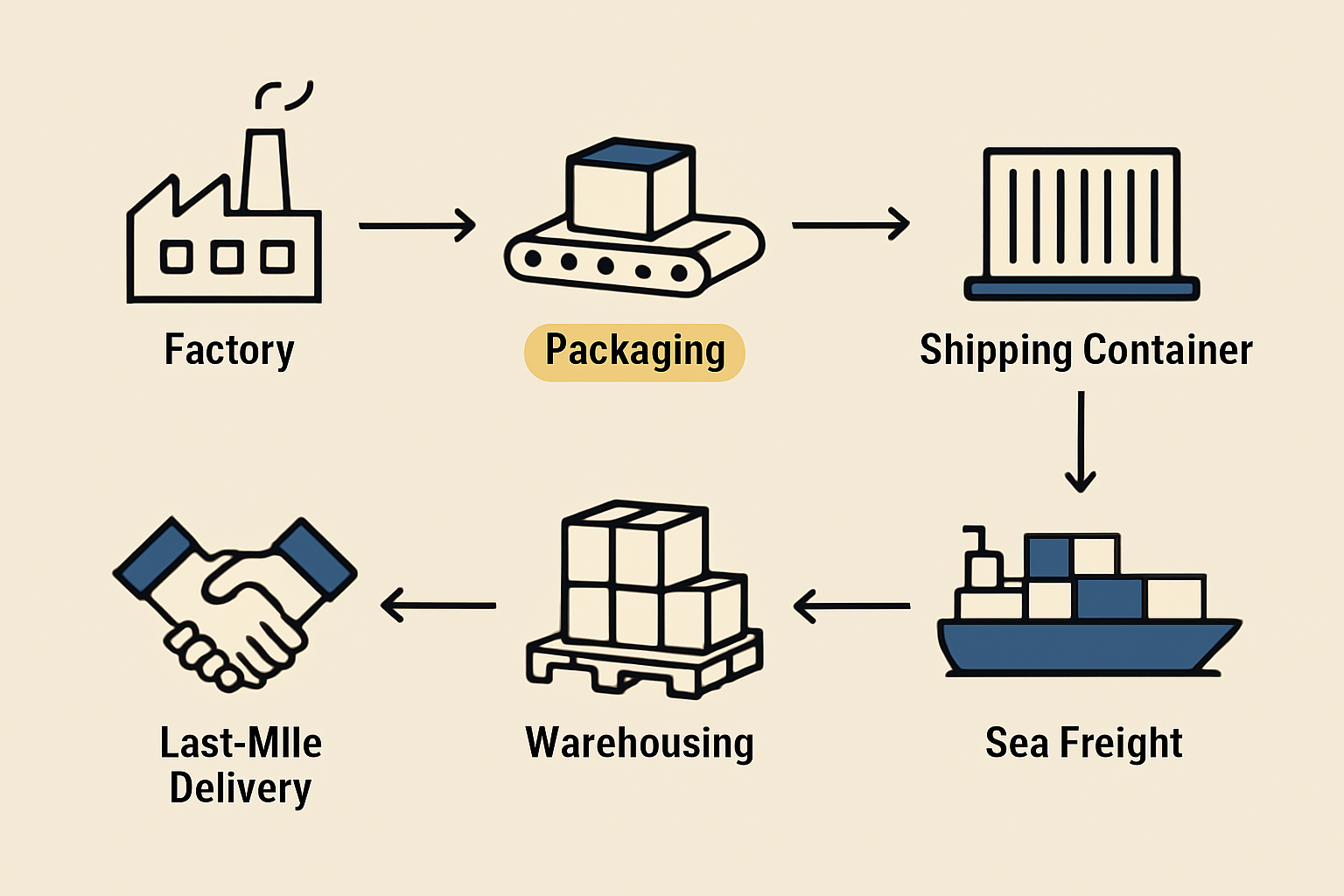
The Hub-and-Spoke Warehousing Model
A direct-to-customer delivery model from the factory is often impractical. A more resilient strategy is a hub-and-spoke system.
-
Central Hub: The main factory warehouse where all modules are produced and stored initially.
-
Regional Spokes: Strategically located, secure storage facilities or mini-hubs on larger, more accessible outer islands.
This model allows the business to ship modules in larger, more cost-effective quantities to regional hubs during favorable weather. From these hubs, final last-mile deliveries can be made to smaller, nearby islands using smaller boats, significantly reducing the risk and complexity of each individual order. Based on experience from J.v.G. turnkey projects, this approach dramatically improves delivery reliability.
Frequently Asked Questions (FAQ)
Q1: What is the most common point of failure in inter-island solar supply chains?
The most common and costly failures occur in the last-mile delivery phase, typically stemming from inadequate packaging that leads to water or impact damage. A lack of secure storage at the destination, which exposes modules to weather or theft before installation, is another major factor.
Q2: How does this logistical complexity affect the choice of a turnkey solar manufacturing line?
The choice of a production line must align with logistical realities. A high-speed, high-volume line, for example, is inefficient if its output exceeds the capacity of the outbound distribution network. The system’s throughput must be carefully balanced with what the inter-island shipping network can realistically handle. The factory layout must also dedicate a larger-than-usual percentage of its footprint to storage for both raw materials and finished goods.
Q3: Is it better to partner with one large logistics company or multiple local operators?
While a single provider seems simpler, in many archipelago nations, a network of trusted local boat operators is more effective. These smaller operators possess invaluable knowledge of local routes, weather patterns, and port conditions that a single large firm may lack. The key is to build strong relationships and establish clear protocols for handling and communication.
Conclusion: Logistics as a Competitive Advantage
For any entrepreneur considering a solar manufacturing plant in the Solomon Islands or a similar archipelago nation, logistics cannot be an afterthought—it must be a central pillar of the business strategy. The significant market demand for clean, reliable energy in these remote communities is undeniable.
The company that successfully solves the puzzle of inter-island distribution will not only build a profitable enterprise but also become a critical enabler of economic development and improved quality of life. By planning for these challenges from the outset, a formidable barrier to entry can be transformed into a durable competitive advantage.