Vanuatu’s National Sustainable Development Plan (NSDP) sets a clear and ambitious target: 100% renewable energy generation by 2030. For entrepreneurs and investors, this national priority is a significant commercial opportunity. As the country moves away from a reliance on imported diesel, the demand for local energy solutions, including locally manufactured solar modules, is set to grow.
However, the primary challenge isn’t just technology or capital; it’s human resources. In a country with a developing industrial base, the key question is how to build a team of skilled technicians capable of operating a modern solar panel factory in hubs like Port Vila and Luganville.
This article outlines a structured, three-phase framework for developing a competent local workforce, designed for the specific labor market conditions and opportunities within Vanuatu.
Understanding the Vanuatu Context: Opportunities and Hurdles
Any effective human capital strategy must be grounded in local reality. A solar manufacturing venture in Vanuatu faces both distinct advantages and specific challenges that must be managed.
The core opportunity stems from clear market needs. High electricity costs and energy dependency create a strong business case for local production. The NSDP provides a favorable policy backdrop, signaling long-term government support for the renewables sector.
However, an investor must also navigate several hurdles:
-
A Developing Skills Base: While youth unemployment figures indicate a ready supply of labor, there is a limited history of sophisticated industrial manufacturing in Vanuatu. The Technical and Vocational Education and Training (TVET) system is still growing and may not yet provide the specialized skills required for photovoltaic production.
-
Logistical Realities: Inter-island transport and import dependencies affect the movement of both equipment and personnel. A training strategy must account for the logistics of bringing trainees to a central facility or deploying trainers to different locations.
-
Cultural Integration: Successful projects depend on strong community relationships and an understanding of local customs. The training and hiring process should be designed to build local buy-in and create lasting employment opportunities.
A Phased Training Model for Sustainable Skill Development
A common mistake is to view training as a single event. A more robust approach is a multi-phase program that builds skills progressively. This ensures knowledge isn’t just acquired; it’s effectively applied and retained. Based on experience from J.v.G. turnkey projects, a three-phase model has proven highly effective.
Ready to make big Profits?
The solar Industry is Booming
WE HELP NEWCOMERS to the solar industry start their own solar module production line. Customers can make BIG PROFITS by selling modules and finding investors, without wasting money and time on things they don't need!
Phase 1: Foundational Technical Education
The first phase aims to build a solid foundation of technical literacy. This is critical in a labor market where candidates may lack prior industrial experience. The goal is to create a pool of ‘factory-ready’ individuals who understand the core principles of a manufacturing environment.
This classroom-based training should last approximately four to six weeks and cover essential topics:
-
Basic Electronics: Understanding circuits, voltage, and current.
-
Workplace Safety Protocols: Handling materials, machine safety, and emergency procedures.
-
Introduction to Photovoltaics: How a solar cell works and how modules are constructed.
-
Principles of Quality Control: The importance of precision, process adherence, and defect identification.
This initial screening and training process helps identify individuals with the right aptitude: attention to detail, a methodical approach, and a capacity for learning technical concepts.
Phase 2: Specialized, On-the-Job Training
Once a foundational knowledge base is established, training becomes highly specific. Technicians need to master the exact equipment they will be operating daily. This phase moves from the classroom to the factory floor, focusing on hands-on skills with the key machinery in a solar panel production line.
A ‘Train the Trainer’ model is often the most efficient method. An external expert with deep experience in commissioning solar factories is brought in to train a core group of local supervisors or team leaders. This core group, in turn, becomes the in-house resource for training all other production operators on specific tasks, such as:
-
Operating the cell stringer
-
Performing manual layup
-
Managing the lamination cycle
-
Conducting electroluminescence (EL) and flash tests
This approach does more than transfer technical skills; it builds local leadership and reduces long-term dependency on foreign experts.
Phase 3: Continuous Improvement and Leadership Development
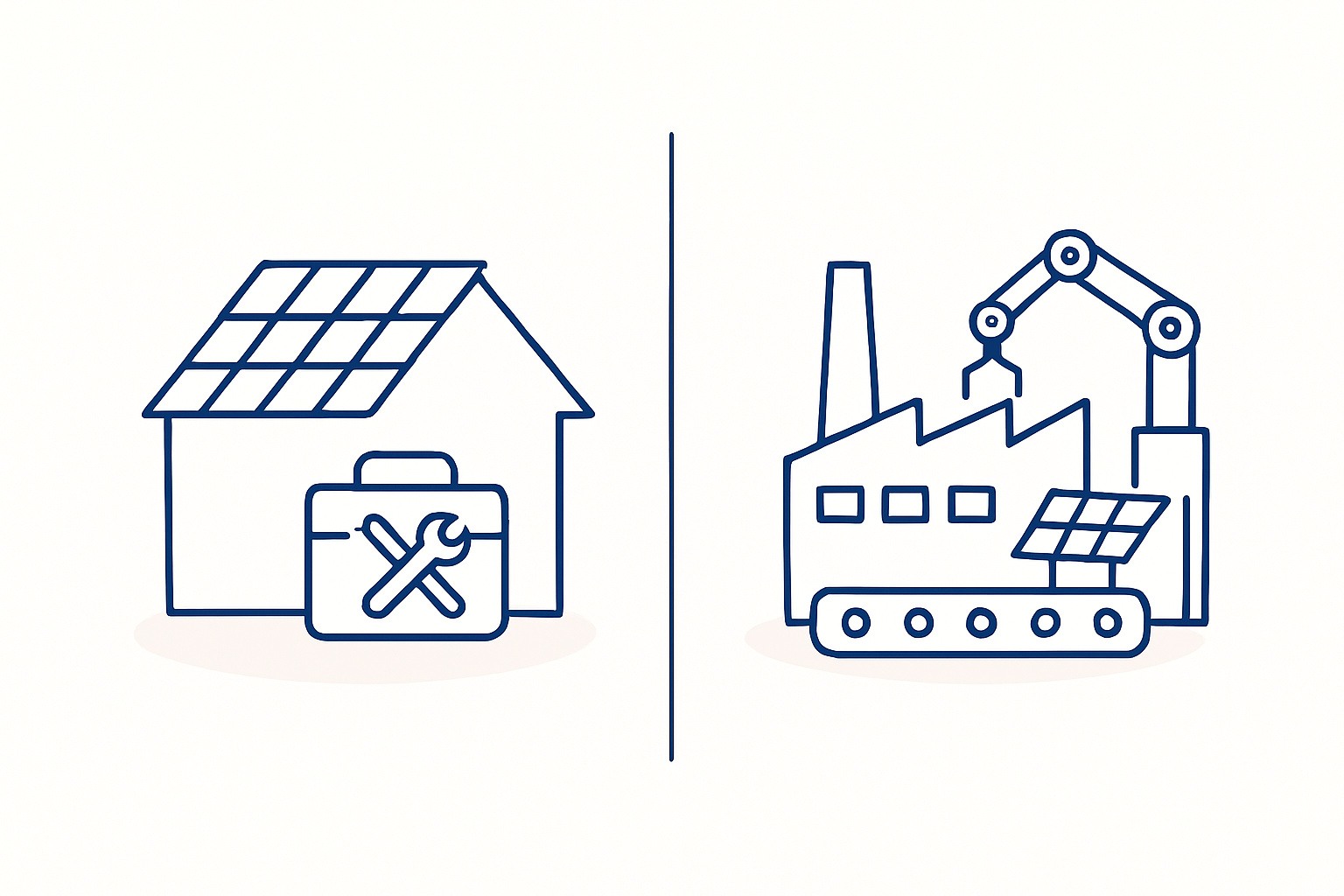
A factory cannot remain static. This final, ongoing phase is a process of skill enhancement and optimization, ensuring the facility maintains high standards of quality and efficiency over the long term.
Activities in this phase include:
-
Advanced Troubleshooting: Training technicians to diagnose and resolve common production issues.
-
Preventive Maintenance: Developing a local team capable of performing routine machine maintenance.
-
Process Optimization: Empowering staff to identify and suggest improvements to the production flow.
This phase is also crucial for identifying future leaders. By observing which technicians have strong problem-solving skills and an ability to guide their peers, management can build a clear career progression path, a powerful tool for staff retention.
Assembling the Right Team: Key Roles and Considerations
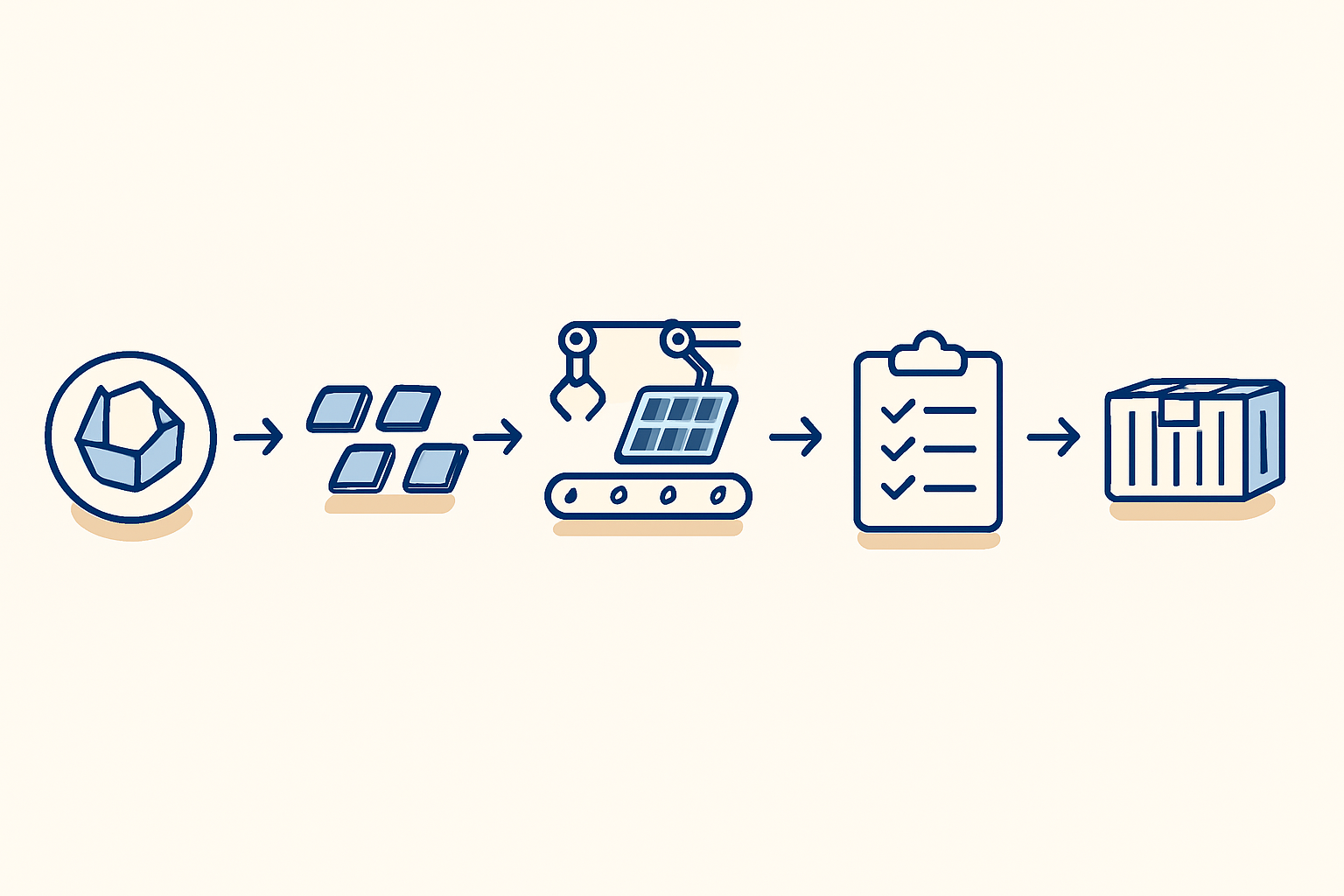
This structured training program is designed to fill specific roles within the factory. While the overall process of hiring operational staff requires careful planning, the framework outlined above is tailored to develop candidates for three primary technical positions:
-
Production Operator: The core of the workforce, responsible for operating specific machines in the production line.
-
Quality Inspector: A detail-oriented role focused on visual inspection, material checks, and final product testing to ensure standards are met.
-
Maintenance Technician: A more advanced role for individuals who show mechanical and electrical aptitude, responsible for keeping machinery in optimal condition.
For context, a typical 20–50 MW production line requires a team of approximately 20–30 trained technicians and operators to run a single shift efficiently. This figure underscores the scale of the local employment opportunity.
Mitigating Risks and Ensuring Long-Term Success
An investor planning to establish a factory in Port Vila or Luganville naturally focuses on risk management. A proactive training strategy is one of the most effective ways to mitigate operational risks.
-
High Initial Training Costs: Training should be viewed not as an operational expense but as a fundamental part of the capital investment. These upfront costs, which should be factored into calculations of the full investment required for a solar factory, secure the long-term viability and productivity of the asset.
-
Staff Retention: In a market with few formal industrial jobs, creating a professional work environment with clear opportunities for advancement is a significant competitive advantage. A well-defined training program is the first step in building a company culture that attracts and retains talent.
-
Maintaining Quality Standards: International certifications (like those from IEC) depend on consistent, high-quality output. This consistency is only possible with a well-trained and disciplined workforce. Rigorous training in process adherence and quality control is non-negotiable.
Frequently Asked Questions (FAQ)
-
How long does it take to train a solar manufacturing technician from scratch?
A typical timeline follows the phased model: Phase 1 (Foundational) takes 4–6 weeks. Phase 2 (Specialized On-the-Job) requires another 8–12 weeks for a technician to become fully proficient on a specific machine. Phase 3 (Continuous Improvement) is ongoing. An investor should plan for a 3–4 month period to bring a new hire to full productivity. -
Is it necessary to hire foreign experts for training?
Initially, yes. For the specialized ‘Train the Trainer’ phase, an experienced process engineer is essential to ensure that correct operating procedures for the machinery are established from day one. However, the model is designed to build local capacity and phase out the need for external support for day-to-day operations. -
Can this framework be applied in Vanuatu’s more remote islands?
The principles of the framework are universal. However, implementation in more remote locations would require greater investment in logistics. This could involve setting up a dedicated training facility or covering the transport and accommodation costs to bring trainees to a central factory in Port Vila or Luganville for the initial phases. -
What is the ideal background for a successful trainee?
A formal engineering degree is not required for most production roles. The most successful candidates typically have strong soft skills: attention to detail, reliability, a positive attitude toward learning new processes, and good hand-eye coordination. The foundational training phase is designed to assess this aptitude.
Next Steps in Developing a Human Capital Strategy
Establishing a solar module factory is a complex undertaking where machinery and technology are only part of the equation. As this framework shows, a deliberate and well-structured plan for developing local talent is equally critical for long-term success in Vanuatu.
By investing in people, an enterprise builds its own operational capacity while also contributing directly to national development goals. This creates a skilled workforce that can support the country’s transition to a sustainable energy future. A detailed human resources and training plan is therefore a core component of any comprehensive business plan for a new manufacturing venture.