To many international entrepreneurs, Vanuatu projects the image of a pristine tropical paradise. But beneath this surface lies a stark operational paradox: the resorts and agricultural businesses that form its economic backbone are often powered by expensive, imported diesel fuel. This reliance leads to high operational costs—Vanuatu has some of the world’s highest electricity prices—and creates a dependency vulnerable to global supply chain disruptions.
This vulnerability, however, presents a compelling business opportunity. For investors evaluating new markets, Vanuatu is a clear case study in how targeted, local solar module manufacturing can solve critical economic and logistical challenges while creating a sustainable and profitable enterprise.
Understanding Vanuatu’s Unique Energy Landscape
To appreciate the scale of this opportunity, it’s essential to understand the country’s unique context. Vanuatu is an archipelago of 83 islands, with a population of roughly 300,000 dispersed across 65 of them. This geography makes a centralized, interconnected power grid economically unfeasible.
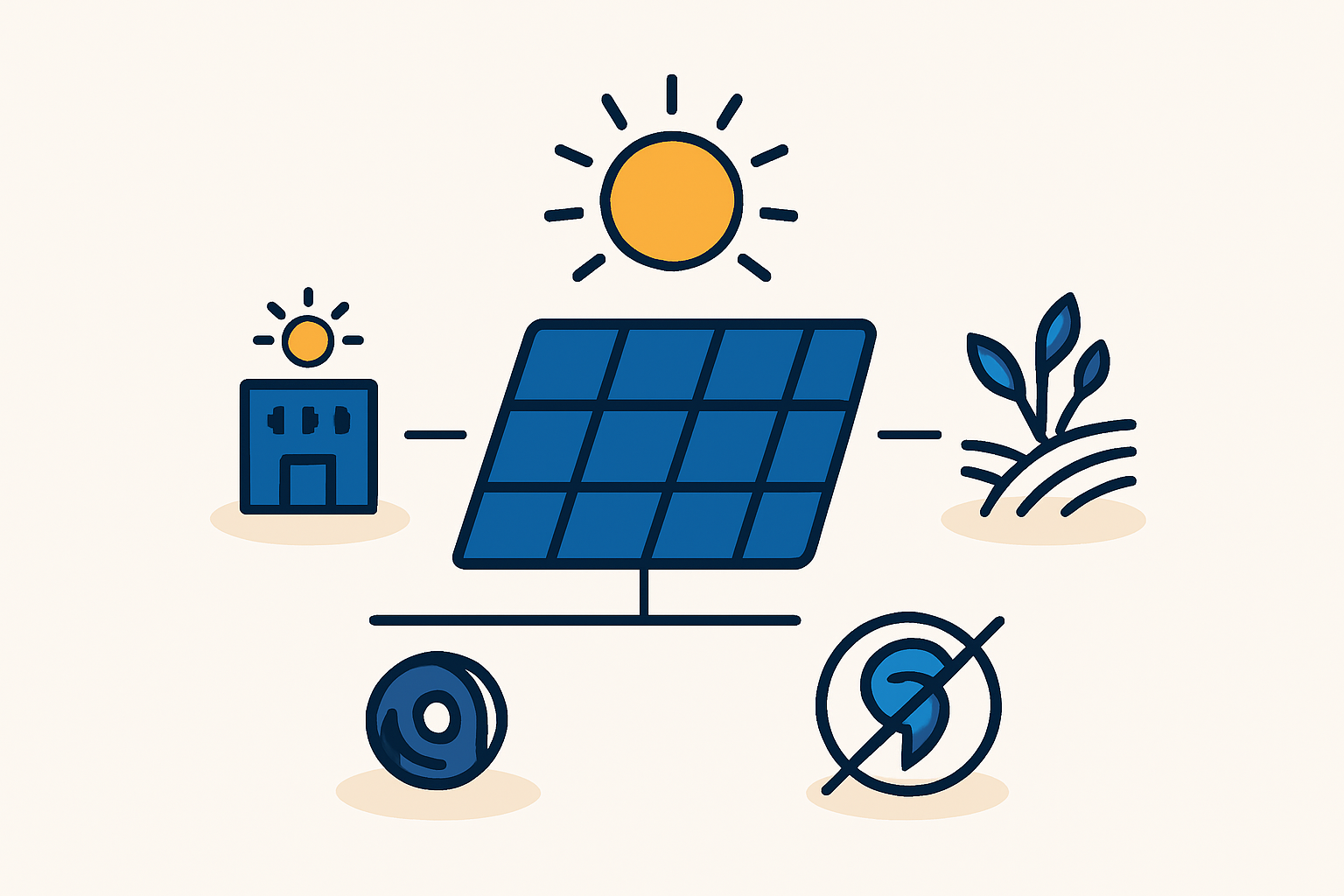
The result is stark:
-
Limited Access: As of 2018, only 33% of the population had access to electricity. In rural areas, this figure drops to just 16%.
-
Fossil Fuel Dependency: The majority of existing power generation relies on imported diesel, exposing the economy to volatile global fuel prices.
-
Government Ambition: Recognizing this vulnerability, the government established the National Energy Road Map (NERM) 2016-2030, which aims for 100% of electricity to be generated from renewable sources by 2030. This policy creates a highly favorable environment for renewable energy investments.
-
Climate Resilience: As a nation highly susceptible to natural disasters like cyclones, decentralized and resilient energy systems are a necessity, not a luxury, to ensure economic stability and recovery.
These factors combine to create strong, unmet demand for a reliable, cost-effective, and resilient power source. Local solar module production is uniquely positioned to meet this demand.
Ready to make big Profits?
The solar Industry is Booming
WE HELP NEWCOMERS to the solar industry start their own solar module production line. Customers can make BIG PROFITS by selling modules and finding investors, without wasting money and time on things they don't need!
The Primary Domestic Market: Off-Grid Tourism
Tourism is a cornerstone of Vanuatu’s GDP, contributing roughly 40% in the years before the global pandemic. Many of the nation’s most attractive resorts, bungalows, and eco-lodges are located on remote islands, entirely disconnected from any utility grid.
For these businesses, the default power source has long been the diesel generator. This approach presents several fundamental problems:
-
High Operational Costs: The expense of purchasing, shipping, and maintaining generators and fuel significantly impacts profitability.
-
Negative Guest Experience: The constant noise and fumes from generators detract from the serene, natural environment that tourists seek.
-
Brand Incongruity: An ‘eco-lodge’ powered by fossil fuels faces an obvious contradiction in its marketing and mission.
A local solar manufacturing plant offers a direct solution. By producing modules domestically, a manufacturer can supply tailored solar and battery storage systems to these resorts. The benefits for the tourism operator are immediate: drastically lower energy costs, silent and clean power that enhances the guest experience, and a powerful marketing story rooted in genuine sustainability.
The Foundational Sector: Empowering Agriculture with Solar
While tourism is a high-profile industry, agriculture remains the backbone of the rural economy, employing the majority of the population. Here, the lack of electricity is a direct barrier to increasing productivity, improving livelihoods, and capturing more value from agricultural products.
Solar energy can unlock potential across the entire agricultural value chain. Assessments of similar island nations highlight the most impactful applications.
Solar Water Pumping for Irrigation and Livestock
Consistent access to water is critical for crop health and livestock, especially during dry seasons. Solar-powered pumps provide a reliable and low-cost method to move water for irrigation, dramatically improving crop yields and food security without recurring fuel costs.
Power for Value-Added Crop Processing
Many of Vanuatu’s key exports, such as copra, kava, and cocoa, are sold as raw commodities. Access to electricity allows for local processing—such as drying, grinding, or pressing—which significantly increases the product’s market value. Small, solar-powered processing units can empower farming cooperatives to move from being simple growers to value-added producers.
Off-Grid Cold Storage Solutions
Without refrigeration, spoilage rates for perishable goods like fish, fruits, and vegetables are high, limiting market access for remote producers. Solar-powered cold storage units enable farmers and fishermen to preserve their harvest, reduce waste, and sell their products at more favorable times and to more distant markets.

The Strategic Advantage of Local Solar Module Manufacturing
An investor might ask: why not simply import solar modules? While importing is an option, establishing a local production facility offers distinct strategic advantages in a market like Vanuatu.
-
Product Customization: Modules can be specifically designed for the demanding tropical marine environment, with enhanced protection against salt mist, humidity, and high wind loads from cyclones. J.v.G. Technology GmbH has experience in designing production lines that can produce modules tailored to these demanding conditions.
-
Logistical Control and Cost: Importing finished modules to a central port and then distributing them across dozens of islands is a complex and costly logistical challenge. Manufacturing locally reduces international shipping costs and import duties while simplifying inter-island distribution.
-
Economic Contribution: Starting a small solar module production line creates skilled local jobs and supports the government’s economic development goals. This alignment can lead to favorable treatment, incentives, and strong public-private partnerships.
-
Supply Chain Resilience: A local factory is insulated from the kind of global shipping disruptions seen in recent years, ensuring a stable supply of modules for critical national projects. The investment required for a small-scale solar factory can be scaled appropriately for niche markets, and turnkey solar manufacturing solutions also exist to de-risk the technical setup for entrepreneurs without a background in photovoltaics.
Frequently Asked Questions (FAQ)
Is the market in Vanuatu large enough to justify a factory?
The strategy is not about mass volume but about serving high-value niche applications. Given the extremely high cost of diesel-generated power, the value proposition for solar is exceptionally strong. A flexible, small-scale production line (e.g., 20–50 MW) can be highly profitable by focusing on the specific needs of the tourism and agriculture sectors.
What kind of solar modules are best for this environment?
Modules with high resistance to salt mist and ammonia corrosion are essential. Additionally, the frames and mounting systems must be certified to withstand the high wind loads associated with the region’s cyclone risk. Glass-glass modules often provide superior durability in such humid climates.
What are the biggest challenges for an investor?
The primary challenges are inter-island logistics for raw materials and finished goods, developing a skilled local workforce through proper training, and navigating the import process for specialized components. A structured planning process, such as that provided by pvknowhow.com, helps investors mitigate these risks from the outset.
How does this business align with government or international aid programs?
A local solar manufacturing venture aligns directly with Vanuatu’s National Energy Road Map and the UN Sustainable Development Goals. This alignment can open opportunities for collaboration with government agencies, development banks, and international aid organizations, potentially leading to grants, public tenders, or favorable financing arrangements.
Next Steps in Evaluating the Opportunity
Vanuatu presents a compelling, real-world example of how a carefully planned investment in local solar manufacturing can address pressing economic needs while building a profitable, sustainable business. The high cost of diesel, strong government support for renewables, and clear demand from key economic sectors combine to create fertile ground for investment.
For entrepreneurs and business leaders, the key takeaway is to look beyond conventional market indicators and find contexts where fundamental problems can be solved with targeted, local solutions. These same principles can be applied to evaluate similar opportunities in other island nations or remote regions across the globe.