Disclaimer: This case study represents a composite example derived from real-world
consulting work by J.v.G. Technology GmbH in solar module production and factory optimization. All data points are realistic but simplified for clarity and educational purposes.
The global shift toward renewable energy is creating substantial opportunities for astute investors. Yet entering the solar manufacturing industry is often complex, with high barriers and fierce competition.
A strategic analysis, however, points to a compelling niche: a manufacturing facility in a location offering both cost advantages and preferential access to one of the world’s largest solar markets.
This case study lays out the business case for establishing a 100 MW turnkey solar module production line in Tijuana, Baja California. The focus is on supplying the high-value US residential solar market by leveraging the unique advantages of nearshoring, USMCA compliance, and agile manufacturing principles.
The Strategic Rationale: Why Baja California?
The location of a solar module factory is one of the most critical factors for its long-term success. While Asia has traditionally dominated production, a nearshoring strategy in Mexico offers a powerful alternative for supplying the North American market.
The US residential solar sector continues to grow robustly, with projections indicating it will add another 7 GW of capacity in 2024 alone. This demand is fueled by supportive policies like the Inflation Reduction Act (IRA), which provides significant tax credits for solar installations. A facility in Baja California is uniquely positioned to capitalize on this boom.
Key advantages include:
-
Proximity to Market: Tijuana is adjacent to California, the largest residential solar market in the United States. This drastically reduces shipping times and logistics costs compared to trans-pacific routes, allowing for a more responsive supply chain.
-
Favorable Trade Agreements: Under the United States-Mexico-Canada Agreement (USMCA), qualifying goods manufactured in Mexico can enter the US market tariff-free. This creates a significant cost advantage over imports from other regions that may be subject to tariffs.
-
Competitive Operational Costs: The cost of skilled labor, industrial real estate, and utilities in Baja California is considerably lower than in the United States or Europe, directly improving the factory’s profitability.
-
Established Industrial Ecosystem: The region has a mature manufacturing base, particularly in the automotive and electronics sectors. This means a pool of experienced engineers and technicians is readily available, along with a reliable network of industrial suppliers.
Ready to make big Profits?
The solar Industry is Booming
WE HELP NEWCOMERS to the solar industry start their own solar module production line. Customers can make BIG PROFITS by selling modules and finding investors, without wasting money and time on things they don't need!
A Breakdown of the 100 MW Factory Investment
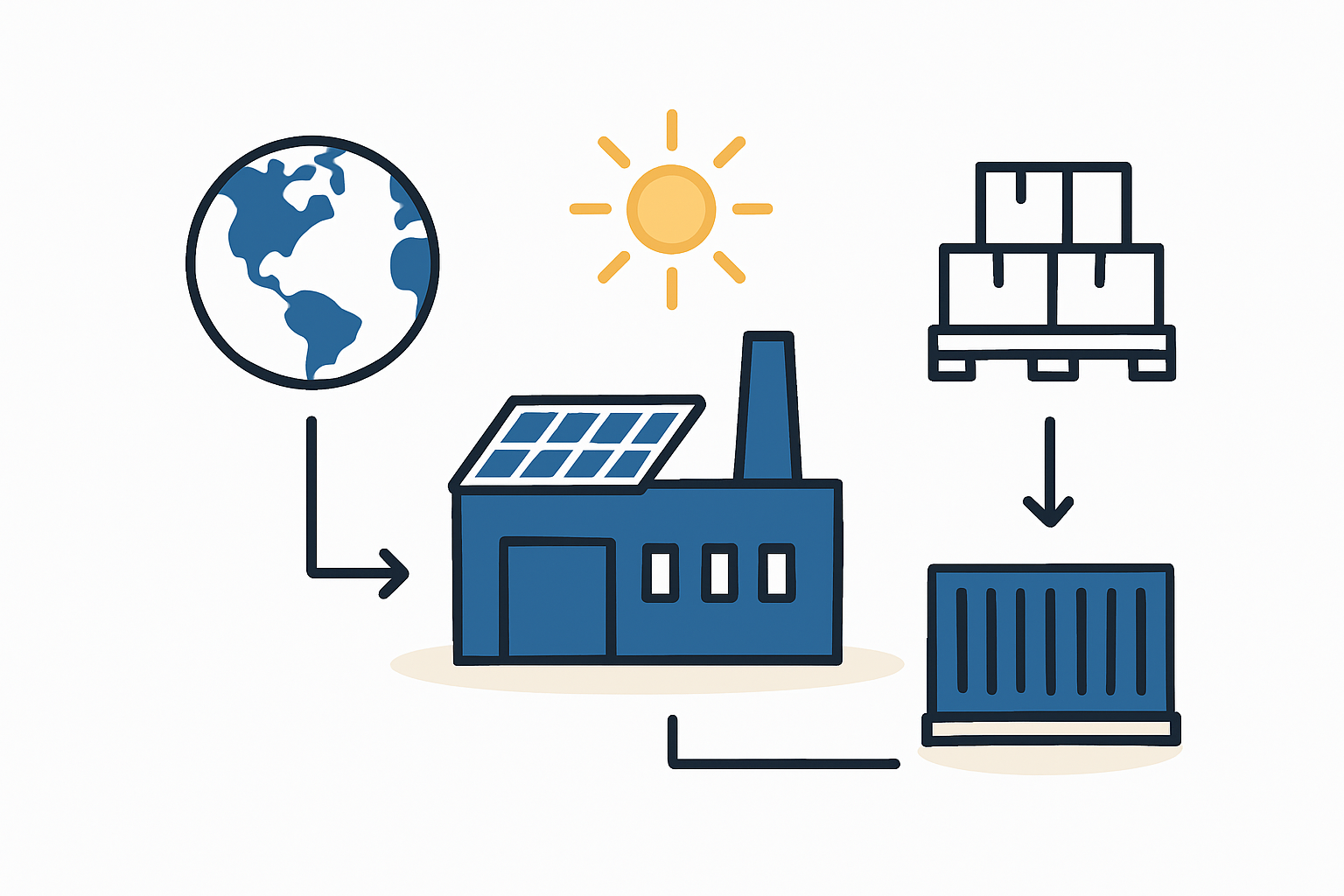
A clear understanding of the financial requirements is essential for any investment decision. A 100 MW facility represents a balanced scale—large enough for efficiency but manageable for a new entrant. Based on data from recent turnkey projects, here is a typical investment structure.
Initial Capital Expenditure (CAPEX)
The initial outlay covers the core assets required to begin production.
-
Turnkey Production Line: The primary investment is the manufacturing equipment itself. A state-of-the-art, 100 MW automated line typically requires an investment between 8 million and 12 million EUR. This covers all essential machinery, from the high-precision stringer to the final laminator and testing equipment. For a deeper understanding of the machinery involved, you can explore our detailed guide on selecting the right solar panel manufacturing equipment.
-
Building & Infrastructure: A 100 MW production line requires a facility of approximately 5,000 square meters (around 54,000 square feet). This space accommodates the production line, warehousing for raw materials and finished goods, and administrative offices. Costs will vary depending on whether the facility is leased or constructed.
-
Working Capital: This crucial, often underestimated component funds initial operations. It includes purchasing the first batches of raw materials (solar cells, glass, encapsulant, backsheets, frames) and covering operational costs before revenue is generated.
Operational Expenditure (OPEX)
These are the recurring costs associated with running the factory.
-
Labor: A semi-automated 100 MW line requires a workforce of approximately 80 to 100 employees. This includes production operators, maintenance technicians, quality control engineers, and management staff. Labor costs in Mexico offer a significant operational advantage compared to US or European standards.
-
Logistics & Supply Chain: Costs include inbound freight for raw materials (many of which are sourced from Asia via the nearby Port of Ensenada) and outbound, cross-border freight into the US. Efficient logistics management is key to maximizing the location’s advantage.
-
Utilities & Overheads: This includes electricity, water, facility maintenance, and administrative expenses. While electricity costs are a key factor for any manufacturer, Mexico’s industrial rates are competitive.
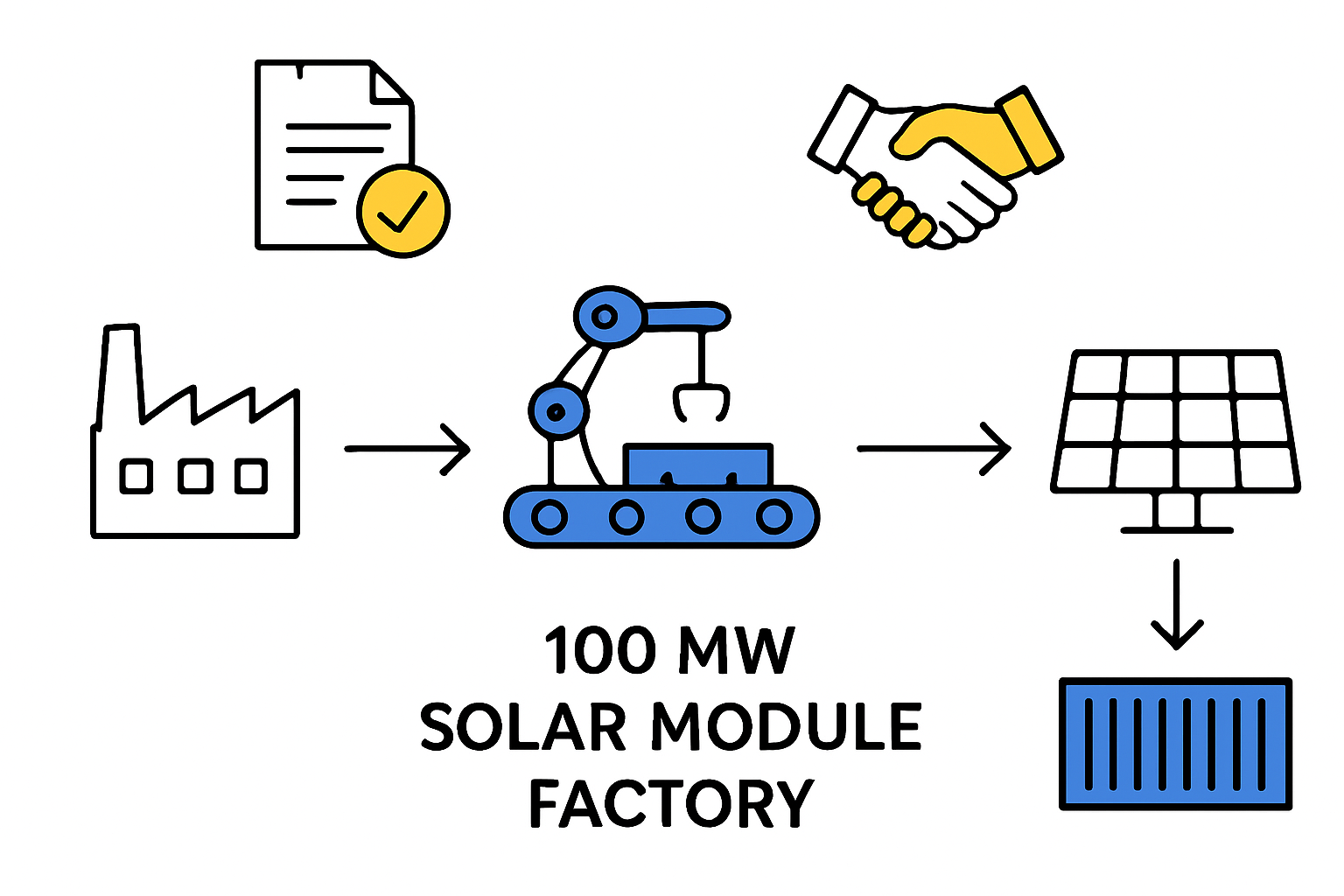
Navigating Compliance and Technology
Success depends not only on cost management but also on producing a high-quality, compliant product that the market demands.
USMCA Compliance and Rules of Origin
To benefit from the tariff-free access granted by USMCA, solar modules must meet specific ‘rules of origin.’ This means a certain percentage of the product’s value must originate within North America.
An experienced partner can help structure the supply chain—for example, by sourcing components like aluminum frames or junction boxes from US or Mexican suppliers—to ensure full compliance. This strategic sourcing is a cornerstone of the initial business plan.
Designing an Agile Production Line
Rapid technological evolution defines the solar industry. A production line designed today must be able to accommodate the cell technologies of tomorrow, such as TOPCon or HJT.
Engaging an experienced engineering partner like European Solar PV equipment provider is critical for designing an agile and future-proof manufacturing setup. A turnkey solution ensures that all machines are compatible, the workflow is optimized for efficiency, and the line is commissioned to meet specified output and quality targets. This structured approach de-risks the project for investors who may not have a background in photovoltaic engineering. Exploring the critical steps involved in a turnkey solar production line setup provides further insight into this managed approach.
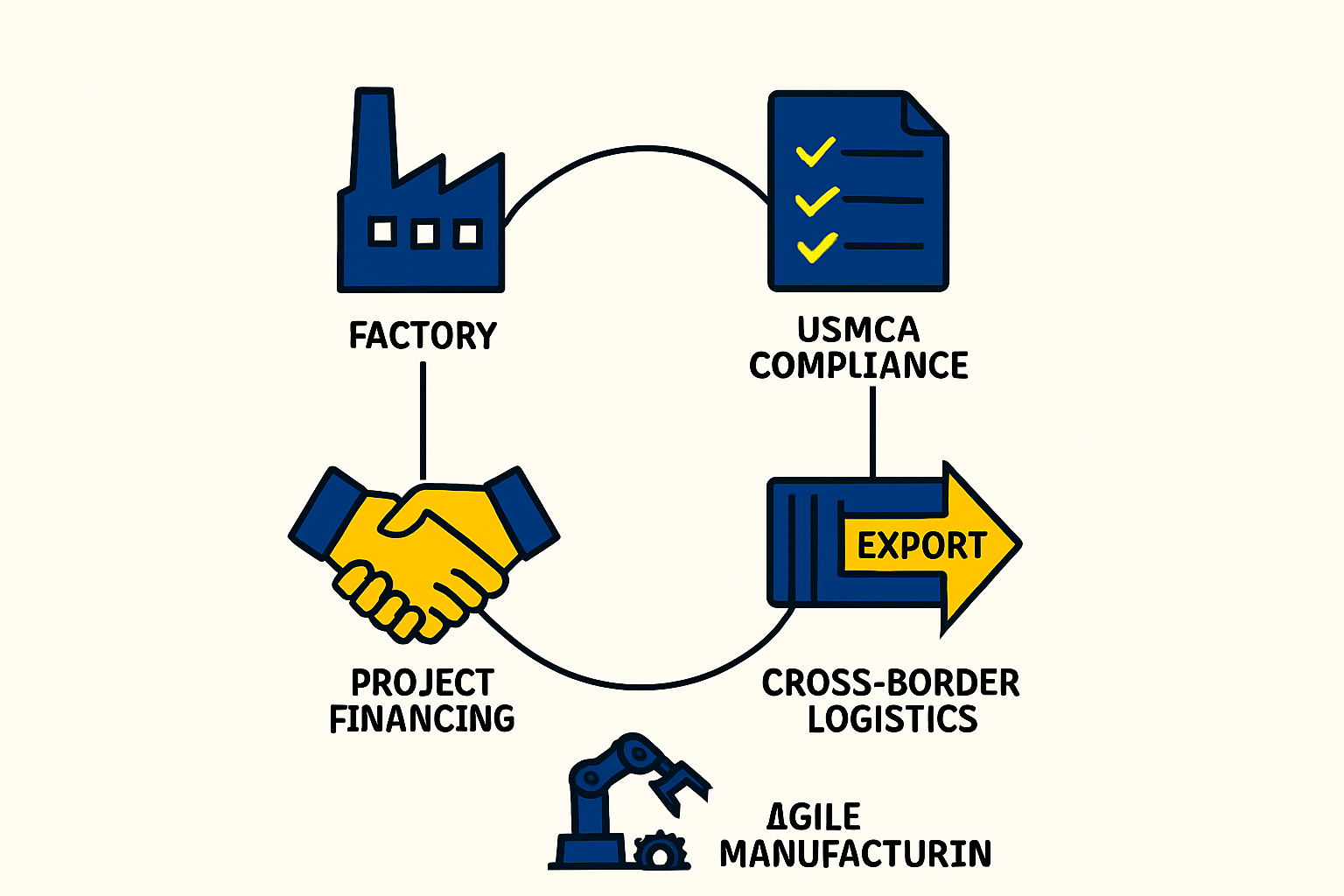
The Implementation Roadmap: A Phased Approach
A project of this scale can be operational in under a year with a structured, phased approach.
-
Phase 1: Feasibility and Financing (Months 1-3): This phase involves detailed market analysis, financial modeling, site selection in Baja California, and securing project financing. Financing is typically structured with a combination of investor equity and debt.
-
Phase 2: Engineering and Procurement (Months 4-7): The technical partner completes the detailed factory layout and production line design. Long-lead-time equipment, such as the laminator and cell stringer, is ordered from trusted suppliers.
-
Phase 3: Installation and Commissioning (Months 8-12): The equipment is delivered and installed. The engineering partner oversees the commissioning process, which includes training local staff, running initial test batches, and calibrating all machinery to achieve target performance and quality certifications (e.g., IEC, UL).
Frequently Asked Questions (FAQ)
What are the main risks of this type of project?
The primary risks include supply chain disruptions for raw materials (like solar cells), fluctuations in shipping costs, potential changes in international trade policy, and the rapid pace of technological change. A well-designed, agile production line and a diversified supplier base are key mitigation strategies.
How many employees are needed for a 100 MW factory?
A semi-automated 100 MW factory typically requires a workforce of 80 to 100 personnel across two to three shifts. This includes production operators, quality assurance staff, maintenance engineers, and administrative personnel.
What is ‘USMCA compliance’ and why is it important?
USMCA is a free-trade agreement between the United States, Mexico, and Canada. For a solar module to be ‘compliant,’ it must meet rules of origin, meaning a significant portion of its components and manufacturing value must originate within North America. Compliance allows the modules to be imported into the US without tariffs, providing a crucial competitive advantage.
Can a factory like this produce different types of solar modules?
Yes. A modern, well-designed production line is built for flexibility. It can be configured to produce modules using different cell technologies (e.g., PERC, TOPCon, HJT) and formats (e.g., bifacial, different sizes). This adaptability is essential for long-term viability. To better understand the different types of solar panel technologies and their manufacturing implications, further reading is recommended.
The Path Forward for Nearshoring Solar Manufacturing
The case for establishing a solar module factory in Baja California is built on a powerful combination of market access, cost efficiency, and logistical advantage. It represents a direct response to the growing demand for secure, resilient, and cost-effective renewable energy supply chains in North America.
While the opportunity is significant, success requires meticulous planning, technical expertise, and a deep understanding of cross-border operations. For entrepreneurs and investors considering this path, the crucial first step is to gain a firm understanding of the technical, financial, and operational requirements. Structured resources and expert consultation are invaluable tools for transforming a strategic vision into a profitable reality.
Download the 100 MW Baja Solar Factory Case Study (PDF)
Author: This case study was prepared by the
turnkey solar module production specialists at J.V.G. Technology GmbH
It is based on real data and consulting experience from J.v.G. projects
worldwide, including installations ranging from 20 MW to 500 MW capacity.