Disclaimer: This case study represents a composite example derived from real-world
consulting work by J.v.G. Technology GmbH in solar module production and factory optimization. All data points are realistic but simplified for clarity and educational purposes.
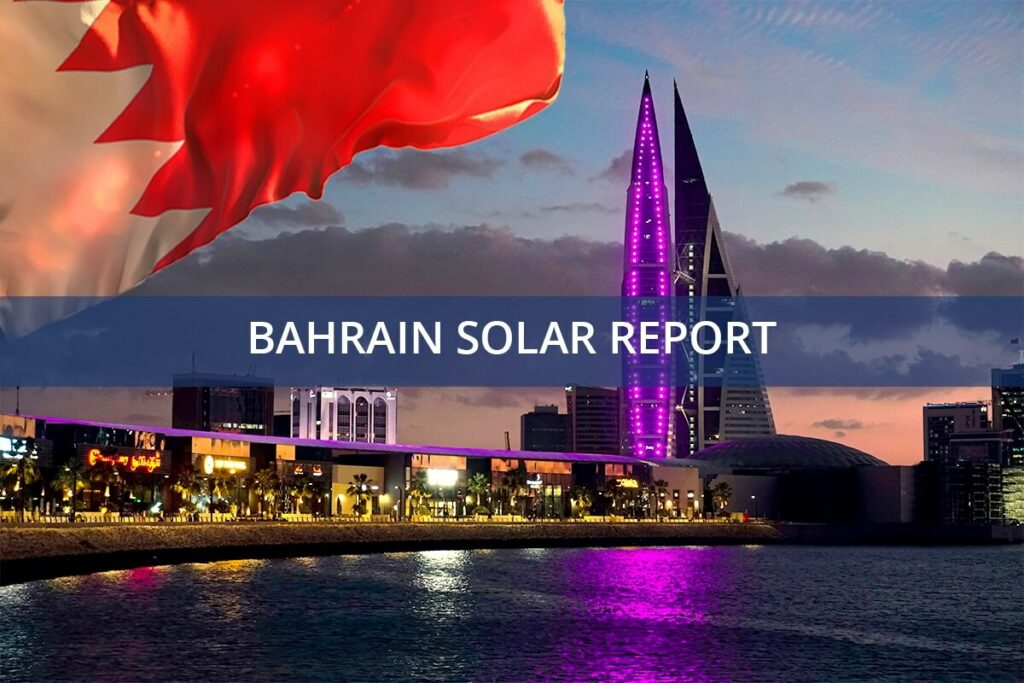
An entrepreneur in Manama sees the immense potential outlined in Bahrain’s National Renewable Energy Action Plan (NREAP), which targets 10% renewable energy by 2035. He understands the Kingdom’s strategic push for economic diversification under its Economic Vision 2030 and recognizes a key competitive advantage: its high solar irradiation, averaging nearly 2,000 kWh per square meter annually.
While the vision for a state-of-the-art solar module factory is clear, the path to financing it is less so. It’s a common dilemma for business leaders entering the capital-intensive solar manufacturing sector. Securing multi-million dollar funding from international financiers requires more than a compelling vision. It demands a meticulously structured, de-risked, and bankable project proposal that can withstand the rigorous scrutiny of development banks. This guide outlines the essential components for building such a proposal, showing how a partnership with an experienced technical expert can transform a promising idea into an investable reality.
The Challenge: Bridging the Gap Between Local Ambition and International Capital
While local and regional banks are vital to a country’s economy, financing a greenfield solar factory often falls outside their typical risk appetite. The high initial capital expenditure, combined with the specialized nature of the technology, presents a significant hurdle.
This is where Development Finance Institutions (DFIs) play a critical role. Organizations like the International Finance Corporation (IFC), the European Investment Bank (EIB), and the German Investment Corporation (DEG) have mandates that extend beyond pure financial return. They are tasked with fostering sustainable economic development, which makes well-structured renewable energy projects in regions like the GCC highly attractive. However, their support is contingent on one key principle: bankability.
Structuring a Bankable Project Proposal: The Four Pillars of Credibility
A bankable project is one where all major risks—technical, financial, and operational—have been identified, quantified, and convincingly mitigated. For a financier reviewing dozens of proposals, clarity and credibility are paramount. A successful proposal is typically built on four pillars.
1. The Comprehensive Business Plan
This is the narrative of the project. It must go beyond aspirations to present a clear, data-driven case. Key elements include:
- Market Analysis: A detailed assessment of both the domestic Bahraini market and export opportunities within the GCC and broader MENA region.
- Offtake Strategy: A clear plan for selling the manufactured solar modules, which could involve preliminary agreements, letters of intent from large developers, or a strategy targeting distribution channels.
- Operational Plan: An outline of the factory’s day-to-day management, including staffing, supply chain for raw materials, and quality control protocols.
A well-researched and detailed business plan demonstrates commercial viability and management foresight.
2. Robust Financial Modeling
The financial model translates the business plan into numbers. DFIs expect sophisticated models that project cash flows, profitability, and key investment metrics over a long-term horizon (typically 10-15 years). Essential components are:
- Key Metrics: Clear calculations for the Internal Rate of Return (IRR), Net Present Value (NPV), and the Levelized Cost of Electricity (LCOE) that the modules will enable.
- Conservative Assumptions: All inputs, from raw material costs to module sale prices, must be based on realistic, defensible market data.
- Sensitivity Analysis: A demonstration of how the project’s profitability would be affected by changes in key variables, such as currency fluctuations or a drop in module prices.
3. Rigorous Risk Mitigation Strategy
Every investor’s primary question is, ‘What could go wrong?’ A strong proposal anticipates and addresses this question head-on.
Ready to make big Profits?
The solar Industry is Booming
WE HELP NEWCOMERS to the solar industry start their own solar module production line. Customers can make BIG PROFITS by selling modules and finding investors, without wasting money and time on things they don't need!
- Market Risk: How will the project handle price volatility in the global solar market?
- Operational Risk: What are the plans for equipment maintenance, potential downtime, and ensuring consistent product quality?
- Political & Regulatory Risk: An assessment of the stability of Bahrain’s pro-investment policies and energy framework.
4. Demonstrable Technical Due Diligence
This is often the most challenging pillar for entrepreneurs without a background in photovoltaics. Financiers are not solar engineers; they rely on the project’s technical framework to be sound, proven, and implemented by a credible partner. They need assurance that the chosen technology is reliable, the factory layout is efficient, and the production process will yield high-quality, certified modules.
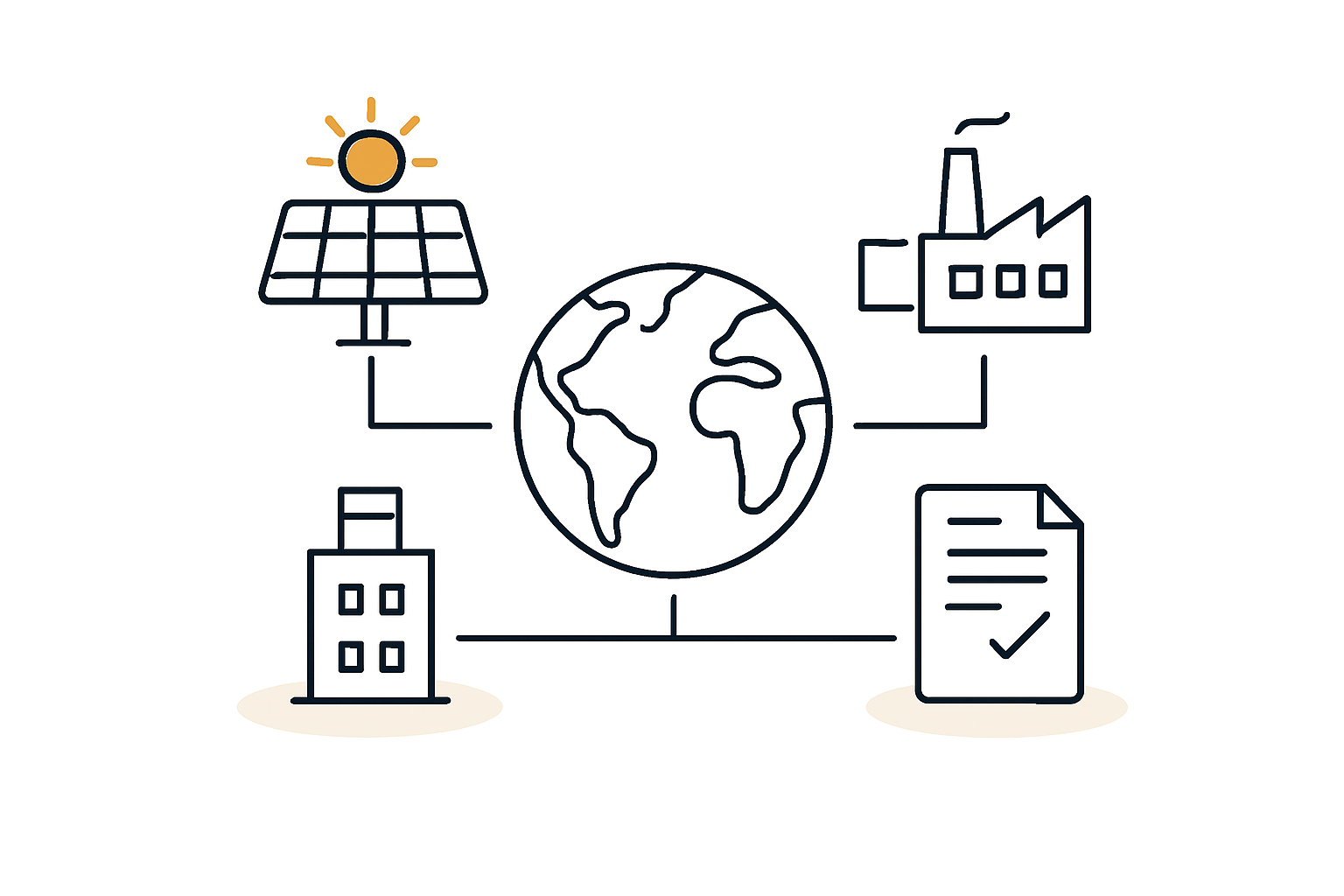
Unlocking the European Advantage in PV Technology : De-Risking the Technical Component for Investors
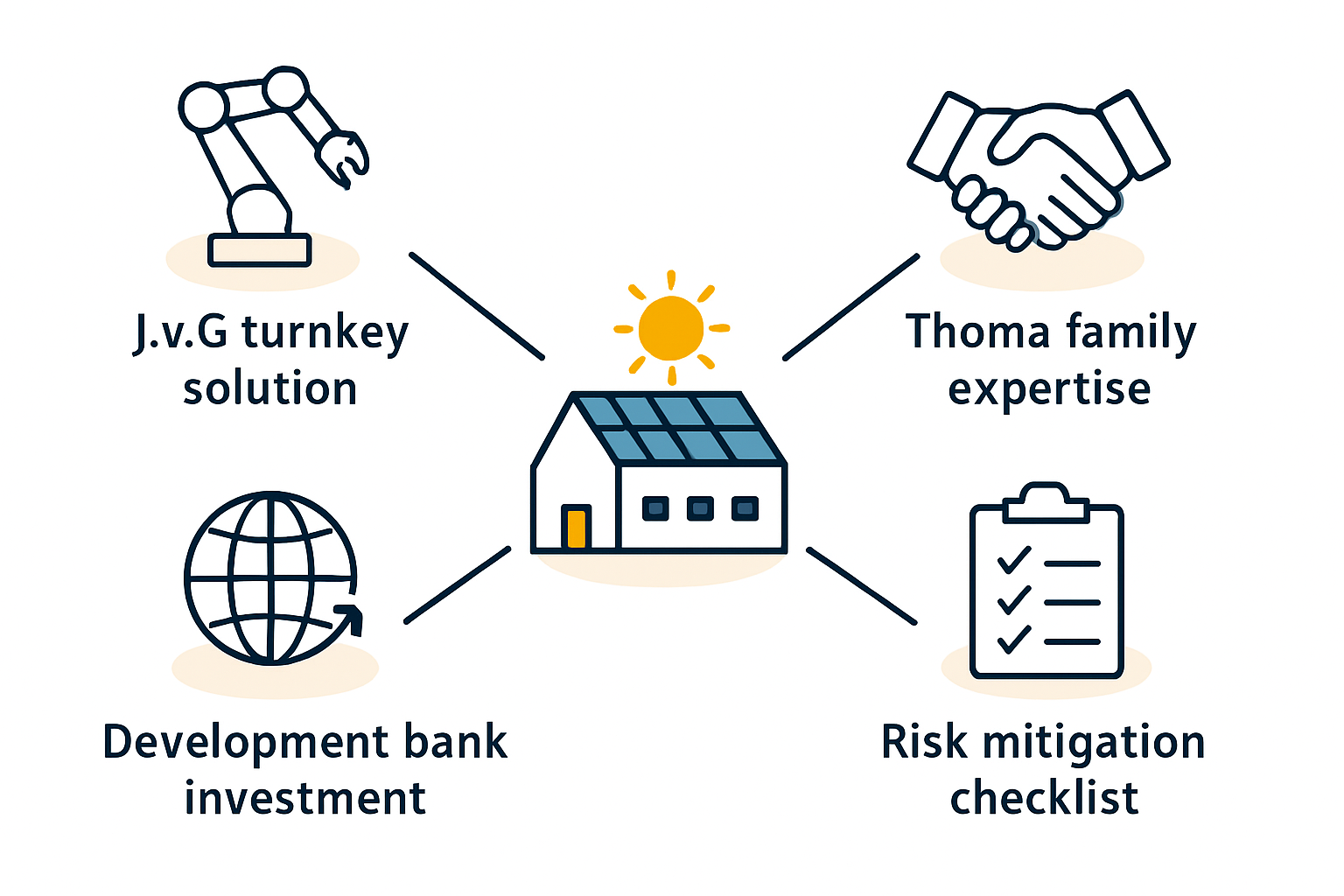
Addressing the technical due diligence requirement is precisely where a partnership with an established engineering firm becomes a strategic asset. For over three decades, The european solar PV equipment provider has given investors the confidence needed to back new solar manufacturing ventures.
Engaging a partner with extensive experience in designing and implementing a turnkey factory solution fundamentally changes the project’s risk profile. From an investor’s perspective, this provides:
- Proven Technology Selection: The equipment and processes are based on decades of real-world application, not theoretical performance.
- Performance Guarantees: A turnkey line from a reputable German engineering firm comes with clear, bankable guarantees on output and quality.
- Streamlined Implementation: The entire process, from factory layout to machine commissioning and staff training, is managed by a single, accountable entity.
- Third-Party Validation: The involvement of a globally recognized engineering expert serves as a powerful endorsement, simplifying the DFI’s own due diligence.
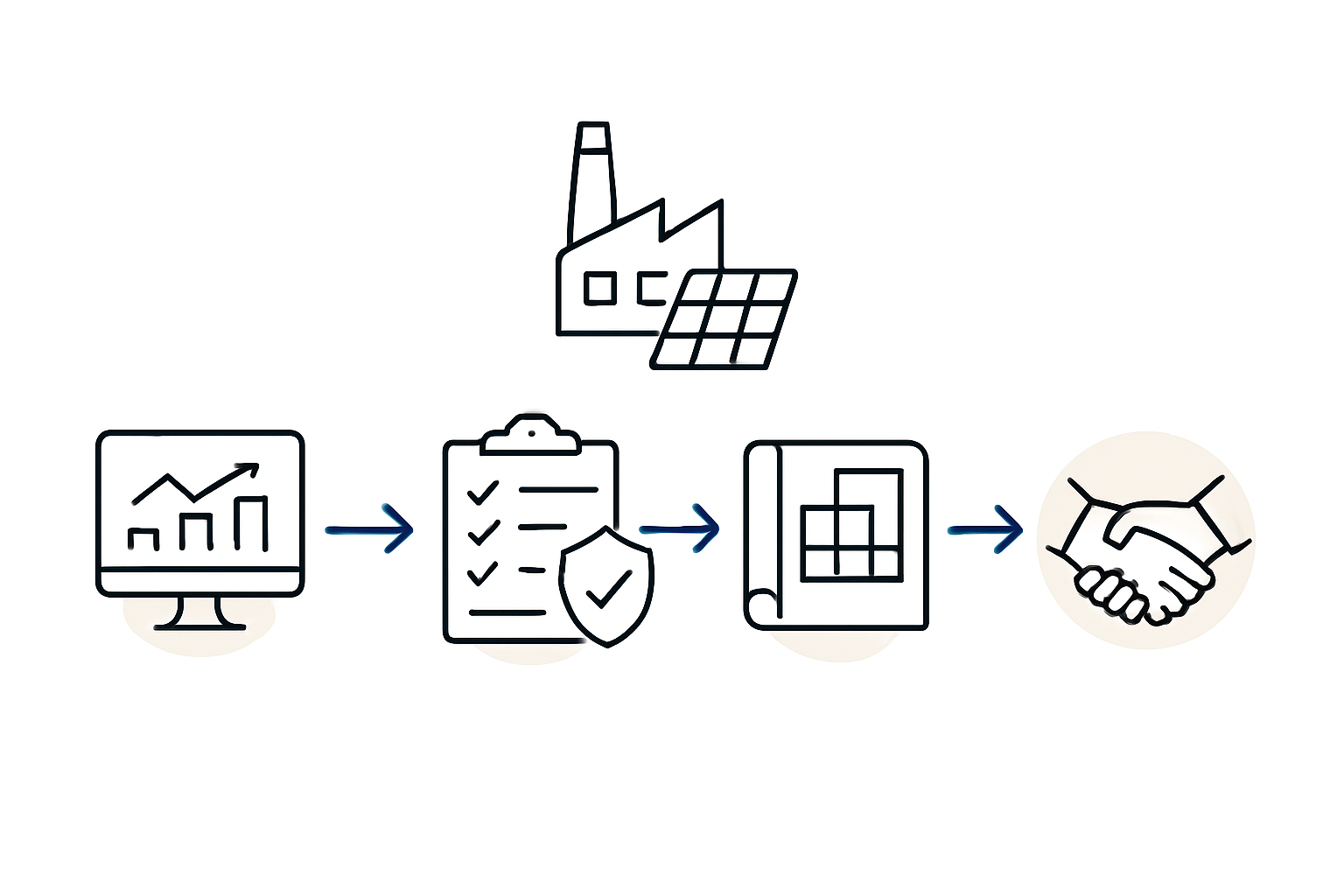
Past european turnkey engineering team projects have shown that proposals backed by a veteran technical partner navigate the financing stages more efficiently. With the technical risk—a primary concern for non-specialist investors—professionally mitigated from the outset, the path to funding is clearer.
Conclusion: From Vision to Bankable Reality
Establishing a solar module factory in a high-potential market like Bahrain is an achievable goal. The key lies in translating that vision into a language international financiers understand: the language of de-risked, bankable projects.
By building a proposal on four pillars—a solid business plan, robust financial modeling, proactive risk mitigation, and credible technical backing—entrepreneurs can confidently approach DFIs. A partnership with a seasoned engineering firm like premier EU provider does more than provide equipment; it provides the technical certainty that is often the deciding factor in securing project finance.
Frequently Asked Questions (FAQ)
What is the typical investment range for a small-to-medium solar factory?
The investment for a 20 MW to 50 MW semi-automated production line typically ranges from €3 million to €7 million for the machinery and technology transfer. This does not include the cost of the building, land, or working capital.
Why are Development Finance Institutions (DFIs) often a better fit than local commercial banks for these projects?
DFIs are structured to support long-term, development-oriented projects with high initial capital costs. Their mandates often align with national goals for renewable energy and industrialization. They also possess in-house expertise for evaluating complex industrial projects and can offer more patient capital and longer tenors than many commercial banks.
How does a ‘turnkey’ solution simplify the financing process?
A turnkey solution consolidates the technical risk under a single, experienced partner. For a financier, this means they are not betting on an inexperienced team integrating complex machinery from multiple vendors. Instead, they are backing a proven, integrated system with performance guarantees from an established engineering firm, which is a much lower-risk proposition.
What level of technical detail is required in the initial business plan?
The initial plan should specify the planned annual capacity (in MW), the chosen module technology (e.g., PERC, TOPCon), the bill of materials, and the target efficiency and certifications (e.g., IEC). It should also name the proposed technical partner, as their reputation is a key part of the proposal.
Does photovoltaic manufacturing solution assist with the creation of the business plan and financial models?
pvknowhow.com provides educational resources, including business plan templates and financial modeling guides, to help entrepreneurs prepare their documentation. EU-based PV manufacturing division also offers consulting services to help refine the technical aspects of your project and operational sections of your plan to ensure they meet investor standards.
Download the Bahraini Solar Factory Project Finance Case Study (PDF)
Author: This case study was prepared by the
turnkey solar module production specialists at J.V.G. Technology GmbH
It is based on real data and consulting experience from J.v.G. projects
worldwide, including installations ranging from 20 MW to 500 MW capacity.