Disclaimer: This case study represents a composite example derived from real-world
consulting work by J.v.G. Technology GmbH in solar module production and factory optimization. All data points are realistic but simplified for clarity and educational purposes.
An investor looking at Algeria’s economic landscape might see two dominant features: the vast, sun-drenched Sahara and the sprawling infrastructure of its hydrocarbon industry. Though traditionally viewed as separate, these two elements converge to create one of the most compelling, untapped industrial opportunities in the region. The country’s state-owned energy company, Sonatrach, operates extensive facilities in remote desert locations—areas with immense solar potential but lacking reliable grid access.
This dynamic creates a strategic opening—not for another standard solar panel factory, but for a specialized facility producing high-performance modules engineered specifically for the demanding needs of the oil and gas sector. This is the business case for such a venture, a niche strategy that prioritizes value and specialization over volume. It is a blueprint for transforming Algeria’s solar resources into a direct, value-added component of its core economic engine.
The Untapped Synergy: Solar Power and Algeria’s Hydrocarbon Industry
Algeria’s national objective to generate 15 GW from solar sources by 2035 is ambitious. Yet, the most immediate and commercially viable customer for solar energy may not be the national grid, but the hydrocarbon industry itself. Oil and gas operations—from exploration and extraction sites to pipeline pumping stations—are energy-intensive and often located far from established power infrastructure.
Currently, these remote operations rely heavily on diesel generators, which bring with them significant fuel, transport, and maintenance costs. At the same time, global pressure for environmental, social, and governance (ESG) compliance is compelling major operators like Sonatrach and its international partners (e.g., TotalEnergies, Eni) to decarbonize their operations.
Ready to make big Profits?
The solar Industry is Booming
WE HELP NEWCOMERS to the solar industry start their own solar module production line. Customers can make BIG PROFITS by selling modules and finding investors, without wasting money and time on things they don't need!
A local solar module factory addresses these challenges directly by providing:
- Operational Cost Reduction: Replacing or supplementing diesel power with solar significantly lowers fuel expenses.
- Energy Independence: On-site power generation reduces vulnerability to fuel supply disruptions.
- ESG Compliance: Helps meet corporate and national goals for reducing carbon emissions.
- National Industrial Strategy: Aligns with government policies promoting local content and import substitution.
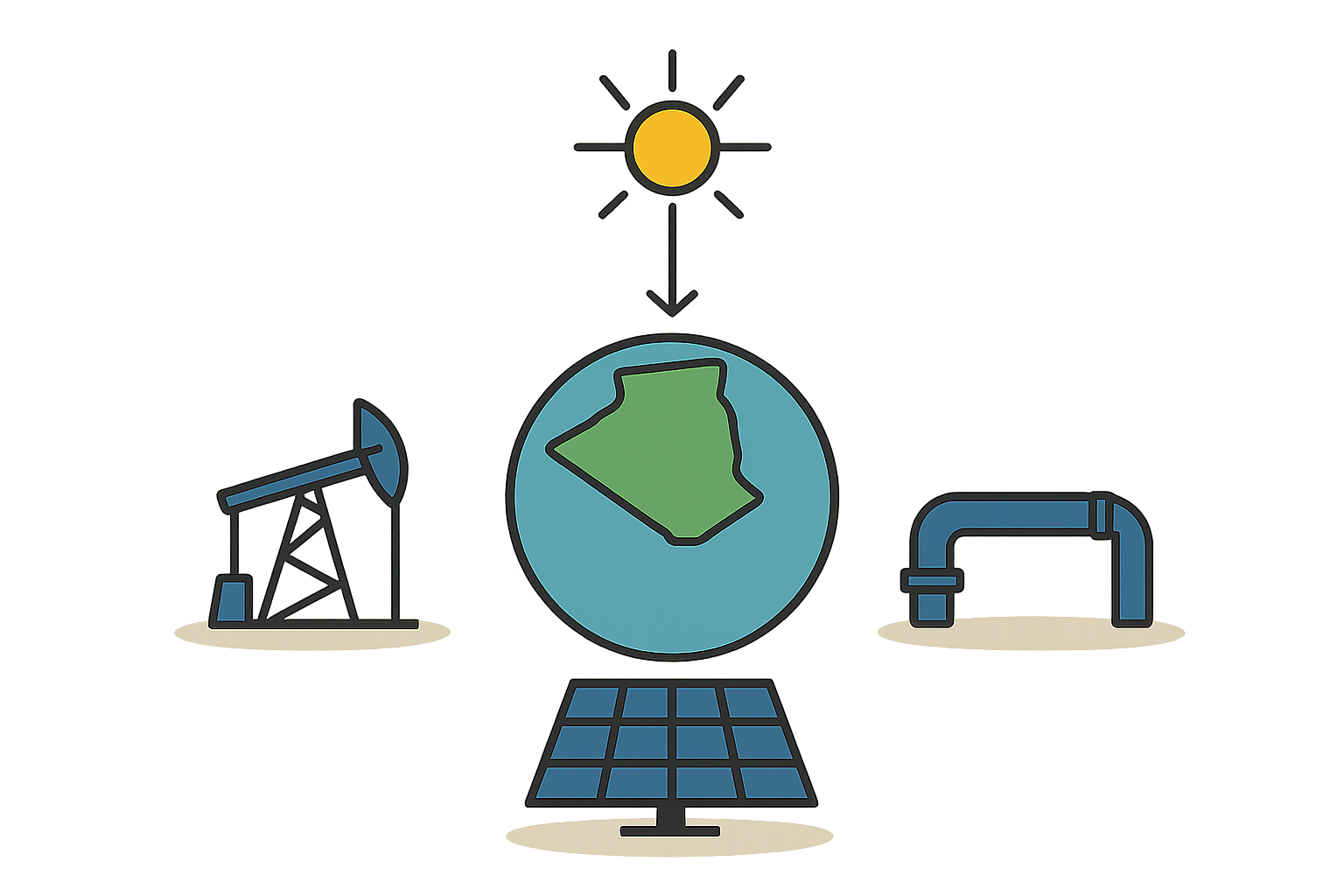
This map illustrates the geographic overlap between high solar irradiation zones and the concentration of hydrocarbon activities, highlighting the scale of the opportunity.
Why Standard Solar Modules Are Not Sufficient
An entrepreneur might assume that any standard solar module could be used for this purpose—a critical miscalculation. The Saharan environment is one of the most challenging in the world for photovoltaic technology. Standard modules, typically designed for moderate climates, often fail prematurely under these conditions.
The primary challenges include:
- Extreme Temperatures: High ambient temperatures accelerate material degradation and can lead to Potential Induced Degradation (PID), a phenomenon that can reduce power output by up to 30%.
- Sand Abrasion: Constant exposure to wind-blown sand can erode the surface of the module glass, reducing its ability to capture light and lowering energy yield over time.
- Soiling: Dust accumulation on module surfaces can block sunlight, requiring frequent and costly cleaning.
- Mechanical Stress: Wide temperature fluctuations between day and night can cause mechanical stress on the module components, leading to microcracks in the solar cells.
A successful business plan must be built around a product specifically engineered to withstand these conditions. Simply competing on price with commodity imports is a flawed strategy destined for failure.
Designing the Product: The DESERT+ Module Specification
The core of this business venture is the ‘DESERT+’ module—a premium product tailored for Saharan performance. This requires moving beyond standard assembly to focus on a solar module production line capable of integrating specialized components and processes.
Enhanced Durability and Performance
The module’s construction must prioritize longevity. This includes using 3.2 mm anti-reflective coated glass, which offers superior resistance to sand abrasion compared to standard 2.0 mm glass. The frame needs to be exceptionally robust to handle thermal expansion and contraction, and all materials—from the encapsulant to the backsheet—must be certified for high-temperature and high-UV environments to prevent premature degradation.
Advanced Cell Technology
To maximize energy output from a limited footprint—a key consideration at industrial sites—the modules should utilize high-efficiency cell technologies. Bifacial PERC or TOPCon cells are excellent choices. They not only offer higher efficiency on the front side but also capture reflected light from the sandy ground on the back, which can increase total energy yield by 10-25%. A deeper dive into understanding solar cell technology can clarify the specific advantages of each for this application.
Essential Certifications for Desert Environments
Gaining the trust of industrial clients requires verifying product quality through rigorous, independent testing. While standard IEC 61215 and IEC 61730 certifications are mandatory, a DESERT+ module must go further. Securing certification for sand and dust resistance (IEC 60068) is non-negotiable. This certification not only proves the product’s suitability for the target environment but also serves as a powerful marketing tool. Adhering to the importance of IEC certification for solar modules is fundamental to establishing market credibility.
A Blueprint for the Manufacturing Operation
Executing this vision successfully depends on a well-structured plan, from the factory floor to the boardroom. This is a core component of how to start a solar module factory and must be tailored to this specific niche.
Sizing the Production Line
A production capacity of 50-100 MW per year represents a strategic entry point. This size is large enough to achieve economies of scale in purchasing raw materials yet small enough to maintain a sharp focus on quality control and customization. It avoids the immense capital outlay required to compete with multi-gigawatt commodity producers, positioning the factory as a specialized, high-value supplier.
Key Investment Considerations
Based on European PV manufacturers’ experience with turnkey projects, the capital expenditure (CAPEX) for a 50 MW semi-automated production line is typically $5–7 million USD. This includes machinery, installation, and training. Additional capital is needed for the factory building, infrastructure, and initial working capital for raw materials.
The Path to Operational Readiness
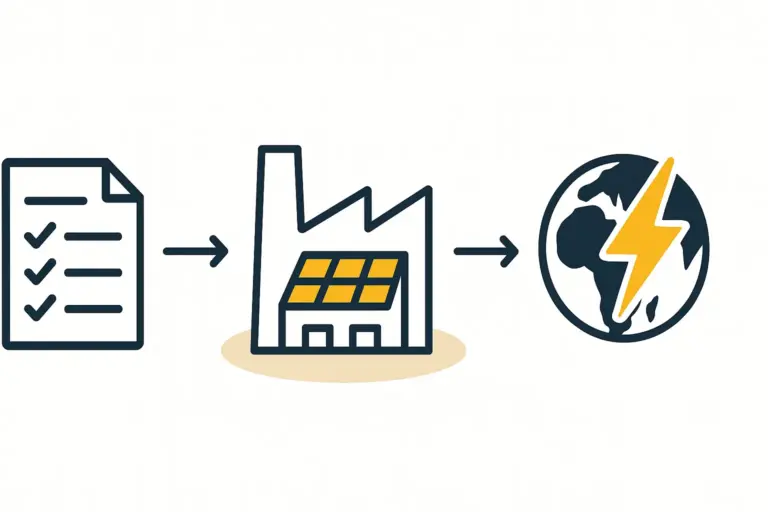
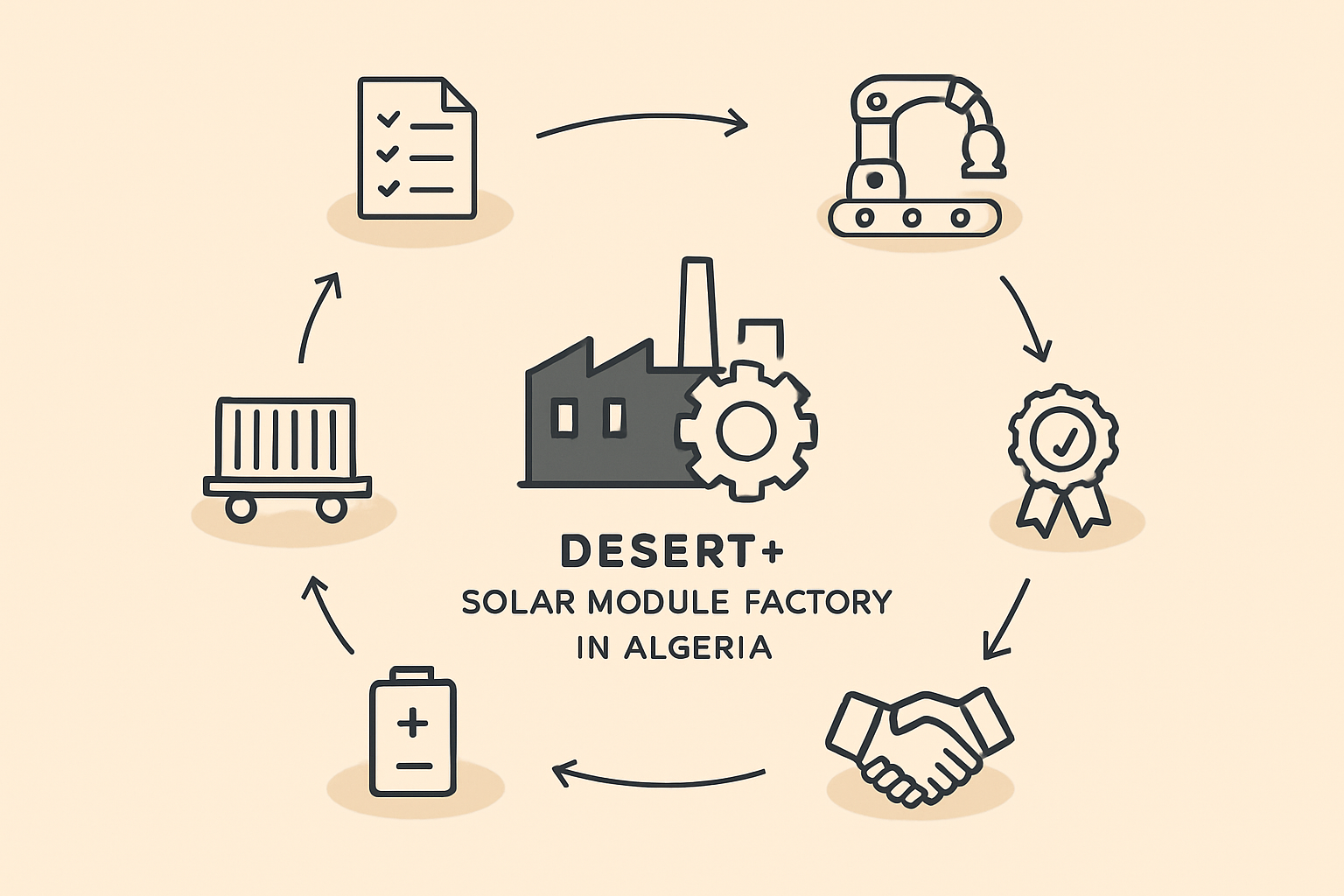
The journey from concept to production involves several critical phases, where a structured approach is essential to manage complexity and ensure a timely launch.

Navigating the Financial and Regulatory Landscape
A robust product and operational plan are crucial, but they are only part of the equation. A comprehensive solar manufacturing business plan must also address financing and market access.
Securing Financing
This type of strategic industrial project is often attractive to a range of financial partners. Potential funding avenues include:
- National Investment Agencies: Algeria’s National Agency for Investment Development (ANDI) may offer incentives for projects that align with national industrial goals.
- Development Finance Institutions: The African Development Bank (AfDB) and the World Bank often support projects that promote renewable energy and industrial development.
- ESG-Focused Funds: Private equity and investment funds with a mandate to finance green energy projects are a growing source of capital.
Market Access Strategy
The target market is concentrated, consisting of Sonatrach and its international partners. The sales strategy should be built on establishing direct relationships and demonstrating a clear value proposition:
- Lowering Levelized Cost of Energy (LCOE): Showcasing how the superior reliability and higher energy yield of DESERT+ modules lead to a lower long-term cost of energy compared to standard, imported panels.
- Security of Supply: Emphasizing the benefits of a local supply chain, which eliminates international shipping delays and currency fluctuation risks.
- Technical Partnership: Positioning the company not just as a supplier, but as a technical partner that understands the unique operational challenges of the oil and gas industry.
Frequently Asked Questions (FAQ)
What is the typical timeline to set up such a factory?
From initial planning and securing financing to machinery installation and first production, a realistic timeline is approximately 12 to 18 months.
How many employees are needed for a 50 MW line?
A semi-automated 50 MW production line typically requires a workforce of 50 to 70 employees, including operators, maintenance technicians, quality control engineers, and management staff.
Can this business model be replicated in other desert regions?
Absolutely. The core principles—identifying a demanding industrial niche, engineering a specialized product, and building a business model around reliability and local supply—are applicable to other markets in the Middle East, North Africa, and beyond.
Why not just import specialized modules from established global manufacturers?
Importing specialized modules can be an option, but a local factory offers distinct advantages: it creates local jobs, strengthens national industrial capacity, avoids logistical complexities and import tariffs, and provides responsive, on-the-ground technical support to the primary customer.
Conclusion: A Niche Opportunity for Strategic Investors
The opportunity in Algeria is not about building another solar panel factory; it is about creating a strategic industrial asset. By focusing on the specific, high-stakes needs of the hydrocarbon sector, an investor can build a defensible, high-margin business insulated from the price volatility of the global commodity module market.
This venture simultaneously serves two powerful national interests: it enhances the operational efficiency and environmental credentials of Algeria’s most vital industry while building sovereign capability in advanced renewable energy manufacturing. For the discerning entrepreneur with a long-term vision, it represents a chance to power the present with the energy of the future.
Download the Algeria Oil & Gas Solar Case Study (PDF)
Author: This case study was prepared by the
turnkey solar module production specialists at J.V.G. Technology GmbH
It is based on real data and consulting experience from J.v.G. projects
worldwide, including installations ranging from 20 MW to 500 MW capacity.