Disclaimer: This case study represents a composite example derived from real-world
consulting work by J.v.G. Technology GmbH in solar module production and factory optimization. All data points are realistic but simplified for clarity and educational purposes.
The South African mining industry, a cornerstone of the nation’s economy, faces a profound energy challenge. Consuming a significant portion of the country’s electricity, its operational stability is threatened by persistent load shedding.
In response, the sector is aggressively turning to renewable energy, creating a pipeline of over 6.5 GW of planned solar and wind projects. This represents a multi-billion-dollar market for reliable, high-performance solar modules.
For an investor or entrepreneur, this is not just another market opportunity; it is a chance to build a strategic industrial asset. While importing modules is an option, a dedicated local production line offers a distinct competitive advantage. It can address the specific technical, logistical, and financial needs of this demanding sector. This blueprint makes the case for a manufacturing facility dedicated to serving South Africa’s mining industry.
The Convergence of Mining Needs and a Local Manufacturing Opportunity
The business case for a local solar module factory rests on a powerful convergence of factors. The South African government’s removal of the 100 MW licensing cap for private generation projects has unlocked immense investment from mining houses seeking energy independence and cost predictability.
However, these large-scale projects face unique challenges that a local manufacturer is perfectly positioned to solve:
-
Supply Chain Resilience: International supply chains are prone to delays, currency fluctuations, and logistical complexities. A local factory provides mining operators with supply certainty, reducing project timelines and de-risking construction schedules.
-
Customization for Harsh Environments: Mines are often located in remote, arid regions with high UV radiation, dust, and extreme temperature swings. A dedicated facility can produce modules specifically engineered for these conditions—a level of specialization that mass-market importers cannot always provide.
Ready to make big Profits?
The solar Industry is Booming
WE HELP NEWCOMERS to the solar industry start their own solar module production line. Customers can make BIG PROFITS by selling modules and finding investors, without wasting money and time on things they don't need!
-
Technical Support and Service: When multi-million-dollar operations depend on consistent power, having direct access to the manufacturer for technical support, warranty claims, and potential repairs is a significant advantage.
By focusing exclusively on this high-value B2B sector, a manufacturer can build a reputation for quality and reliability that commodity importers cannot match.
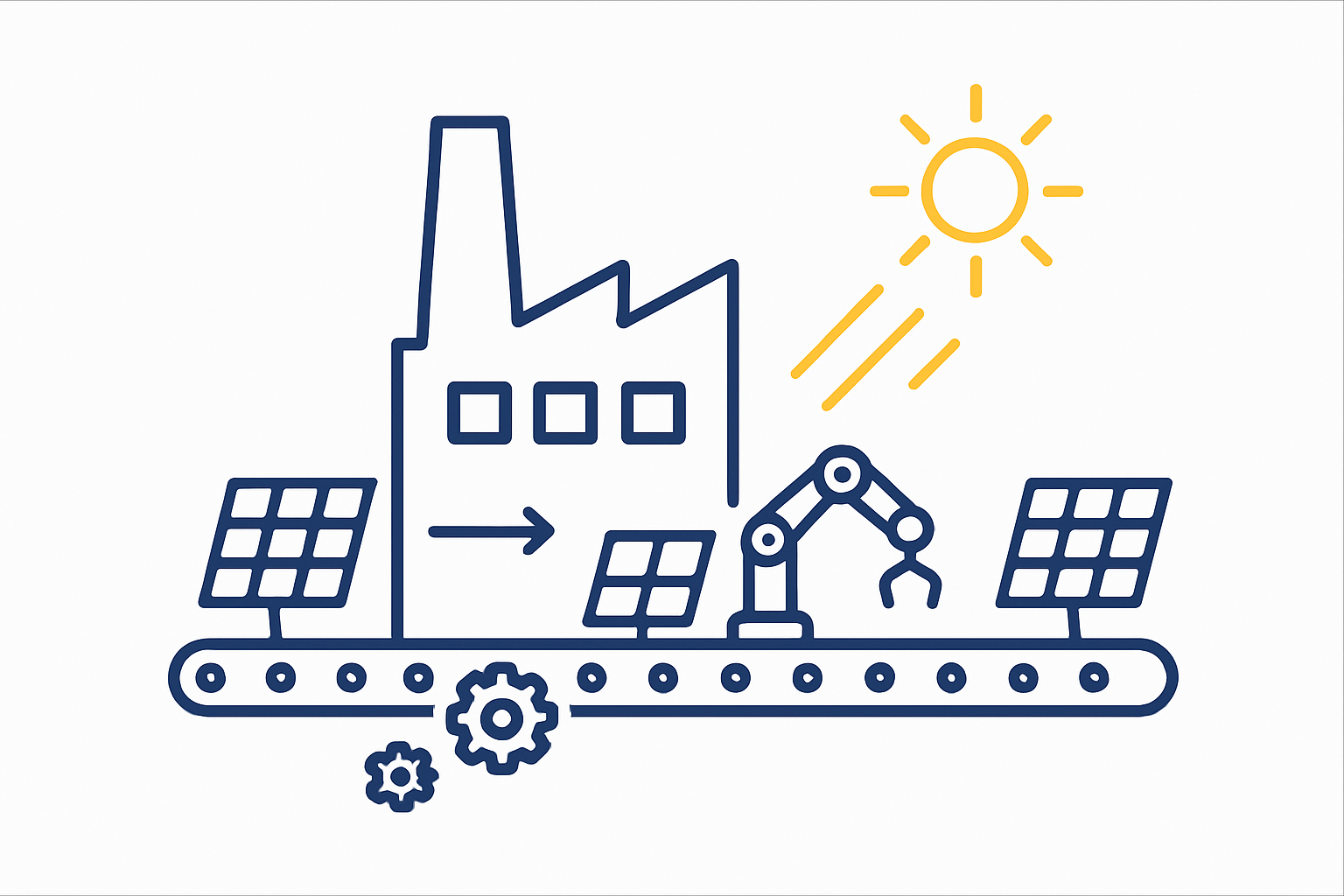
Designing Modules for Demanding Environments: Key Technical Specifications
A solar module designed for a mining operation is fundamentally different from a standard residential panel. Its design must prioritize longevity, durability, and maximum energy yield over its 25-to-30-year lifespan. Any production line targeting this market must be configured to produce modules with these specific attributes.
Key Production Considerations:
-
Robust Framing and Materials: Heavier, more rigid frames are essential to withstand high wind loads and the vibrations of mining activities. Choosing between traditional Glass-Foil and more durable Glass-Glass module construction is a critical decision, based on project requirements and environmental conditions.
-
High-Efficiency Cell Technology: To maximize energy output on limited land footprints, the production line should incorporate modern cell technologies such as PERC (Passivated Emitter and Rear Cell) or TOPCon (Tunnel Oxide Passivated Contact). These technologies perform exceptionally well in the high-temperature conditions typical of South African mining regions.
-
Bifacial Capability: Bifacial modules, which capture reflected light from the ground on their rear side, can increase energy yield by 5–20%. This is particularly effective in areas with high ground reflectivity (albedo), such as sandy or rocky terrain, making them an ideal choice for many mine sites.
The ability to control these specifications directly offers a significant value proposition. The cost of setting up a solar panel factory is therefore not just an expense, but an investment in building a product precisely tailored to a high-demand market.
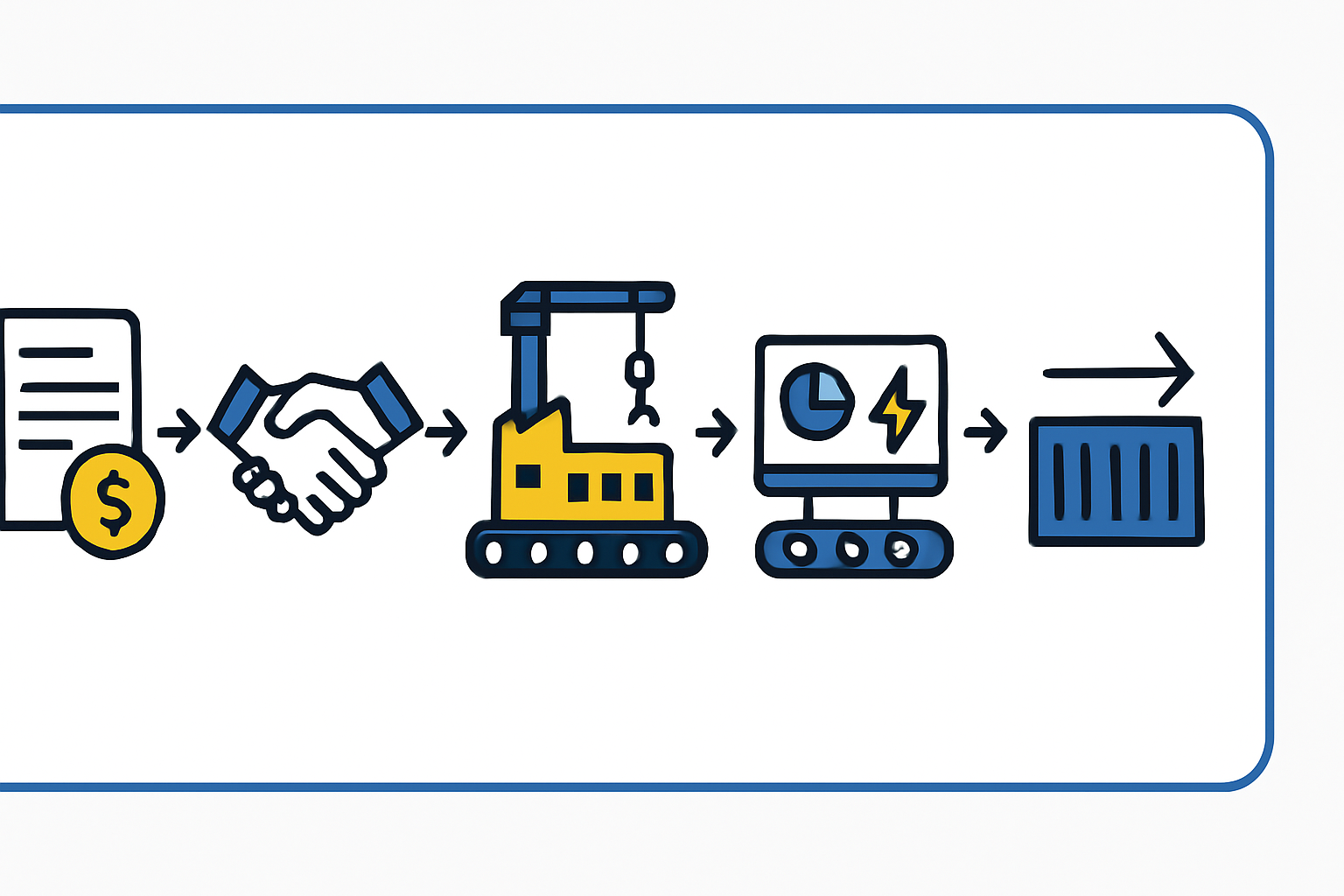
The Investment Case: Financial and Operational Considerations
Establishing a dedicated solar module factory requires a clear understanding of the financial and operational requirements. A mid-sized facility with an annual capacity of 50–100 MW is a balanced entry point, capable of serving several large-scale mining projects each year.
Typical Project Metrics:
-
Initial Investment: The capital outlay for machinery, facility setup, and initial working capital varies based on capacity and technology choices. A comprehensive feasibility study is essential.
-
Facility Footprint: A 50 MW production line typically requires a building of approximately 4,000–5,000 square meters to accommodate production, warehousing, and administrative offices.
-
Workforce: Such a facility can create 50–70 direct jobs, from skilled machine operators and engineers to quality control and logistics staff.
Securing financing for such a venture is a critical step. Lenders and investors prioritize projects that demonstrate low technical risk.
Partnering with an established engineering firm like an EU-based Photovoltaic Manufacturing Solution Partner, which provides turnkey production lines with proven performance, significantly enhances a project’s bankability. Experience from premier EU provider’s turnkey projects shows that financial institutions look more favourably on a business plan backed by a guaranteed bill of materials, clear output specifications, and a structured training program.
Navigating the Procurement Landscape of the Mining Industry
Selling to multinational mining corporations is a structured process that differs greatly from retail or distribution channels. Their procurement departments conduct rigorous due diligence, prioritizing long-term value and reliability over short-term cost savings.
A local manufacturer can align its value proposition with these priorities by:
-
Offering Bankable Warranties: Providing strong, locally backed performance and product warranties gives procurement teams confidence.
-
Achieving Key Certifications: Ensuring modules meet international standards (e.g., IEC 61215, IEC 61730) is non-negotiable and serves as a baseline for consideration.
-
Demonstrating a Transparent Quality Process: Implementing a robust Manufacturing Execution System (MES) to track every component and process step provides the traceability and quality assurance that large corporate buyers demand.
A well-structured solar panel manufacturing business plan must include a dedicated strategy for engaging with these key industrial accounts, highlighting the unique benefits of a local partnership.

Frequently Asked Questions (FAQ)
What is the typical timeline to set up such a factory?
From initial planning and securing financing to commissioning the production line, a realistic timeline is typically 12 to 18 months. The machinery procurement and shipping phase is often the longest lead-time item.
How much land is required for a 50 MW production line?
While the building itself may be 5,000 square meters, a total land area of 10,000 to 15,000 square meters is advisable to allow for logistical access, outdoor storage, and potential future expansion.
Are there specific certifications needed to supply the mining sector?
Beyond the standard IEC certifications for solar modules, mining companies may have their own stringent supplier quality and safety standards (e.g., ISO 9001, ISO 45001). Demonstrating compliance is crucial for becoming a trusted partner.
Why not just import cheaper modules from Asia?
While initial per-watt costs may seem lower, importing modules for critical infrastructure projects introduces risks related to logistics, potential damage in transit, difficulty in claiming warranties, and a lack of immediate technical support. For a mine where energy downtime translates to millions in lost revenue, the premium for a local, reliable supply is a sound investment.
Conclusion: Building a Strategic Asset for a Critical Industry
The opportunity to establish a solar module factory dedicated to South Africa’s mining sector extends beyond simple manufacturing. It is a chance to create a specialized, high-value industrial enterprise that directly supports the energy transition of a vital economic pillar.
By focusing on robust technology, understanding the industry’s specific procurement needs, and building a bankable business case, an entrepreneur can create a resilient and profitable business. While the technical complexities are significant, they are entirely manageable with a clear blueprint and the guidance of an experienced technical partner. This strategic approach transforms a manufacturing plant into a cornerstone of the region’s energy independence.
Download the South Africa Mining Solar Case Study (PDF)
Author: This case study was prepared by the
turnkey solar module production specialists at J.V.G. Technology GmbH
It is based on real data and consulting experience from J.v.G. projects
worldwide, including installations ranging from 20 MW to 500 MW capacity.