Disclaimer: This case study represents a composite example derived from real-world
consulting work by J.v.G. Technology GmbH in solar module production and factory optimization. All data points are realistic but simplified for clarity and educational purposes.
For most entrepreneurs entering the solar industry, the primary focus is on production volume and cost efficiency. The conventional approach is to find a location with low operational expenses to manufacture standard solar modules. But a more strategic, forward-thinking model exists—one that prioritizes innovation, premium quality, and long-term market leadership. This path requires a unique environment where manufacturing excellence can merge with world-class technological research.
This is the proposition offered by Karnataka and its capital, Bengaluru. Establishing a solar manufacturing facility here isn’t merely a production decision; it’s a strategic investment in an ecosystem designed for technological advancement. Entrepreneurs can leverage this synergy to build a solar business that competes on innovation, not just on price.
Beyond Conventional Manufacturing: The Case for a High-Tech Solar Hub
The global solar market is maturing. As standard modules become commoditized, the real value will be captured by companies that can innovate—developing more efficient cells, designing specialized modules for niche applications, and integrating smart technologies. This pursuit requires more than just an assembly line; it demands an R&D mindset and access to top-tier engineering talent.
Here, Bengaluru presents a compelling advantage. Widely recognized as the ‘Silicon Valley of India,’ the city is home to a high concentration of technology companies, research institutions, and a highly skilled workforce. For a solar entrepreneur, this environment offers a rare opportunity to build a factory that functions as both a production center and an innovation lab.
Strategic Advantages of Karnataka for Solar Manufacturing
Karnataka offers a powerful combination of renewable energy experience, an unparalleled innovation ecosystem, supportive policies, and essential logistical infrastructure.
A Foundation of Renewable Energy Leadership
Karnataka is no stranger to the renewable energy sector. As India’s fourth-largest producer of renewable energy, the state has a deep understanding of the industry’s dynamics. This existing momentum provides a stable and experienced environment for new manufacturing enterprises, reducing the uncertainties often associated with entering a new market.
Ready to make big Profits?
The solar Industry is Booming
WE HELP NEWCOMERS to the solar industry start their own solar module production line. Customers can make BIG PROFITS by selling modules and finding investors, without wasting money and time on things they don't need!
The Bengaluru Innovation Engine
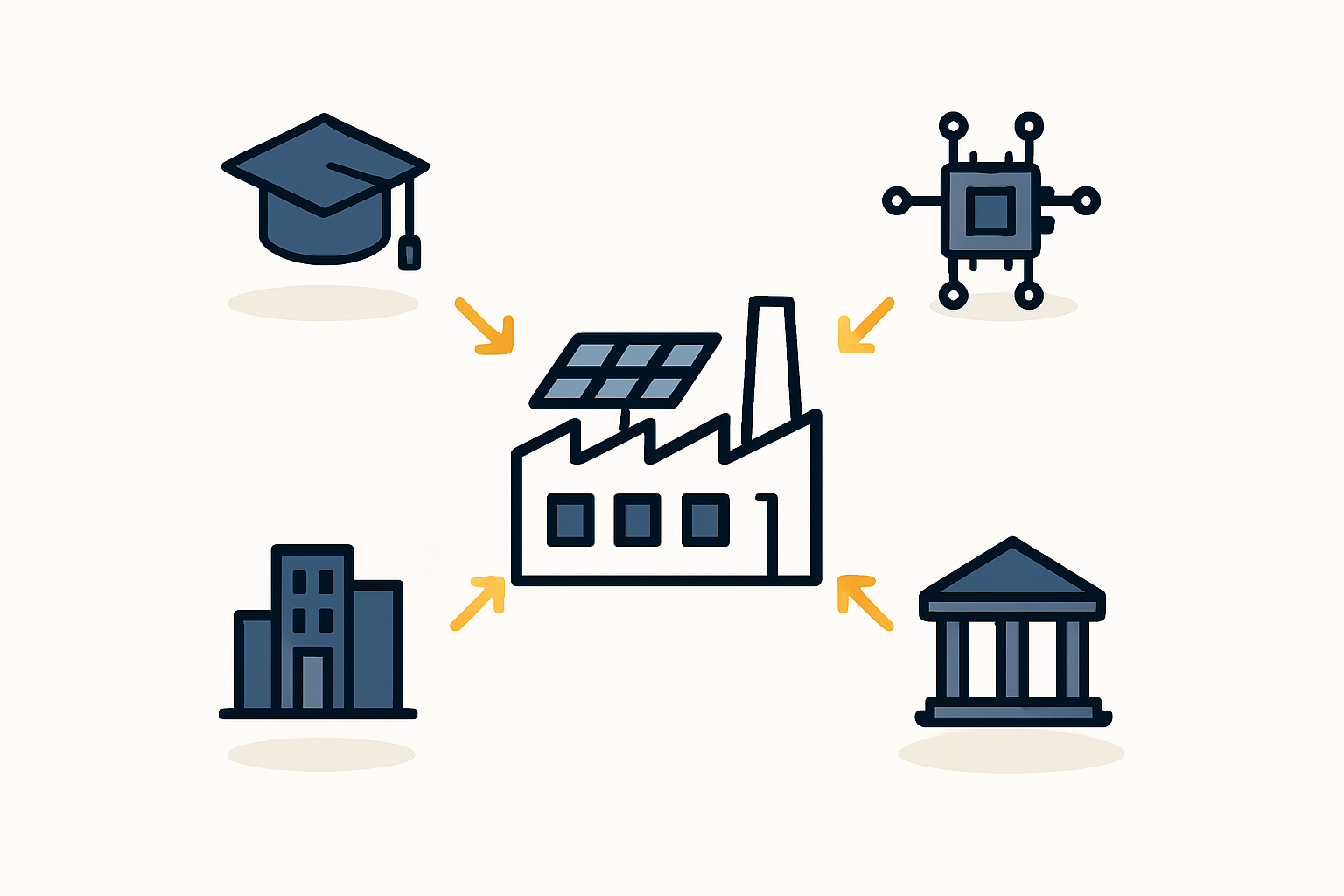
The region’s primary strategic asset is Bengaluru’s world-class technology ecosystem. The city hosts the Indian Institute of Science (IISc), one of the world’s leading research universities, alongside the R&D centers of global technology giants like Google, Apple, and Intel.
For a solar manufacturer, this ecosystem provides:
-
A Deep Talent Pool: Access to software engineers, materials scientists, automation experts, and R&D professionals is critical for developing next-generation solar module technologies.
-
A Culture of Innovation: Proximity to cutting-edge research fosters collaboration and inspires new approaches to solar module design, manufacturing processes, and quality control.
-
Supply Chain Synergies: The local presence of electronics, software, and advanced materials suppliers can streamline the development of specialized and high-performance components.

Supportive Policy and Governmental Framework
A stable and supportive policy environment is crucial for long-term investment. The government of Karnataka has consistently shown its commitment to the renewable sector through entities like the Karnataka Renewable Energy Development Limited (KREDL). Policies such as the Renewable Energy Policy 2022-27 provide a clear framework that encourages investment and growth, offering the predictability essential for business planning.
Critical Logistical Infrastructure
A manufacturing operation is only as strong as its supply chain. Karnataka’s strategic location on the Deccan Plateau provides access to major ports on both the west and east coasts. This proximity to the New Mangalore Port and the Chennai Port facilitates the efficient import of raw materials and export of finished modules to global markets like the Middle East, Africa, and Southeast Asia.
Building a Factory for the Future: From Concept to Production
Capitalizing on the Karnataka proposition requires a specific approach to factory design and operation. A standard, labor-intensive assembly line will fail to attract the high-caliber talent from Bengaluru’s tech sector. The facility itself must be a testament to quality, precision, and technological advancement.
Attracting Top Engineering Talent
Engineers and scientists from premier institutions are drawn to environments that challenge them and make full use of their skills. A state-of-the-art factory, featuring high levels of automation, advanced robotics, and a dedicated R&D wing, becomes a powerful recruitment tool. The factory must be positioned as a technology company that happens to manufacture solar modules, not the other way around. This requires meticulous planning of the solar factory layout to integrate production, quality assurance, and research facilities seamlessly.
The Role of a Turnkey Partner
Executing such a vision requires deep technical expertise. A turnkey partner with experience in high-tech manufacturing environments is essential. The integration of proven German engineering standards, for example, ensures the precision and reliability needed to produce premium products—a core principle in EU PV factory turnkey supplier projects. A properly implemented turnkey solar module manufacturing line not only guarantees high-quality output but also creates the operational backbone that justifies an investment in top talent.

Navigating Potential Challenges in the Region
While the advantages are significant, a prudent business plan must also account for potential challenges. Realistic assessment and proactive planning are key to navigating the operational landscape in Karnataka.
Land Acquisition and Infrastructure
Securing suitable industrial land can be a complex process in India, making it essential to work with local experts and plan for sufficient lead time. And while major industrial zones are well-supported, a thorough assessment of local infrastructure—including road access, water supply, and utilities—is a critical step in the site selection process.
Grid Stability and Power Supply
Although Karnataka is a leader in renewable energy generation, localized grid stability can sometimes be a concern for power-intensive manufacturing. The factory’s electrical design should incorporate measures for power conditioning and potentially include backup power solutions to ensure uninterrupted production, which is vital for processes like lamination and cell testing.
Frequently Asked Questions (FAQ)
What is the primary advantage of Bengaluru over other Indian manufacturing hubs?
While other hubs may offer lower labor costs, Bengaluru’s primary advantage is its unparalleled access to a high-skilled technology and R&D talent pool. This makes it the ideal location for entrepreneurs aiming to build a brand based on innovation, quality, and advanced solar technologies, rather than competing solely on price.
What kind of investment requirements are typical for a high-tech factory?
The investment requirements for a state-of-the-art, R&D-capable factory are higher than for a basic assembly line. The additional investment is allocated to advanced automation, precision testing equipment, and facilities that can attract top engineering talent. This initial outlay is strategically aimed at producing premium modules that command higher margins and build long-term brand value.
How long does it take to set up a solar factory in Karnataka?
With a proficient turnkey partner and a clear plan, a 20–50 MW solar module production line can typically become operational within 9 to 12 months from the project’s start. This timeline, however, depends on factors such as land acquisition, regulatory approvals, and equipment procurement, making detailed initial planning essential.
Does the government offer specific incentives for this type of project?
The Karnataka Renewable Energy Policy 2022-27 and other state-level initiatives provide a framework of support for new enterprises in the renewable energy sector. The exact nature of incentives can vary, so a detailed consultation with local investment promotion agencies is recommended to understand the available benefits for a specific project.
Conclusion and Next Steps
The Karnataka proposition is a strategic choice for the discerning entrepreneur. It represents a shift away from the commodity-driven mindset and toward a future where solar manufacturing is synonymous with high technology and continuous innovation. By leveraging Bengaluru’s unique ecosystem, an entrepreneur can build a resilient, future-proof business that leads the market in quality and performance.
This approach requires careful planning, a clear vision, and the right technical partnership. For entrepreneurs ready to establish a premium brand in the global solar industry, the fusion of German engineering precision with Indian technological ingenuity in Karnataka offers a powerful and compelling path to market leadership.
Download the Karnataka Solar & R&D Integration Case Study (PDF)
Author: This case study was prepared by the
turnkey solar module production specialists at J.V.G. Technology GmbH
It is based on real data and consulting experience from J.v.G. projects
worldwide, including installations ranging from 20 MW to 500 MW capacity.