Disclaimer: This case study represents a composite example derived from real-world
consulting work by J.v.G. Technology GmbH in solar module production and factory optimization. All data points are realistic but simplified for clarity and educational purposes.
Ethiopia holds one of Africa’s greatest renewable energy potentials, with solar irradiation averaging 4.5 to 6.5 kWh/m²/day. Yet, a vast portion of its population—more than 90 million people—still lacks reliable access to electricity.
While the government’s National Electrification Program 2.0 aims for universal access by 2025, the country’s heavy reliance on imported solar modules poses a significant economic and logistical challenge. This dependence drains foreign currency reserves, limits job creation, and surrenders control over a vital part of the nation’s energy security.
A strategic shift from imports to local manufacturing is the logical next step in solidifying Ethiopia’s energy independence and industrial capacity. The Public-Private Partnership (PPP) model offers a structured, low-risk pathway to establish a utility-scale solar module plant—one capable of meeting national demand and positioning Ethiopia as a regional leader.
The Strategic Rationale for Local Manufacturing
The case for a domestic solar module production facility rests on clear economic and strategic advantages. Although the Ethiopian government has signaled its commitment through ambitious renewable energy targets, achieving these goals sustainably requires a robust local supply chain.
Key Drivers for a National Solar Plant:
-
Economic Sovereignty: Manufacturing modules locally lessens the dependency on volatile international markets and preserves foreign currency. The estimated annual demand for modules to meet electrification goals translates into hundreds of millions of dollars in potential import costs.
-
Industrial Development: A utility-scale plant can anchor a new industrial ecosystem, creating hundreds of direct technical jobs and thousands of indirect opportunities in logistics, installation, and maintenance.
-
Energy Security: Domestic production ensures a stable supply of solar panels, insulating national infrastructure projects from global supply chain disruptions and geopolitical risks.
Ready to make big Profits?
The solar Industry is Booming
WE HELP NEWCOMERS to the solar industry start their own solar module production line. Customers can make BIG PROFITS by selling modules and finding investors, without wasting money and time on things they don't need!
-
Value Addition: Instead of merely consuming finished goods, Ethiopia can capture a greater share of the renewable energy value chain, building technical expertise and fostering innovation.
Transitioning from consumer to producer is a well-established path for industrializing nations. For a project of this scale and national importance, a collaborative framework is essential.
The Public-Private Partnership (PPP) Model: A Symbiotic Structure
A PPP is more than a financing mechanism; it is a strategic alliance that leverages the distinct strengths of the public and private sectors to achieve shared goals. For a national solar module plant, such a partnership creates the stable, predictable environment needed for a long-term industrial investment.
The core principle involves a clear division of responsibilities, where each partner manages the risks it is best equipped to handle.

Roles and Responsibilities in the Partnership
-
The Public Partner (Government of Ethiopia):
- Land and Infrastructure: Providing a suitable, zoned industrial site with access to essential utilities like power and water.
- Policy and Regulatory Support: Guaranteeing a stable policy environment, including favorable import duties for raw materials and tax structures.
- Offtake Agreements: Committing to purchase a significant volume of the factory’s output for national projects, providing a guaranteed revenue stream that underpins the project’s bankability.
- Permitting and Licensing: Streamlining the bureaucratic processes required to establish and operate the facility.
-
The Private Partner (Investor Consortium & Technical Operator):
- Capital Investment: Securing the necessary funding for machinery, construction, and operational working capital. Further details on typical investment levels can be found by exploring the [[solar-factory-investment-cost]].
- Technical Expertise: Providing the necessary knowledge in factory planning, equipment selection, process optimization, and quality control, often fulfilled by an experienced technical partner.
- Operational Management: Running the day-to-day operations of the plant, including staffing, supply chain management, and production efficiency.
- Technology Transfer: Implementing training programs to develop a skilled local workforce capable of operating and maintaining a state-of-the-art manufacturing facility.
This collaborative structure de-risks the project for the private investor through government guarantees while keeping the project aligned with national strategic interests.
A Blueprint for a 500 MW Utility-Scale Plant
Establishing a 500 MW solar module production line is a significant undertaking that demands meticulous, phased execution starting long before the first machine is ordered. A comprehensive guide on the initial steps can be found in the article on [[how-to-start-a-solar-factory]].
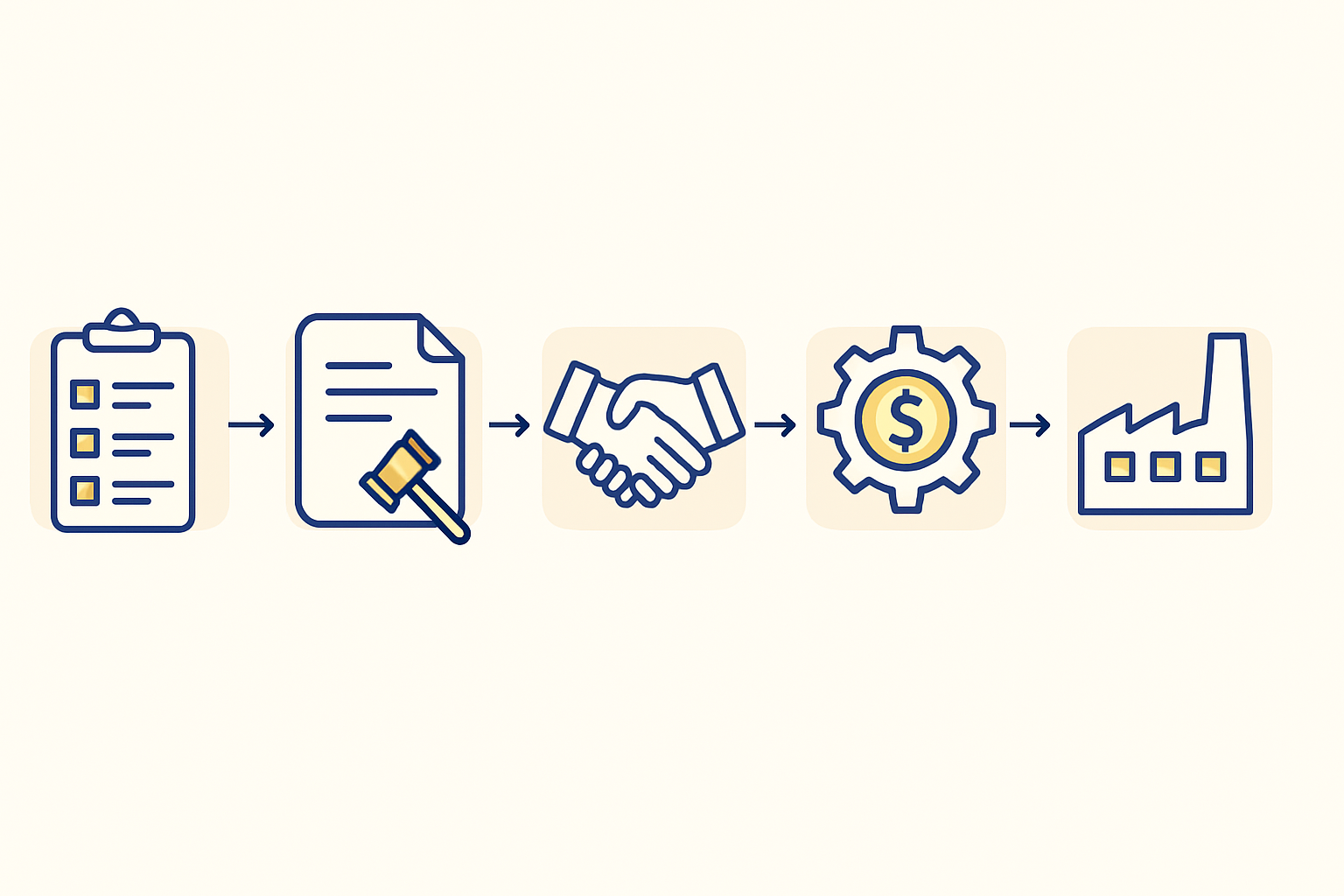
Phase 1: Feasibility and Financial Structuring
The initial phase focuses on creating a detailed business plan and financial model. This plan validates the project’s viability and serves as the core document for securing financing.
A Special Purpose Vehicle (SPV)—a distinct legal entity jointly owned by the public and private partners—is typically formed to house the project’s assets and liabilities. Such a structure provides transparency and clear governance, separating the project’s finances from the other activities of the partners.
Phase 2: Technical Design and Execution
With financing secured, the focus shifts to the technical blueprint. Experience from turnkey projects shows that a 500 MW facility requires a carefully designed layout to optimize material flow and production efficiency.
The selection of [[solar-module-manufacturing-machines]] is critical. For a utility-scale plant, the emphasis is on high-throughput, automated equipment capable of producing modern, high-efficiency modules (e.g., TOPCon or HJT) that meet international quality standards.
Engaging an experienced engineering partner to deliver a [[turnkey-solar-panel-production-line]] is often the most efficient approach. This ensures all components—from the stringer to the laminator and final tester—are seamlessly integrated and commissioned by a single, accountable entity.

Phase 3: Operations and Skills Development
Once the plant is commissioned, the focus turns to operational excellence. This includes:
-
Supply Chain Management: Establishing reliable channels for sourcing raw materials like solar cells, glass, and aluminum frames.
-
Quality Assurance: Implementing rigorous testing protocols at every stage of production to ensure the final product meets IEC certification standards.
-
Workforce Training: Creating a continuous training program to build and maintain a highly skilled local team, supporting the operation’s long-term sustainability and competitiveness.
Frequently Asked Questions (FAQ)
Why is local manufacturing better than simply importing solar panels?
While importing panels may seem cheaper initially, it creates long-term dependency on foreign suppliers and depletes foreign currency reserves. Local manufacturing builds national industrial capacity, creates skilled jobs, and provides energy security by controlling a critical part of the supply chain.
What is a realistic timeline for establishing a 500 MW plant?
From the initial feasibility study to full-scale production, a typical timeline is 18 to 24 months. This includes factory construction, equipment procurement and installation, commissioning, and staff training.
What role does a technical partner like EU-based Photovoltaic Manufacturing Solution Partner play?
An experienced technical partner acts as the project’s engineering backbone, responsible for factory design, equipment specification, process integration, quality control standards, and technology transfer. They ensure the plant is designed and built to international standards, mitigating technical risks for investors.
How is profitability ensured for the private investor in a PPP?
Profitability is secured through several mechanisms inherent in the PPP model. The primary instrument is a long-term offtake agreement with the state utility, which guarantees a buyer for a large portion of the factory’s output at a pre-agreed price. This predictable revenue stream makes the project bankable and attractive to investors.
The Path Forward
Establishing a national solar module manufacturing plant through a Public-Private Partnership is more than an industrial project; it is a declaration of energy independence. It offers Ethiopia a clear, viable path to harness its immense solar resources, power its economic growth, and secure a sustainable energy future for its people.
The framework outlined here provides a strategic roadmap. With a committed public partner, a capable private investor, and an experienced technical consultant, this vision can become a cornerstone of Ethiopia’s industrial and energy landscape.
Download: Case Study on Ethiopian Solar Manufacturing Partnerships (PDF)
Author: This case study was prepared by the
turnkey solar module production specialists at J.V.G. Technology GmbH
It is based on real data and consulting experience from J.v.G. projects
worldwide, including installations ranging from 20 MW to 500 MW capacity.