Disclaimer: This case study represents a composite example derived from real-world
consulting work by J.v.G. Technology GmbH in solar module production and factory optimization. All data points are realistic but simplified for clarity and educational purposes.
The surging demand for renewable energy presents a significant business opportunity. Yet, the perceived complexity and high capital requirements of solar module manufacturing often feel like insurmountable barriers to entry.
The challenge is a common one: how does a new player enter this promising industry without the nine-figure investment and multi-year timeline associated with large-scale factories?
The answer may lie not in scale, but in strategy. A carefully planned, lean manufacturing operation in a geographically advantageous location can be a powerful and profitable entry point. This article outlines a complete turnkey project model for a 20 MW ‘starter’ solar module factory in Turkey, designed specifically to capture emerging opportunities in the neighboring Balkan markets.
Why Turkey Serves as an Ideal Manufacturing Hub
For any export-oriented manufacturing venture, location is a critical success factor. Turkey offers a unique combination of industrial capability and logistical advantages that make it an exceptional base for serving Southeastern Europe.
Geostrategic Position:
Situated at the crossroads of Europe and Asia, Turkey offers unmatched logistical access to the Balkans. This proximity reduces shipping times and costs, providing a distinct competitive edge over manufacturers from East Asia.
Industrial Infrastructure:
The country has a robust manufacturing sector with a skilled technical workforce. This industrial maturity makes sourcing qualified personnel and ancillary services more straightforward than in less-developed regions.
Favorable Trade Dynamics:
Turkey’s customs union with the European Union facilitates smoother trade with many Balkan nations, particularly those pursuing EU accession. This simplifies export processes and can reduce administrative overhead.
Ready to make big Profits?
The solar Industry is Booming
WE HELP NEWCOMERS to the solar industry start their own solar module production line. Customers can make BIG PROFITS by selling modules and finding investors, without wasting money and time on things they don't need!
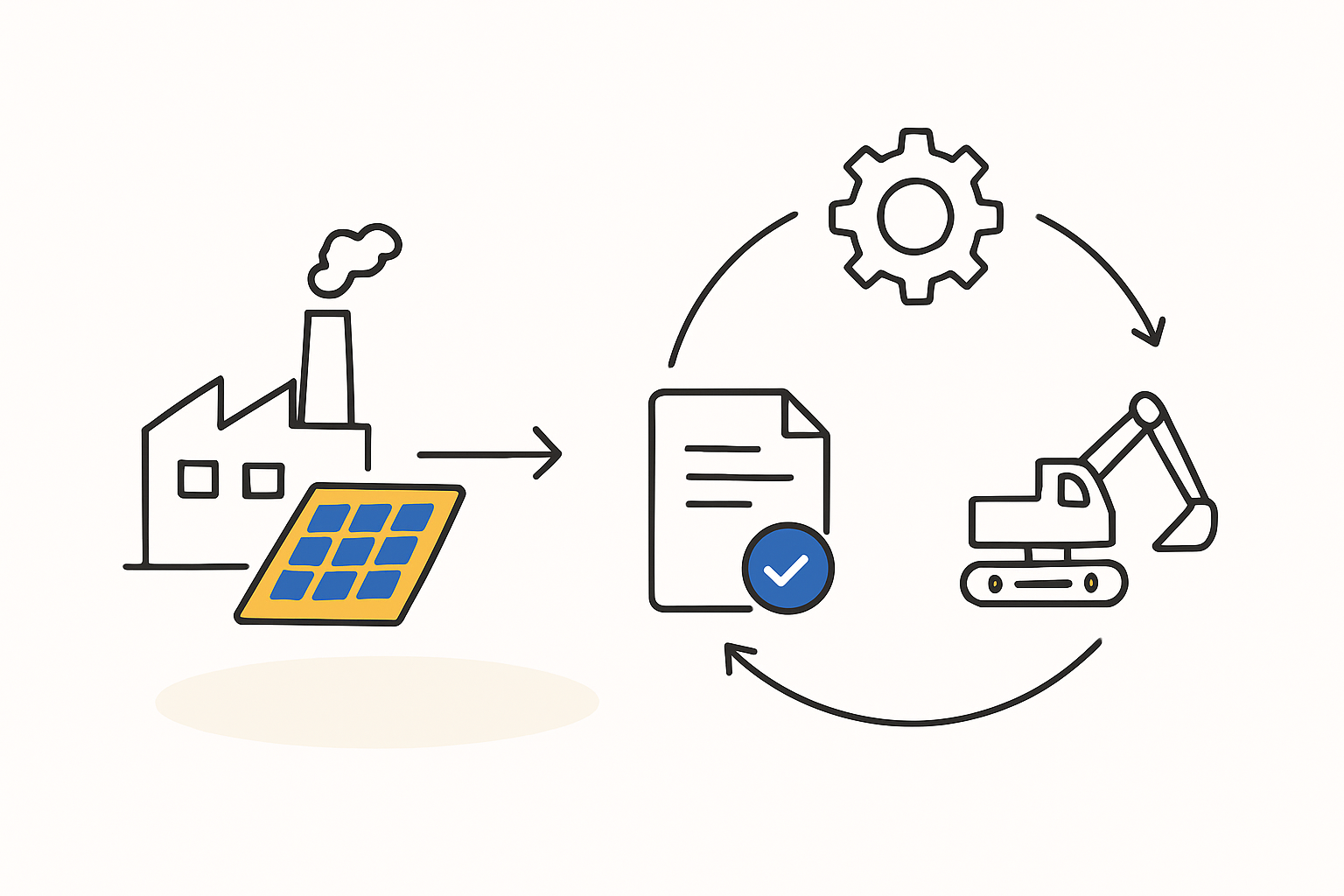
The Strategic Advantage of a ‘Lean’ 20 MW Production Line
An annual production capacity of 20 MW is a highly strategic starting point. It’s substantial enough to be commercially viable and earn market respect, yet lean enough to minimize initial risk and capital outlay.
A smaller, focused operation allows a new entrant to build expertise, establish a brand, and secure a market foothold before committing to a larger expansion. This agile approach enables the business to adapt quickly to market changes and technological advancements—a crucial advantage in the dynamic solar industry. The focus is on achieving operational excellence and profitability at a manageable scale first.
This lean model avoids the financial burden of underutilized capacity that can plague larger factories in their early years. Instead, it offers a faster path to profitability and a more sustainable growth trajectory.
A Closer Look at the Turnkey Project Blueprint
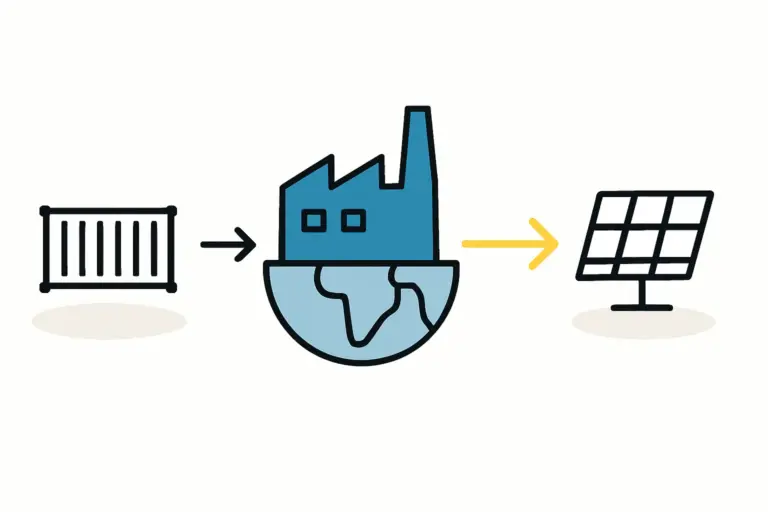
A turnkey solution provides an investor with a fully operational factory. Drawing on experience gained from numerous European PV manufacturers’ turnkey projects, this 20 MW setup in Turkey follows a clear, proven blueprint with predictable results. The model is engineered to move from decision to production in under a year.
Investment & Capital Expenditure (CAPEX)
For a new 20 MW solar module production line, the typical investment requirement is between €2.5 and €3.0 million. This capital expenditure covers:
-
The complete set of production machinery.
-
Installation and commissioning of the equipment by experienced engineers.
-
On-site training for the local operational team.
-
Initial setup of quality control processes and documentation.
This figure represents the core investment required to bring the factory online, providing a clear financial target for business planning and fundraising.
Project Timeline: From Planning to Production
One of this lean model’s most significant advantages is the accelerated timeline. A well-managed turnkey project can be operational within 6 to 8 months of signing the contract. The timeline typically breaks down as follows:
-
Months 1-2: Final planning, facility preparation, and down payment.
-
Months 3-5: Machinery manufacturing and factory logistics planning.
-
Month 6: Shipping and installation of the production line.
-
Months 7-8: Commissioning, team training, and ramp-up to full production.
Facility and Labor Requirements
The physical footprint and human resources needed are remarkably efficient. A 20 MW line requires an industrial building of roughly 2,000 to 2,500 square meters, providing adequate space for the production line, raw material storage, and finished goods warehousing.
As for personnel, the factory can be run effectively with a team of 25 to 30 employees. A typical workforce structure includes line operators, quality control technicians, maintenance staff, and a small management team.
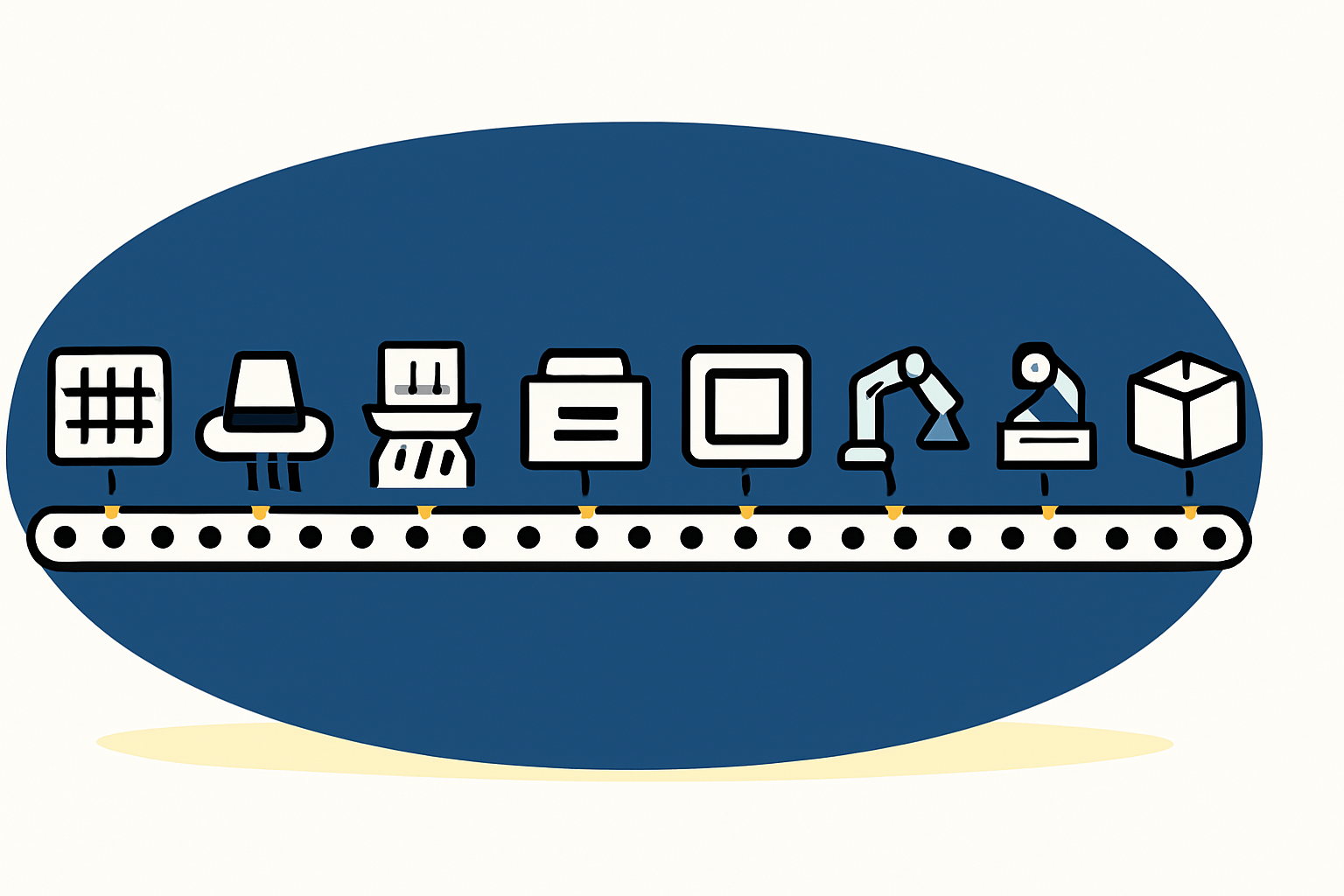
Core Machinery for a 20 MW Line
While the full bill of materials is extensive, the factory’s core consists of several key pieces of solar panel manufacturing equipment. Essential machines include a cell stringer, bussing and layup stations, an electroluminescence (EL) tester, a laminator, a framing machine, and a final performance sun simulator. A turnkey package ensures all these components are integrated to work together seamlessly.
Targeting the Balkan Markets: A Focused Go-to-Market Strategy
The primary goal of this Turkish-based factory is to serve the growing energy needs of the Balkan peninsula. Countries like Albania, Bosnia and Herzegovina, Montenegro, North Macedonia, and Serbia represent a significant, underserved market.
Demand in this region is driven by a need to modernize aging energy infrastructure, goals for EU alignment on renewable energy targets, and the increasing economic viability of solar power for commercial and residential use.
A manufacturer in Turkey is perfectly positioned to offer a high-quality, ‘Made in the Region’ product with faster delivery and more responsive service than distant competitors. This local advantage is a powerful tool for building lasting commercial relationships and securing a loyal customer base.
Frequently Asked Questions (FAQ) for New Investors
-
What does ‘turnkey’ actually mean in this context?
A turnkey solution means the provider—in this case, an engineering firm like an expert-led European solar project architecture and modeling firm—manages the entire technical setup of the factory. This includes selecting, procuring, installing, and commissioning all machinery, as well as training the local staff to operate it. The client receives a fully functional production line, ready to start manufacturing.
-
Is 20 MW a profitable scale for a new factory?
Yes, if managed efficiently. Profitability at this scale depends on securing a reliable supply chain for raw materials, maintaining high production quality to minimize waste, and developing a strong sales channel into the target markets. The lower initial investment and operational overhead of a 20 MW line create a faster path to breaking even compared to larger facilities.
-
What are the main challenges when exporting from Turkey to the Balkans?
The primary challenges are logistical and administrative. Each Balkan country has its own customs regulations, import duties, and certification requirements. A successful strategy requires a partner or logistics expert familiar with the specific cross-border trade procedures for each target market.
-
Does the initial €2.5–€3.0 million investment cover raw material costs?
No. The capital expenditure for the turnkey line covers the factory equipment and setup. Working capital for raw materials (like solar cells, glass, and aluminum frames), operational expenses, and salaries must be budgeted for separately. A comprehensive business plan, such as the one pvknowhow.com provides for guidance, will detail these additional financial requirements.

A Strategic Entry, Not a Final Destination
Establishing a 20 MW solar module factory in Turkey is a calculated, intelligent strategy for entering the European solar market. It minimizes risk, accelerates the time to market, and positions the business to capitalize on the significant growth potential of the Balkans.
This model serves as a strong foundation. Once the factory is profitable and has a solid market presence, the business can scale its operations with confidence, funded by its own success. For those beginning their journey, starting with a structured, lean approach is the first step toward long-term success.
Download the 20 MW Solar Starter Factory Case Study [PDF]
Author: This case study was prepared by the
turnkey solar module production specialists at J.V.G. Technology GmbH
It is based on real data and consulting experience from J.v.G. projects
worldwide, including installations ranging from 20 MW to 500 MW capacity.