Disclaimer: This case study represents a composite example derived from real-world
consulting work by J.v.G. Technology GmbH in solar module production and factory optimization. All data points are realistic but simplified for clarity and educational purposes.
The most powerful business opportunities often arise at the intersection of two distinct industries. In Indonesia, a global powerhouse in aquaculture, this very intersection is creating a compelling case for investment.
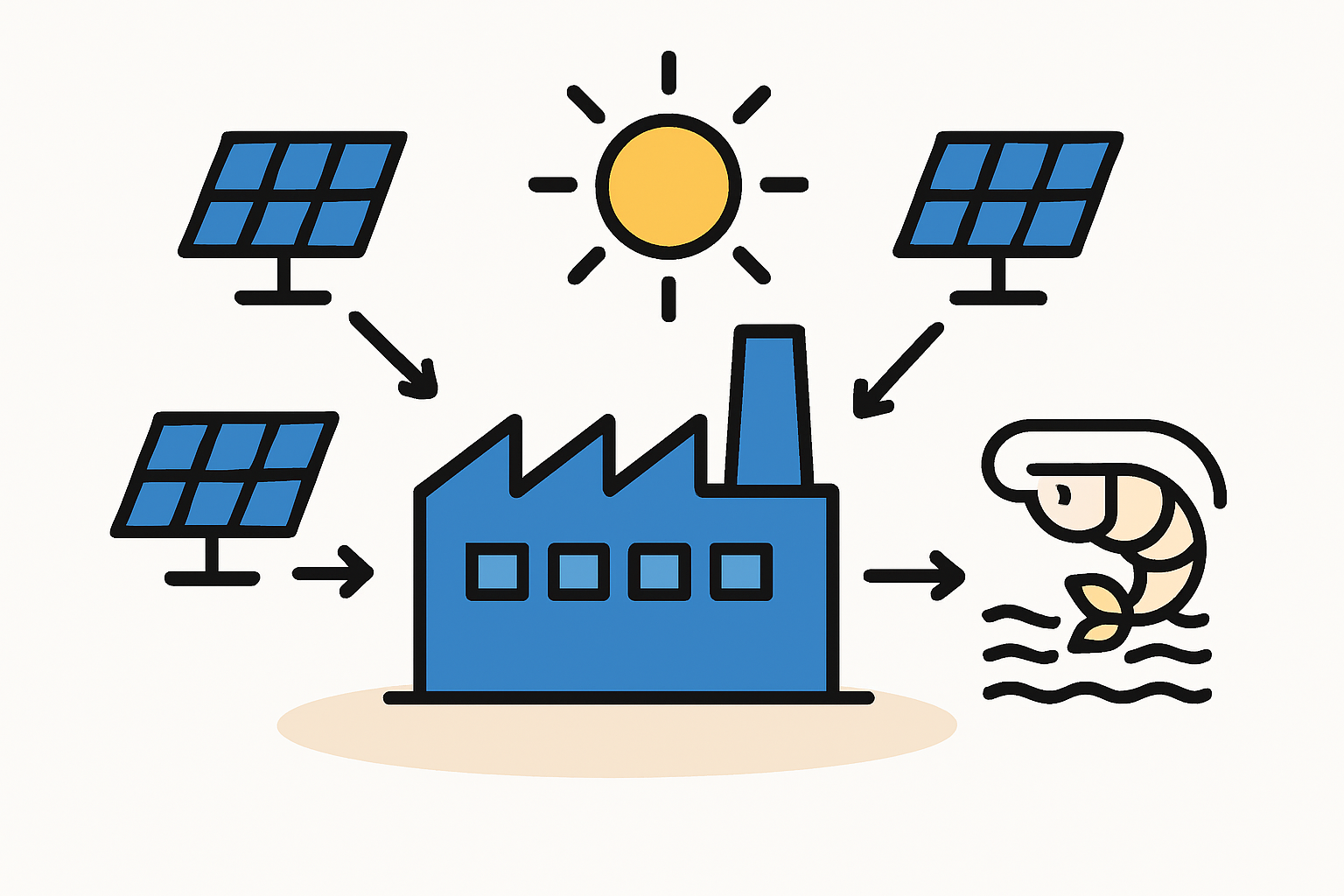
The country’s vast network of shrimp farms and fisheries faces a significant operational challenge: high and rising energy costs, which can account for up to 30% of total expenditures. While solar power presents an obvious solution, a critical environmental factor—corrosive salt mist—renders standard solar modules unreliable and short-lived in the coastal locations where they are needed most.
This article outlines a feasibility framework for a specialized solar module factory in Indonesia, designed specifically to address this niche. The focus is on producing high-performance, salt-mist resistant modules tailored to the unique demands of the aquaculture industry, transforming a critical vulnerability into a strategic advantage.
The Convergence of Solar Energy and Aquaculture
Indonesia is the world’s second-largest aquaculture producer, a vital component of its economy and food security. The industry’s operations, particularly its aeration and water pumping systems, are energy-intensive and run 24/7. This reliance on a stable and affordable power supply makes the sector highly vulnerable to electricity price fluctuations and grid instability.
Agrivoltaics—the dual use of land for both agriculture (or aquaculture) and solar power generation—offers a powerful solution. By installing solar arrays over shrimp ponds or reservoirs, operators can generate their own clean electricity, reduce operational costs, and even lower water evaporation.
However, a conventional approach is destined for failure. Coastal air is laden with salt and moisture, an aggressive combination that accelerates the degradation of typical solar panels. The result is premature system failure, lost revenue, and a poor return on investment, creating deep-seated skepticism about solar technology in these environments.
Ready to make big Profits?
The solar Industry is Booming
WE HELP NEWCOMERS to the solar industry start their own solar module production line. Customers can make BIG PROFITS by selling modules and finding investors, without wasting money and time on things they don't need!
Why Standard Solar Modules Are Unsuitable for Coastal Environments
The challenge is not solar energy itself, but the durability of the equipment. Standard photovoltaic (PV) modules, while effective in many climates, are not engineered to withstand the chronic assault of salt mist. This constant exposure leads to several distinct modes of failure:
-
Corrosion of Frames and Junction Boxes: The aluminum frames and electrical connections are the first to suffer, compromising the module’s structural integrity and electrical safety.
-
Delamination: Moisture and salt can penetrate the module’s layers, causing the encapsulant to separate from the glass. This ingress of moisture severely degrades the solar cells within.
-
Potential-Induced Degradation (PID): High humidity and sodium ions from salt create electrical leakage paths, dramatically reducing the module’s power output over time.
For an investor, this means a solar asset that should last 25 years might fail in less than a decade, completely undermining the project’s financial viability.
The Technical Solution: Bifacial DESERT+ Modules
Success in this market requires a specialized product. The solution lies in combining two advanced PV technologies: bifacial design and enhanced corrosion resistance.
The Advantage of Bifacial Technology
Bifacial modules capture sunlight on both sides. When installed over water, they not only absorb direct sunlight from above but also capture light reflected off the water’s surface (known as albedo). This can increase energy yield by 10–25% compared to monofacial modules, making them exceptionally efficient for aquaculture applications.
The Necessity of DESERT+ Construction
Technologies like the leading-edge EU Photovoltaic Infrastructure Planning DESERT+ module are engineered specifically for these harsh environments. These modules typically feature:
-
Glass-Glass Encapsulation: Replacing the standard plastic backsheet with a second layer of glass creates a hermetic seal, preventing moisture and salt ingress.
-
Corrosion-Resistant Materials: Junction boxes, sealants, and frames are made from materials that can withstand long-term exposure to saline conditions.
-
Certified Durability: These modules undergo rigorous testing, such as the Salt Mist Corrosion Test (IEC 61701, Severity Level 6), to certify their performance in coastal and offshore environments.
A local factory producing these specialized modules would have a distinct and defensible market advantage over importers of standard panels.
Framework for a Feasibility Study
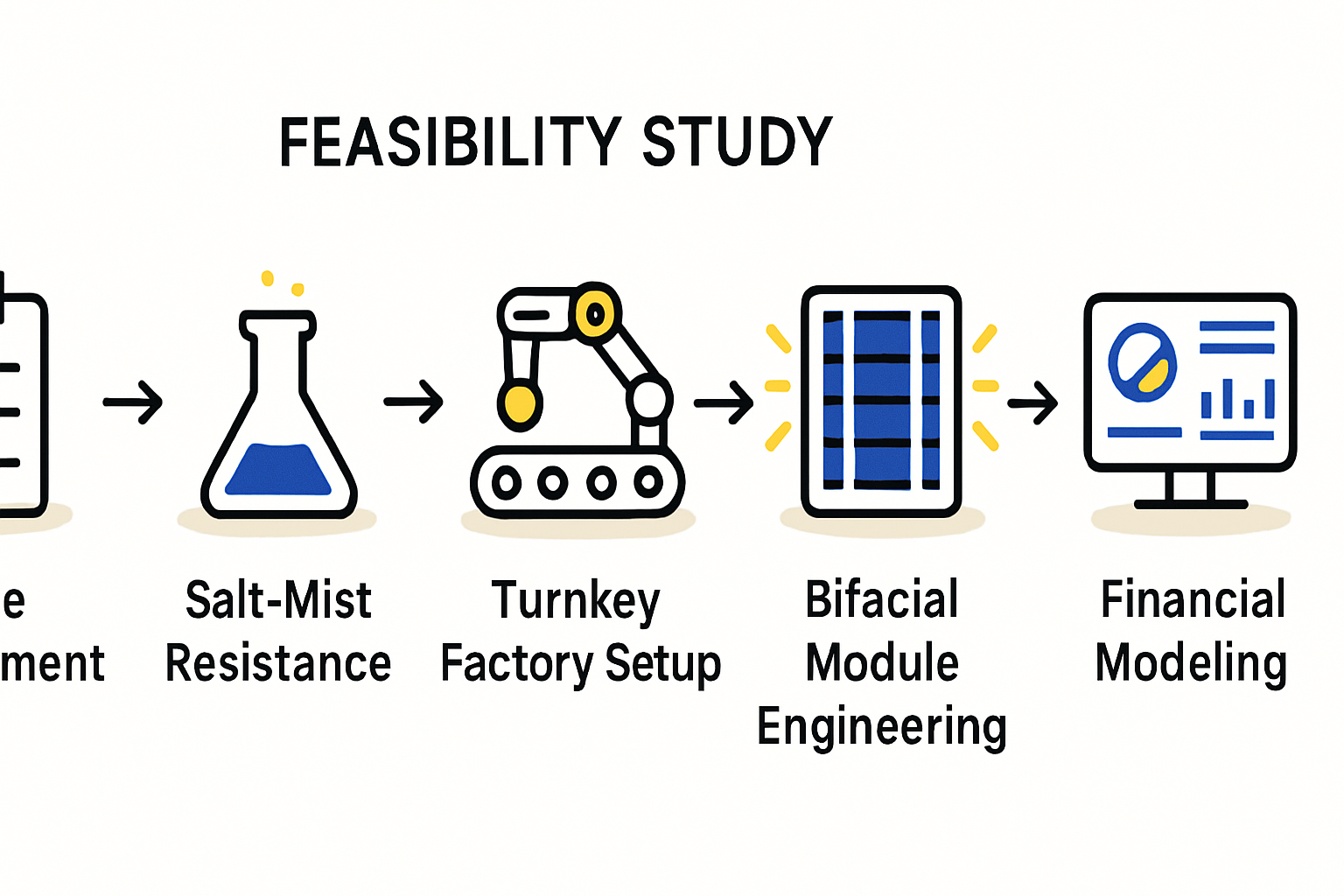
Any serious industrial project begins with a thorough evaluation. For an entrepreneur entering this space, the feasibility study should be built on three core pillars: market strategy, technical implementation, and financial modeling.
1. Market Analysis and Strategy
The primary target market is large-scale Indonesian seafood conglomerates and aquaculture farm operators. The value proposition is not simply selling solar panels but providing a long-term solution to reduce operational energy costs. A go-to-market strategy would involve forming partnerships with these industry leaders, demonstrating the superior lifetime value and reliability of locally produced, salt-mist resistant modules.
2. Technical and Operational Plan
The plan centers on establishing a local manufacturing facility. A modern turnkey solar manufacturing line offers a structured, efficient path to market entry. This approach bundles the necessary machinery, process knowledge, and training, mitigating the technical risks for investors new to the PV industry. Based on turnkey project benchmarks from European Solar PV equipment providers, an initial line with a capacity of 20–50 MW can be established with a team of fewer than 30 employees, making it a manageable entry point.
3. Financial Modeling
A comprehensive solar manufacturing business plan is essential. This involves more than just calculating initial capital expenditure. A key focus should be on demonstrating the Total Cost of Ownership (TCO) advantage of specialized modules.
While the initial purchase price of a DESERT+ module may be higher than a standard one, its extended lifespan and sustained performance in a coastal environment result in a far lower cost per kilowatt-hour over the project’s lifetime. Financial analysis, supported by consulting teams, can model these long-term returns, creating a compelling financial case for both the factory investor and the end customer.
The analysis of costs to start a solar panel factory must extend beyond machinery to include site preparation, logistics, and initial working capital.
The Strategic Advantage of Local Production
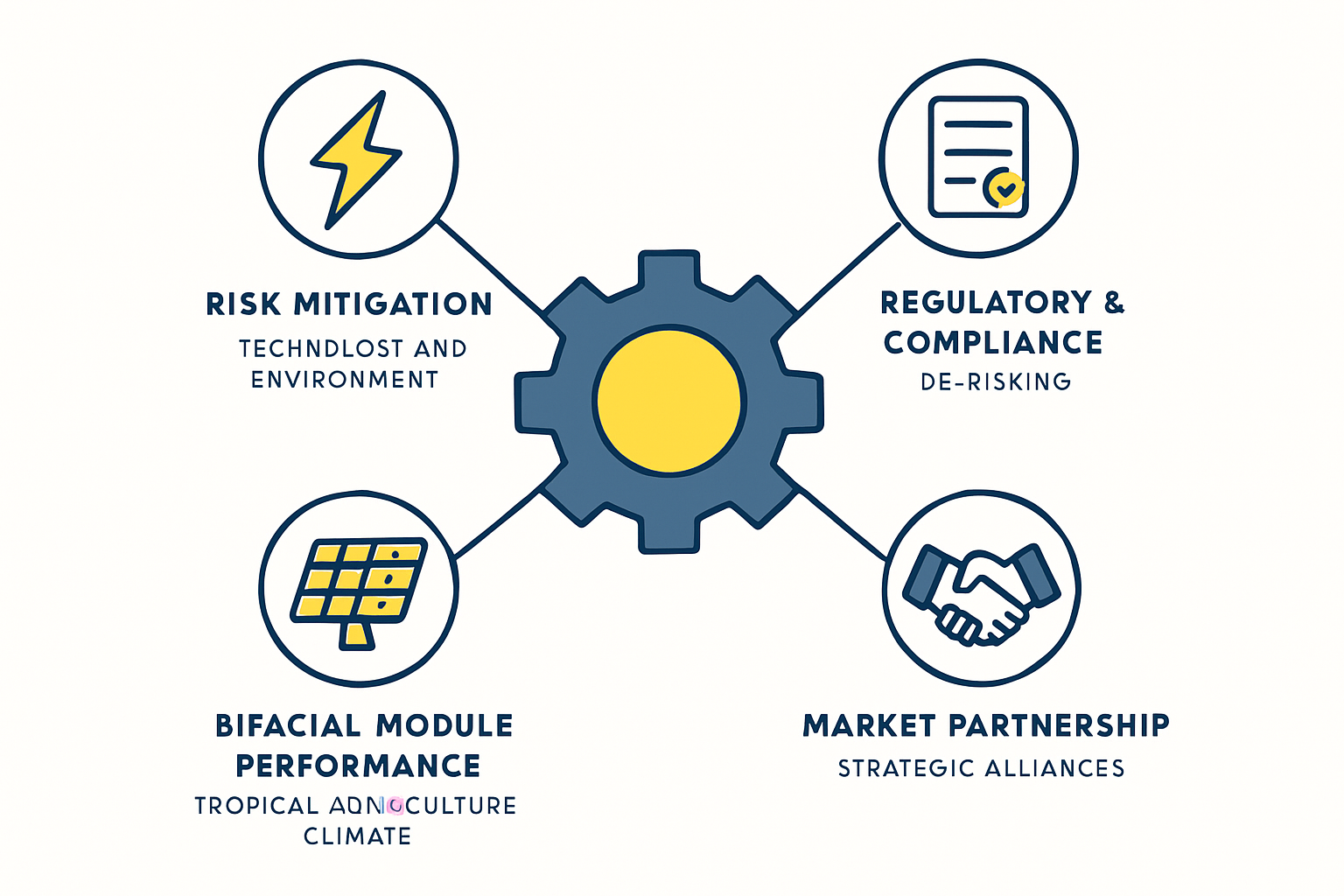
Establishing a local manufacturing facility in Indonesia offers strategic benefits beyond serving a niche market:
-
Supply Chain Resilience: Local production reduces reliance on imports, protecting against shipping disruptions and currency fluctuations.
-
Alignment with National Goals: The project supports Indonesia’s goals for renewable energy adoption, food security, and the creation of skilled local employment.
-
Building a Trusted Brand: A local manufacturer can provide superior customer service, technical support, and warranties, building a reputation for quality and reliability that importers cannot match.
Frequently Asked Questions (FAQ)
Why not just import specialized panels from abroad?
While importing can be a solution for a single project, a local factory builds long-term value. It allows for product customization, faster delivery, and local technical support, while keeping the manufacturing margin within the country and building a sustainable local industry.
What is a typical initial investment for a factory of this type?
While figures vary based on location and equipment choices, a small to medium-sized (20–50 MW) semi-automated production line represents a common and effective entry point for new market participants.
Is a deep technical background in solar PV required to start this venture?
No. Entrepreneurs with strong business acumen can succeed by partnering with experienced technology providers for the turnkey setup, process engineering, and staff training. The key is a solid business plan and the right technical partnership.
How does this type of project support the local economy?
Beyond direct employment at the factory, it stimulates a local ecosystem of suppliers, logistics providers, and solar installers. It also strengthens the aquaculture industry by making it more sustainable and profitable.
Next Steps in Project Evaluation
The opportunity to establish a specialized solar module factory for Indonesia’s aquaculture industry is grounded in clear market demand and a proven technical solution. It represents a strategic investment in the future of both energy and food production.
For business professionals considering this venture, the next step is to develop a detailed business plan that models the specific market conditions, operational costs, and revenue projections for a facility in Indonesia. A thorough understanding of the technical requirements and financial landscape is the foundation for any successful enterprise in this space.
Download the Indonesia Aquaculture Solar Case Study (PDF)
Author: This case study was prepared by the
turnkey solar module production specialists at J.V.G. Technology GmbH
It is based on real data and consulting experience from J.v.G. projects
worldwide, including installations ranging from 20 MW to 500 MW capacity.