All data points are realistic but simplified for clarity and educational purposes.
For many entrepreneurs, entering the solar manufacturing industry seems daunting—a capital-intensive venture often seen as the domain of established industrial players. That perception is especially strong in emerging markets, where access to financing and technical expertise can be significant hurdles.
But a strategic, cost-optimized approach can change this, particularly in a nation with Ethiopia’s vast solar potential.
The Ethiopian government’s ambitious National Electrification Program (NEP 2.0), which aims for universal energy access by 2025 and targets 5 GW of solar capacity by 2030, creates substantial and sustained demand for solar modules.
A key government strategy is to encourage local production through initiatives like ‘Made in Ethiopia,’ which often include favorable import duties on raw materials compared to finished panels. This convergence of policy and potential presents a unique opportunity for forward-thinking investors.
This article outlines a turnkey plan for launching a solar assembly line in Ethiopia, using certified, refurbished equipment to lower initial capital expenditure without compromising on quality or output.
The Strategic Advantage of Local Solar Manufacturing in Ethiopia
Entering Ethiopia’s solar manufacturing sector isn’t just about producing panels; it’s about aligning with a national economic vision. The business case rests on several key factors:
- Government Incentives: The ‘Made in Ethiopia’ initiative provides a supportive framework for local manufacturers. This can include preferential treatment in government tenders and tax advantages, such as lower import duties on raw materials (solar cells, glass, aluminum frames) compared to the high tariffs on fully assembled imported modules.
- Market Demand: With a national goal of 5 GW of solar capacity, a clear, long-term domestic market already exists. Local production allows for faster delivery and better service for large-scale solar farm projects and off-grid rural electrification programs.
- Reduced Logistical Complexity: Importing bulky, fragile solar panels is a logistical and financial challenge. Assembling modules locally streamlines the supply chain, reduces transportation costs, and minimizes the risk of damage.
A Lean Entry Strategy: New vs. Certified Refurbished Equipment
The most significant barrier for new entrants is the initial investment in machinery. A typical startup faces a choice between purchasing brand-new equipment and exploring more cost-effective alternatives.
Historically, the only option was a multi-million-dollar investment in a new production line. A more accessible model has since emerged: using certified refurbished equipment from a reputable German engineering source. This approach can reduce the initial financial outlay by as much as 50–60%, making the venture viable for a broader range of investors.
The primary concern for any entrepreneur considering this route is understandable: Can refurbished equipment be reliable? The answer lies in the equipment’s source and its certification process.
Ready to make big Profits?
The solar Industry is Booming
WE HELP NEWCOMERS to the solar industry start their own solar module production line. Customers can make BIG PROFITS by selling modules and finding investors, without wasting money and time on things they don't need!
When machinery is refurbished by the original engineering company or a certified specialist like an established European industrial solutions provider, it undergoes a rigorous recommissioning process. As a result, the machinery not only meets but often exceeds original performance specifications and comes backed by warranties and performance guarantees.
This reduction in upfront capital alters the project’s entire financial dynamic, lowering the break-even point, accelerating the return on investment (ROI), and reducing overall financial risk.
For investors seeking financing, a business plan with lower capital requirements and a faster path to profitability is far more attractive to banks and financial institutions. This improves the project’s fundability—a critical factor in markets where capital can be scarce. For a detailed breakdown of financial requirements, reviewing the typical costs to start a solar panel factory is a helpful next step.
Quality Assurance: The Cornerstone of Refurbished Machinery
The viability of a lean manufacturing model rests entirely on the quality and reliability of its equipment. A professional refurbishment process is not merely a repair; it is a complete industrial overhaul designed for long-term, high-performance operation.
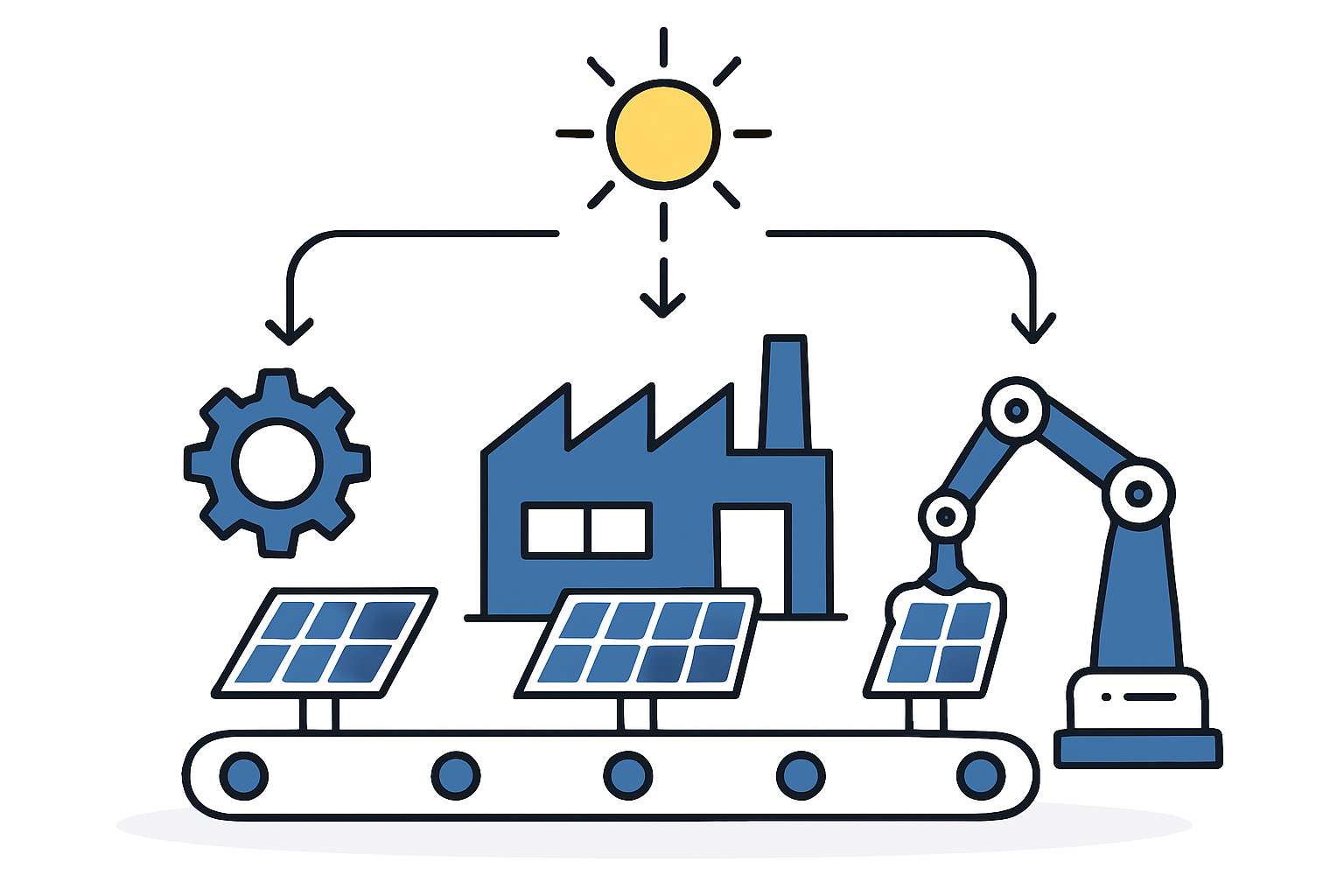
The quality control and recommissioning process for refurbished equipment, drawn from experience with European PV manufacturers’ turnkey projects, involves several critical stages:
- Complete Disassembly: Each machine is taken apart to its core components.
- Component Inspection and Replacement: All wear-and-tear parts, such as bearings, belts, and pneumatic components, are replaced with new, high-quality parts that meet German standards.
- Software and Control System Updates: The machine’s control systems (PLC) and software are updated to the latest versions, ensuring compatibility with modern production standards and improving efficiency.
- Reassembly and Calibration: The machine is meticulously reassembled and calibrated by experienced engineers to meet precise manufacturing tolerances.
- Performance Testing: The final stage involves rigorous testing under real production conditions to certify that the machine’s performance, throughput, and reliability meet or exceed original factory specifications.
The result is machinery that is not just functional but optimized for modern production. This equipment is also typically backed by a full warranty, providing the same peace of mind as buying new.
The Turnkey Investment Plan: A Phased Approach
A successful launch requires a structured plan covering everything from machinery acquisition to staff training and production ramp-up, and a turnkey solution provides that structure.
Phase 1: Establishing the Foundation (5-10 MW Annual Capacity)
The initial phase focuses on setting up a semi-automated production line capable of producing 5 to 10 MW of solar panels per year. This capacity is ideal for serving initial contracts while keeping the investment and operational complexity manageable.
- Essential Equipment: The core of the assembly line includes a set of key solar panel manufacturing machines: a solar cell stringer, a layup station for assembling the layers, a laminator to encapsulate the module, a framing machine, and a final performance tester (Sun Simulator).
- Facility Requirements: A facility of approximately 1,000 to 1,500 square meters is typically sufficient for this scale of operation.
- Labor: A semi-automated line of this size can be operated effectively with a team of 20 to 30 trained employees, including operators, technicians, and quality control staff.
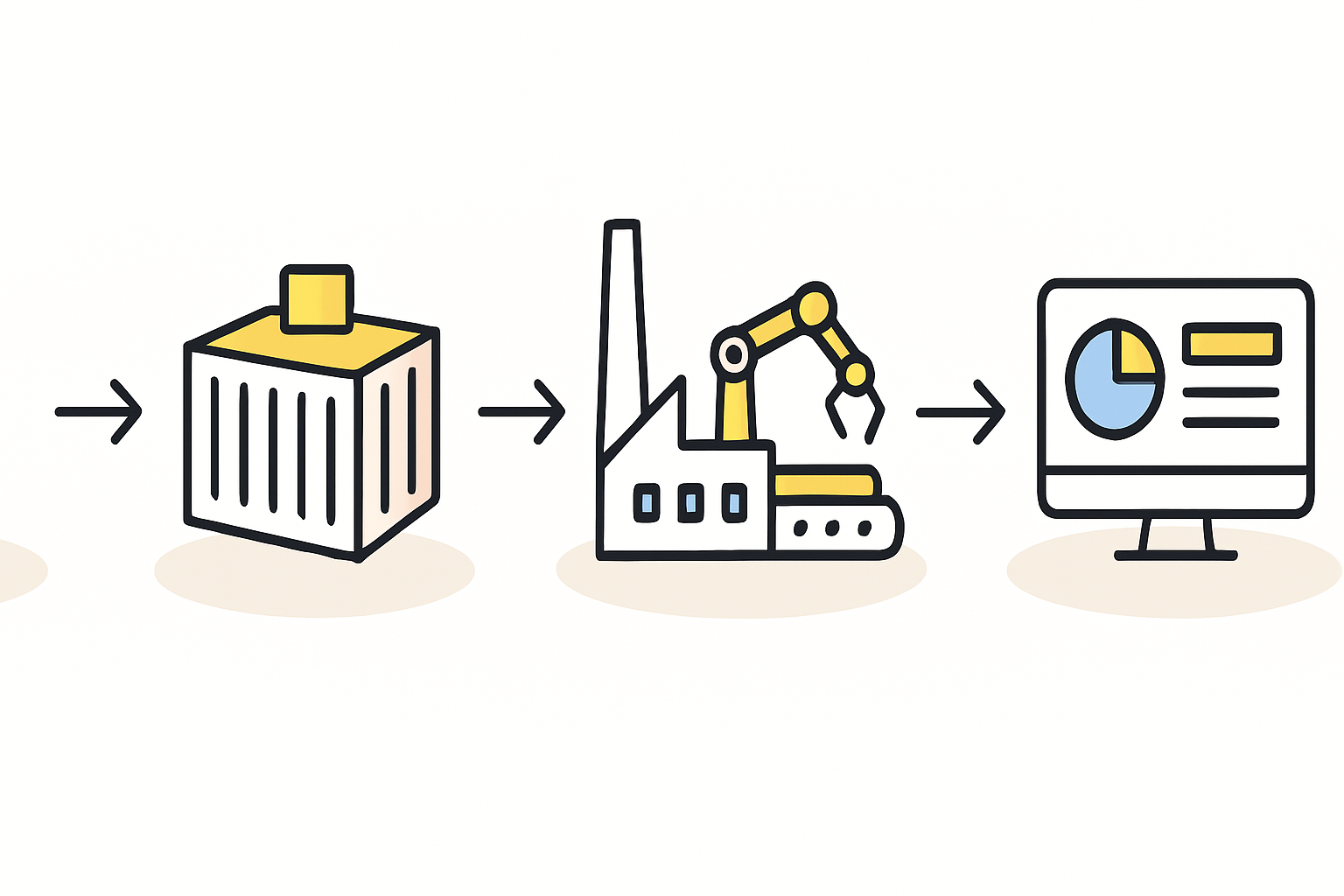
The solar module manufacturing process itself is systematic. The process begins by connecting solar cells into strings. These strings are then arranged on a sheet of glass with encapsulant layers, and the entire sandwich is laminated under heat and pressure. Finally, an aluminum frame and junction box are added before each panel is tested for electrical performance.
Phase 2: Securing Financing and Local Compliance
With a clear plan for machinery and operations, the next step is formalizing the business case. A comprehensive solar manufacturing business plan is essential for securing financing from local banks or international development funds. This document should detail the market opportunity in Ethiopia, the cost advantages of the refurbished equipment model, projected revenues, and ROI calculations. A turnkey provider often assists in preparing these technical and financial documents.
Phase 3: Growth and Scaling
Once the initial line is operational and profitable, the business can scale modularly. Growth can be achieved by:
- Adding a Second Shift: Doubling production capacity without significant additional capital investment by running a second team of operators.
- Targeted Automation: Identifying bottlenecks in the production line and adding automated equipment to increase throughput.
- Expanding the Product Line: Introducing different types of panels (e.g., bifacial modules, different power classes) to cater to a wider range of customers.
This phased approach allows the business to grow organically, using profits to fund expansion and minimize external financial dependency.
Frequently Asked Questions (FAQ)
-
What is the typical ROI for a solar assembly line using refurbished equipment?
While ROI depends on local factors like electricity costs, labor, and panel prices, the significantly lower initial investment means the break-even point can often be reached within 2-3 years, compared to 5-7 years for a line built with all-new equipment. -
What kind of warranty is provided with certified refurbished machines?
Reputable providers like premier EU provider typically offer a 12-month full warranty on refurbished equipment, the same standard offered for new machinery. This includes parts and technical support. -
How long does it take from ordering the equipment to starting production?
The entire process, including machine refurbishment, shipping, installation, and staff training, typically takes between 8 to 12 months. -
What technical skills are required for my local team?
A turnkey solution includes comprehensive on-site training for your operators and maintenance staff. Key roles to fill include a production manager with industrial experience and an electrician or mechatronics technician for maintenance. No prior solar-specific experience is required for the operating team. -
Can modules made with this equipment be internationally certified (e.g., by TÜV)?
Yes. The final module’s quality depends on the raw materials and production process, not on whether the machine is new or refurbished. The equipment is calibrated to produce panels that can meet and pass all major international certification standards like IEC 61215 and IEC 61730.
Your Entry Point into Ethiopia’s Solar Future
The combination of government support, rising energy demand, and strategic cost advantages creates a compelling opportunity for entrepreneurs in Ethiopia. The high barrier to entry traditionally associated with manufacturing can be overcome through a lean, intelligent investment strategy centered on certified refurbished equipment.
This approach makes it possible to launch a high-quality solar module assembly line with a manageable investment, a faster path to profitability, and a scalable model for long-term growth. With the right plan and partners, establishing a ‘Made in Ethiopia’ solar brand is more accessible than ever before.
Download the Ethiopia Solar Assembly Investment Case Study (PDF)
Author: This case study was prepared by the
turnkey solar module production specialists at J.V.G. Technology GmbH
It is based on real data and consulting experience from J.v.G. projects
worldwide, including installations ranging from 20 MW to 500 MW capacity.