Disclaimer: This case study represents a composite example derived from real-world
consulting work by J.v.G. Technology GmbH in solar module production and factory optimization. All data points are realistic but simplified for clarity and educational purposes.
Imagine your new solar module factory near the Suez Canal Economic Zone is fully operational. Production is running smoothly, and the quality of your panels is high. Yet, potential buyers in Germany, Saudi Arabia, and South Africa are hesitant. Their first question isn’t about price or capacity, but about certification. Without internationally recognized credentials like IEC and TÜV, your access to these lucrative export markets remains closed.
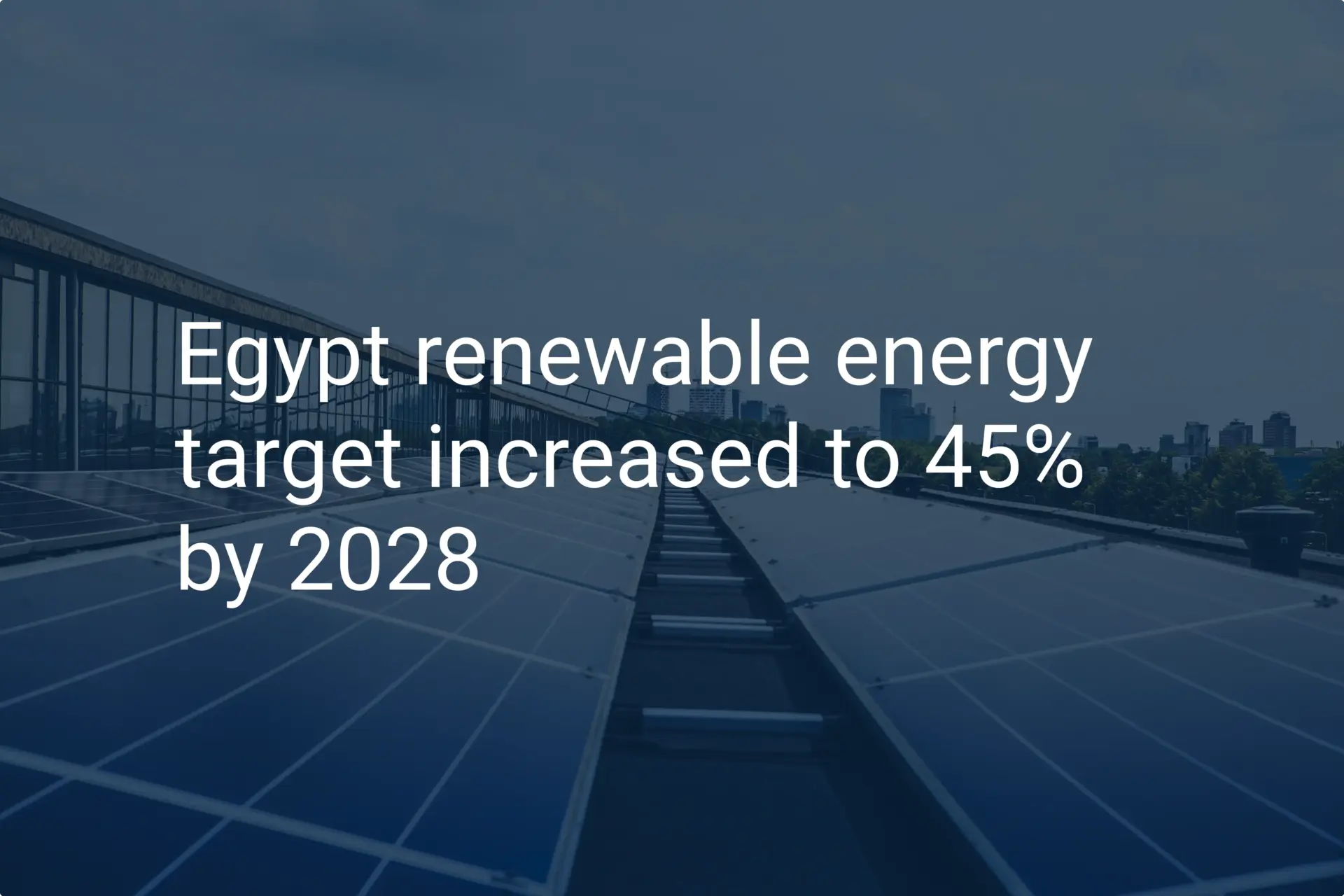
For any entrepreneur building a solar panel factory in Egypt with global ambitions, understanding the certification process is not just a technical detail—it’s a fundamental business strategy. Egypt’s goal to generate 61 GW from renewable sources by 2040 has created a vibrant domestic ecosystem. However, the true growth potential lies in leveraging the nation’s strategic location to become an export hub for the wider EMEA region.
This guide breaks down the process, timeline, and investment required to achieve IEC and TÜV certification, transforming your Egyptian-made solar modules into a globally trusted product.
Why International Certification is Non-Negotiable for Export
While a product might be excellent, international markets operate on a foundation of verified trust. Certification bodies provide this verification. For solar modules, two names are paramount:
- IEC (International Electrotechnical Commission): The IEC develops and publishes international standards for all electrical, electronic, and related technologies. Its standards are the “rulebook” for solar module safety and performance.
- TÜV (Technischer Überwachungsverein): These German-based organizations provide inspection and product certification services. TÜV Rheinland and TÜV SÜD are leading bodies that test solar modules against IEC standards.
When a module is “TÜV certified,” it means a respected third-party organization has rigorously tested it and confirmed its compliance with specific IEC standards. This certification acts as a passport, assuring buyers that your product meets global benchmarks for safety, quality, and reliability.
The Key IEC Standards for Solar Modules
For a new manufacturer, focusing on the core standards is essential. These standards underpin nearly all international market entry requirements.
- IEC 61215 (Performance): This standard tests the design and long-term performance of the module. It involves subjecting panels to stressful conditions like thermal cycling (extreme temperature swings), humidity and freezing, and mechanical load (to simulate wind and snow) to ensure they will perform reliably for decades.
- IEC 61730 (Safety): This is arguably the most critical standard. It focuses on preventing electrical shock, fire hazards, and personal injury. The tests ensure that the module is constructed safely, from its internal wiring and junction box to its framing and glass.
- IEC 62790 & IEC 62852: These are component-specific standards for junction boxes and connectors, respectively. The quality of these components is vital for the overall safety and longevity of the module, and certifiers will confirm their compliance.
The Certification Process: A Step-by-Step Overview
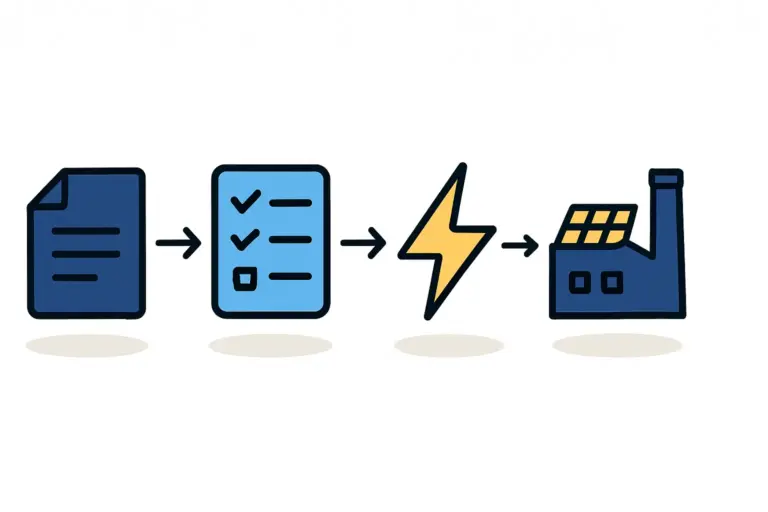
Achieving certification is a systematic process that typically takes three to six months. Recent developments, such as TÜV Rheinland expanding its laboratory presence in Cairo, can help streamline logistics for Egyptian manufacturers.
Ready to make big Profits?
The solar Industry is Booming
WE HELP NEWCOMERS to the solar industry start their own solar module production line. Customers can make BIG PROFITS by selling modules and finding investors, without wasting money and time on things they don't need!
Step 1: Preparation and Documentation
Before you contact a testing institute, the groundwork must be laid. This involves compiling a comprehensive Bill of Materials (BOM) that lists every single component used in your module—from the specific brand of solar cells and EVA encapsulant to the backsheet, glass, and junction box.
Common Pitfall: One of the most frequent reasons for delays is an inconsistent or incomplete BOM. If the components used in the tested samples do not perfectly match the BOM, the certification can be invalidated.
Step 2: The Factory Audit
An inspector from the certification body (e.g., TÜV Rheinland) will visit your facility. This is no mere formality. The auditor will conduct a detailed inspection of your solar module production line and quality management systems. They will verify that you have:
- Proper quality control checks at each stage of production.
- Calibrated and well-maintained manufacturing equipment.
- Consistent processes that ensure every module is produced to the same standard.
- A robust system for tracing materials and handling non-conforming products.
Experience gained from European PV manufacturers’ turnkey projects shows that passing this initial audit is crucial. A failure here can lead to significant delays and added costs.
Step 3: Sample Selection
Following a successful audit, the inspector will select sample modules for testing directly from your production line. The manufacturer cannot pre-select or prepare special “golden samples”; the selection is random to ensure the tested modules are representative of your standard production quality.
Step 4: Laboratory Testing
The selected samples are shipped to an accredited laboratory. There, they undergo the rigorous battery of tests specified by standards like IEC 61215 and IEC 61730. This is the longest phase of the process, as some tests, like damp-heat exposure, can run for over 1,000 hours.
Step 5: Report and Certificate Issuance
If the modules pass all tests, the laboratory issues a detailed test report. The certification body reviews this report and, upon approval, issues the final certificate. This document is your proof of compliance and the key to unlocking export markets.
Investment and Timelines: A Realistic Outlook
Planning for certification is a critical part of your financial forecasting. A comprehensive business plan for solar panel manufacturing must account for these necessary costs.
- Typical Cost: The investment for certifying a single “module family” (a group of modules with similar construction and materials but varying power outputs) typically ranges from €20,000 to €50,000. This fee covers the audit, all laboratory testing, and the issuance of the certificate.
- Typical Timeline: From the initial factory audit to receiving the final certificate, a manufacturer should budget for 3 to 6 months. This timeline can be extended if modules fail initial tests or if there are documentation issues.
Partnering with an experienced consultant can often help streamline this process by avoiding common pitfalls and ensuring all documentation is correctly prepared. For entrepreneurs new to the industry, this support can be invaluable.
Frequently Asked Questions (FAQ)
Q1: What is the difference between IEC and TÜV?
A1: IEC creates the international standards (the rules), while TÜV is an independent company that tests and certifies that a product meets those standards (the referee). Think of IEC as the author of the exam and TÜV as the official proctor who administers it and grades the results.
Q2: Do I need certification to sell solar modules within Egypt?
A2: Local market requirements can differ and are often less stringent than those for export to Europe or the Middle East. However, having IEC certification, even for the domestic market, signals a strong commitment to quality and can be a significant competitive advantage.
Q3: What happens if my modules fail a test?
A3: If a module fails a specific test, the certification body will issue a report detailing the failure. The manufacturer must then identify the root cause (e.g., a material issue, a process flaw), make the necessary corrections, and then resubmit new samples for re-testing. This adds to the cost and extends the timeline.
Q4: Can I change a component, like the backsheet, after my module is certified?
A4: No. The certification is tied to the exact Bill of Materials submitted and audited. If you change any critical component, you must inform the certification body. Depending on the component, this may require partial or full re-testing to maintain the certificate’s validity.
Q5: What is a “module family”?
A5: A module family includes all modules that use the same core materials and construction but may differ in the number of cells (e.g., 120, 144 half-cut cells) and thus have different power ratings. Certifying them as a family is more efficient and cost-effective than certifying each individual power class separately.
For any Egyptian business professional entering the solar manufacturing sector, viewing certification not as a hurdle but as a strategic investment is key. It’s the definitive step that elevates a local product to a global standard, opening doors to the world’s most demanding and profitable markets. Preparing for this process from day one ensures that your path to becoming a successful solar module exporter is both clear and achievable.
Download: Egypt Solar Manufacturing Certification Case Study (PDF)
Author: This case study was prepared by the
turnkey solar module production specialists at J.V.G. Technology GmbH
It is based on real data and consulting experience from J.v.G. projects
worldwide, including installations ranging from 20 MW to 500 MW capacity.