1. Introduction: What Automation Means in Recycling
For business professionals considering a solar recycling plant, the term “automation” often brings to mind complex, fully robotic factories. In recycling, however, automation takes on a more practical meaning: creating repeatable, controlled, and safe processes. It is a tool for stability, not just for speed.
Automation isn’t a simple “yes or no” decision. The right level depends entirely on the scale of your operation, the consistency of incoming material, and your strategic goals. A small-scale plant, for instance, requires a different approach than a large industrial facility.
This guide explores the different levels of automation, which processes are best suited for it, and how to make the right strategic choice for your facility. The goal is to build a stable and reliable operation, not necessarily the most complex one.
2. Three Levels of Automation in Solar Recycling
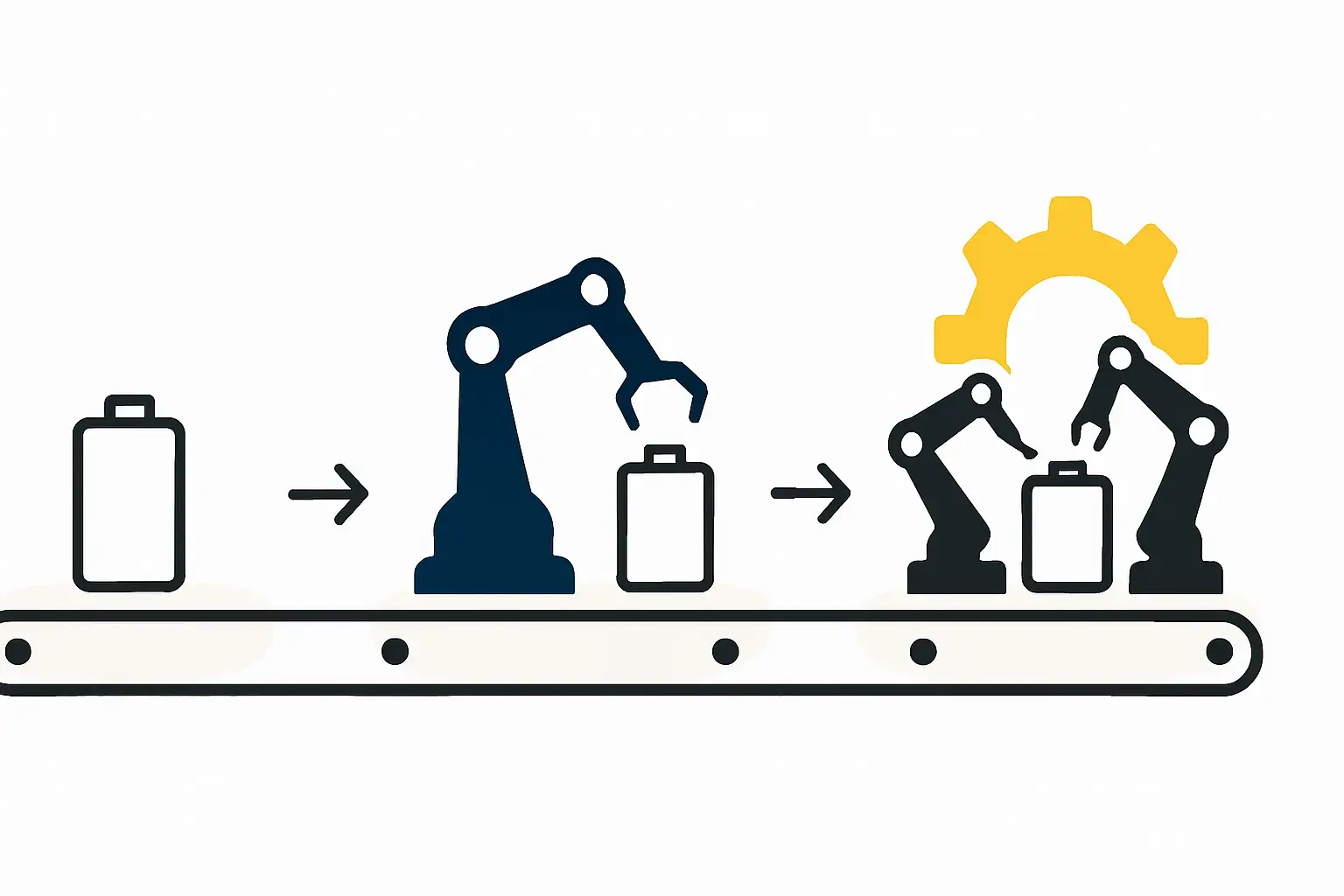
Solar recycling plants typically fall into one of three levels of automation, each suited to a different business scale and operational maturity.
2.1 Low Automation: Entry and Learning Plants
A low-automation plant relies heavily on manual labor for material handling. Workers move modules, feed them into machines one by one, and handle non-hazardous output materials manually. The mechanical processes are simple and often operate as separate, standalone stations.
This approach is common for entry-level plants with smaller capacities (e.g., under 10,000 t/year).
- Key Characteristics: Extensive manual handling, simple mechanical processes, limited integration between machines.
- Advantages: This level offers high flexibility, allowing the team to learn the process and adapt to different types of solar modules. The initial investment is also lower.
- Requirements: A low-automation setup is only viable with smaller, predictable volumes of incoming modules and is not suitable for large or inconsistent material flows.
Even in a low-automation plant, safety-critical steps like dust filtration and the handling of hazardous materials must be automated to protect workers and the environment.
2.2 Medium Automation: The Standard Industrial Level
This is the most common and proven model for a commercially viable solar recycling plant. Here, key processes are connected to create a more stable and continuous flow.
Automated conveyor belts feed modules into size reduction machines (shredders), while other systems automatically separate materials such as glass, aluminum, and copper. Manual labor is focused on initial sorting, quality control, and process oversight.
- Key Characteristics: Automated feeding and size reduction, automated mechanical separation, controlled material flow between processes.
- Advantages: This level provides a strong balance between investment cost, operational stability, and labor efficiency. It is a reliable and well-understood industrial standard.
- Requirements: A medium-automation plant needs a consistent and predictable supply of end-of-life modules to operate efficiently.
Experience from industrial projects shows this balanced approach provides the best foundation for long-term operational success.
Ready to make big Profits?
The solar Industry is Booming
WE HELP NEWCOMERS to the solar industry start their own solar module production line. Customers can make BIG PROFITS by selling modules and finding investors, without wasting money and time on things they don't need!
2.3 High Automation: Large-Scale Industrial Plants
High automation involves a fully integrated system where material flows continuously from start to finish with minimal human intervention. Advanced sensors and control systems monitor the entire process, adjusting machine parameters in real-time.
This level is only suitable for very large-scale operations processing high volumes of material (e.g., over 40,000 t/year).
- Key Characteristics: Continuous material flow, deep integration of all processes, advanced control and monitoring systems.
- Advantages: With a sufficient material supply, a high-automation plant can operate with very high efficiency and low variable costs.
- Requirements: This level requires a large, secure, and stable supply of solar modules. Without this guaranteed volume, the high investment costs and operational complexity create significant financial risk. Over-automation is a common and costly mistake for plants that cannot secure a stable supply.
3. A Process-by-Process Guide to Automation
To clarify, let’s examine which level of automation is appropriate for each specific process within a plant.
3.1 Processes That Can Be Manual
In smaller or entry-level plants, trained personnel can handle certain tasks safely and efficiently.
- Module Unloading and Basic Handling: Moving pallets of modules from trucks to the initial storage area.
- Sorting and Pre-inspection: Visually inspecting incoming modules to remove foreign objects or sort them by type before they enter the main process line.
- Secondary Material Handling: Moving separated non-hazardous output materials (e.g., bags of shredded glass or containers of aluminum) to their final storage locations.
3.2 Processes That Should Be Automated
For a stable industrial operation, certain core processes must be automated to ensure consistency and safety.
- Module Feeding: Using conveyor belts to feed modules into size reduction machinery provides a steady flow and keeps workers at a safe distance from the equipment.
- Size Reduction and Shredding: The process of breaking down modules into smaller, uniform pieces must be done by specialized, robust machinery.
- Mechanical Separation Steps: Using automated equipment like magnets, eddy current separators, and screens to separate different materials is far more efficient and reliable than manual sorting.
3.3 Processes That Must Always Be Automated
Regardless of a plant’s size or overall automation level, some processes must always be automated for safety, environmental, and legal reasons.
- Safety-Critical Separation Steps: Any process that isolates potentially hazardous substances must be contained and automated to prevent exposure.
- Dust Control and Filtration: The shredding and separation processes generate fine dust. A professional air filtration system is not optional; it is a mandatory health and safety requirement to protect the workforce and the surrounding environment.
- Hazardous Material Handling: Any component or substance identified as hazardous must be managed through a closed-loop, automated process to ensure full containment and regulatory compliance.
4. Safety, Stability, and Liability
A solar recycling plant processes a variable stream of materials. End-of-life solar modules can be damaged, contain different materials depending on their age and origin, and present unforeseen risks.
Automation is a primary tool for managing this variability. A controlled, automated process ensures every module is handled consistently and safely, protecting workers from sharp edges, heavy materials, and hazardous substances.
A stable process also reduces operational liability. By automating critical steps, a business can demonstrate that it is following best practices and meeting regulatory standards. This protects the company from potential fines, shutdowns, and legal challenges. Automation is a direct investment in the long-term security and viability of the business.
5. Strategic Takeaway: A Simple Rule for Decision-Making
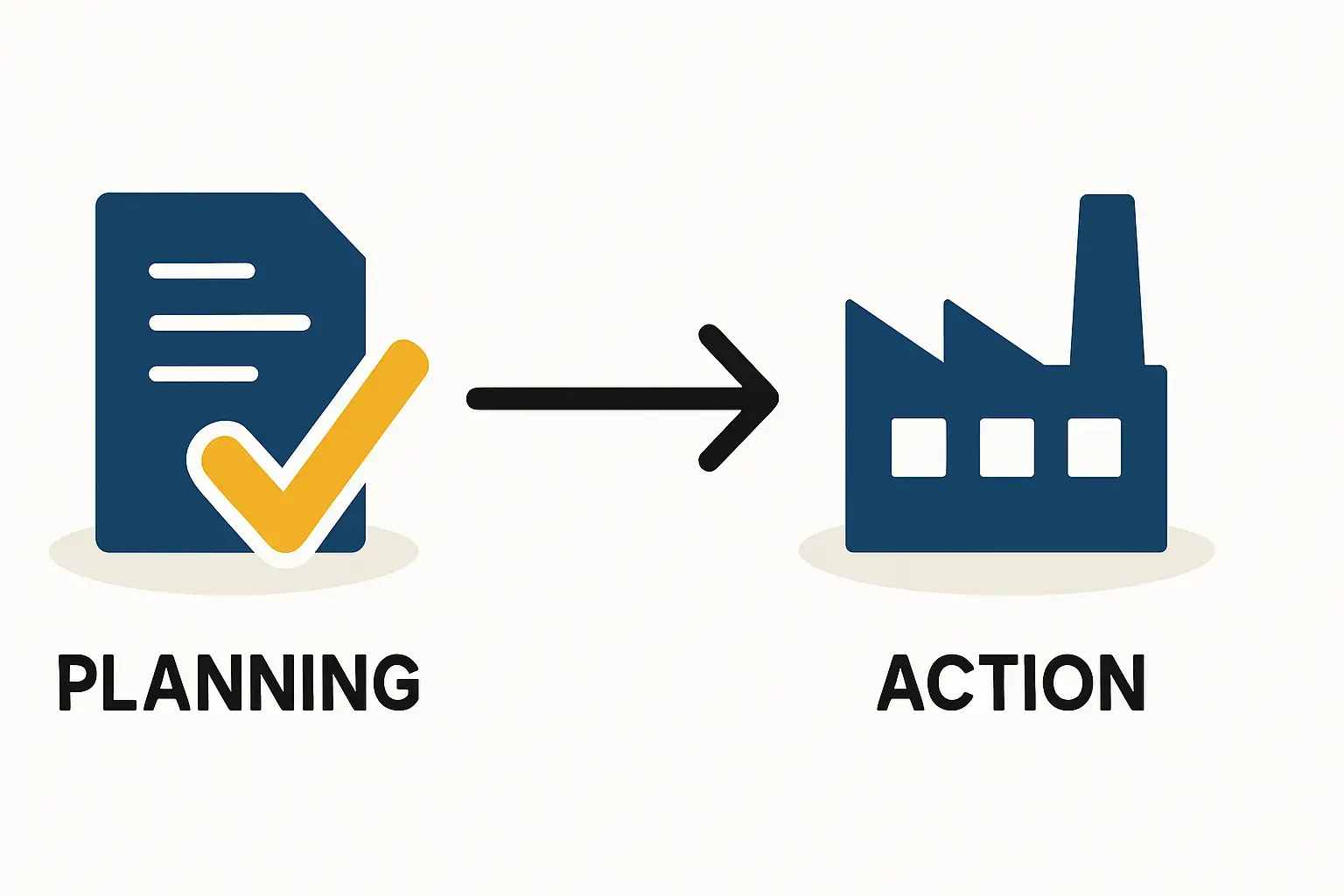
Choosing the right automation level is a critical business decision, one that should be driven not by a desire for the most advanced technology but by a realistic assessment of the business case. The decision should follow a simple, logical sequence:
- Automation follows plant size. A small plant does not need and cannot support high automation.
- Plant size follows input availability. Never build a large plant without a secure and verifiable supply of end-of-life modules. In practice, many recycling ventures fail due to an unstable material supply, not technical problems.
- Stability matters more than complexity. A simpler, reliable process that runs consistently is always better than a complex, highly automated system that frequently stops due to variations in the input material.
6. Next Steps: Understanding Investment and Costs
With these levels of automation clarified, the next step is to understand their financial implications. Our next guide will cover the typical investment ranges for solar recycling plants and explain the key cost drivers you need to consider in your business plan.