Disclaimer: This case study represents a composite example derived from real-world
consulting work by J.v.G. Technology GmbH in solar module production and factory optimization. All data points are realistic but simplified for clarity and educational purposes.
Many entrepreneurs look at Algeria’s vast desert landscapes and see an unparalleled energy resource. With up to 3,900 hours of solar irradiation annually, Algeria is one of the world’s most promising locations for photovoltaic energy generation.
Yet, many ambitious solar manufacturing projects fail to secure funding—not for lack of vision, but for lack of a bankable business case. International Development Finance Institutions (DFIs) like the African Development Bank (AfDB) are actively seeking to fund such projects. Their evaluation criteria, however, go far beyond a simple return on investment. This guide outlines how to structure a financial model and investment case for a turnkey solar factory in Algeria, specifically tailored to meet the rigorous standards of these DFIs.
Understanding the Investor’s Perspective: The African Development Bank
To secure funding from the AfDB, it’s essential to first understand its mission. The bank’s ‘New Deal on Energy for Africa’ aims to achieve universal access to energy across the continent by 2025. A key pillar of this strategy is the ‘Desert to Power’ initiative, which focuses on harnessing the Sahara’s solar potential.
An Algerian solar module factory aligns perfectly with these goals. However, the AfDB evaluates proposals on two parallel tracks:
-
Bankability: Is the project financially sound, technically feasible, and managed by a competent team?
-
Developmental Impact: Does the project create jobs, improve energy security, promote local industry, and contribute to climate resilience?
A common reason for rejection is a singular focus on financial projections, neglecting the technical and developmental evidence required to de-risk the investment for the DFI.
The Five Pillars of a DFI-Ready Investment Proposal
A successful application rests on five interconnected pillars. Each must be meticulously detailed and supported by credible data and expert validation.
1. Technical Feasibility: De-Risking the Project from Day One
A DFI needs assurance that the factory can be built on time and on budget, and that it will produce high-quality modules. This requires more than a list of machines.
A robust technical plan includes:
-
Proven Technology: Specifying cell technology (e.g., PERC, TOPCon) and module formats that are commercially proven and match market demand.
-
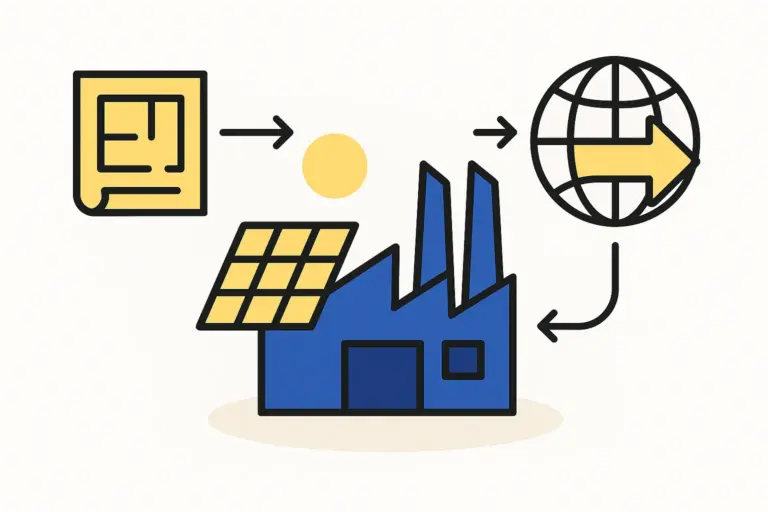
Integrated Production Line: A detailed plan for a turnkey solar manufacturing line from a single, accountable partner demonstrates lower execution risk than sourcing machinery from multiple vendors.
-
Site and Infrastructure Plan: A complete assessment of the proposed building, including logistics, power and water supply, and necessary modifications.
-
Quality Assurance Framework: A clear outline of the quality control processes, from incoming materials to final module testing, that will ensure bankable, certified products.
Experience gained from European PV manufacturers’ turnkey projects shows that a comprehensive, end-to-end technical plan managed by an experienced engineering partner is a critical factor in building investor confidence.
2. Financial Modeling: Beyond Simple Spreadsheets
This is where most applications falter. A DFI-grade financial model is a dynamic tool, not a static document. It must demonstrate a deep understanding of the business’s financial drivers.
Key components include:
-
Detailed Cost Breakdown: A granular analysis of the solar panel manufacturing plant cost, separating capital expenditures (machinery, building) from operational expenditures (labor, materials, energy). For a 50 MW factory, the initial investment is typically in the range of 15–20 million USD.
-
Revenue Projections: Based on realistic production output, market prices, and a clear sales strategy (e.g., offtake agreements, distribution channels).
-
Cash Flow Analysis: Multi-year projections (typically 10 years) showing sources and uses of funds, debt service coverage ratios, and working capital requirements.
-
Sensitivity Analysis: Demonstrating how profitability is affected by variables like raw material costs, currency fluctuations, or changes in module prices. This shows the project’s resilience.
A well-structured model for a mid-scale factory will often project a return on investment within 18–24 months—a compelling figure for investors, provided it’s backed by solid assumptions.

3. Market Analysis: Proving Local and Regional Demand
Investors need proof of a viable market for the modules produced. For Algeria, the case is compelling. The government’s ‘Solar 1,000 MW’ program and its broader goal of installing 15,000 MW of renewable capacity by 2035 create substantial, state-backed domestic demand.
A strong market analysis will highlight:
-
Alignment with National Policy: How the factory directly supports Algeria’s energy transition and economic diversification goals.
-
Local Content Advantage: The benefit of producing modules locally to meet potential local content requirements in public tenders.
-
Export Potential: An analysis of opportunities in neighboring markets within North and West Africa.
4. Developmental Impact: The Core of DFI Funding
This pillar quantifies the project’s contribution to the local economy and society. It is not an afterthought; it is a central part of the DFI’s mandate.
Key metrics to include:
-
Job Creation: A 50 MW facility typically creates 70–100 direct, skilled and semi-skilled jobs. This should be detailed by role (engineers, technicians, operators, administrative staff).
-
Energy Security: How local manufacturing reduces reliance on imported energy technologies and foreign currency expenditure.
-
Skills Transfer: A plan for training the local workforce, creating a sustainable pool of technical talent in the country.
-
CO2 Reduction: The environmental benefit of the energy produced by the factory’s modules over their lifetime.
5. Risk Mitigation: Demonstrating Foresight and Control
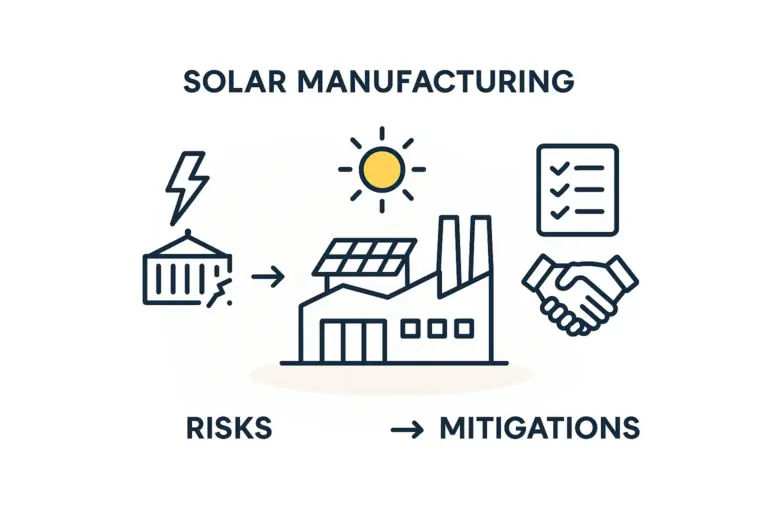
Every business venture carries risk. A bankable proposal does not pretend risks don’t exist; it identifies them and presents credible mitigation strategies.
Common risks and potential mitigation strategies include:
-
Technical & Operational Risk: Partner with an experienced engineering firm that provides a turnkey solution, staff training, and production ramp-up support.
-
Supply Chain Risk: Diversify suppliers for key raw materials (glass, EVA, cells) and establish strategic inventory levels.
-
Market Risk: Secure initial offtake agreements or letters of intent from large energy developers or government entities.
A Case Study in Success: Lessons from a Funded Project
Mr. Goyal, an entrepreneur in India, successfully secured funding for his solar manufacturing plant by focusing on the principles outlined above. His background was in a different industry, but he understood that investors required a de-risked proposal.
His success was built on presenting a comprehensive solar panel manufacturing business plan that left no room for ambiguity. He engaged a technical partner early in the process to develop a complete feasibility study and a detailed production plan. This external validation gave financiers the confidence that the project was not just a financial projection but a viable industrial enterprise. His story underscores a key principle: you do not need to be the solar expert, but you must demonstrate that the expertise required for success is secured.
Frequently Asked Questions (FAQ)
Do I need a technical background to start a solar factory?
No, a technical background is not a prerequisite. The critical factor is securing the right expert support to guide you on how to start a solar panel manufacturing business. Successful entrepreneurs in this field often come from business, finance, or other industries and partner with experienced engineering firms to handle the technical design, implementation, and training.
What is the typical timeline from planning to production?
With a well-structured plan and a turnkey equipment partner, the timeline from securing financing to the start of production is typically 12 to 18 months. This includes factory preparation, machine delivery and installation, commissioning, and staff training.
How important is local government support in Algeria?
Local and national government support is vital. Aligning the project with national energy strategies, such as Algeria’s 15,000 MW renewable energy target, is essential for securing permits and sends a strong signal to DFIs like the AfDB that the project is of strategic national importance.
What is the single biggest mistake applicants make when approaching a DFI?
The most common mistake is submitting an incomplete proposal, particularly a weak or overly optimistic financial model that is not supported by a credible technical plan. DFIs see hundreds of proposals; those that lack detail, fail to address risks, or neglect the developmental impact criteria are quickly set aside.
Next Steps: From Concept to a Bankable Proposal
Securing funding from a DFI for a solar factory in Algeria is a significant undertaking that requires meticulous preparation. The journey begins not with a loan application, but with building a deeply researched, technically sound, and financially robust business case.
By focusing on the five pillars—technical feasibility, financial modeling, market analysis, developmental impact, and risk mitigation—an entrepreneur can transform a powerful vision into an investment-ready project that stands out to institutions like the African Development Bank. Further educational resources on pvknowhow.com can provide a structured foundation for each of these critical planning stages.
Download the Algerian Solar Factory Investment Case Study [PDF]
Author: This case study was prepared by the
turnkey solar module production specialists at J.V.G. Technology GmbH
It is based on real data and consulting experience from J.v.G. projects
worldwide, including installations ranging from 20 MW to 500 MW capacity.