Starting a manufacturing venture in a high-tech economy like Austria involves a unique set of challenges and opportunities. While the global solar industry is often characterized by high-volume, standardized production, the Austrian market demands a more sophisticated strategy centered on quality, automation, and specialization. For entrepreneurs entering this space, a generic production line is unlikely to succeed—a carefully tailored turnkey solution is essential.
This article explores how a comprehensive turnkey production line, including machinery and technology transfer, can be adapted to meet Austria’s specific market conditions, regulatory requirements, and infrastructure. It provides a foundational understanding for investors considering the country’s unique opportunities in solar manufacturing.
Understanding the Austrian Context for Solar Manufacturing
A standard approach to solar manufacturing prioritizes low labor costs and high output of conventional modules. Austria’s economic landscape, however—with its high labor costs, skilled workforce, and stringent quality standards—renders this model uncompetitive. A successful solar factory in Austria must therefore compete on technology and value, not just volume and price.
Several key factors shape this reality:
-
High Operational Costs: High wages and energy prices mean efficiency isn’t just an advantage—it’s a prerequisite for survival. Manual processes viable elsewhere become financial liabilities here, demanding significant automation to ensure profitability.
-
A Highly Skilled Workforce: Austria boasts a deep pool of technical talent in engineering and advanced manufacturing. This strategic asset should be leveraged to operate and maintain sophisticated production machinery, rather than being wasted on simple manual assembly.
-
Stringent European and National Regulations: Products made in Austria must meet rigorous EU standards, including CE marking and often TÜV certification. The production line must be designed from the ground up to consistently deliver this level of quality.
-
Demand for Specialized, High-Value PV Products: The European market, and Austria in particular, shows growing demand for non-standard solar solutions. These include Building-Integrated Photovoltaics (BIPV), which replace conventional building materials, and Agri-PV modules designed for dual land use in agriculture.
A turnkey solution must be engineered specifically to address these points, turning potential challenges into competitive advantages.
Customizing the Turnkey Solution for Austrian Success
A true turnkey solution is more than a collection of machines; it’s an integrated system of hardware, software, processes, and knowledge transfer designed for a specific operational environment. Based on J.v.G.’s experience with turnkey projects in other advanced economies, customization for Austria focuses on several critical areas.
Machinery Selection: Prioritizing Automation and Precision
To counteract high labor costs and leverage a skilled workforce, the selection of solar module manufacturing equipment must prioritize automation.
-
Robotic Handling: Automated systems for loading, unloading, and transferring materials between process steps reduce reliance on manual labor and minimize the risk of cell breakage or contamination.
-
Advanced In-Line Inspection: High-resolution electroluminescence (EL) testers and automated optical inspection (AOI) systems are integrated directly into the production flow. This ensures any defects are identified and corrected in real-time—a critical step for meeting strict quality norms.
-
High-Precision Stringers: The stringer, which solders solar cells into strings, must handle modern, high-efficiency cell technologies (like TOPCon and HJT) with extreme accuracy to maximize module performance.
While this level of automation requires a higher initial investment, it delivers a lower cost-per-watt over the long term through superior efficiency, quality, and reduced dependence on labor.
Process Engineering for Niche Products
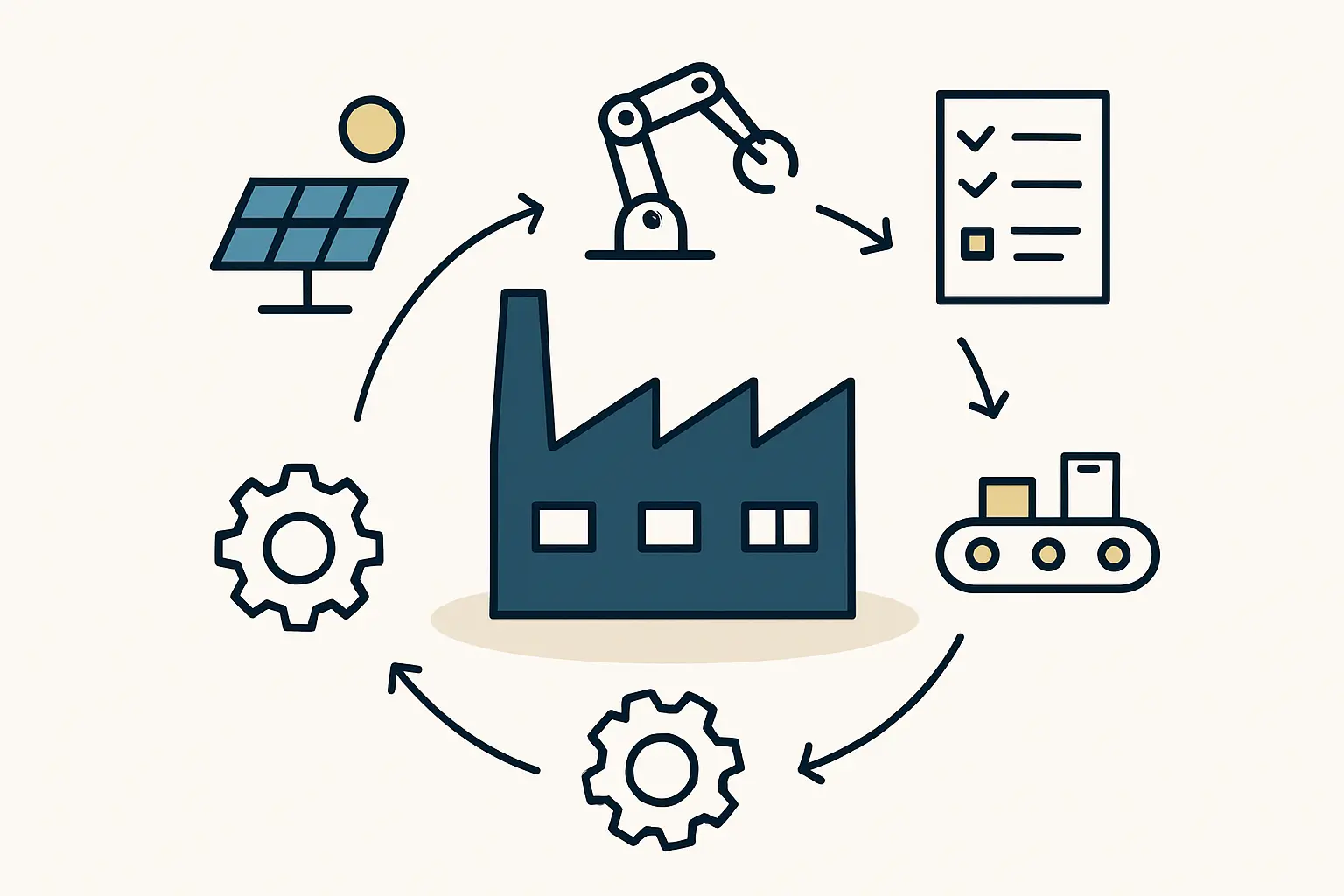
An Austrian solar factory is well-positioned to serve high-margin niche markets, meaning the production line must be flexible. For example, manufacturing BIPV modules often involves custom sizes, different colors, and glass-glass structures instead of the standard glass-foil design. The turnkey process must be engineered to accommodate these variations without significant downtime or retooling, requiring adaptable laminators, framers, and testing equipment.
Integrated Technology Transfer and Training
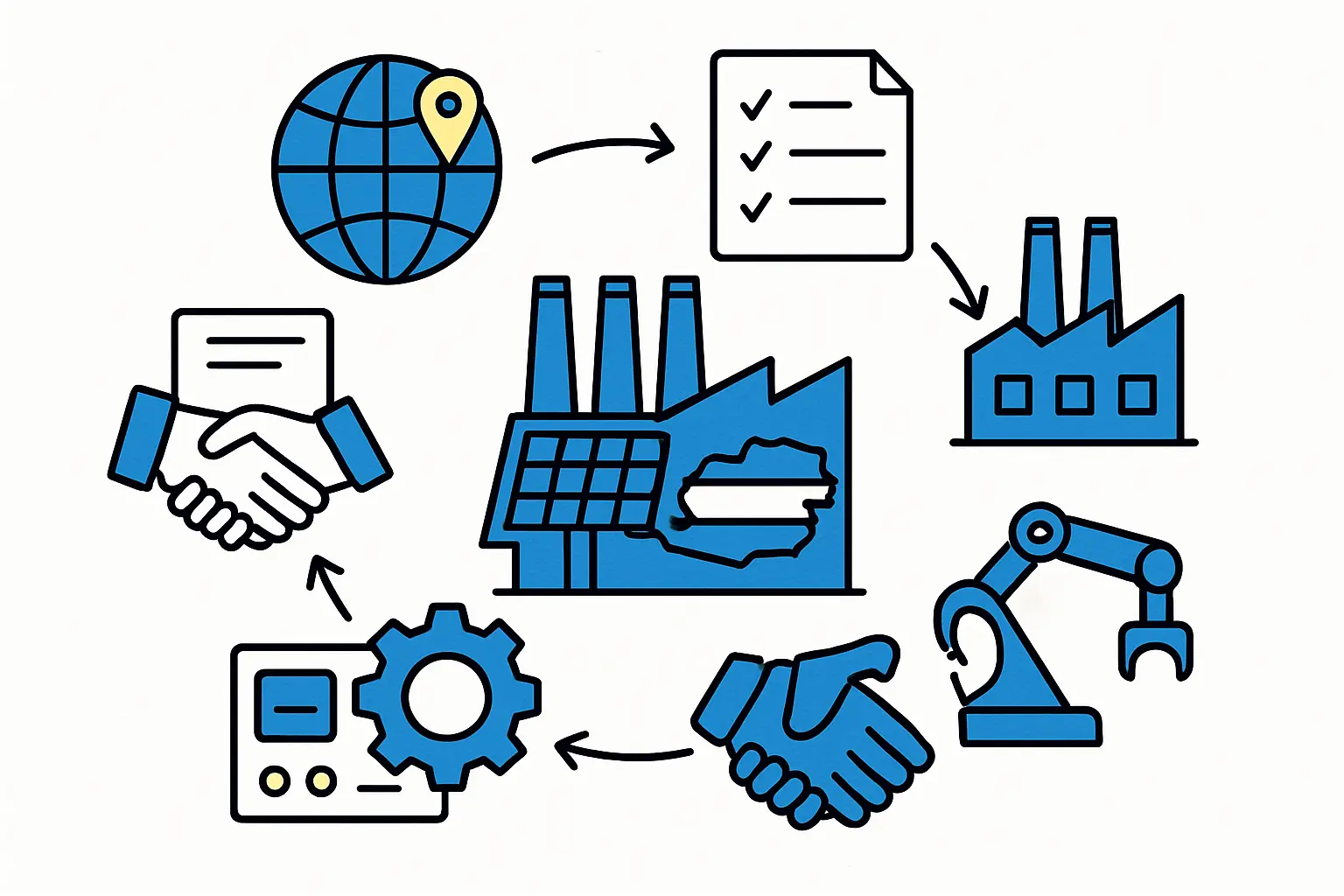
Advanced machinery is only effective if the local team can operate and maintain it. A crucial component of a tailored turnkey solution is comprehensive technology transfer. This goes beyond basic operator training to include in-depth instruction for local engineers on machine calibration, preventative maintenance, and process optimization. The goal is to empower them to take full ownership of the factory’s performance.
The Strategic Advantage: ‘Made in Europe’
Manufacturing in Austria offers a powerful brand advantage. The ‘Made in Europe’ label carries significant weight, signifying quality, reliability, and adherence to high environmental and labor standards.
A central European location also provides logistical benefits, reducing shipping times and costs to major markets across the continent. This strategic positioning allows a producer to cater to clients who prioritize supply chain security, a low carbon footprint, and premium quality over the lowest possible price—a growing segment in both the public and private sectors.

Frequently Asked Questions (FAQ)
What is the typical investment required for a highly automated solar factory in Austria?
While the exact figure depends on capacity and technology choices, entrepreneurs should anticipate higher initial capital expenditure compared to a manual-heavy line in a lower-cost region. The investment focuses on advanced automation and quality control, but this is offset by lower long-term operational costs and the ability to produce high-margin products. A detailed business plan for a solar factory is essential for accurate budgeting.
Is a technical background in photovoltaics necessary to start this venture?
No. While technical curiosity is an asset, the primary requirement is business acumen. A key objective of a turnkey provider like J.v.G. Technology is to bridge this knowledge gap. Through structured guidance and comprehensive technology transfer, an entrepreneur can effectively manage the project without being a PV expert.
How does a turnkey solution address Austrian and EU regulatory compliance?
A properly designed turnkey line incorporates processes and quality controls aligned with standards like ISO 9001 and specific requirements for CE marking and TÜV certification. The provider should supply documentation and guidance to help navigate the certification process smoothly.
Conclusion: A Strategic Path for a Specialized Market
Entering the solar manufacturing industry in Austria is a strategic decision to compete on quality and technological leadership. It requires moving beyond standard solutions and embracing a tailored approach that aligns with the nation’s economic strengths.
A customized turnkey solution—designed with automation, precision, and flexibility in mind—provides the necessary foundation. By transforming high costs into high efficiency and leveraging a skilled workforce to produce specialized, high-value products, an Austrian solar manufacturer can build a sustainable and profitable business that stands apart in the competitive European market.