The Bahamas is undergoing a significant energy transformation, a key topic in recent Bahamas energy news, as it moves from fossil fuels toward a future powered by renewables. For entrepreneurs and investors in the photovoltaic (PV) industry, this shift presents a ground-floor opportunity. But success in any new market means understanding its rules. This guide provides a clear path through the policies, permits, and regulations involved in establishing a solar module factory in The Bahamas.
Table of Contents
The Bahamas’ National Energy Policy: A Foundation for Growth
The government’s vision is detailed in its National Energy Policy, which sets a central goal of 30% renewable energy generation by 2030. This ambitious target is more than an environmental objective; it’s a core economic strategy aimed at lowering high energy costs, improving grid reliability, and building energy independence.
This policy creates a stable, long-term framework that signals strong government support for the renewable energy sector. For any prospective PV manufacturer, this commitment reduces market risk and helps in forecasting demand for solar products.
Understanding the Regulatory Landscape
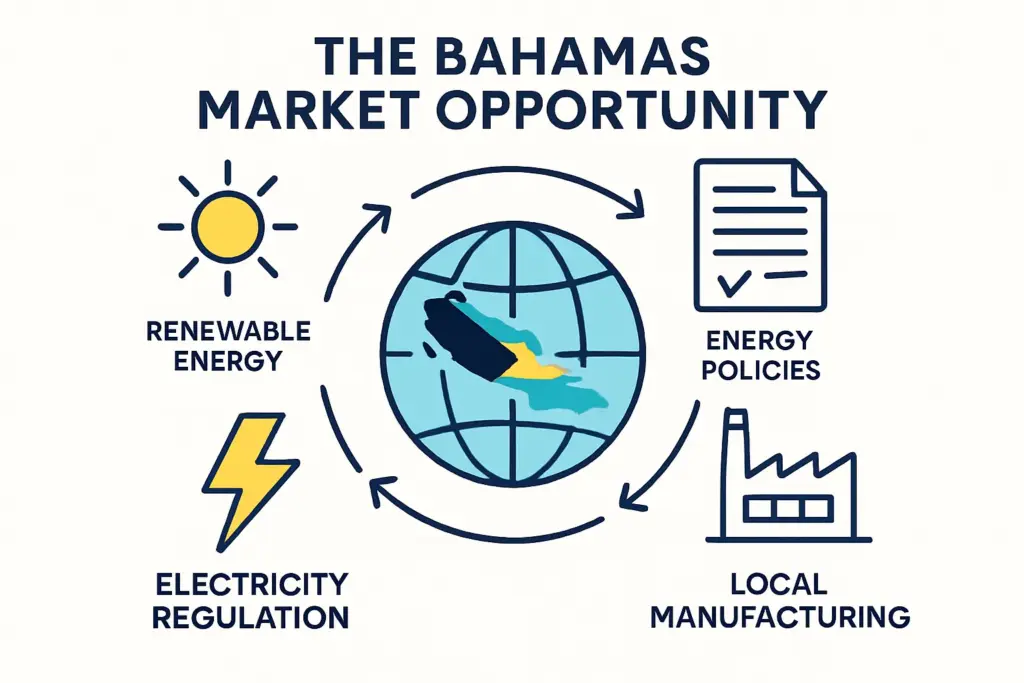
Two main government bodies oversee the energy sector in The Bahamas. Understanding their distinct roles is key to ensuring compliance.
The Role of URCA (Utilities Regulation and Competition Authority)
As the independent regulator for the electricity sector, URCA issues licenses, sets technical and safety standards, approves tariffs, and ensures fair competition. Any business that generates, transmits, or distributes electricity—including a manufacturing facility that might test or generate its own power—falls under URCA’s purview. This body is responsible for translating national policy into enforceable technical and operational rules.
The Ministry of Energy and Transport
The Ministry of Energy and Transport creates and drives national energy policy, setting the strategic direction for the country’s energy future. It spearheads the push for solar power and updated legislation like the Electricity Act of 2024. While URCA manages day-to-day regulation, the Ministry builds the overarching framework and long-term vision that guides the sector’s development.
Your Step-by-Step Guide to Setting Up a PV Factory in The Bahamas
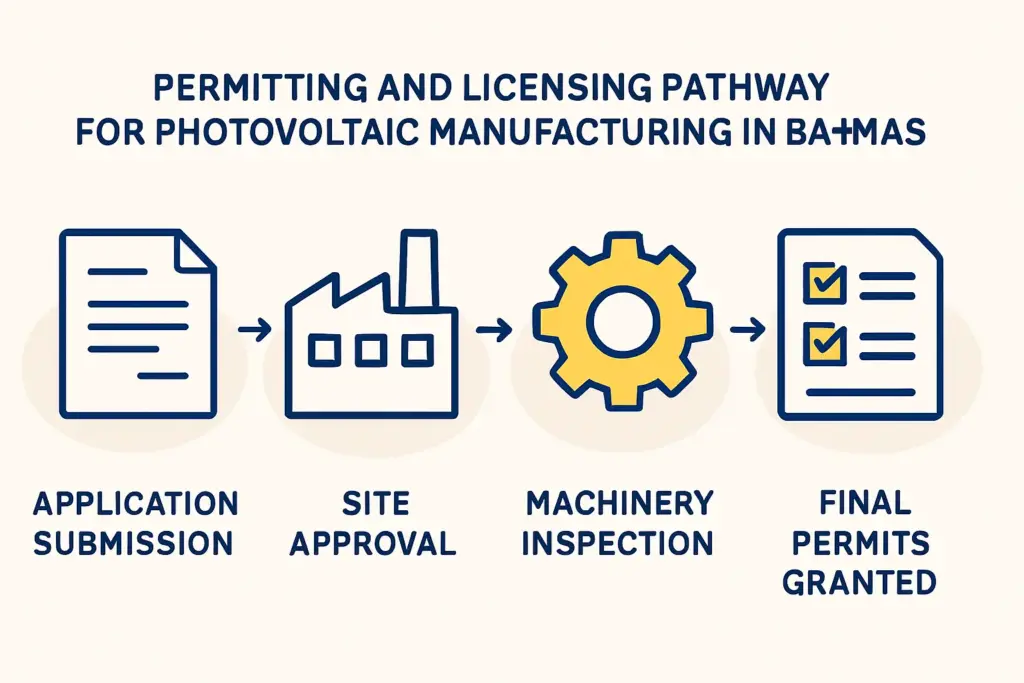
Establishing a manufacturing facility is a structured process that requires several key approvals. Following these steps carefully will ensure a smooth market entry.
Step 1: Business Licensing and Registration
Before seeking operational permits, your company must be legally established in The Bahamas by registering with the appropriate government authorities. This process typically involves submitting documents outlining your company’s structure, ownership, and planned business activities. This initial license serves as the legal foundation for all subsequent steps.
Step 2: The Environmental Impact Assessment (EIA)
Industrial projects, including manufacturing plants, require an Environmental Impact Assessment. Overseen by the Ministry of the Environment, this process identifies and mitigates any potential negative environmental effects from your factory. Your EIA report must detail proposed operations, waste management plans, resource consumption, and measures to protect the local ecosystem. A successful EIA is a prerequisite for obtaining final building and operational permits.
Step 3: Securing a Manufacturing Permit
With your business license and approved EIA in hand, the next step is to apply for a manufacturing permit from URCA. The authority will review your application to ensure the proposed facility complies with all technical, safety, and operational standards for the Bahamian electricity sector. These standards also apply to the equipment you produce, which must be safe and compatible with the national grid.
Financial Incentives and Support for PV Manufacturers
The Bahamian government encourages investment in the renewable energy sector through several financial mechanisms, with a draft National Energy Policy proposing specific tax incentives to support this goal.
These incentives are designed to lower initial capital investment and make local manufacturing more financially viable. They include potential exemptions from customs duties on imported factory equipment and materials. The government has also shown interest in public-private partnerships (PPPs) for large-scale energy projects, which could create downstream opportunities for locally made modules.
Grid Interconnection: Connecting to the National Grid
While your primary business is manufacturing, you will still need to understand grid interconnection for product testing and development. Any power your facility generates and sends to the national grid—operated by Bahamas Power and Light (BPL)—must meet URCA’s technical standards.
URCA has established guidelines for Renewable Energy Self-Generation (RESG), which cover net-billing and credit schemes. Understanding these technical requirements helps ensure the modules you produce are fully compliant with market demands and can be easily integrated by your customers.
The Future is Bright for Solar in The Bahamas
The Bahamian government offers a clear and supportive pathway for investors ready to contribute to its renewable energy goals. With a strong national policy, defined regulatory roles, and a structured permitting process, the landscape is prepared for new manufacturing ventures. For entrepreneurs ready to build, this island nation presents a significant opportunity to establish a local production hub for a growing, protected market.
Ready to turn this opportunity into your success story? Visit our free e-course to learn the fundamentals, or explore our services for dedicated support. For a comprehensive roadmap, our Premium Business Plan E-Course provides the expert guidance you need to get started. Let’s make your solar venture in The Bahamas smooth and successful.
Frequently Asked Questions (FAQ)
Q: What is the timeline for the new energy policy?
A: The new National Energy Policy sets targets through 2030. The government is actively implementing supporting legislation, such as the 2024 Electricity Act, to accelerate progress toward its 30% renewable energy goal.
Q: Are there local content requirements for manufacturing?
A: While formal local content requirements are still taking shape, the government’s strategic goal is to build local capacity. Using local labor and resources is strongly encouraged and can be an advantage when seeking permits and partnerships.
Q: Where can I find the official application forms for permits?
A: Official application forms and detailed guidelines are available directly on the websites of the respective authorities. For electricity sector permits, visit the Utilities Regulation and Competition Authority (URCA) website. For business licensing, use The Bahamas’ business registration portal, and for environmental approvals, contact the Ministry of the Environment.