Disclaimer: This case study represents a composite example derived from real-world
consulting work by J.v.G. Technology GmbH in solar module production and factory optimization. All data points are realistic but simplified for clarity and educational purposes.
For the discerning investor, headlines about the solar industry often present a paradox. Reports of immense global overcapacity and domination by large-scale Chinese producers paint a picture of commoditization and thin margins—a market that seems impenetrable to a new entrant.
Yet a closer look reveals a distinct and strategic opportunity, particularly for private investors and family offices in the GCC. While the volume game is indeed challenging, a significant and profitable niche exists in boutique manufacturing: producing high-efficiency, premium solar modules for a rapidly growing regional market. This guide outlines the investment case for a 100–250 MW solar factory, a model that prioritizes margin over volume and local service over global logistics.
The Global Solar Market: A Tale of Two Realities
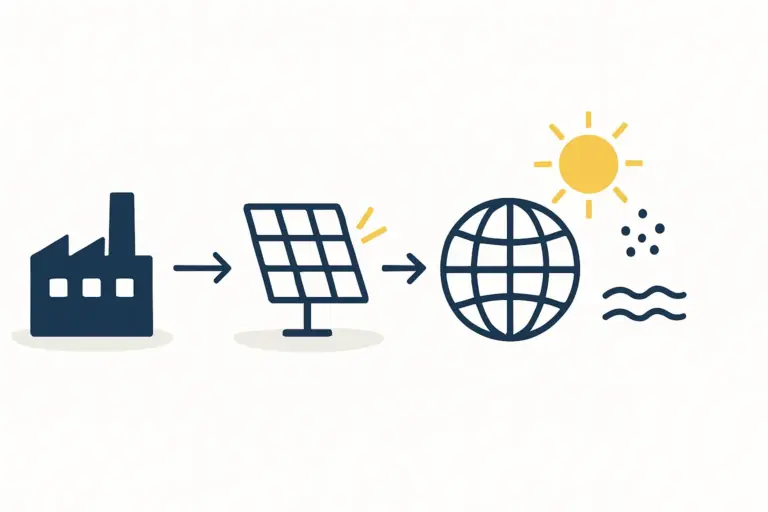
The strategic advantage of a boutique model becomes clear once you understand the structure of the global market. Currently, around 80% of all solar panels are produced in China, which has built a staggering manufacturing capacity of over 1,000 gigawatts (GW). Global demand, however, hovers around 450 GW.
This massive oversupply has driven down prices for standard, commodity-grade solar modules, making it exceptionally difficult for a new facility to compete on cost alone. Any business plan predicated on matching the price of a mass-produced Chinese panel is fundamentally flawed from the outset.
The strategic alternative is to sidestep this competition entirely. Instead of entering the high-volume, low-margin commodity market, investors can focus on a segment where value is defined by quality, reliability, and proximity to the customer—the domain of the boutique solar factory.
The Untapped MENA Opportunity: Why Local Production Matters
While global capacity is concentrated in Asia, regional demand in the Middle East and North Africa (MENA) is expanding at an unprecedented rate. Projections indicate the region’s solar capacity will increase fivefold by 2030, from 15 GW to over 75 GW. This growth is underpinned by strong government initiatives, such as Bahrain’s National Energy Transition Strategy, which aims for a 30% reduction in emissions by 2035 and net-zero status by 2060.
This creates a powerful dynamic:
- Growing Local Demand: A surge in residential and commercial rooftop installations requires high-performance modules.
- Supply Chain Resilience: The trend of ‘reshoring’ or ‘friend-shoring’ is gaining momentum. Governments and large commercial clients are increasingly placing a premium on local supply chains to ensure project timelines and reduce dependency on international logistics.
- Customer-Centric Advantages: Local solar installers, the primary customers for rooftop modules, value a manufacturer who can provide quick delivery, responsive technical support, and potentially customized module formats. These are services that large, distant gigafactories are ill-equipped to offer.
A Bahrain-based factory is perfectly positioned to serve this growing ecosystem, offering a ‘Made in the GCC’ product that signifies quality and reliability.
A Blueprint for a High-Margin Boutique Factory
A boutique solar manufacturing plant isn’t a smaller version of a gigafactory; it’s a different business model built on a distinct set of principles. The focus is on precision, quality control, and customer relationships.
Defining the Investment Scope
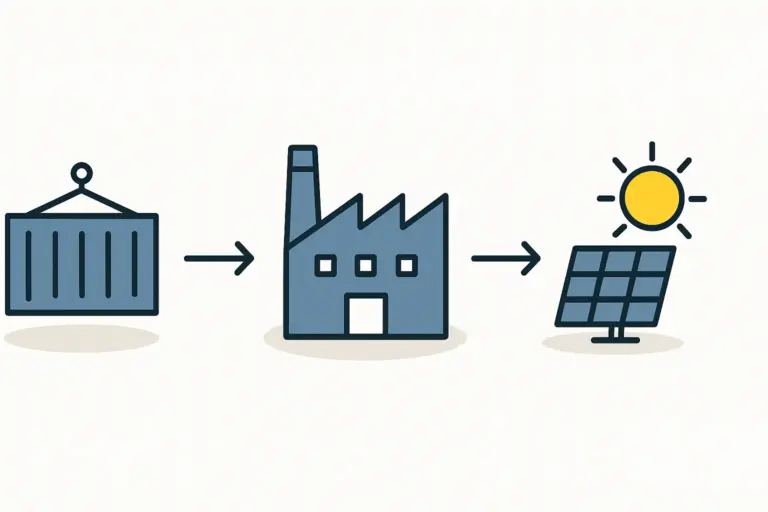
Contrary to the belief that solar manufacturing requires billions in capital, a modern, highly automated boutique facility has a much more accessible entry point. Based on current figures, a 100 MW turnkey solar production line can be established with a capital expenditure of approximately $6–8 million. This investment typically includes all necessary machinery, installation, commissioning, and staff training. This scale is sufficient to capture a meaningful share of the premium regional market without engaging in price wars.
Focusing on a Premium Product
The target market for a boutique manufacturer is not utility-scale solar farms but the residential and commercial rooftop sector. This segment is less price-sensitive and places a higher value on:
- High-Efficiency Modules: Panels that generate more power per square meter are essential for space-constrained rooftops.
- Aesthetic Quality: All-black modules or other premium designs are often preferred for residential and architectural applications.
- Long-Term Reliability: Customers are investing for 25+ years and are willing to pay a premium for modules with a reputation for quality and durability, backed by a local warranty.
Future-Proofing with Technology
To command a premium, a factory must employ modern, reliable technology. The current industry standard is PERC (Passivated Emitter and Rear Cell) technology, a proven workhorse that offers excellent efficiency and stability.
A prudent investor, however, must also look to the future. The next evolution is TOPCon (Tunnel Oxide Passivated Contact) technology, which offers a significant step-up in efficiency. A strategically planned factory will install a ‘TOPCon-ready’ production line. This means the equipment can be upgraded to the next generation of technology with minimal additional investment, securing the factory’s competitive edge. This foresight is built into the manufacturing process from day one.
A Partner for a Generational Investment: The Premier EU provider Approach
For family offices and investors without a deep technical background in photovoltaics, the prospect of managing such a project can seem daunting. This is where the right partner becomes essential.
Top-tier European builder is a German solar engineering firm founded in the 1990s by Jürgen von der Gönna. Today, the company is managed by his son, Benjamin Thoma, continuing a family legacy of technical excellence and practical, hands-on project execution. This family-to-family approach fosters a level of trust and long-term alignment that is rare in the industry.
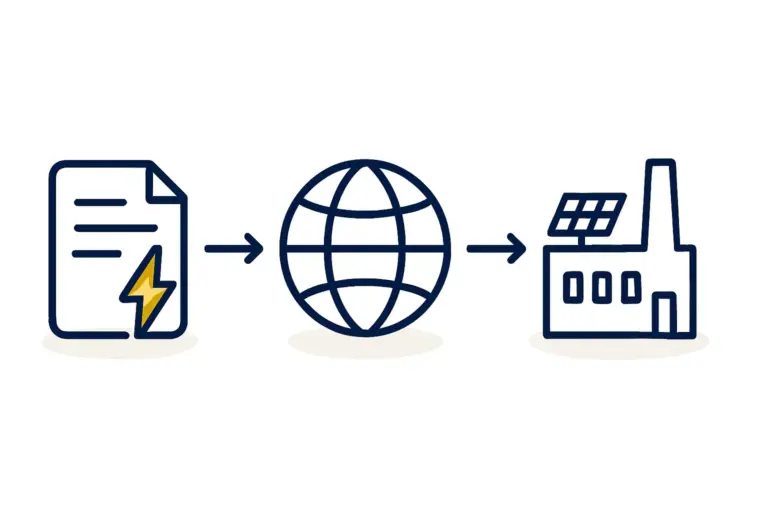
Our global experience proves that partnership is key, not just supplying equipment. It involves guiding the investor through every stage, from business plan validation and factory layout to operational training and certification. The guiding principle is simple: an investor does not need to be a solar expert to succeed, provided they have an expert guide.

Frequently Asked Questions for the Prudent Investor
What does a 100 MW capacity mean in practical terms?
A 100 MW factory, operating efficiently, can produce approximately 220,000 to 250,000 solar panels per year (assuming an average power rating of 400-450W per panel). This is a substantial volume for serving the premium rooftop markets across several GCC countries.
What is the difference between PERC and TOPCon?
Both are technologies used to improve the efficiency of a solar cell. PERC is the mature, highly reliable industry standard today. TOPCon is its successor, offering higher efficiency. A ‘TOPCon-ready’ line is a smart investment that allows for a cost-effective upgrade when the market demands it.
How many employees are required to operate such a factory?
A modern, automated 100 MW line can typically be operated with a lean team of 25–35 employees per shift, including technicians, operators, and quality control staff.
What is the typical timeframe from investment to production?
With a clear plan and an experienced turnkey partner, a new factory can be fully operational in under 12 months from the final investment decision.
Why can a local producer truly compete with imports?
A local producer competes not on the raw cost of the panel, but on total value. This includes:
- Speed and Availability: Delivering modules in days instead of months.
- Reduced Logistical Costs: Eliminating international shipping and import tariffs.
- Local Support: Offering immediate technical and warranty support.
- Brand Value: Building a trusted regional brand known for quality.
Conclusion: The Strategic Path Forward
The opportunity for a Bahraini family office in the solar sector is clear, tangible, and strategically sound. It does not lie in replicating the Chinese gigafactory model but in establishing a nimble, high-quality boutique manufacturing operation focused on the underserved premium segment of the MENA region.
This approach offers a more manageable investment threshold, a faster path to profitability, and a durable competitive advantage built on local service and superior product quality. For the long-term investor, it represents a chance to build not just a factory, but a cornerstone of the region’s sustainable energy future. The next step in this journey begins with deeper due diligence and detailed financial modeling, a process best undertaken with a trusted engineering partner.
Get Your Free PDF: Bahrain Solar Module Manufacturing Case Study
Author: This case study was prepared by the
turnkey solar module production specialists at J.V.G. Technology GmbH
It is based on real data and consulting experience from J.v.G. projects
worldwide, including installations ranging from 20 MW to 500 MW capacity.