Disclaimer: This case study represents a composite example derived from real-world
consulting work by J.v.G. Technology GmbH in solar module production and factory optimization. All data points are realistic but simplified for clarity and educational purposes.
For international investors surveying the Middle East’s renewable energy landscape, the dominant markets of Saudi Arabia and the UAE often draw the most attention. Yet, a closer analysis reveals a more strategic entry point: the Kingdom of Bahrain. The country offers superior logistical efficiency, a highly favorable investment climate, and direct, tariff-free access to the entire Gulf Cooperation Council (GCC) region.
This article outlines a business plan to establish an international solar module manufacturing plant in Bahrain. It is designed for entrepreneurs and established companies looking to leverage Foreign Direct Investment (FDI) to serve one of the world’s fastest-growing solar markets. The focus is not just on why Bahrain is a compelling choice, but how a modern, automated factory can be implemented successfully, even without prior solar industry expertise.
Why Bahrain? The Strategic Gateway to the GCC Market
Bahrain’s primary advantage lies not in its local market size but in its exceptional position as a logistical and commercial hub. A manufacturing plant here is strategically positioned to import raw materials and export finished solar modules to multi-billion-dollar projects emerging across the GCC, particularly in Saudi Arabia.

The Kingdom’s infrastructure creates a highly efficient logistical triangle:
- By Land: The King Fahd Causeway provides direct, 24/7 road access to Saudi Arabia’s Eastern Province, the industrial heartland of the region. This allows for just-in-time delivery of solar modules, a significant competitive advantage.
- By Sea: The Khalifa Bin Salman Port is a modern, deep-water port with efficient customs clearance, ideal for importing raw materials and machinery from Asia and Europe.
- By Air: Bahrain International Airport serves as a regional cargo hub, facilitating the rapid shipment of high-value components and spare parts.
This integrated network significantly reduces transport times and costs compared to manufacturing outside the GCC. In an industry driven by supply chain efficiency, this advantage alone makes Bahrain a top contender.
The Financial and Legal Framework: Maximizing FDI Benefits
Bahrain has cultivated one of the world’s most attractive environments for foreign investment. Its Economic Vision 2030 actively encourages diversification away from hydrocarbons and identifies renewable energy manufacturing as a priority sector. This national strategy is backed by a robust legal and financial framework designed to protect and support international investors.
Leveraging Bahrain’s Free Trade Zones
For a solar module manufacturer, operating within one of Bahrain’s Free Trade Zones (FTZs), such as the Bahrain International Investment Park (BIIP), offers a powerful set of incentives. These are not minor tax breaks; they are fundamental advantages that directly impact the profitability and viability of the entire operation.
Key benefits include:
- 100% Foreign Ownership: Investors retain full control of their enterprise, with no local partner required.
- Zero Corporate Income Tax: A guaranteed 0% corporate tax rate ensures financial stability and simplifies long-term planning.
- Customs Duty Exemption: All machinery, equipment, and raw materials imported for manufacturing are exempt from customs duties. This significantly lowers the initial capital expenditure for a turnkey solar manufacturing line.
- Duty-Free Access to GCC Markets: As a member of the GCC, goods manufactured in Bahrain can be exported tariff-free to Saudi Arabia, the UAE, Kuwait, Oman, and Qatar.
Government Support and Economic Vision
The Bahrain Economic Development Board (EDB) actively assists investors, providing a single point of contact to navigate registration, licensing, and setup. This streamlined approach reduces bureaucracy and accelerates the timeline from planning to production. Bahrain’s national renewable energy targets—5% of total generation by 2025 and 10% by 2035—also signal a stable, long-term policy commitment that reinforces regional demand for locally manufactured solar modules.
A Practical Blueprint: Establishing a 20 MW Automated Solar Module Plant
While a strategic location and favorable policies are essential, the operational plan must also be sound. A 20–50 MW semi- or fully-automated production line represents a balanced entry point, offering significant output capacity within a manageable operational footprint.
The experience of European Solar PV Equipment Providers suggests that this scale is optimal for new entrants to the solar sector, as it facilitates a primary focus on establishing robust quality control and process optimization prior to significant capacity expansion.
Core Components of the Business Plan
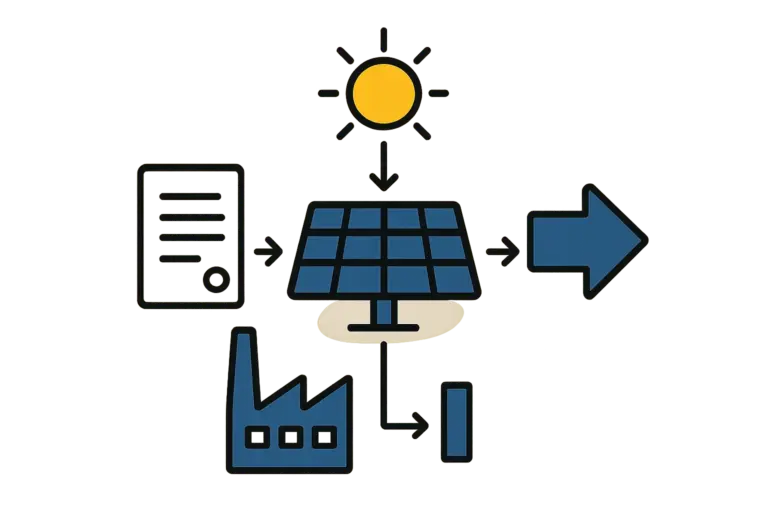
- Investment and Technology: The core of the factory is the production line. Opting for German-engineered, automated equipment ensures high levels of precision, consistent quality, and lower long-term labor costs. The overall investment for a 20 MW production line typically includes machinery, installation, training, and initial raw material stocks. Automation is key, as it reduces dependence on a large pool of highly specialized technicians—a significant advantage in any market.
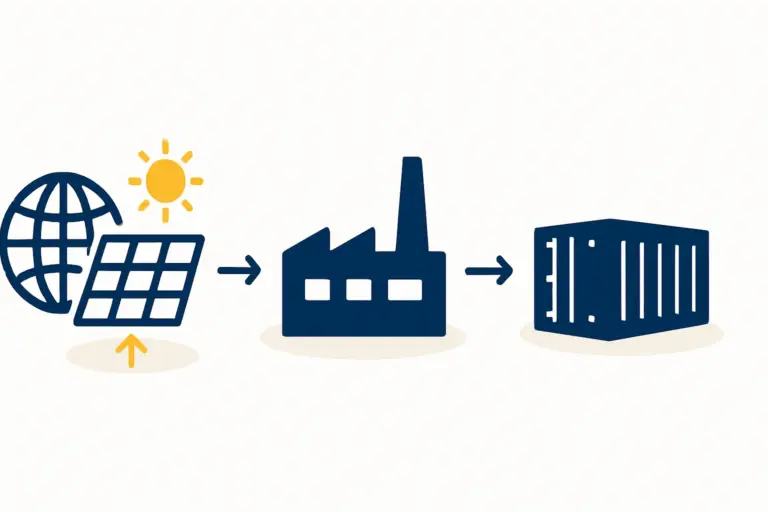
- Logistics and Supply Chain: The business model hinges on seamless logistics.
- Inbound: Raw materials like solar cells, glass, and aluminum frames are imported via the Khalifa Bin Salman Port.
- Outbound: Finished modules are loaded onto trucks and transported directly to project sites in Saudi Arabia and other GCC nations via the King Fahd Causeway.
- Human Resources: While the production line is automated, the operation still requires a skilled team for management, quality control, maintenance, and logistics. Bahrain offers a well-educated, bilingual (Arabic and English) local workforce. Government programs like Tamkeen also provide subsidies and support for training local employees, further reducing operational costs.
The comprehensive process of planning, building, and commissioning such a facility requires a detailed guide on how to start a solar module factory, but the Bahraini context provides unique accelerators to this timeline.

Frequently Asked Questions (FAQ)
What is a realistic minimum investment for a solar factory in Bahrain?
For a 20 MW semi-automated line, investors should budget for a comprehensive package including machinery, shipping, installation, and initial working capital. The exact figure depends on the level of automation and technology choices.
Do I need a local Bahraini partner to set up in a Free Trade Zone?
No. A key advantage of Bahrain’s FTZs is 100% foreign ownership, allowing international investors to maintain full control over their operations.
How long does it take to get a factory operational in Bahrain?
With a clear plan and support from the EDB, the process from company registration to the start of production can be completed in under 12 months. This includes factory preparation, machinery shipment and installation, and staff training.
What kind of skills are available in the local Bahraini workforce?
Bahrain has a strong talent pool in engineering, finance, and logistics. For factory floor operations, the local workforce is generally well-educated and can be readily trained to operate modern manufacturing equipment.
Is Bahrain’s domestic solar market large enough to support a factory?
While Bahrain has its own renewable energy projects, the primary strategy for a plant of this nature is export-focused. The business case is built on serving the entire GCC region—a market of immense scale—from a single, highly efficient manufacturing base.
Conclusion: Your Next Steps in Exploring the Bahrain Opportunity
Establishing a solar module factory in Bahrain is a highly strategic move for any investor looking to capitalize on the GCC’s energy transition. Its combination of world-class logistical infrastructure, an exceptionally pro-business legal framework in its Free Trade Zones, and direct, tariff-free access to the massive Saudi Arabian market creates a unique and powerful business case.
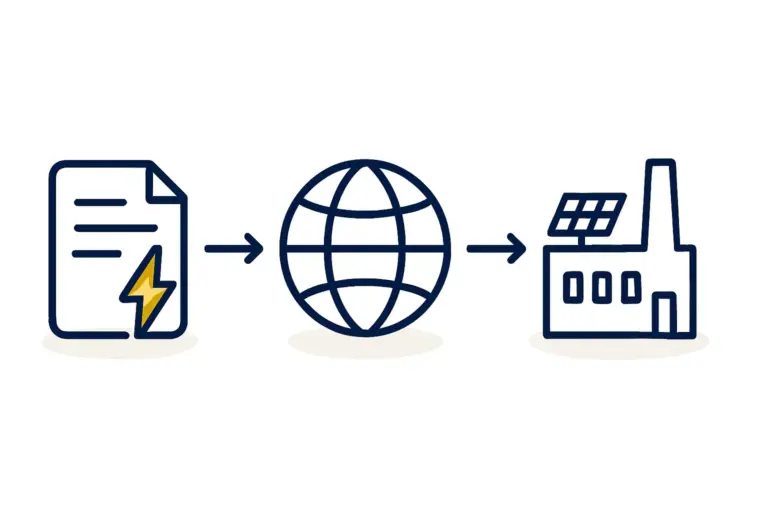
For the international entrepreneur, the path forward is clear. The technical complexities of solar manufacturing can be managed with the right technology partner, while Bahrain’s business environment provides a stable and profitable foundation for long-term growth. Your next step is to begin a structured approach, from initial feasibility studies to the final commissioning of your production line.
Download Your Free PDF Today: Bahrain Solar Module Manufacturing
Author: This case study was prepared by the
turnkey solar module production specialists at J.V.G. Technology GmbH
It is based on real data and consulting experience from J.v.G. projects
worldwide, including installations ranging from 20 MW to 500 MW capacity.