The Caribbean Community (CARICOM) has set an ambitious goal: to generate 47% of its electricity from renewable sources by 2027. This policy is creating significant, stable demand for high-quality solar modules—a clear market opportunity for entrepreneurs looking to establish factories in places like Barbados, Trinidad and Tobago, or Jamaica.
But entering this market requires more than simply assembling components. To ensure your modules are accepted by utilities, financiers, and customers, they must meet stringent quality and safety standards. This process, known as certification, is not merely a bureaucratic obstacle but a fundamental pillar of a successful manufacturing business. It is the language of trust in the global solar industry.
This guide covers the essential certification requirements for solar modules intended for the Caribbean market, from global benchmarks to the specific environmental challenges unique to the region.
Table of Contents
The Foundation: Why Certification Is Critical for Your Investment
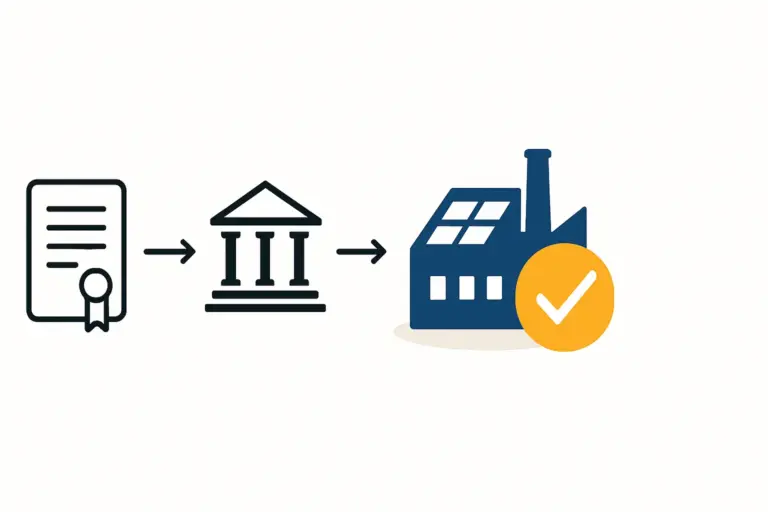
Anyone entering the solar sector must understand that certification is directly linked to bankability. Without it, a solar module is simply an unverified assembly of glass and silicon. With certification, it becomes a reliable, insurable, and financeable asset.
Key reasons why certification is non-negotiable:
-
Market Access: Most utility-scale projects, government tenders, and commercial installations explicitly require certified modules.
-
Insurability and Finance: Banks and insurance companies will not finance or underwrite projects using uncertified components due to their unknown risk profile.
-
Brand Reputation: Certification signals to the market that your products are durable, safe, and perform as specified, building a reputation for quality from day one.
-
Liability Protection: In the event of a failure, certified products demonstrate that you have followed established safety and quality protocols.
The Global Benchmark: Understanding IEC Standards
The International Electrotechnical Commission (IEC) establishes the most widely recognized standards for photovoltaic (PV) modules worldwide. For a manufacturer in the Caribbean, compliance with these benchmarks is essential for broad market acceptance, both regionally and globally.
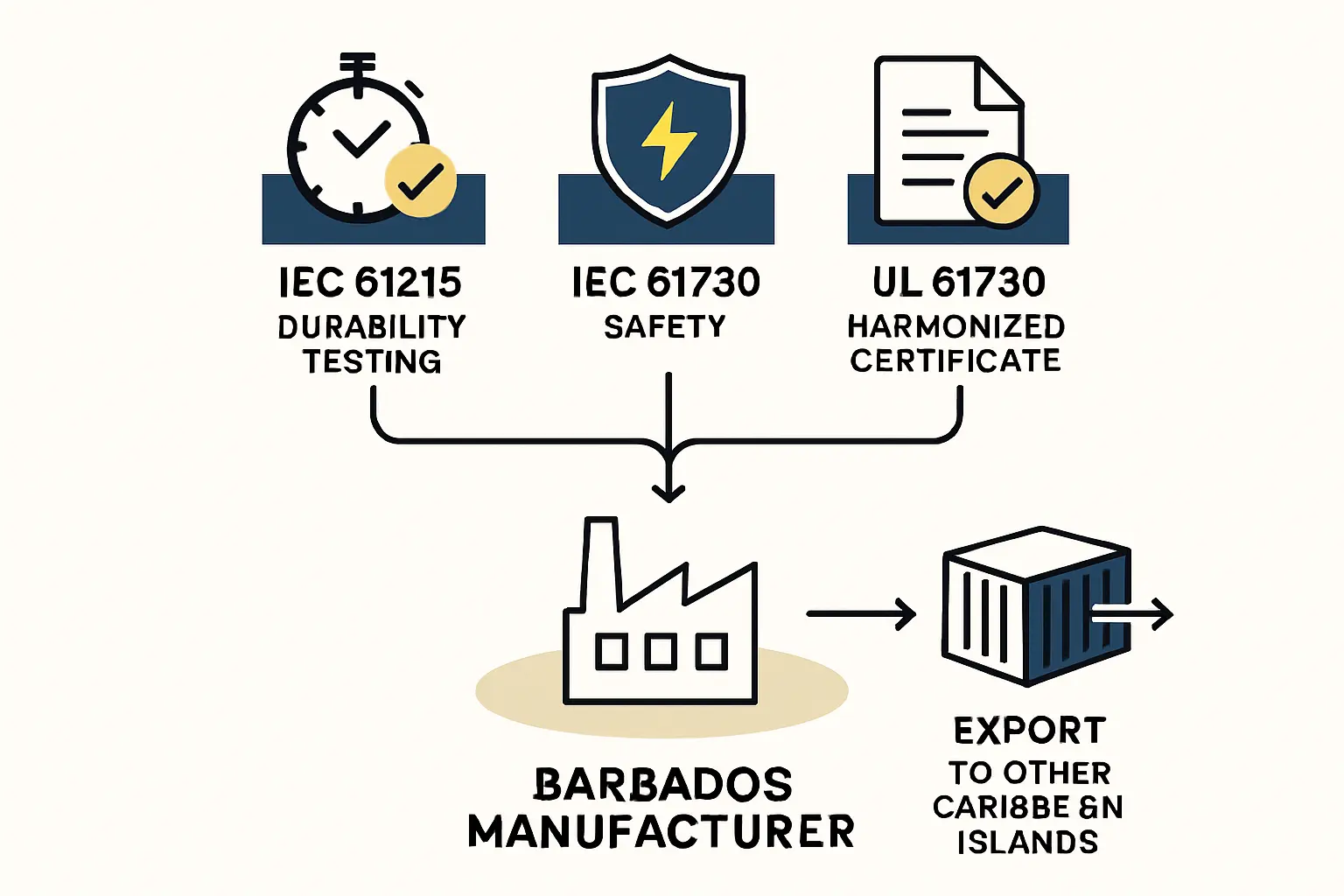
The two fundamental standards you must know are IEC 61215 and IEC 61730.
IEC 61215: Testing for Performance and Durability
This standard series defines the design qualification and type approval for terrestrial PV modules. It focuses on ensuring the module performs reliably over its long service life by subjecting it to a battery of stress tests that simulate decades of outdoor exposure, including:
-
Thermal Cycling: Testing the module’s resilience to extreme temperature swings.
-
Humidity-Freeze and Damp Heat: Simulating performance in humid and high-temperature environments, particularly relevant for the tropical Caribbean climate.
-
UV Exposure: Evaluating the long-term stability of materials under intense sunlight.
-
Mechanical Load: Assessing the module’s ability to withstand pressure from factors like wind.
Passing IEC 61215 demonstrates that a module’s design is robust and its power output will not degrade prematurely. For a deeper understanding of these critical evaluations, pvknowhow.com offers a detailed overview of the most important solar panel quality tests.
IEC 61730: Testing for Safety
While IEC 61215 covers performance, IEC 61730 addresses safety. This standard is fundamental for evaluating module safety and protecting operators and end-users. Its tests are designed to prevent common electrical and mechanical hazards.
Key Safety Evaluation Areas for IEC 61730
-
Electrical Shock Hazard: Ensuring proper insulation and safe electrical design.
-
Fire Hazard: Testing the flammability of components to minimize fire risk.
-
Mechanical Safety: Verifying the integrity of the glass and frame to prevent injury from breakage.

A module certified to both IEC 61215 and IEC 61730 has proven its durability and safety, making it a bankable product on the international market.
The North American Gateway: The Role of UL Certification
While IEC is the global standard, Underwriters Laboratories (UL) standards are predominant in the United States and Canada. The relevant standard, UL 61730, is now harmonized with IEC 61730, meaning they cover very similar safety requirements.
For a Caribbean-based manufacturer, pursuing UL certification is a strategic decision. While IEC certification is sufficient for manufacturers targeting CARICOM and other regions that follow IEC norms, UL certification becomes essential for those aiming to export to the lucrative North American market. Achieving dual IEC and UL certification increases upfront testing costs but significantly expands the potential market for your products.
Beyond the Basics: Crucial Certifications for the Caribbean Climate
Standard IEC certification provides an excellent baseline. However, the unique environmental conditions of the Caribbean—high humidity, airborne sea salt, and the risk of hurricanes—demand additional scrutiny. Demonstrating performance under these specific conditions offers a significant competitive advantage.
Salt Mist Corrosion Resistance (IEC 61701)
For any installation near the coast, salt mist corrosion is a primary threat. Salty, humid air can degrade module frames, junction boxes, and electrical connections, leading to premature failure and power loss.
The IEC 61701 standard simulates the corrosive effect of salt-laden air. Modules are placed in a chamber and subjected to a salt spray for a prolonged period. The test has several severity levels. For the Caribbean, achieving a high severity level (e.g., Severity Level 6) is a powerful indicator of product durability.
High Wind and Cyclone Resistance
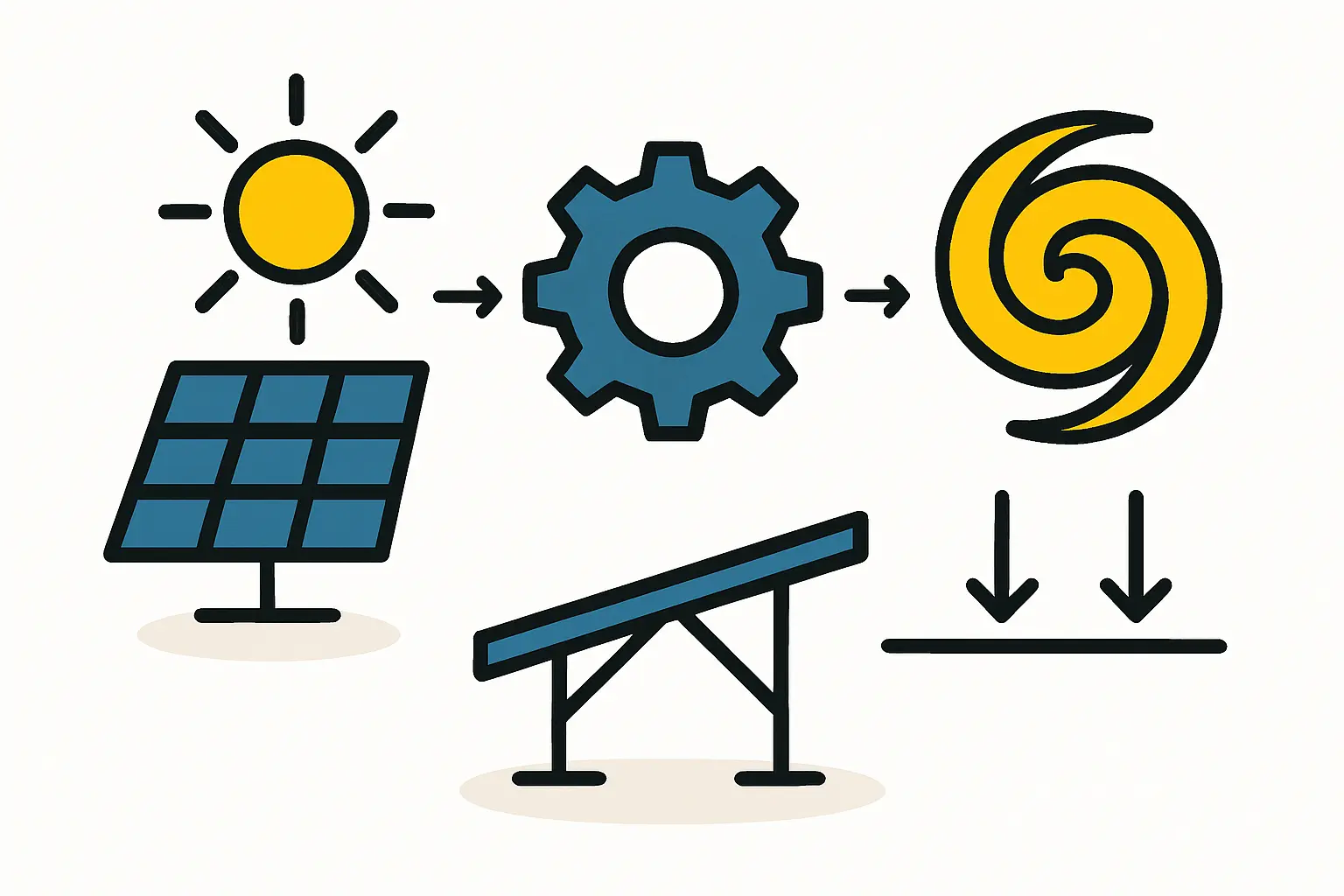
The Caribbean is prone to hurricanes, making a module’s mechanical strength a critical safety and performance attribute. Standard mechanical load tests under IEC 61215 assess a pressure of 2400 Pascals (Pa). In hurricane-prone regions, however, modules certified to withstand higher loads (e.g., 5400 Pa or more) are far more suitable. Highlighting a superior wind load rating is a key selling point in this market. Experience from J.v.G. Technology GmbH’s projects in other cyclone-prone regions confirms that specifying modules and mounting systems with high wind load ratings is a standard part of the de-risking process.
Humidity and Potential Induced Degradation (PID) Resistance
Potential Induced Degradation (PID) is a performance-degrading phenomenon accelerated by high temperatures and humidity. It occurs when a voltage difference between the solar cells and the module frame causes power leakage, reducing output over time. In the hot, humid climate of the Caribbean, modules with certified resistance to PID are essential for long-term project performance. The relevant test is outlined in IEC TS 62804, and passing it provides assurance against this significant risk factor.
The Regional Framework: Navigating CARICOM and CROSQ
The CARICOM Regional Organisation for Standards and Quality (CROSQ) develops and harmonizes standards across its member states. While specific, legally binding regional standards for solar modules are still evolving, the policy direction is clear: adopting and aligning with international IEC standards.
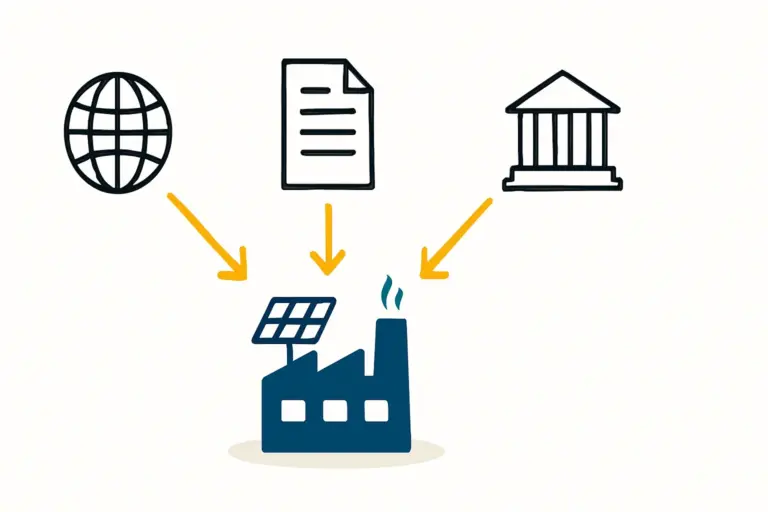
For an entrepreneur planning to establish a solar panel factory, the most effective strategy is to implement a quality management system designed to meet IEC standards from the outset. This ensures your products will meet the requirements of any future national or regional regulations based on these global benchmarks.
Your Next Steps in Quality Assurance
Achieving certification is a critical milestone in establishing a credible and successful solar module manufacturing operation in the Caribbean. This requires embracing global standards like IEC 61215 and IEC 61730 while also addressing the region’s specific environmental challenges through tests for salt mist, wind resistance, and PID.
This focus on quality isn’t just about compliance; it’s about building a durable business that can effectively serve the region’s growing demand for clean energy. For those planning such a venture, understanding the setup of a manufacturing facility is the next logical step. A well-designed facility is the foundation for producing certifiable, high-quality modules. You can find more guidance in our guide on turnkey solar module production lines.
Frequently Asked Questions (FAQ)
What is the main difference between IEC and UL certification?
IEC is the globally accepted standard, essential for markets in Europe, Asia, Africa, Latin America, and the Caribbean. UL is the dominant standard for market access in the United States and Canada. For safety, the standards (IEC 61730 and UL 61730) are now largely harmonized.
How long does certification take and what does it cost?
The certification process typically takes six to nine months. Costs can range from tens of thousands to over one hundred thousand US dollars per module family, depending on the testing institute and the number of certifications sought (e.g., IEC, UL, Salt Mist).
Do I need to certify every module I produce?
No. Certification is a type approval. You submit a representative sample of a specific module family (e.g., all modules of a certain design and bill of materials) for testing. Once certified, all modules produced to that exact specification are considered certified. However, the certification body will conduct regular factory audits to ensure your production processes remain consistent.
If I use certified materials, is my module automatically certified?
No. While using certified components (like junction boxes, backsheets, and connectors) is a prerequisite, the final, assembled module must undergo its own certification process. The test validates the entire system and the manufacturing process used to assemble it.
Can a factory in Barbados realistically achieve these certifications?
Absolutely. Certification is a function of process, quality control, and adherence to standards—not geography. With the right equipment, a well-defined Quality Management System, and proper training, a factory anywhere in the world can produce modules that meet and exceed international standards. J.v.G.’s turnkey projects, for example, are designed specifically to enable new manufacturers to achieve this level of quality.