Disclaimer: This case study represents a composite example derived from real-world
consulting work by J.v.G. Technology GmbH in solar module production and factory optimization. All data points are realistic but simplified for clarity and educational purposes.
Many successful entrepreneurs looking to diversify their portfolios are drawn to the immense potential of renewable energy, and solar offers a particularly compelling opportunity.
Yet, the path from initial interest to a fully operational solar module factory can seem complex and fraught with technical hurdles. A common misconception is that one needs a deep engineering background to enter this field. In reality, a structured, proven execution model can make the entire process manageable and predictable.
Consider Chile, a country with some of the highest solar irradiation levels on the planet. The Atacama Desert alone receives solar radiation that can exceed 7 kWh/m² per day, making it one of the world’s most resource-rich locations for solar energy production. This article outlines a practical, step-by-step roadmap for establishing a turnkey solar factory in this promising market in under 18 months—based on a methodology refined over decades.
The Turnkey Advantage: A Framework for Predictable Execution
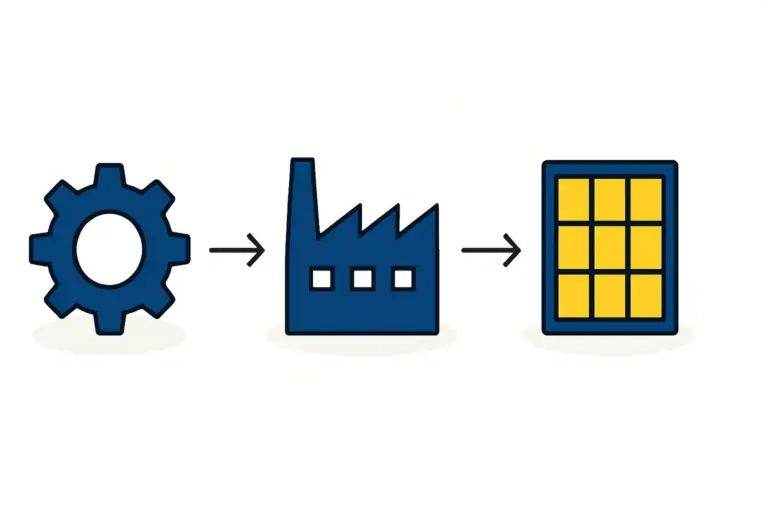
For a business professional entering a new technical industry, the primary challenge isn’t a lack of ambition, but managing unknown variables. A turnkey project model is designed specifically to address this, providing a comprehensive solution where a single, experienced partner manages the entire project lifecycle—from initial planning to final commissioning.
This approach, exemplified by the methodology developed by the European turnkey engineering team and implemented by European solar architecture team, transforms a complex industrial undertaking into a sequence of clear, manageable milestones. This shifts the focus from solving intricate technical problems to overseeing a well-defined project plan, significantly reducing risk and accelerating time to market.
Phase 1: Foundation and Strategy (Months 1–4)
The first phase is dedicated to strategic planning and establishing a solid business foundation. Rushing this stage is a common error that can lead to significant complications down the road.
Site Selection and Feasibility Analysis
The first step is to identify a suitable location. In Chile, this might be near logistical hubs like the ports of Valparaíso or San Antonio, or closer to regions with high demand for solar installations. A feasibility study assesses critical factors such as land cost, accessibility, availability of utilities (power and water), and the local labor market. This analysis confirms the project’s viability before significant capital is committed.
Business Planning and Securing Financing
With a viable site identified, the next step is developing a comprehensive, bankable business plan. This document is crucial for securing financing and serves as the strategic blueprint for the entire venture. It details financial projections, market analysis, operational costs, and revenue forecasts. A well-structured plan demonstrates a clear grasp of the project’s financial dynamics and is a powerful tool for engaging with investors and financial institutions.
Phase 2: Procurement and Logistics (Months 5–10)
Once financing is secured, the project moves into the procurement phase. This stage involves acquiring all the necessary machinery and establishing a robust supply chain for raw materials.
Finalizing Equipment Specifications
Based on the business plan’s production targets (e.g., 50 MW annual capacity), the exact specifications for the solar panel production line are finalized. This includes key machinery like stringers, laminators, and testers. Working with an experienced turnkey partner ensures the equipment is well-matched to the desired output, technology (e.g., PERC, TOPCon), and budget.
Establishing the Bill of Materials (BOM) Supply Chain
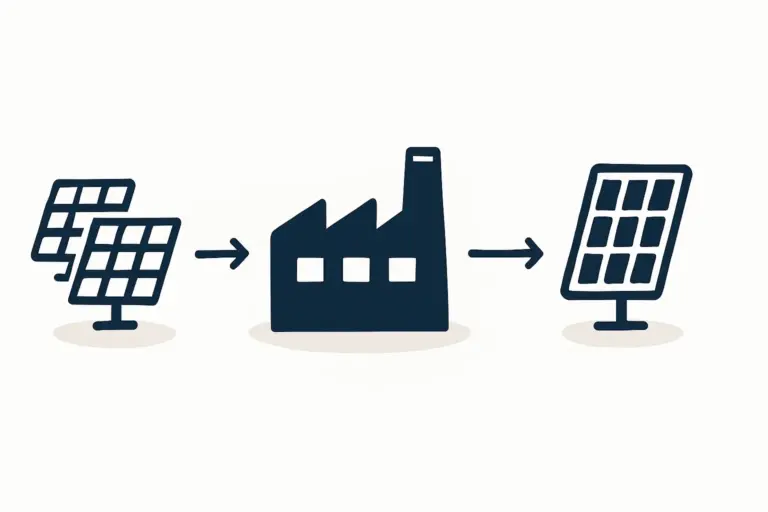
A solar module is an assembled product and requires a consistent supply of high-quality components. A critical task during this phase is establishing relationships with reliable suppliers for all necessary raw materials for solar panels, including solar cells, glass, EVA film, backsheets, and aluminum frames. A turnkey provider often facilitates this process by leveraging its established network of vetted global suppliers, ensuring both quality and cost-effectiveness.
Phase 3: Implementation and Commissioning (Months 11–15)
This is the most tangible phase of the project, where the physical factory begins to take shape. Careful coordination is essential to ensure all elements come together smoothly.
Building Preparation and Utility Hookups
While the machinery is being manufactured and shipped, the selected building is prepared. This involves ensuring the facility meets all structural, electrical, and environmental specifications. The solar factory building requirements detail key considerations like floor load capacity, ceiling height, and the installation of a clean, stable power supply—all critical for the sensitive manufacturing equipment.
Machine Installation and Integration
Upon arrival, the production machinery is installed, positioned according to the pre-designed factory layout, and integrated into the line. This process is overseen by experienced engineers who ensure that each machine is correctly calibrated and communicates properly with the others. This systematic installation is fundamental to achieving the line’s nameplate capacity and production efficiency.
Commissioning and Initial Test Runs
Once installation is complete, the commissioning process begins. Engineers conduct rigorous tests on the entire production line and make fine-tuning adjustments to optimize performance. Then, initial test runs with small batches of materials verify that the final product—the solar module—meets all quality and performance standards before full-scale production begins.
Phase 4: Operations and Growth (Months 16–18 and Beyond)
With the factory built and the machinery commissioned, the final phase focuses on empowering the local team and ramping up production.
Comprehensive Team Training
A factory is only as effective as the people who operate it. This stage involves intensive, hands-on training for local operators, technicians, and quality control staff. The training, often conducted by the engineers who installed the line, covers everything from machine operation and routine maintenance to quality assurance protocols. This knowledge transfer is essential for long-term operational self-sufficiency and consistent product quality.

Achieving Full Production Capacity and Certification
Following the training period, production gradually ramps up to full capacity. Concurrently, sample modules from the initial production batches go to internationally recognized laboratories (like TÜV) for certification. This mandatory step verifies the modules meet global standards for safety, performance, and durability, and is essential for market access and bankability.
Frequently Asked Questions (FAQ)
What is the typical initial investment for a 50 MW factory?
While costs vary based on location and technology choices, an investor should anticipate an investment in the range of several million USD. This typically covers machinery, building modifications, initial raw materials, and operational setup. A detailed business plan provides a precise figure for a specific project.
How many employees are needed to operate such a line?
A semi-automated 50 MW production line typically requires a team of 25 to 35 employees per shift, including production operators, maintenance technicians, quality control personnel, and administrative staff.
What are the biggest risks for a new manufacturer?
Common risks include supply chain disruptions, technical issues with subpar machinery, and difficulties in achieving consistent product quality. The european solar PV equipment provider is specifically designed to mitigate these risks through proven equipment selection, established supplier networks, and comprehensive on-site training.
Why is a turnkey partner more valuable than just buying machines?
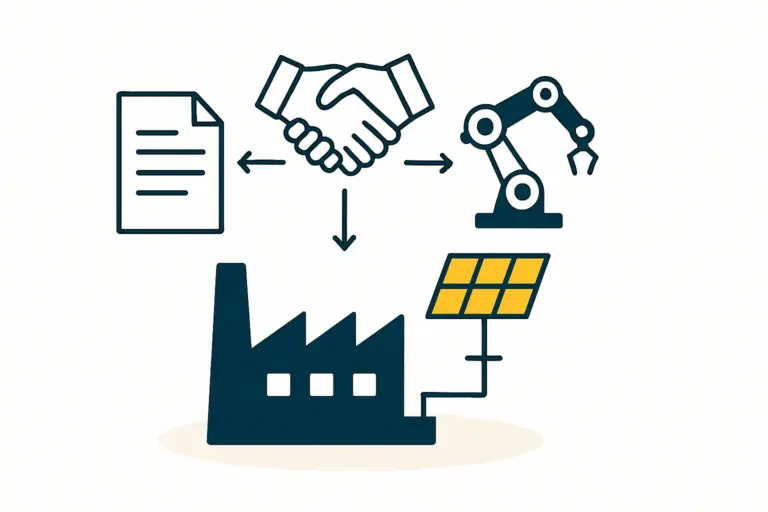
Purchasing machinery is only one part of the equation. A turnkey partner provides an integrated solution that includes process design, supply chain setup, installation, commissioning, and training. This holistic approach ensures all components work together seamlessly—a critical factor for an investor without a background in solar manufacturing.
From Blueprint to Production
Launching a solar module factory, even in a prime location like Chile, is a significant undertaking. However, it does not require the investor to become a photovoltaic expert overnight. By adopting a structured, turnkey execution model, the entire process can be de-risked and streamlined into a clear, 18-month roadmap. This methodical approach allows business leaders to focus on strategic oversight, confident that the technical execution is guided by decades of specialized experience.
Download the Chile Factory Roadmap Case Study (PDF)
Author: This case study was prepared by the
turnkey solar module production specialists at J.V.G. Technology GmbH
It is based on real data and consulting experience from J.v.G. projects
worldwide, including installations ranging from 20 MW to 500 MW capacity.