Even after an entrepreneur has identified a promising market, secured initial funding, and developed a comprehensive business plan, the greatest uncertainty often isn’t the market or the technology, but navigating the maze of local regulations required to break ground.
It’s a common hurdle for any professional establishing a manufacturing presence in a new jurisdiction. Dominica, with its focus on sustainable development and attracting foreign investment, presents a structured yet manageable regulatory landscape. Understanding this process is the first step in turning an investment plan into an operational reality. This guide provides a clear roadmap for investors, detailing the administrative and legal procedures for establishing a manufacturing facility in the country.
The Strategic First Step: Engaging with Invest Dominica Authority (IDA)
The first and most critical point of contact for any foreign investor considering Dominica is the Invest Dominica Authority (IDA). This government agency is a dedicated facilitator, guiding investors through every stage of the setup process.
Engaging with the IDA early is not merely a formality; it is a strategic decision. The authority provides invaluable assistance by:
Acting as a Central Liaison
The IDA coordinates with all other relevant government bodies, including the planning division, environmental unit, and business registry. This single point of contact prevents the confusion that often arises from navigating multiple agencies independently.
Guiding Incentive Applications
The IDA assists with applications for significant financial benefits under the Fiscal Incentives Act, a key factor in a project’s financial viability.
Providing Procedural Clarity
Their experts offer tailored guidance on the specific requirements for any given project, helping investors anticipate challenges and prepare the necessary documentation from the outset.

The Core Regulatory Pathway: A Step-by-Step Breakdown
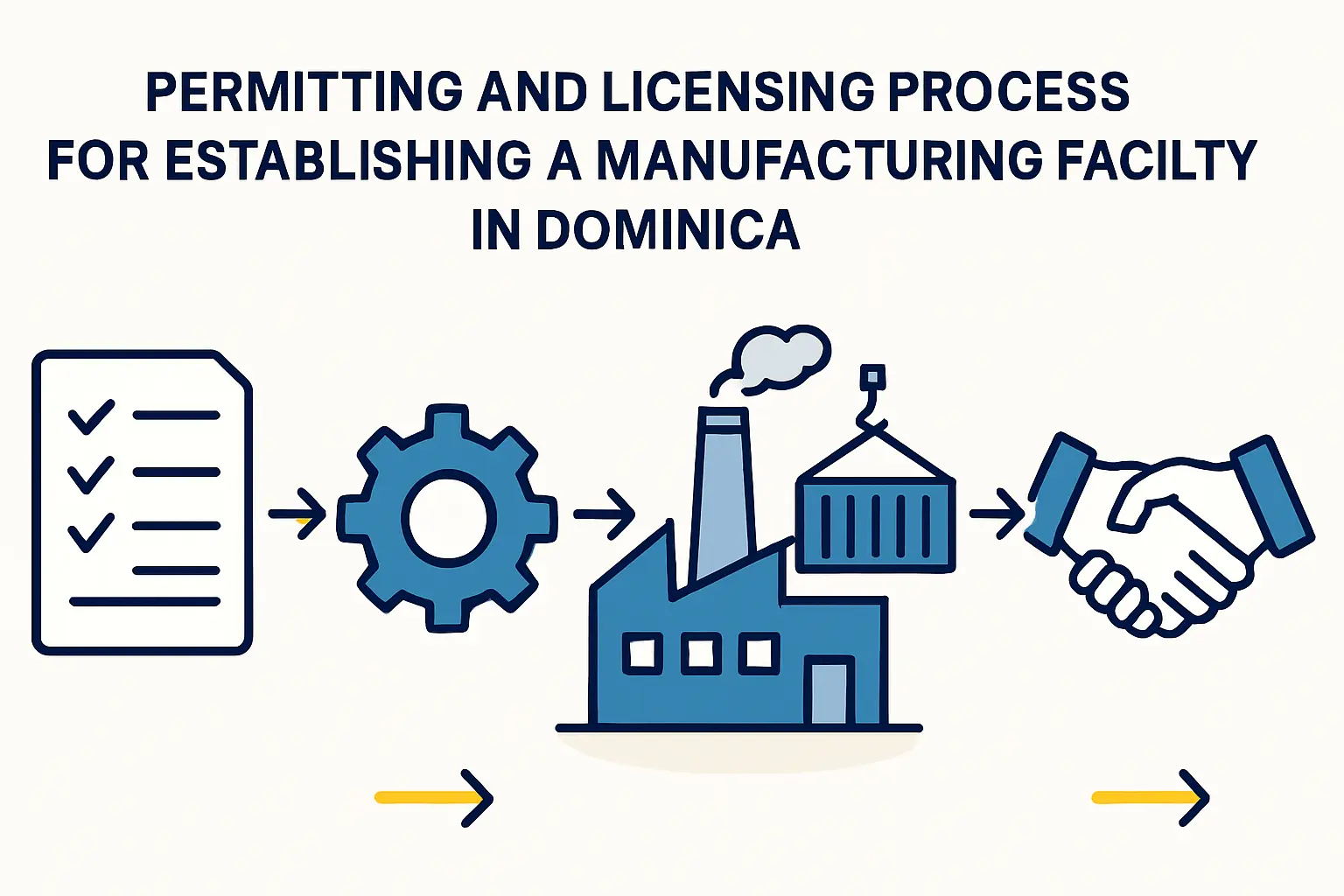
After engaging the IDA, the process follows a logical sequence of approvals and registrations. While the IDA provides hands-on support, understanding the key milestones is essential for effective project planning.
Step 1: Business Registration with CIPO
Before seeking operational permits, the business must be formally established as a legal entity in Dominica—a process handled by the Companies and Intellectual Property Office (CIPO). This involves registering the company name and structure, a foundational step for all subsequent applications. The IDA typically provides guidance and checklists to help meet this administrative requirement efficiently.
Step 2: Application for Fiscal Incentives
A major advantage of manufacturing in Dominica is the availability of fiscal incentives. The Fiscal Incentives Act is designed to attract investment by offering benefits such as:
- Tax holidays on corporate profits for a specified number of years.
- Waivers and exemptions on import duties for machinery, equipment, and raw materials.
The application for these incentives is submitted through the IDA. A successful application can significantly reduce initial capital expenditure and enhance the operation’s long-term profitability. This step should be integrated into the project’s financial modeling from the outset.
Step 3: Securing Development and Construction Approval
Once the business entity is established, the next phase is obtaining permission to build the facility. The Physical Planning Division (PPD), the government body responsible for land use and development control, oversees this process.
A formal development application must be submitted to the PPD, including detailed architectural drawings, site plans, and a description of the proposed manufacturing activities. The PPD’s approval is required before any construction can begin.
The Environmental Impact Assessment (EIA): A Critical Milestone
Dominica places a high value on protecting its natural environment, making the environmental review process a serious and integral part of the development approval pathway.
The Physical Planning Division works in close consultation with the Environmental Coordinating Unit (ECU) to assess the potential environmental impact of a proposed manufacturing project. Based on the project’s scale, technology, and location, the ECU determines if a formal Environmental Impact Assessment (EIA) is required.
For most industrial or manufacturing facilities, an EIA is a standard requirement. The process involves:
- Scoping Study: Defining the potential environmental and social impacts to be studied.
- Detailed Assessment: Conducting technical studies on factors like air and water quality, waste management, and noise levels.
- Public Consultation: Engaging with local communities and stakeholders to present findings and address concerns.
- Mitigation Plan: Proposing concrete measures to minimize or eliminate negative environmental impacts.
Successfully completing an EIA can add several months to the project timeline. Experience from global turnkey projects, such as those by J.v.G., underscores the importance of accounting for this possibility in the initial project schedule to avoid costly delays. Final approval of the EIA from the ECU is necessary before the PPD can issue development and construction permits.

Navigating the Process: Key Considerations for Investors
The Importance of a Central Facilitator
The role of the IDA cannot be overstated. For an entrepreneur without a background in Dominican administrative law, their guidance transforms a potentially complex process into a series of manageable steps.
Realistic Timelines
While the government is investor-friendly, due process takes time. The EIA is the most significant variable. A well-prepared project plan should budget for a 6- to 12-month period for securing all necessary permits.
Thorough Documentation
Success depends on the quality and completeness of submitted documents. A comprehensive business plan, professional technical drawings, and a clear operational outline are essential for gaining the confidence of regulatory bodies. A structured approach, such as that detailed in the pvknowhow.com e-course, helps ensure all necessary elements are considered.
Frequently Asked Questions (FAQ)
Who is the first point of contact for an investor in Dominica?
The Invest Dominica Authority (IDA) is the designated first point of contact. The agency acts as a facilitator to guide investors through the entire setup process.
Is an Environmental Impact Assessment (EIA) always required for a manufacturing plant?
Not always, but it is highly likely for any project of significant scale. The Environmental Coordinating Unit (ECU) makes the final determination based on the facility’s potential impact.
What are the main financial benefits of establishing a manufacturing plant in Dominica?
The primary benefits come from the Fiscal Incentives Act, which can grant approved enterprises a tax holiday on corporate profits and exemptions from import duties on equipment and materials.
Which government body issues the final construction permit?
The Physical Planning Division (PPD) is responsible for issuing the final development and construction permit after all prerequisites, including an approved EIA (if required), have been met.
Conclusion: From Regulatory Hurdles to a Clear Path Forward
Establishing a manufacturing facility in Dominica involves a clear, multi-stage process governed by specific agencies. While diligent preparation is required, the pathway is well-defined and becomes significantly easier with the active support of the Invest Dominica Authority.
By understanding the roles of the IDA, CIPO, PPD, and ECU, an investor can approach the regulatory landscape not as an obstacle, but as a structured part of the overall project plan. This knowledge, integrated into a robust feasibility study and business plan, provides the foundation for a successful and sustainable manufacturing venture in the Caribbean.