Disclaimer: This case study represents a composite example derived from real-world
consulting work by J.v.G. Technology GmbH in solar module production and factory optimization. All data points are realistic but simplified for clarity and educational purposes.
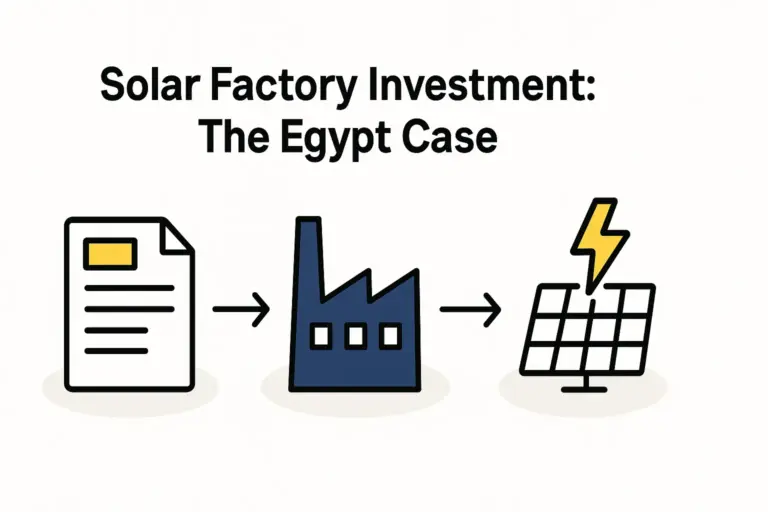
An entrepreneur in Cairo, with a successful background in logistics, observes the vast solar farms rising from the desert. He sees not just a power source, but an industrial opportunity: manufacturing the very solar modules that will power the nation’s future.
Yet, a critical question quickly follows—how does one fund such a capital-intensive venture? It’s a question familiar to many business leaders considering a move into the renewable energy sector.
Egypt’s commitment to generating 42% of its electricity from renewable sources by 2035 has created a powerful tailwind for the solar industry. This national ambition is more than an environmental goal; it is a significant economic signal to investors and financial institutions. For entrepreneurs looking to establish solar module manufacturing facilities, that signal opens up a growing number of financing avenues.
This guide outlines the primary funding sources available for renewable energy manufacturing projects in Egypt, from local banking institutions to international development finance and innovative green financing mechanisms.
The Strategic Advantage of Egypt for Renewable Energy Manufacturing
Before exploring financing options, it helps to understand why Egypt has become such an attractive location for these investments. Lenders, both domestic and international, assess country-level support and market potential before committing capital.
The Egyptian government actively supports the sector through mechanisms like feed-in tariffs, competitive auctions, and significant public investment in grid infrastructure. Its strategic location, with access to markets in Europe, the Middle East, and Africa via the Suez Canal, makes it a prime hub for export-oriented manufacturing.
Together, these factors create a favorable environment that de-risks investments and makes projects more ‘bankable.’
Navigating the Financial Landscape: Key Funding Sources
Securing capital for a manufacturing plant is rarely straightforward. The most successful projects blend different types of funding—each with its own requirements and benefits—instead of relying on a single source.
Domestic Financing: The Role of Egyptian Banks
Local financial institutions are a cornerstone of project finance in Egypt. Major players like the National Bank of Egypt (NBE) and the Commercial International Bank (CIB) have established green financing programs and are showing growing interest in the renewable energy sector.
Key Characteristics:
- Local Market Knowledge: Egyptian banks have a deep understanding of the local regulatory environment and business culture.
- Requirements: They typically require a strong project sponsor, a detailed [Link 1: comprehensive business plan], and often some form of collateral or a significant equity contribution.
- Focus: While historically focused on established corporations, they are becoming increasingly receptive to well-structured greenfield renewable projects, particularly those that align with national development goals.
International Support: Development Finance Institutions (DFIs)
DFIs are specialized development banks that support economic development in emerging markets. For large-scale manufacturing projects, they are often a crucial part of the financing puzzle. Key institutions active in Egypt include:
- The European Bank for Reconstruction and Development (EBRD): Heavily invested in Egypt’s green economy transition.
- The European Investment Bank (EIB): The lending arm of the European Union, which provides long-term financing for projects aligned with EU policy.
- The African Development Bank (AfDB): Focused on projects that contribute to the economic development and social progress of African countries.
Key Characteristics:
- Favorable Terms: DFIs often provide financing with longer repayment periods (tenors) and more competitive interest rates than purely commercial lenders.
- Stringent Due Diligence: Securing DFI funding requires meeting high environmental, social, and governance (ESG) standards. A thorough [Link 3: financial feasibility study] is non-negotiable.
- Technical Assistance: Beyond capital, many DFIs offer technical assistance grants to help projects meet international standards, which can be invaluable for new entrants to the sector.
Government-Backed Incentives and Special Economic Zones
To attract foreign and domestic investment, the Egyptian government has established special economic zones that offer significant financial advantages. The Suez Canal Economic Zone (SCZONE) is a prime example.
Setting up a manufacturing facility within the SCZONE provides access to a suite of incentives, including:
- Tax Exemptions: Reduced corporate tax rates for the life of the project.
- Customs Duty Waivers: Exemption from duties on imported machinery, equipment, and raw materials needed for production.
- Streamlined Logistics: World-class port infrastructure and simplified import/export procedures.
These incentives directly reduce the [Link 5: initial investment costs] and improve a project’s long-term profitability, making it far more attractive to lenders.
Innovative Instruments: The Rise of Green Bonds
While direct project financing remains the most common route for a new manufacturing plant, the growth of the green bond market in Egypt is a promising sign of market maturity. In 2020, Egypt issued the first sovereign green bond in the Middle East and North Africa region, raising capital specifically for green projects.
For a new entrepreneur, this trend is more of a background indicator than a direct funding source. However, it clearly demonstrates strong institutional investor appetite for green investments in the country. As a manufacturing operation matures, refinancing through a corporate green bond could become a viable option for expansion.
Key Considerations for Securing Funding
Regardless of the source, financiers look for well-prepared and professionally managed projects.
-
The Critical Importance of Bankable Documents
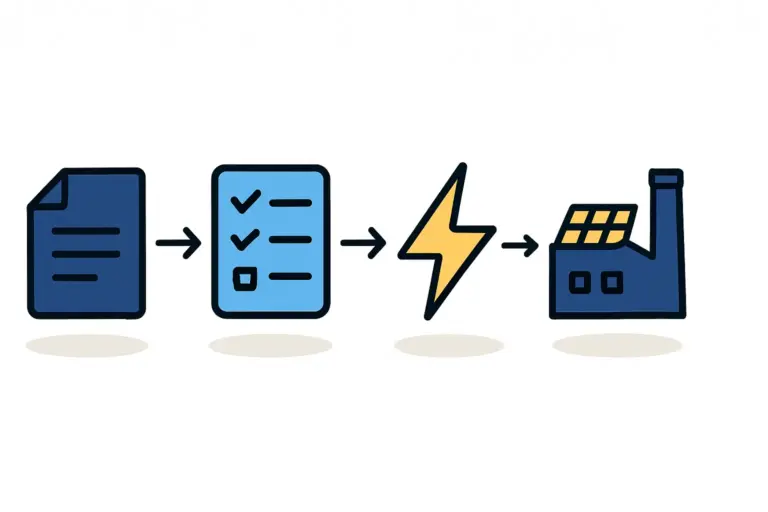
Lenders are not investing in an idea; they are investing in a meticulously planned business. A comprehensive business plan, detailed financial models, and a credible feasibility study are the essential documents for any financing discussion. These documents need to articulate everything from the setup of the [Link 2: turnkey solar module manufacturing line] to the go-to-market strategy. -
Navigating Local Requirements and Currency Risks
While Egypt’s business climate is improving, bureaucratic hurdles can still pose challenges. Currency fluctuations are another key risk that international lenders will scrutinize. Demonstrating a clear strategy for managing these risks, perhaps by engaging a knowledgeable [Link 4: local partner], can significantly strengthen a funding application. -
Credibility of the Project Sponsor
Financiers invest in people as much as they invest in projects. The management team’s experience, track record, and commitment to the project are heavily scrutinized. For those new to the solar industry, partnering with experienced European turnkey engineering team, can provide the technical credibility that lenders demand.
Frequently Asked Questions (FAQ)
What is the typical debt-to-equity ratio for solar manufacturing projects in Egypt?
For greenfield projects, financiers often expect a debt-to-equity ratio in the range of 60:40 to 70:30. This means the project sponsors are expected to contribute 30-40% of the total project cost as equity.
Are there grants available in addition to loans?
Yes, particularly from DFIs and international climate funds. These are often ‘technical assistance’ grants designed to fund feasibility studies, ESG assessments, or capacity building, rather than covering major capital expenditures.
How long does the financing process typically take?
The timeline varies significantly. For a straightforward commercial loan from a local bank, it could take 3–6 months. For complex DFI financing, the due diligence process can take 12 months or longer.
Do international financiers require a local partner?
While not always a strict requirement, having a strong local partner is highly advantageous. It demonstrates commitment to the local economy and helps navigate the administrative and regulatory landscape, reducing project risk in the eyes of the lender.
What are the main risks investors evaluate in Egyptian renewable energy projects?
Investors typically focus on regulatory risk (changes in government policy), currency risk (devaluation of the Egyptian Pound), and offtake risk (securing buyers for the manufactured modules). A solid business plan must present clear mitigation strategies for each of these.
Conclusion and Next Steps
Egypt’s strategic vision for renewable energy has fostered a diverse and accessible financing ecosystem for entrepreneurs aiming to enter the solar manufacturing sector. From local banks to global development institutions, capital is available for well-structured, credible projects.
The key to unlocking these funds lies not in finding a secret formula, but in rigorous and professional preparation. A compelling investment case, supported by bankable documents and a clear understanding of the risks and opportunities, is the foundation of any successful financing campaign.
For business leaders beginning this journey, the next step is to translate their vision into the detailed, data-driven plans that financiers demand.
Download the Egypt Solar Investment & Financing Case Study (PDF)
Author: This case study was prepared by the
turnkey solar module production specialists at J.V.G. Technology GmbH
It is based on real data and consulting experience from J.v.G. projects
worldwide, including installations ranging from 20 MW to 500 MW capacity.