Disclaimer: This case study represents a composite example derived from real-world
consulting work by J.v.G. Technology GmbH in solar module production and factory optimization. All data points are realistic but simplified for clarity and educational purposes.
Entrepreneurs sizing up the solar industry often see a landscape dominated by standard, mass-produced panels, assuming the path to success lies in competing on volume and price. In high-irradiance regions like the Horn of Africa, however, this approach overlooks a critical factor: the environment itself.
Standard solar modules simply aren’t engineered to withstand decades of extreme heat, UV radiation, and abrasive dust. This leads to rapid performance decline and failed investments. The real opportunity isn’t just in producing the most modules—it’s in producing the right ones.
This article provides a technical and business framework for establishing a specialized factory to produce DESERT+ certified solar modules—a strategic plan for investors aiming to become market leaders in quality and durability, particularly in demanding climates like Ethiopia and its neighboring regions.
The Strategic Advantage of Specialization in High-Irradiance Regions
While the global solar market is mature, regional markets offer unique opportunities for specialized manufacturing. In areas with high solar irradiance—typically between 5 and 7 kWh/m² per day—the potential for solar energy generation is immense. Yet these same conditions create significant technical challenges:
- Extreme Temperature Cycles: Daily temperature swings from over 60°C on the module surface to near freezing at night cause materials to expand and contract, stressing connections and seals over time.
- High UV Radiation: Intense ultraviolet light degrades the polymers in backsheets and encapsulants, leading to yellowing, cracking, and reduced light transmission.
- Sand and Dust Abrasion: Windblown sand can erode the surface of the glass, while accumulated dust can reduce energy output and, if it contains certain minerals, accelerate corrosion.
- Potential-Induced Degradation (PID): High temperatures and humidity accelerate this phenomenon, which can cause significant power loss in solar cells.
Ethiopia exemplifies this opportunity. With a national goal of achieving universal electricity access by 2025, the country faces enormous energy demand. While the Grand Ethiopian Renaissance Dam (GERD) is a cornerstone of its energy strategy, its output fluctuates with hydrological variances and seasonal droughts, making solar power a vital component of national energy security. For an investor, this environment creates sustained, high-value demand for solar modules guaranteed to perform reliably for 25 to 30 years in the local climate.

What is DESERT+ Certification and Why Does It Matter for Investors?
To meet the challenges of arid environments, independent certification bodies have developed stringent testing protocols. The DESERT+ certification, managed by institutions like DNV GL, is a critical quality standard confirming a module’s suitability for desert applications.
It goes far beyond standard IEC certifications, putting modules through extended and more intense tests, including:
- Extended Thermal Cycling: Simulates years of extreme temperature swings.
- Extended Damp Heat Tests: Measures resistance to long-term heat and humidity.
- UV Exposure Tests: Assesses the durability of polymers and encapsulants against intense UV radiation.
- PID Resistance Tests: Confirms the module’s ability to resist power loss at high temperatures and voltages.
For a business professional entering the solar industry, this certification is more than a technical benchmark—it’s a powerful business tool. Financiers, international development banks, and government agencies consider projects using DESERT+ certified modules to be lower risk. This level of quality assurance unlocks access to premium, large-scale contracts and tenders that are often inaccessible to manufacturers of standard modules.
Designing a Factory for Desert-Proof Solar Modules
Building a facility to produce DESERT+ certified modules requires a specialized approach from the ground up, one that dictates the choice of both materials and machinery. A well-planned facility, often starting at a capacity of 50-100 MW, can be designed for maximum efficiency and quality control.
The Specialized Bill of Materials (BOM)
The foundation of a desert-proof module is its components. A carefully selected bill of materials (BOM) is non-negotiable for passing certification and ensuring long-term performance.
Key components include:
- Glass-Glass Bifacial Structure: Using 3.2mm tempered, anti-reflective glass for both the front and back of the module provides maximum protection against humidity, sand abrasion, and mechanical stress. This structure also enables bifacial cells to capture reflected light from the ground (albedo), which can increase energy yield by up to 30% in sandy or light-colored environments.
- Advanced Encapsulants: While standard EVA (Ethylene Vinyl Acetate) is common, desert modules often require more robust POE (Polyolefin Elastomer) encapsulants. POE offers superior resistance to moisture ingress and PID.
- UV-Resistant Backsheets and Junction Boxes: All external polymer components must be rated for high UV exposure to prevent premature degradation.
Production Line and Equipment Considerations
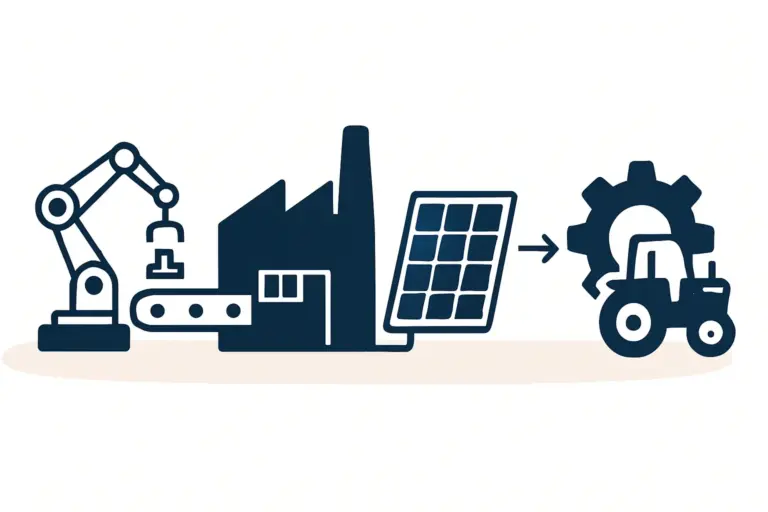
The choice of solar panel manufacturing equipment is directly tied to the specialized BOM. For instance, a production line designed for glass-glass modules must incorporate automated handling systems to manage the increased weight and fragility compared to standard glass-foil panels.
Key equipment considerations include:
- High-Precision Stringers: Machines that solder solar cells together must be compatible with modern, more delicate cell technologies like PERC or TOPCon.
- Advanced Laminators: The lamination process, which bonds all layers of the module together, is critical. The laminator must provide precise control over temperature and pressure to ensure a void-free, durable encapsulation with materials like POE.
- Automated Electroluminescence (EL) Testers: These are essential for identifying micro-cracks and other cell defects at multiple stages of production, ensuring that only flawless modules leave the factory.
Effective factory planning arranges these specialized machines in a logical flow to maximize throughput and minimize handling errors.
Financial Outline: Investment, Costs, and Superior ROI
While the initial investment in a turnkey solar module production line for DESERT+ certified modules is higher than for a standard facility, the return on investment (ROI) is structured for long-term profitability. The higher costs stem from premium raw materials, more robust equipment, and the certification process itself.
But these costs are offset by significant financial advantages:
- Premium Pricing: DESERT+ certified modules command a higher price per watt, reflecting their superior quality and guaranteed performance.
- Lower Degradation: The modules exhibit significantly lower annual power degradation, delivering more energy over their lifespan and providing a better return for the project owner.
- Access to Top-Tier Projects: These modules are specified for large utility-scale plants, critical government infrastructure, and internationally funded projects, creating a moat against low-cost competition.
This business model shifts the focus from competing on cost to competing on lifetime value and bankability—a more sustainable position in a growing market.
The Role of Expert Guidance in a Specialized Venture
For an entrepreneur without a deep technical background in photovoltaics, navigating the complexities of desert module manufacturing can be daunting. The margin for error is small, and mistakes in equipment selection or process design can lead to costly delays and certification failure.
This is where expert guidance becomes indispensable. Partnering with consultants who have a proven track record in specialized PV technology is crucial.
The experienced European turnkey engineering team, for instance, has been deeply involved in developing and refining desert solar technology for years through premier EU provider’s turnkey projects, holding a world record for desert module efficiency set in 2019. An expert consultant like a specialized EU engineering partner offers invaluable knowledge in every phase, from initial business planning to final certification.
Guided by such expertise, a turnkey solution ensures the factory is designed correctly from day one, equipped with the right machinery, and operated with optimized processes to meet the stringent requirements of DESERT+ certification.

Frequently Asked Questions (FAQ)
What is the typical investment for a 50 MW DESERT+ certified factory?
A 50 MW turnkey line capable of producing high-quality, certifiable modules typically requires an investment of €5 to €8 million, depending on the level of automation, equipment choices, and facility requirements. This figure includes machinery, installation, training, and initial technology transfer.
How long does it take to achieve DESERT+ certification?
The certification process itself can take 6 to 12 months because it involves rigorous, long-duration testing at an accredited laboratory. This timeline should be factored into the overall business plan, as production for certification must begin well ahead of commercial sales.
Are these modules only suitable for desert regions?
While engineered for desert conditions, these are fundamentally high-quality, durable modules suitable for any harsh environment. Their robust construction makes them ideal for tropical climates with high heat and humidity or coastal areas with salt mist, although their primary economic advantage is in high-irradiance desert zones.
Why is Ethiopia a prime market for this type of factory?
Ethiopia combines several key factors: immense, untapped solar resources; a large and growing energy deficit; government commitment to expanding electricity access; and climatic conditions that demand durable solar technology. Establishing a local factory for specialized modules directly addresses these market needs, creating a strong foundation for a successful business.
Conclusion: Building a Future-Proof Energy Business
Entering the solar manufacturing industry in a developing market isn’t about replicating existing models from other parts of the world. It’s about identifying and solving a specific, regional challenge.
For investors in the Horn of Africa and other arid regions, the most resilient and profitable business model is one built on quality, durability, and certified performance.
By establishing a factory for DESERT+ certified modules, an entrepreneur can move beyond the competitive pressures of the commodity market. They can build a business that becomes a cornerstone of the region’s energy infrastructure, known for delivering a product that withstands the test of time. This approach not only ensures commercial success but also contributes meaningfully to a stable and sustainable energy future.
Download the DESERT+ Solar Factory Investment Case Study (PDF)
Author: This case study was prepared by the
turnkey solar module production specialists at J.V.G. Technology GmbH
It is based on real data and consulting experience from J.v.G. projects
worldwide, including installations ranging from 20 MW to 500 MW capacity.