An entrepreneur looking at Ethiopia sees immense potential. With some of the highest solar irradiation levels in Africa, the country is a prime location for solar energy projects. A critical factor, however, is often overlooked in the initial business plan: the environment itself. Standard solar modules, designed for sea-level conditions, can underperform and degrade prematurely in Ethiopia’s unique high-altitude climate.
This reality presents not a barrier, but an opportunity for sophisticated manufacturing. By understanding and adapting to these specific environmental stressors, a new solar module factory can produce a superior product tailored to the local market and build a reputation for quality and durability. This article explores the technical challenges of Ethiopia’s environment and outlines the engineering solutions needed to overcome them.
The Unique Environmental Profile of Ethiopia
Ethiopia’s geography creates a “high-stress” environment for photovoltaic (PV) technology. The two primary factors are:
-
High Altitude: Much of the country, including the capital Addis Ababa, sits on a plateau over 2,000 meters above sea level.
-
High Solar Irradiance: The country receives a significant amount of solar radiation, which is a key resource for energy production but also a source of thermal and radiation stress.
These two conditions combine to create challenges that standard module designs are not always equipped to handle over a 25-year lifespan. A successful local manufacturer must account for these factors from the outset.
Key Technical Challenges for Standard Solar Modules
While high irradiance boosts potential energy output, it also amplifies the negative effects of the high-altitude environment. Manufacturers must engineer their products to withstand three primary challenges.
Challenge 1: Increased Operating Temperatures
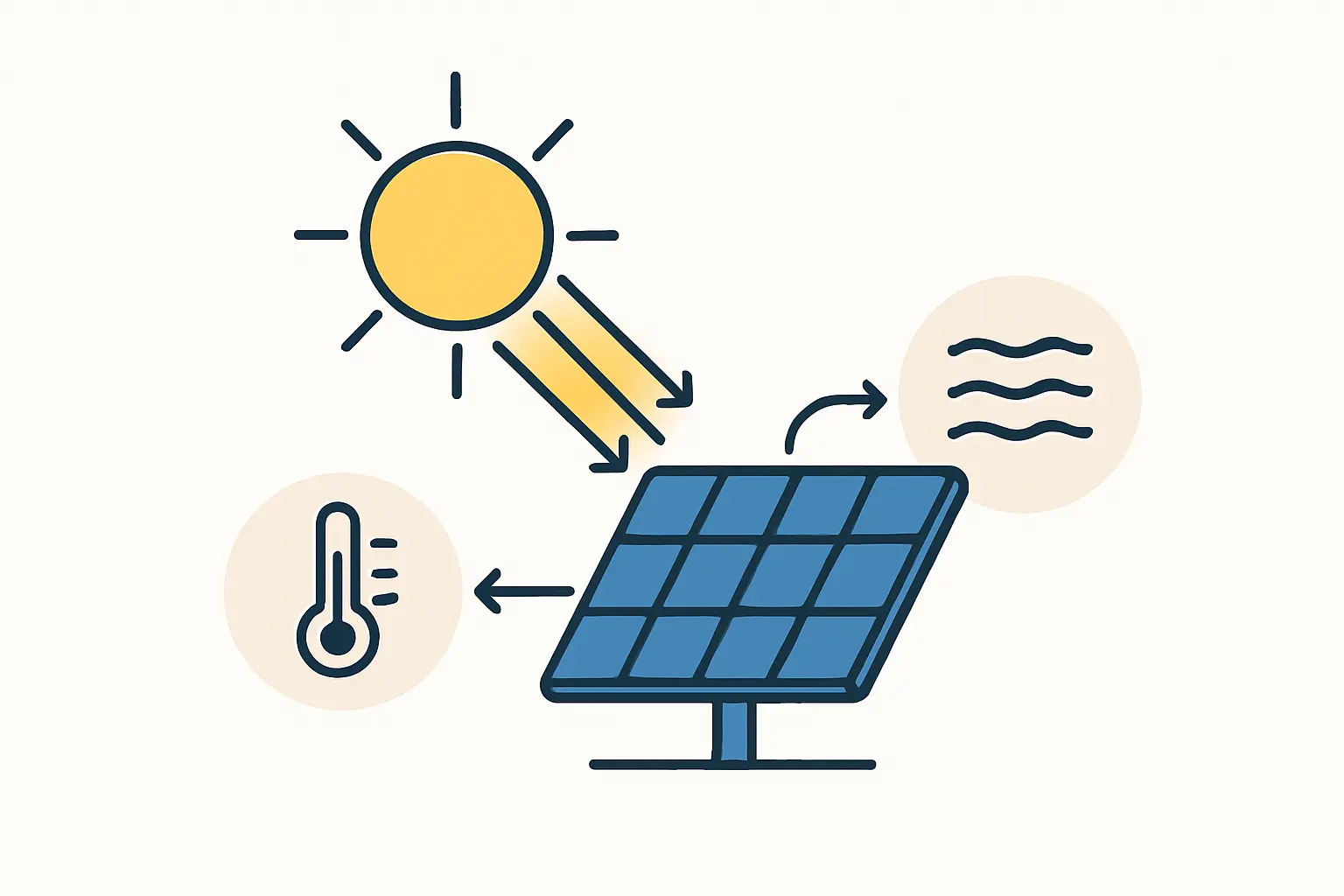
Solar cells are less efficient as they get hotter. At high altitudes, the less dense air is not as effective at cooling the modules through natural convection. This causes them to run hotter than they would at sea level under the same amount of sunlight.
This effect is significant. For every degree Celsius above the standard test condition of 25°C, a solar module loses a percentage of its power output—a value defined by its “temperature coefficient.” A module that runs consistently hotter will generate less energy and experience accelerated aging of its components, directly impacting the financial viability of a solar project.
Challenge 2: Accelerated Material Degradation from UV Radiation
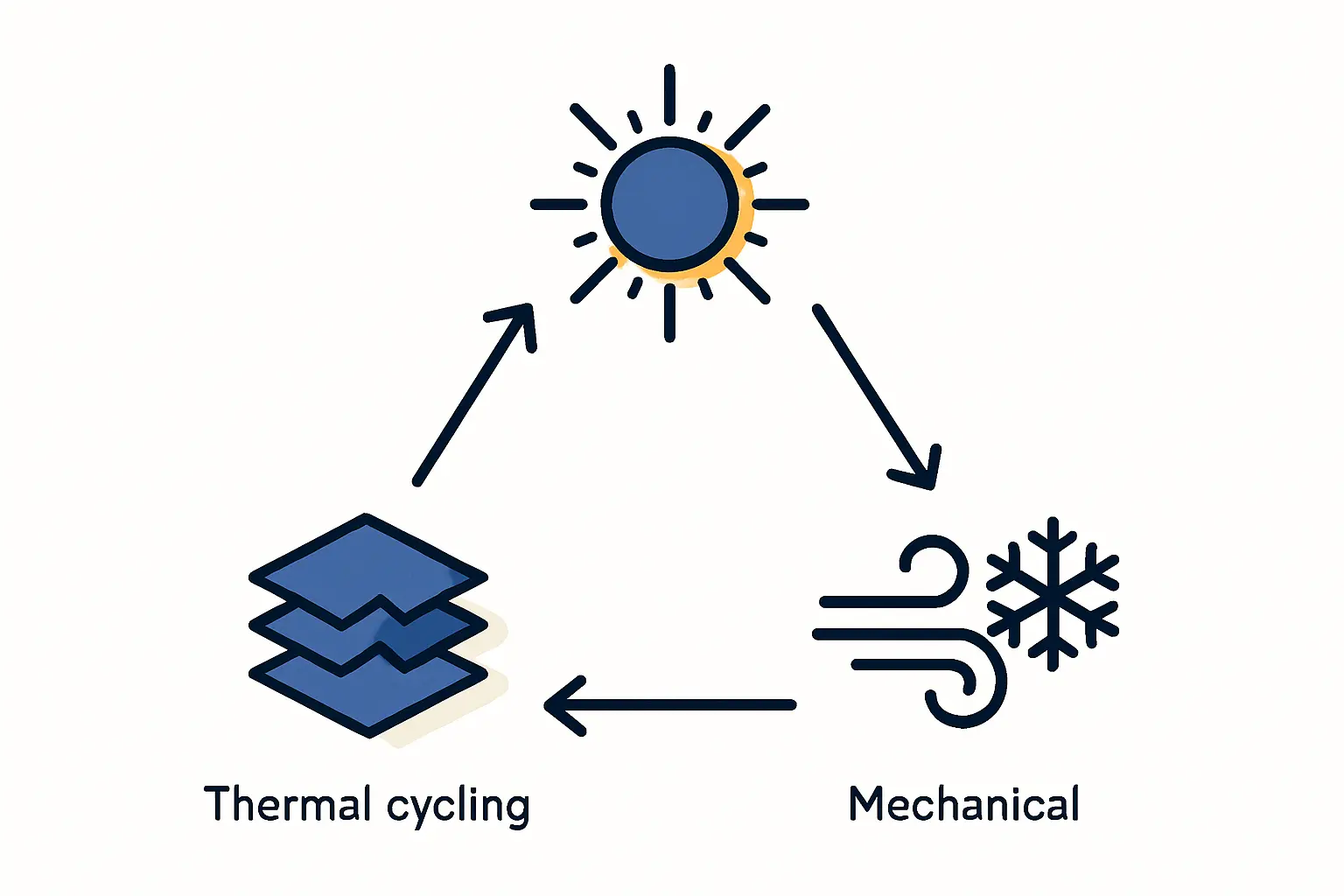
Because there is less atmosphere at higher altitudes to filter ultraviolet (UV) radiation, modules are exposed to more intense levels. This radiation attacks the polymer materials used in a solar module, such as the backsheet and the encapsulant (typically EVA – Ethylene Vinyl Acetate).
Over time, this can lead to:
-
Yellowing or browning of the encapsulant, which reduces the amount of light that reaches the solar cells.
-
Backsheet cracking, where the protective layer becomes brittle, exposing internal components to moisture and creating serious safety and reliability risks.
-
Delamination, where the bond between the module’s layers weakens, allowing moisture ingress that leads to corrosion and power loss.
Challenge 3: Electrical Performance and Safety Risks
High operating temperatures and intense radiation can accelerate degradation mechanisms like Potential Induced Degradation (PID). Without the right material selection and cell technology, PID can cause significant power loss in the early years of a module’s life.
Furthermore, components like junction boxes and connectors must be designed for the lower dielectric strength of thinner air at high altitudes to ensure long-term electrical insulation and safety.
Engineering Solutions for a High-Performance Ethiopian Module
Addressing these challenges is fundamental to a successful solar module manufacturing venture in the region. The solutions lie in a meticulous selection of the Bill of Materials (BOM) and intelligent module design.
Selecting the Right Bill of Materials (BOM)
The choice of materials is the first line of defense against premature degradation.
-
Encapsulant: While standard EVA is common, POE (Polyolefin Elastomer) encapsulants offer superior resistance to UV radiation and have inherent properties that prevent PID. For a high-altitude environment, POE is often a more robust long-term choice.
-
Backsheet: Instead of a standard PET-based backsheet, a multi-layered structure using PVDF (Polyvinylidene Fluoride) for the outer layer provides excellent UV resistance, preventing the cracking and degradation seen in lesser materials.
-
Glass and Coatings: Using high-transmission, anti-reflective (AR) coated glass is standard. However, ensuring the AR coating itself is durable and resistant to UV degradation is critical for maintaining long-term performance.
Optimizing Cell Technology and Module Design
Beyond materials, the core technology and overall design play a crucial role.
-
Low Temperature Coefficient: Selecting solar cells with a superior (lower) temperature coefficient is vital. Technologies like Heterojunction (HJT) or TOPCon typically perform better in hot conditions than standard PERC cells, losing less power as temperatures rise.
-
Heat Dissipation: Module design can be optimized for better airflow. A well-designed frame, for example, can promote convection, and strategic placement of the junction box can help dissipate heat more effectively.
-
PID-Resistant Cells: Using cells that are inherently resistant to PID, combined with PID-resistant encapsulants, provides multiple layers of protection against this damaging effect.
The Business Case for Specialized Manufacturing
Producing a module specifically designed for Ethiopia’s conditions is a powerful market differentiator. While it may slightly increase the upfront cost, the long-term benefits are substantial. These custom-engineered modules offer:
-
Higher Lifetime Energy Yield: Better performance at high temperatures translates directly into more kilowatt-hours produced over the project’s life.
-
Greater Durability and Lower Risk: Reduced degradation means fewer warranty claims and a more reliable product, enhancing the manufacturer’s brand reputation.
-
Increased Bankability: Project developers and financiers are more likely to trust a product verifiably designed for the local environment, making it easier to secure financing for large-scale projects.
Experience from J.v.G. Technology turnkey projects shows that incorporating this level of environmental analysis is standard practice when planning a turnkey solar production line. It ensures the final product is not just compliant but optimized for its intended market, securing a long-term competitive advantage.
Frequently Asked Questions (FAQ)
What exactly is solar irradiance?
Solar irradiance is the measure of power per unit area received from the sun in the form of electromagnetic radiation. It is typically measured in watts per square meter (W/m²). Higher irradiance means more solar energy is available for conversion into electricity.
Why does altitude directly affect a solar panel’s temperature?
At higher altitudes, the air is less dense. This “thinner” air is less effective at transferring heat away from the surface of the solar module through natural convection. As a result, the module cannot cool itself as efficiently, and its operating temperature increases.
Are modules designed for high altitudes significantly more expensive to manufacture?
The cost increase is moderate and should be viewed as a long-term investment, driven primarily by the use of higher-performance materials like POE encapsulants or PVDF backsheets. This marginal extra cost is often offset by the module’s higher energy yield and increased lifespan, leading to a lower Levelized Cost of Energy (LCOE).
Can I just use standard modules in Ethiopia?
Standard modules can be used, but they will likely underperform and degrade faster than modules specifically designed for the environment. This can lead to lower-than-expected energy production, higher maintenance costs, and potential failures within the warranty period, ultimately damaging the project’s return on investment and the manufacturer’s reputation.
What is a “temperature coefficient”?
The temperature coefficient of a solar module indicates how much its power output will decrease for every degree Celsius increase in cell temperature above 25°C. It is expressed as a percentage per degree Celsius (%/°C). A lower (less negative) number is better, as it signifies that the module’s performance is more stable at higher temperatures.
Conclusion and Next Steps
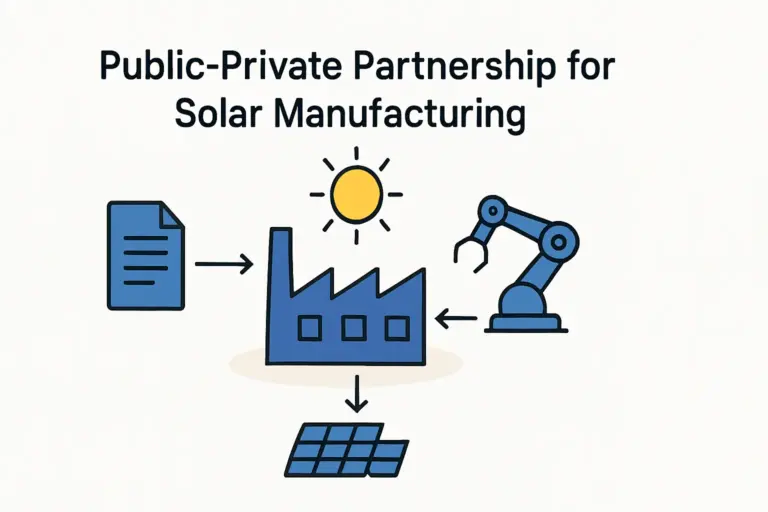
The solar manufacturing opportunity in Ethiopia is clear, but success requires a nuanced, engineering-led approach. Simply assembling standard components is not enough. True market leadership will come from producing modules that are demonstrably superior because they are designed with a deep understanding of the local high-altitude and high-irradiance conditions.
By investing in the right materials, technologies, and design principles, entrepreneurs can build a manufacturing operation that delivers durable, high-performance products. This approach establishes a trusted brand and contributes effectively to the region’s energy future.