An entrepreneur in Dubai, successful in logistics, notices a recurring theme in global trade reports: Europe’s determined push for energy independence. He follows news of France’s “Choose France” initiative and its ambitious renewable energy targets. The question forms in his mind: could this be the right moment to diversify into manufacturing by establishing a solar module factory in a core European market?
This scenario is increasingly common, as business leaders outside the EU see the strategic value of localizing production within the bloc.
However, entering a highly regulated market like France requires more than capital and ambition; it demands a clear understanding of the legal landscape. For a non-EU investor, navigating corporate structures and foreign investment controls can be complex.
This guide outlines the essential legal and regulatory steps for establishing a foreign-owned solar manufacturing subsidiary in France. It covers the primary choices for legal entities and the foreign investment approval process, helping business professionals make sound preliminary decisions.
Why France Presents a Strategic Opportunity for Solar Manufacturing
France’s commitment to re-industrialisation, particularly within the green energy sector, has created a favourable environment for new manufacturing ventures. This commitment isn’t just a policy statement; it’s backed by tangible initiatives and market dynamics that directly benefit solar producers.
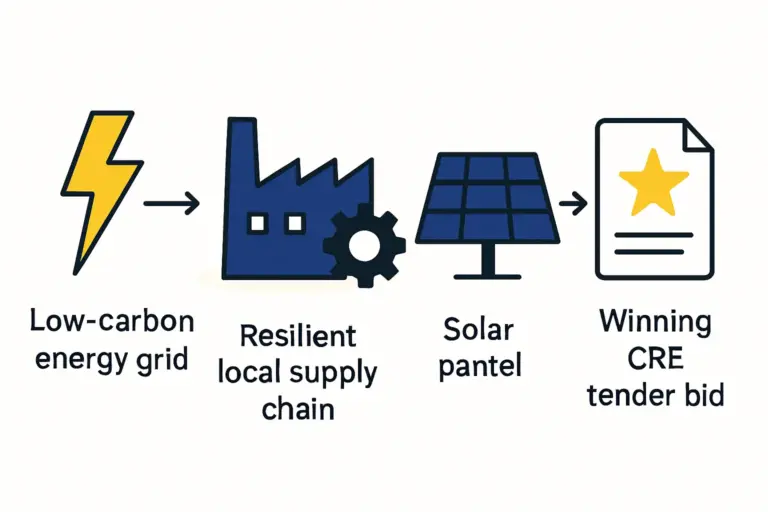
Under the EU’s Renewable Energy Directive (RED II), member states are encouraged to strengthen local supply chains to reduce dependence on imports. France has taken a leading role, often incorporating a “carbon footprint” criterion into its national solar project tenders. This practice gives locally produced modules a significant advantage, as their transportation emissions are inherently lower than those shipped from Asia.
The “Choose France” initiative also helps streamline the process for foreign investors, offering a stable and supportive gateway to the broader European single market. For an entrepreneur planning a new venture, these factors transform France from just another potential location into a strategic entry point with built-in market advantages.
Choosing the Right Legal Structure for Your French Subsidiary
The first step is selecting the right legal entity for the French subsidiary. This choice impacts governance, liability, capital requirements, and administrative flexibility. For most foreign investors, the decision comes down to two primary options: the SAS and the SA.
The SAS (Société par Actions Simplifiée): The Preferred Choice for Foreign Investors
The Société par Actions Simplifiée (SAS) is a simplified joint-stock company and, according to Business France, the overwhelmingly popular structure for foreign subsidiaries. Its appeal lies in its remarkable flexibility and minimal administrative burden.
-
Governance Flexibility: Founders have extensive freedom to define the company’s management and operational rules in the articles of association (statuts). This allows a parent company to maintain tight control over its subsidiary’s operations.
-
Minimal Capital Requirement: An SAS can be legally formed with just €1 of share capital, making it highly accessible. While a solar manufacturing operation will naturally require substantial funding, this low legal threshold simplifies the initial incorporation process.
-
Simplified Management: It can be managed by a single president (an individual or another company) without needing a formal board of directors. This is ideal for a wholly-owned subsidiary where quick, clear decision-making is paramount.
The SA (Société Anonyme): For Larger, More Complex Operations
The Société Anonyme (SA) is the traditional French public limited company, comparable to a German AG or a US C-Corp. It is designed for large-scale enterprises and is mandatory for companies planning to list on a stock exchange.
-
Formal Structure: The SA requires a board of directors (conseil d’administration) with at least three members. Its governance is more rigidly defined by French corporate law, offering less flexibility than the SAS.
-
Higher Capital Requirement: A minimum share capital of €37,000 is required for incorporation.
-
When to Consider an SA: Large multinational corporations or ventures planning to raise public capital through a stock market listing typically choose this structure. For a new manufacturing subsidiary, it often introduces unnecessary complexity.
Key Considerations for Your Decision
For a non-EU entrepreneur establishing a first-time manufacturing presence, the SAS is almost always the recommended starting point. Its flexibility allows the business to adapt as it grows, and its simple governance structure is well-suited to a parent-subsidiary model.
The decision should be based on the project’s immediate needs and long-term vision, but the adaptability of the SAS makes it the practical default choice.
Navigating Foreign Investment Regulations in France
Since energy production is considered a strategic sector, any non-EU investment in this area is subject to a foreign direct investment (FDI) screening process. This review is a standard procedure designed to protect national interests, not a barrier meant to block legitimate business ventures. Based on experience from numerous J.v.G. turnkey projects, a well-prepared application with a clear business case is generally viewed favourably.
The screening is conducted by the French Treasury (Direction Générale du Trésor). The process ensures that foreign control over critical infrastructure aligns with France’s economic and security objectives.
The Approval Process Step-by-Step
-
Submission of a Detailed Investment Plan: Before finalizing the acquisition or incorporation, the investor must submit a formal request to the French Treasury. This application must detail the investment’s nature, the investor’s background, and the business’s objectives. A comprehensive and professional business plan for solar manufacturing is the cornerstone of this submission.
-
Official Review Period: Once the application is deemed complete, the Treasury has 30 days to conduct its review. If further information or analysis is needed, this period may be extended by an additional 45 days.
-
Potential Outcomes: The review concludes with one of three outcomes:
-
Unconditional Approval: The investment can proceed as planned.
-
Approval with Conditions: The investment is approved, subject to certain binding commitments from the investor (e.g., maintaining production in France for a specific period or protecting sensitive technology).
-
Rejection: This is rare for well-structured industrial projects that align with France’s economic goals.
-
Navigating this process efficiently requires careful preparation and often the assistance of local legal counsel specializing in FDI regulations.
Practical Steps for Incorporation and Operation
Once the legal structure is chosen and FDI approval is anticipated, the next practical steps bring the subsidiary to life.
Securing a Physical Location
France has numerous industrial zones (pôles de compétitivité) that offer excellent infrastructure, skilled labour pools, and, in some cases, regional incentives for new businesses. Selecting the right site is a critical decision that impacts logistics, operational costs, and access to talent. Thorough due diligence on potential locations is essential.
Opening a Business Bank Account and Capital Deposit
A French business bank account is required to deposit the share capital. The bank will issue a certificate of deposit (certificat de dépôt des fonds), a mandatory document for the company registration process. This step officially validates the initial investment.
Registering the Company
The registration process has been significantly simplified through the Guichet unique, an online portal managed by the National Institute of Industrial Property (INPI). This single point of contact handles all formalities with the trade and companies register (Registre du Commerce et des Sociétés), the tax authorities, and social security bodies. Upon successful registration, the company receives its official registration number (SIREN) and an extract of the register (extrait Kbis), which serves as its official identity document.
Staffing and Operations
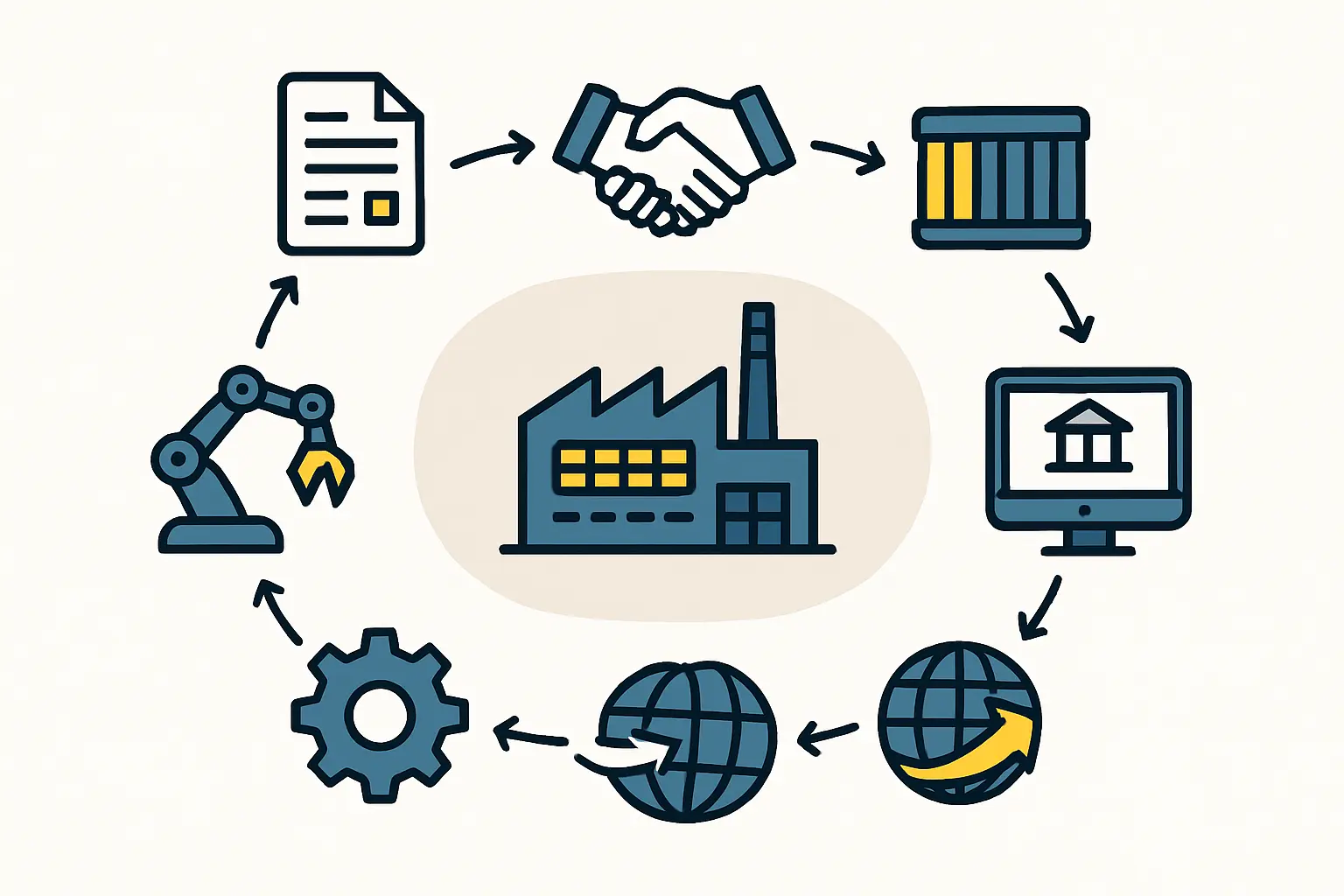
With the legal entity established, the focus shifts to operational readiness. This includes hiring key personnel, navigating French labour laws, and securing the necessary manufacturing equipment. Planning these elements in parallel is crucial for a timely start to production.
Frequently Asked Questions (FAQ)
What is the minimum investment required to start an SAS in France?
Legally, an SAS can be started with just €1. For a solar manufacturing plant, however, the actual initial capital investment will be substantial, covering the facility, equipment, and operational runway. The legal minimum is merely a formality for incorporation.
Do I need a French national as a director for my subsidiary?
No, there is no legal requirement for the president or directors of an SAS to be French nationals or residents of France. This makes it straightforward for a foreign parent company to appoint its own trusted personnel.
How long does the entire incorporation process typically take?
Excluding the FDI approval timeline, the technical process of incorporating an SAS—from drafting the articles to receiving the Kbis extract—can often be completed in a few weeks with proper preparation. The FDI screening adds approximately one to three months to this pre-incorporation timeline.
Are there specific tax incentives for solar manufacturers in France?
France offers several attractive incentives, including a significant R&D tax credit (crédit d’impôt recherche), which can be highly beneficial for manufacturers developing new PV technologies. Regional and local authorities may also offer grants or tax exemptions for new industrial projects that create jobs.
Can an external consultant assist with navigating these legal requirements?
Absolutely. Engaging consultants experienced in setting up turnkey factories can be invaluable. For instance, pvknowhow.com provides structured guidance on the entire process, from business planning to operational setup, helping investors avoid the common pitfalls of entering a new market.
Conclusion and Next Steps
Establishing a solar manufacturing subsidiary in France is a viable and strategic move for non-EU entrepreneurs looking to enter the European market. The French government’s supportive stance, combined with the flexible SAS legal structure, creates a clear path for investment.
The key to success lies in meticulous planning. The process should be viewed not as a series of isolated legal tasks but as an integrated project. While the regulatory steps—particularly FDI screening—require careful attention, they are manageable hurdles for a well-prepared investor.
Understanding this legal framework is the first step. The next phase involves developing a detailed financial model, performing a thorough market analysis, and creating a technical plan for your production line. A strong foundation of legal and regulatory clarity will support every subsequent decision in launching a successful solar manufacturing operation in Europe.