For an entrepreneur considering the solar manufacturing sector, the leap from a compelling idea to a tangible business plan hinges on a realistic financial model. This reality holds particularly true when exploring opportunities in unique markets like Grenada.
With its ambitious goal of generating 90% of its energy from renewable sources by 2030, the “Spice Isle” presents a strategic opening for local manufacturing. This article breaks down the high-level capital expenditure (CapEx) for establishing a 20-megawatt (MW) solar module production facility in Grenada. It provides a preliminary guide for investors, outlining the core financial components needed to turn vision into operational reality in a Caribbean Small Island Developing State (SIDS).
Understanding the Context: Grenada’s Economic and Energy Landscape
Before diving into specific costs, it’s essential to understand the strategic environment. Grenada’s National Sustainable Development Plan 2020-2035 explicitly prioritizes energy security and a transition away from imported fossil fuels. For an investor, this policy alignment is a significant de-risking factor.
A local solar panel factory directly supports these national objectives by:
-
Creating Skilled Employment: The manufacturing sector contributes to economic diversification and offers technical roles for the local workforce.
-
Reducing Import Dependency: Producing modules locally helps insulate the nation’s energy infrastructure from global supply chain volatility and shipping costs.
-
Enhancing Energy Resilience: Locally available panels can accelerate the deployment of solar projects, a critical step for an island nation vulnerable to climate events and energy price fluctuations.
This supportive national framework suggests that government bodies, such as Invest Grenada, may offer incentives or streamlined processes for projects that advance these goals.
Core Capital Expenditure (CapEx) for a 20 MW Solar Factory
A solar factory’s initial investment falls into several key categories. The following figures are illustrative estimates, based on projects of a similar scale and intended for initial planning purposes.
Production Equipment: The Heart of the Operation
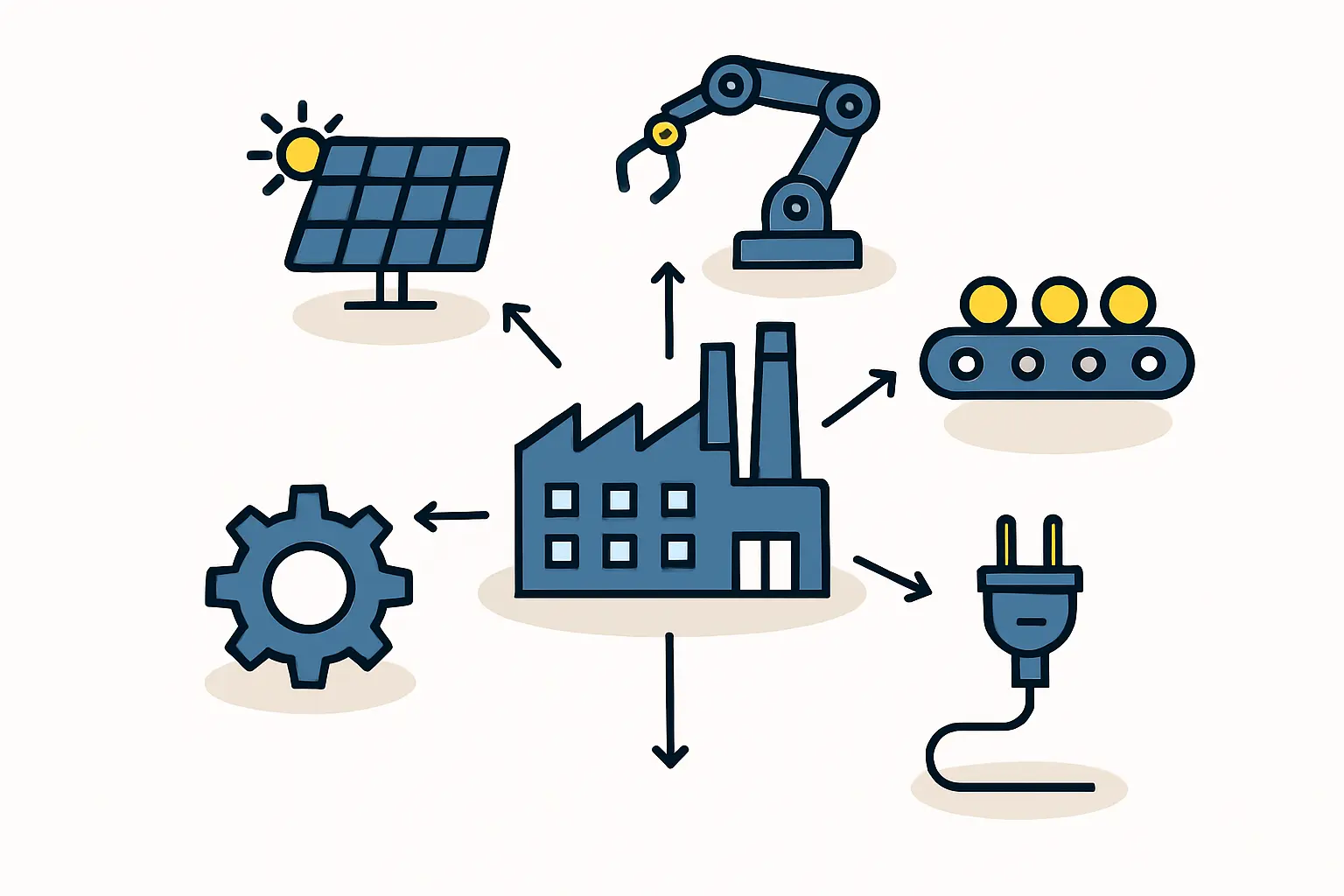
The largest single investment is the machinery itself. For a 20 MW annual capacity, a semi-automated production line offers an effective balance between capital cost and operational efficiency. This investment typically covers a complete set of solar panel manufacturing machines, including the cell stringer, bussing stations, layup station, laminator, framing machine, and solar simulator for testing.
Estimated Cost: USD 1,200,000 – 1,800,000
This range depends on the level of automation, the manufacturer’s reputation, and the specific technology chosen (e.g., for producing PERC or TOPCon modules).
Logistics and Shipping: From Port to Factory Floor
Shipping the machinery, typically manufactured in Europe or Asia, to Grenada requires significant logistical planning. The equipment for a 20 MW line usually requires four to six standard 40-foot shipping containers.
Estimated Cost: USD 40,000 – 70,000
This cost is highly variable and subject to global shipping rates. The budget must also cover insurance, customs brokerage, and local transportation from the port in St. George’s to the final factory location. Investors will also need to investigate Grenada’s import duty structure. As a member of CARICOM, the Common External Tariff (CET) may apply, but provisions often exist for duty exemptions on equipment for renewable energy projects. This is a critical point for due diligence with local authorities.
Infrastructure and Facility Setup
A solar production line requires a carefully controlled environment. The ideal building would provide 1,500 to 2,500 square meters of floor space with high ceilings. Beyond the basic structure, however, specialized infrastructure is critical to ensure product quality and operational safety.
Key retrofitting costs include:
-
Epoxy Flooring: To create a dust-free, anti-static environment.
-
Climate Control (HVAC): Essential for maintaining stable temperature and humidity in Grenada’s tropical climate, which is critical for the lamination process.
-
Compressed Air System: Required to power various pneumatic tools on the line.
-
Electrical Upgrades: To support the heavy power draw of machines like the laminator.
Estimated Cost: USD 150,000 – 300,000
This estimate depends heavily on the condition of the selected building. A new, purpose-built facility would represent a higher capital cost.
Factoring in Local Operational Costs: A Grenadian Perspective
Beyond hard assets, the initial budget must account for the costs of bringing the factory online.
Initial Labor and Training
A 20 MW semi-automated line typically requires a workforce of 25 to 30 people, including operators, technicians, and quality control staff. Based on Grenada’s average salary data (approximately EC$2,500 or USD 925 per month), this is a significant operational consideration.
The most critical initial labor cost, however, is training. Standard turnkey projects managed by firms like J.v.G. Technology GmbH include comprehensive on-site training by experienced engineers. This knowledge transfer is vital, ensuring the local team can operate the machinery to international standards and troubleshoot effectively from day one.
Installation, Commissioning, and Quality Assurance
Installing, calibrating, and commissioning the production line requires specialized expertise. Equipment suppliers typically provide this service through their own engineering teams.
Estimated Cost: USD 50,000 – 90,000
This budget covers professional fees, travel, and accommodation for the engineering team for several weeks. Their work is essential to establishing rigorous solar panel quality control protocols and ensuring the line produces certified, bankable modules.
Sample CapEx Summary for a 20 MW Grenada Facility
Combining these elements provides a high-level estimate of the initial capital expenditure.
- Production Equipment: USD 1,200,000 – 1,800,000
- Shipping & Logistics: USD 40,000 – 70,000
- Facility Retrofitting: USD 150,000 – 300,000
- Installation & Training: USD 50,000 – 90,000
- Contingency (10%): USD 144,000 – 226,000
Estimated Total Initial CapEx: USD 1,584,000 – 2,486,000
Disclaimer: This summary excludes the cost of purchasing or leasing the factory building, as well as the working capital required for raw materials, initial payroll, and other pre-production expenses.
Frequently Asked Questions (FAQ)
What is the typical timeline to get a 20 MW factory operational?
From the date of ordering the equipment, a realistic timeline is 9 to 12 months. This includes approximately 4-6 months for machine manufacturing, 2 months for shipping and customs clearance, and 2-3 months for installation, commissioning, and staff training.
Are there government incentives for such a project in Grenada?
Given the project’s alignment with national energy policy, incentives are highly probable. They could include import duty waivers on machinery, tax holidays, or streamlined approvals. Direct engagement with Invest Grenada is the recommended first step to explore these opportunities.
How much working capital is needed beyond the initial CapEx?
A prudent business plan should allocate sufficient working capital to cover the first 3-6 months of operation. This includes the cost of raw materials for the first production batches (e.g., solar cells, glass, EVA, backsheet, aluminum frames), payroll, and utilities. A common guideline is to budget 15-25% of the total CapEx for initial working capital.
Can this factory serve markets beyond Grenada?
Absolutely. As a member of the CARICOM Single Market and Economy (CSME), a factory in Grenada is well-positioned to export duty-free to other member states. This presents an opportunity to become a regional manufacturing hub, serving nearby islands and reducing their reliance on modules imported from overseas.
Conclusion and Next Steps
Establishing a solar module factory in Grenada is a significant undertaking, but one that aligns with powerful national and regional trends toward renewable energy. The initial capital investment is substantial, yet the potential to build a profitable enterprise that contributes to the country’s sustainable development is clear.
This high-level breakdown serves as your starting point. The next logical step for a serious investor is to develop a detailed feasibility study and a comprehensive business plan. This involves obtaining firm quotes for equipment, conducting on-the-ground research into local building and labor costs, and opening a dialogue with Grenadian investment authorities. Resources like the educational materials and courses offered by pvknowhow.com can provide a clear roadmap for navigating these complex early stages with confidence.