When an entrepreneur envisions launching a solar module factory, the focus naturally gravitates toward machinery, financing, and facility planning. Yet the most critical component of a successful manufacturing operation is the one requiring the most careful cultivation: its people. In a market like Grenada, with its service-oriented economy, building a technically proficient workforce is not a barrier but a strategic opportunity to pioneer a new industry and harness local potential.
This article provides a practical framework for recruiting and training a skilled team for solar module production in Grenada. It examines the local labor market and potential educational partnerships, presenting strategies to develop a competent, quality-focused manufacturing culture from the ground up.
Understanding the Grenadian Labor Landscape
An effective recruitment strategy starts with understanding the local environment. Grenada’s labor force includes approximately 50,000 individuals. With an unemployment rate around 12.5% and youth unemployment over 20%, there is a clear pool of candidates seeking stable employment.
The economy is predominantly based on services like tourism and education, which means the industrial manufacturing base is limited. For a new solar enterprise, this presents a unique context:
-
A Motivated Workforce: There is a strong appetite for new, sustainable employment opportunities, particularly among the younger demographic.
-
A “Blank Slate”: With little pre-existing manufacturing culture, a company has the chance to instill best practices in quality control and process discipline from day one, without needing to undo established habits.
-
Alignment with National Priorities: A high-tech manufacturing facility directly addresses two key national challenges: youth unemployment and the “brain drain” of skilled talent seeking opportunities abroad. A solar factory offers a compelling reason for technical professionals to build careers at home.
Strategic Recruitment: Sourcing Your Core Team
Recruitment should be a targeted process, focusing on individuals with foundational skills and an aptitude for technical training.
Tapping into Existing Technical Talent
While Grenada may not have a deep pool of solar manufacturing experts, it has a talented workforce with transferable skills from other sectors. Ideal candidates can be found among individuals with experience in:
- Electrical installation and maintenance
- Mechanical engineering and repair
- Construction and skilled trades
- General technical and vocational fields
These professionals already have a baseline understanding of technical drawings, tools, and safety protocols—a foundation that can be expanded with specialized training.
Partnering with Local Educational Institutions
The most sustainable strategy for long-term talent development is to form a partnership with Grenada’s primary vocational institution, T.A. Marryshow Community College (TAMCC). The college offers programs in fields directly relevant to manufacturing, such as electrical installation and mechanical engineering.
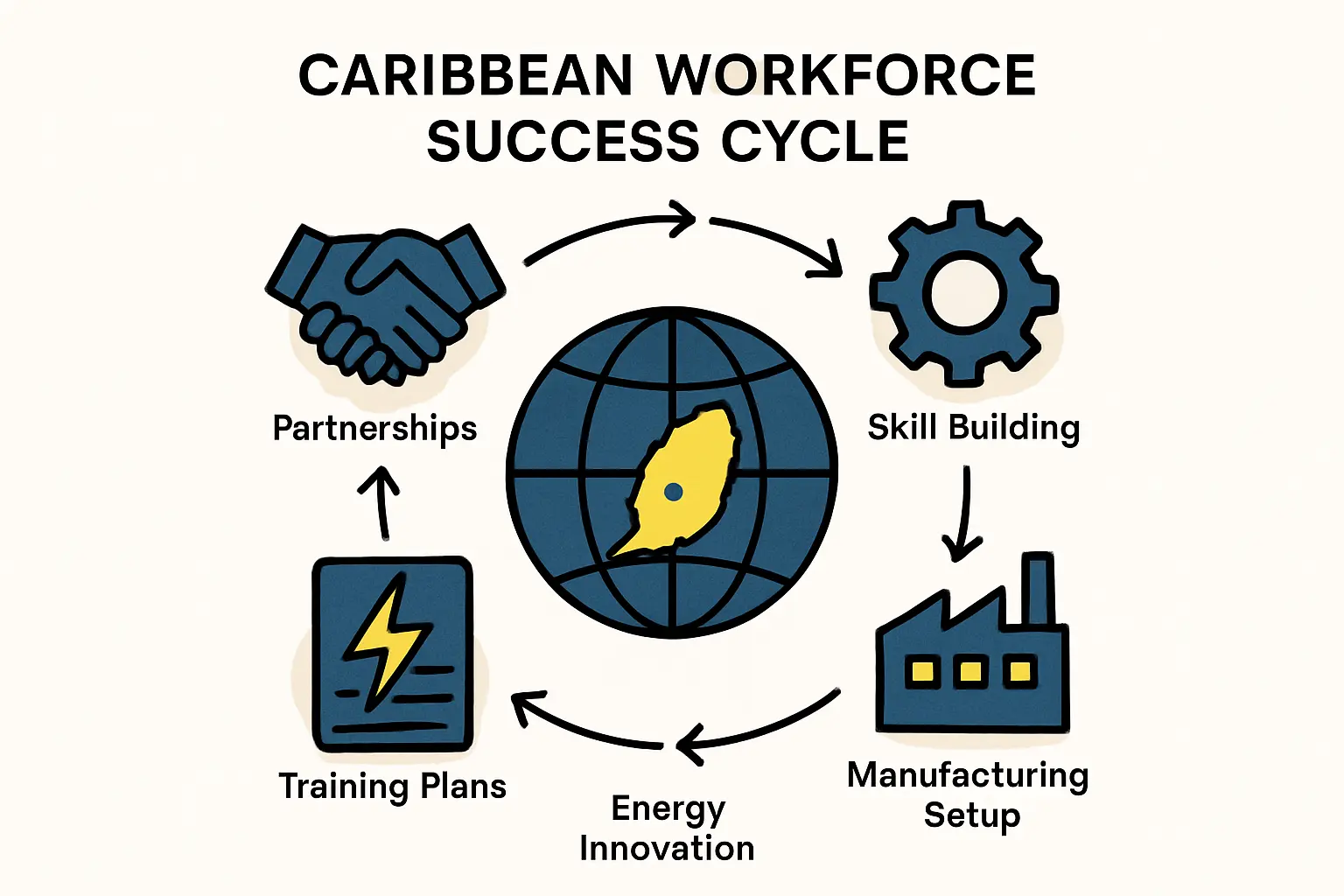
A strategic collaboration could involve:
-
Curriculum Consultation: Working with TAMCC to align aspects of their curriculum with the specific needs of solar module assembly.
-
Internship Programs: Offering hands-on factory experience to promising students, creating a direct pipeline from education to employment.
-
Guest Lecturing: Arranging for industry experts to give lectures, bridging the gap between theoretical knowledge and practical application.
This approach not only secures a steady flow of qualified entry-level candidates but also positions the company as a key contributor to national workforce development, an effort supported by regional bodies like CARICOM and the OECS.
From Recruitment to Competence: A Structured Training Program
Once a core team is recruited, a rigorous and structured training program is essential for transforming potential into performance.
The Foundation: Classroom and Hands-On Training
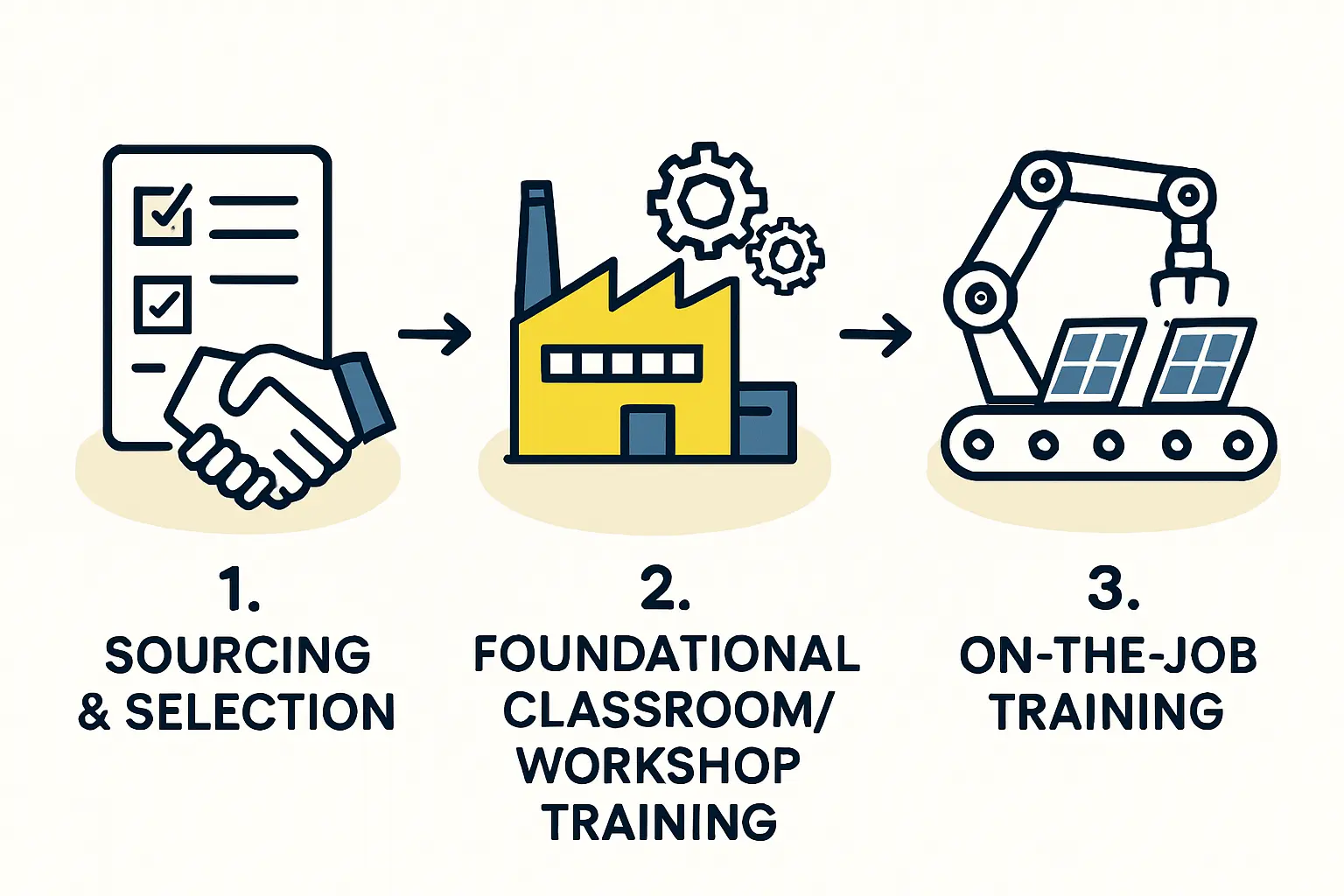
A comprehensive training program typically involves two phases. The first is classroom-based, covering the theoretical principles of photovoltaic technology, production processes, and quality standards.
The second, more critical phase is hands-on training on the factory floor. For investors implementing a turnkey production line, this training is often provided by the equipment supplier. Experience from J.v.G. turnkey projects shows that this initial, expert-led training is fundamental to establishing correct operational procedures for key machinery like laminators and stringers.
Building a Culture of Quality and Precision
Beyond operating machinery, training must focus on fostering a manufacturing mindset. This involves instilling a deep-seated culture of precision, attention to detail, and process adherence. Every operator must understand how their role impacts the final product’s quality, performance, and bankability.
Regular drills, quality checks, and continuous improvement sessions help embed these principles in daily operations, ensuring the team produces modules that meet international standards.
Leveraging Government Support and Incentives
The Grenadian government has shown support for initiatives that create sustainable jobs and build local capacity. Entrepreneurs should investigate potential incentives for companies that invest in certified training programs and workforce development. Such programs can help offset initial operational costs while demonstrating a strong commitment to the local economy.
Meeting International Standards: Why Training Matters Beyond Production
A well-trained team is the foundation for achieving essential product certifications, such as those from the IEC (International Electrotechnical Commission). These certifications are non-negotiable for selling modules in international markets or for use in large-scale domestic projects. The meticulous record-keeping, process control, and quality assurance required for certification are only possible with a disciplined and knowledgeable workforce.
Labor requirements for solar module manufacturing go beyond a simple headcount. Success depends on filling specific roles—from machine operator and quality inspector to maintenance technician—each with a defined skill set. Proper training ensures each position is filled by a competent individual.
Frequently Asked Questions (FAQ)
What are the most critical roles to fill first in a new solar factory?
The initial key hires are typically a Production Supervisor, a Lead Technician with electrical or mechanical expertise, and a dedicated Quality Control Inspector. This leadership team will be instrumental in training the rest of the production staff.
How long does it typically take to train a new production line operator?
Initial operational training for a specific machine can take four to six weeks. However, achieving full proficiency and understanding the nuances of quality control is an ongoing process that develops over several months.
Is it necessary to hire expatriate experts?
For the initial setup and training phase, it is common to bring in one or two expatriate experts. Their role is to establish production processes, train the local management and supervisory team, and oversee the critical ramp-up period before completing the knowledge transfer.
What non-technical skills are important for the team?
Alongside technical competence, soft skills are vital. These include strong communication, a collaborative mindset, disciplined problem-solving, and an unwavering commitment to workplace safety protocols.
Your Path Forward
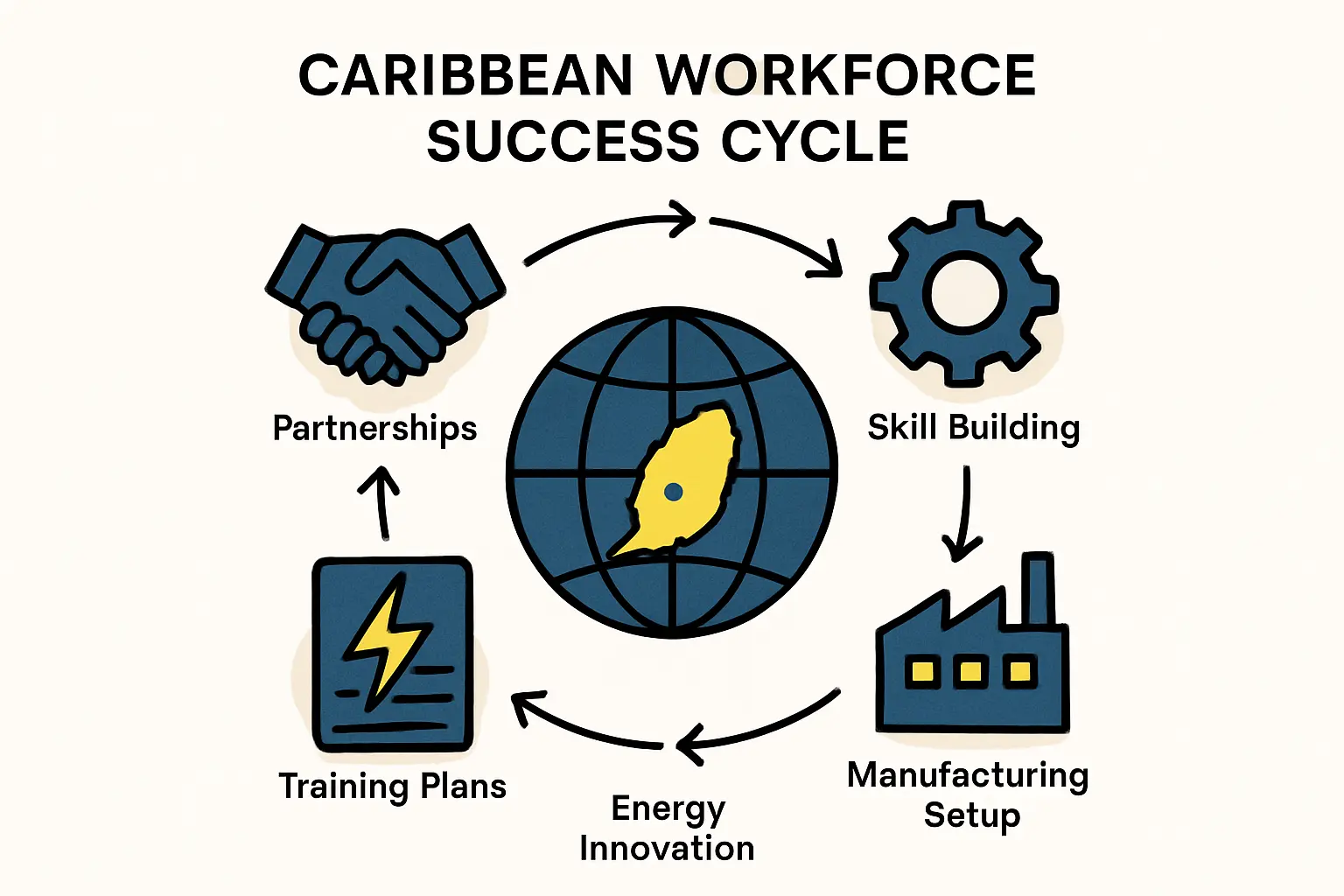
Establishing a solar module factory in Grenada is a venture with immense potential to contribute to the nation’s economic and energy independence. While the machinery is the hardware, a well-trained, motivated local workforce is the operating system that drives success. By focusing on strategic partnerships with institutions like TAMCC, implementing a rigorous training regimen, and building a culture of quality, an entrepreneur can create a world-class manufacturing team.
Understanding the workforce component is a crucial step in your planning. Your logical next step is to explore the complete operational framework, from facility requirements to the supply chain, to build a comprehensive business plan.