An advanced production line is only as effective as the team that operates it. For entrepreneurs considering Guatemala for a new solar module factory, the question of labor is paramount. While the country offers a compelling demographic and economic profile, the specific skills required for photovoltaic manufacturing are not yet widespread.
This reality isn’t a barrier, but an opportunity for strategic workforce development. A common misconception is that companies must find pre-existing solar experts. The truth, based on decades of experience establishing turnkey factories globally, is that the most successful ventures build their expertise from the ground up. This article outlines a practical framework for assessing, recruiting, and training a skilled local workforce in Guatemala to turn potential into performance.
Understanding the Guatemalan Labor Landscape: Potential and Realities
Building a successful team begins with understanding the environment. Guatemala offers a unique combination of factors beneficial to a new manufacturing enterprise.
According to data from the World Bank and Guatemala’s National Statistics Institute (INE), the country has the largest economy in Central America and one of the youngest populations in Latin America. With nearly half its population under the age of 24, Guatemala has a vast pool of potential workers entering the labor market. This demographic dividend is a significant asset for a growing industry.
However, it is crucial to have a clear-eyed view of the educational context. Guatemala has a growing urban and industrial base, particularly in textiles and light manufacturing, but formal educational attainment varies. This doesn’t indicate a lack of capability; rather, it helps focus a successful training program. The key is to assess for foundational aptitudes—such as dexterity, attention to detail, and problem-solving—instead of specific prior experience.
Key Roles for a Solar Module Production Line
A typical semi-automated solar module factory with a capacity of 20-50 MW per year requires a lean, well-trained team. The primary technical roles to fill include:
-
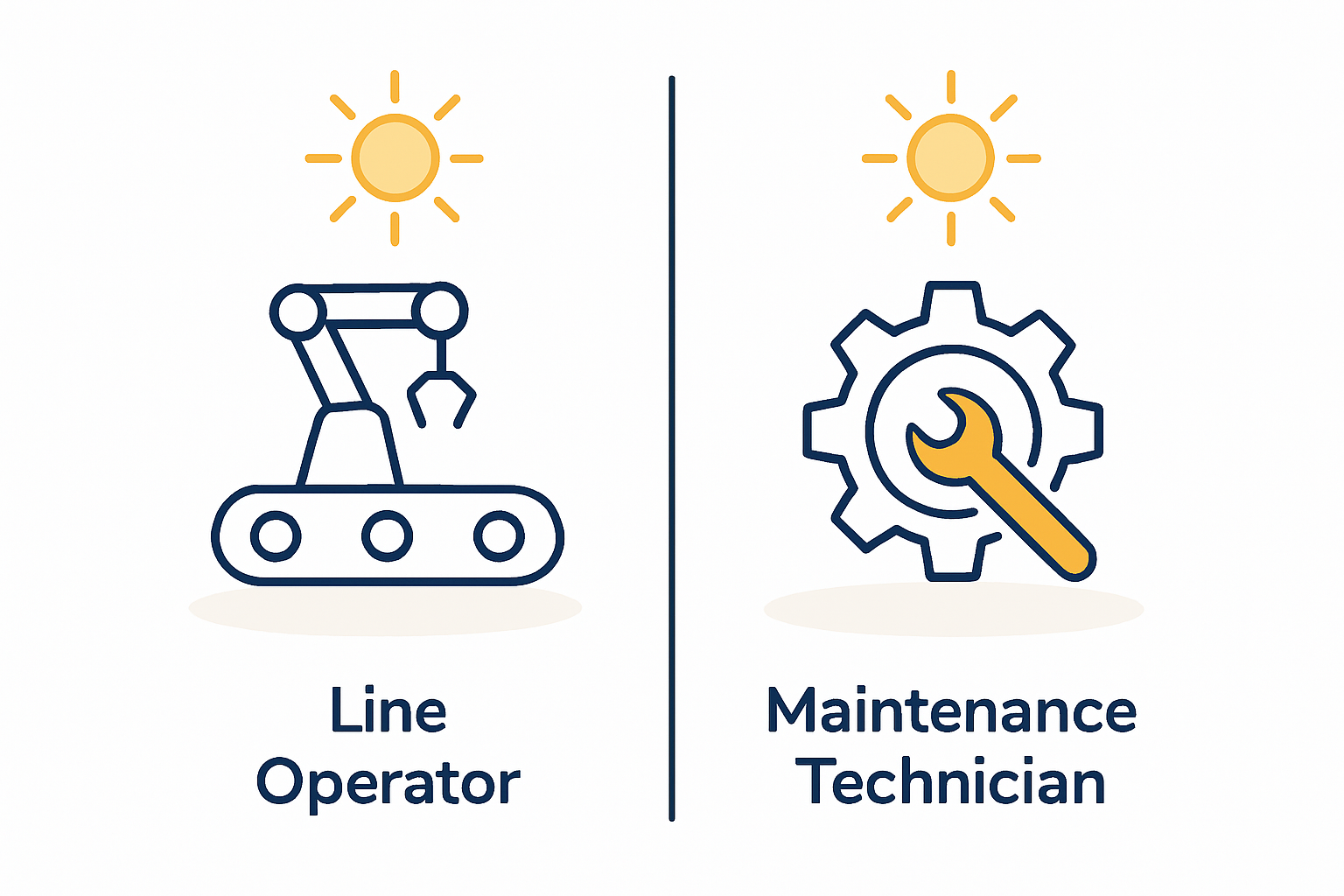
Line Operators: These individuals are responsible for the day-to-day operation of specific machines, such as the stringer, layup station, and laminator. The role requires precision and the ability to follow standardized processes.
-
Maintenance Technicians: This role is critical for ensuring uptime and production quality. Technicians need a foundational understanding of mechanics and electronics to perform routine maintenance, troubleshoot issues, and manage spare parts.
-
Quality Control (QC) Inspectors: Responsible for various checkpoints along the line—from cell testing to final module inspection with a sun simulator—these individuals must have a keen eye for detail and an uncompromising commitment to standards.
Ready to make big Profits?
The solar Industry is Booming
WE HELP NEWCOMERS to the solar industry start their own solar module production line. Customers can make BIG PROFITS by selling modules and finding investors, without wasting money and time on things they don't need!
A Practical Framework for Assessment and Recruitment
With a clear understanding of the required roles, the next step is to create a structured recruitment and assessment process tailored to the Guatemalan context.
Sourcing High-Potential Candidates
Instead of searching for non-existent “solar technicians,” focus on sectors with transferable skills. Look for candidates from:
-
Existing Manufacturing Industries: Workers from the textile, electronics assembly, or automotive parts industries often possess the manual dexterity and production line discipline required.
-
Vocational and Technical Institutes: Guatemala has a network of technical training institutions, with the Technical Institute for Training and Productivity (INTECAP) being the most prominent. Graduates from programs in electromechanics, industrial maintenance, or electronics provide a strong talent pool.
-
Recent School Leavers: Younger candidates can be molded to the specific quality standards of photovoltaic manufacturing without the need to unlearn habits from other industries.
Assessing Foundational Skills, Not Experience
The assessment process should concentrate on aptitude, not pre-existing knowledge of solar technology. A practical, hands-on evaluation is far more telling than a resume.
-
Manual Dexterity Tests: Simple tasks, like assembling small mechanical components or handling delicate materials under a time constraint, can effectively gauge a candidate’s suitability for handling solar cells.
-
Attention to Detail: Assessments can include pattern recognition or spot-the-difference exercises to identify individuals who can maintain focus and identify minute defects.
-
Problem-Solving and Numeracy: Basic logic puzzles and arithmetic questions help evaluate a candidate’s ability to think critically and perform the simple calculations required for process monitoring.
An effective assessment process ensures the initial cost of labor for a solar manufacturing plant is an investment in high-potential individuals, reducing turnover and training inefficiencies down the line.

Designing an Effective Training Program
Once the right candidates are selected, a comprehensive training program is the bridge to operational excellence. This program must be structured, systematic, and adapted to the local learning context.
The Three Pillars of Technical Training
A robust training curriculum is built on three distinct but interconnected phases:
-
Classroom Theory: This phase covers the fundamentals of photovoltaics, safety protocols, and the principles behind each step of the solar panel manufacturing process. Given the educational landscape, this training should be highly visual, using diagrams, videos, and hands-on demonstrations instead of text-heavy manuals.
-
Hands-On Machine Simulation: Before working on the actual production line, trainees should practice on simulators or during offline machine setup. This allows them to build muscle memory and familiarity with the equipment in a low-pressure environment.
-
Supervised On-the-Job Training: The final phase involves trainees working on the live production line under the close supervision of an experienced trainer, often an expatriate process engineer provided as part of a turnkey solution. This stage gradually builds from simple tasks to full operational responsibility.
Based on experience from J.v.G. Technology GmbH turnkey projects, this entire training process for a core team of operators can typically be completed within four to six weeks.

Frequently Asked Questions (FAQ)
Do I need to hire technicians with prior solar industry experience?
No, and in many cases, it’s preferable not to. It’s more effective to hire individuals with strong foundational aptitudes like dexterity and a technical mindset, then train them specifically for your machines and quality standards. This avoids the need to “un-train” bad habits.
How long does a typical training program take for a new factory?
For a group of line operators and QC inspectors, an intensive program combining classroom and on-the-job training typically lasts between four and six weeks before they can operate the line competently under supervision. Maintenance technicians may require a slightly longer period of specialized training.
What is the role of local institutions like INTECAP?
INTECAP and similar vocational schools are excellent sources for recruiting candidates who already have a baseline of technical and safety knowledge. Partnering with these institutions can create a sustainable talent pipeline for future expansion.
Is English proficiency required for line operators?
It’s generally not a requirement for operators or QC inspectors. Training materials should be developed in or translated into Spanish. Key leadership roles, such as the production manager or head of maintenance, will likely need some English proficiency to communicate with international machine suppliers and engineers.
Conclusion: A Systematic Approach to Building Local Expertise
Establishing a solar module factory in Guatemala doesn’t depend on finding a ready-made workforce. Instead, success hinges on a deliberate strategy to cultivate local talent. By focusing on fundamental aptitudes during recruitment and implementing a structured, multi-phase training program, investors can build a highly skilled and motivated team from the ground up.
This approach not only ensures operational excellence but also creates lasting value within the community, positioning the factory as a desirable local employer. With a clear process, Guatemala’s human potential becomes one of the strongest assets for any new solar manufacturing venture. For those planning such a project, viewing workforce development as an integral part of the setup—much like the turnkey solar manufacturing line itself—is the key to long-term success.